Best Hunting Method for Eastern Turkey in Texas
If you have ever spent a morning in the deep thickets of East Texas, you know that hunting Eastern turkeys is a completely different beast than chasing Rios in the Hill Country. While Rio Grandes might gobble at a slamming truck door, Eastern turkeys in the Pineywoods are notoriously tight-lipped, wary, and prone to vanishing at the slightest mistake. This guide breaks down the specific strategies you need to master to finally outsmart the ghost of the East Texas woods.
Understanding the Eastern Turkey Challenge in the Pineywoods
The very first thing any hunter needs to realize is that Eastern turkeys occupy a habitat that is vastly different from the open savannahs of West or South Texas. When you are looking into Texas Game Animals: What You Can Hunt, the Eastern turkey stands out because of its limited range and the sheer difficulty of the terrain. We are talking about the Pineywoods—dense stands of loblolly pines, thick yaupon undergrowth, and swampy creek bottoms where visibility is often measured in feet, not yards.
In this environment, the birds have the home-field advantage. They can hear you coming from a mile away on the dry pine needles, but you often won't see them until they are well within your "red zone." Furthermore, the regulations for these birds are much stricter. Unlike the multi-bird bags in other regions, East Texas typically operates under a one-gobbler limit with mandatory harvest reporting. This means every move you make has to be calculated because you only get one chance to get it right for the entire season.
The biological behavior of these birds is also more subdued. Because they live in high-predator environments with bobcats and coyotes lurking in every thicket, they tend to gobble less frequently once they hit the ground. A bird that gobbles at dawn might go completely silent for the next four hours as he works his way toward you. If you aren't prepared for that silence, you will likely stand up and spook the very bird you were calling in.
The Impact of Humidity and Thick Cover on Sound
One often overlooked factor in Pineywoods & East Texas Hunting is how the environment swallows sound. In the Hill Country, a gobble can carry across a canyon for half a mile. In the dense woods of the Angelina or Sabine National Forests, the humidity and the physical barrier of the pines act as a muffler.
You might think a bird is three hundred yards away when he is actually sitting at seventy-five. This leads many hunters to over-call or move too aggressively, thinking the bird hasn't heard them yet. Learning to "read" the acoustics of a swampy bottom vs. a pine plantation is the first step in becoming a master Eastern turkey hunter.
Navigating the Mandatory Harvest Reporting
Because Eastern turkey populations are more sensitive than Rios, the Texas Parks and Wildlife Department (TPWD) requires hunters to report their harvest via the My Texas Hunt Harvest app. This isn't just a suggestion; it is a critical part of the legal framework. Before you head out, you need to ensure your Texas Hunting License: Cost, Types & How to Buy (2026) is up to date and that you understand the specific county-by-county regulations, as not every county in East Texas has an open spring season.
The Best Hunting Method: The Controlled Ambush
If you try to use the "run and gun" tactics often employed in Rio Grande Turkey Hunting in Texas, you are going to go home empty-handed most of the time. In East Texas, the best hunting method is a "controlled ambush" that prioritizes stealth and patience over mobility. You cannot outwalk an Eastern turkey in the brush, but you can certainly out-wait him.
The controlled ambush involves identifying a "hub" of activity—usually a transition zone between a roosting area and a feeding area—and setting up a primary position that offers maximum concealment with a clear shooting lane. Because the brush is so thick, you don't need a massive field. You just need a twenty-yard opening where the bird feels comfortable stepping out to look for the "hen" he hears.
Choosing the Right Setup Location
When looking for a spot, focus on "internal" openings. These are small clearings, logging decks, or old fire lanes within the timber. Turkeys in the Pineywoods love these spots because they can strut without being trapped by thick briars, but they still feel safe because the heavy cover is only a few feet away.
Avoid setting up directly under a roost tree unless you can get there in total darkness without making a sound. The better play is to find the "bench" or the slight elevation change just above a creek bottom. Easterns love to travel along these ridges. If you can position yourself where a ridge meets a logging road, you have found a prime turkey highway.
The Importance of a "Backstop" Tree
Your physical setup against a tree is more than just a way to rest your back. It is your primary source of camouflage. You want a tree that is wider than your shoulders to break up your silhouette completely. In East Texas, where the ground is often damp, having a high-quality seat cushion is not a luxury—it is a necessity for staying still. If you are shifting your weight every five minutes because your tailbone is cold and wet, you are going to telegraph your position to every bird in the area.
| Feature | Rio Grande Turkey Tactics | Eastern Turkey Tactics |
|---|---|---|
| Mobility | High (Run and Gun) | Low (Controlled Ambush) |
| Calling Volume | Loud and Frequent | Soft and Sparse |
| Decoy Use | Multiple (Strutters/Hens) | Minimal (Single Hen or None) |
| Primary Habitat | Open Range / Mesquite | Pineywoods / Creek Bottoms |
| Patience Level | Medium | Extreme |
Calling Tactics for Wary East Texas Gobblers
When it comes to Turkey Calling & Tactics for Texas Rios, you can often get away with aggressive cutting and loud yelping to fire up a bird. With an Eastern turkey, less is almost always more. These birds have heard it all, and they are naturally more suspicious of loud, repetitive calling.
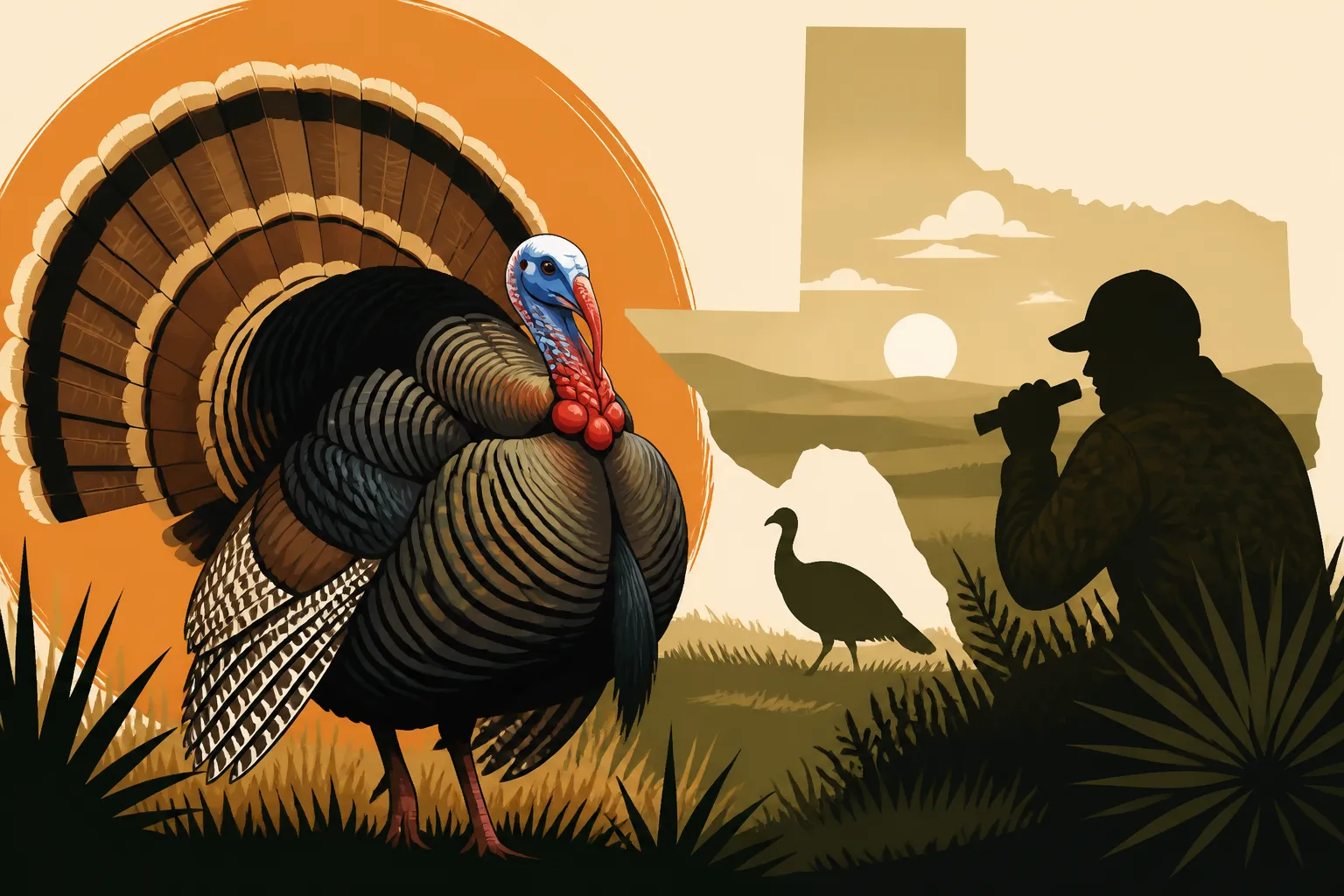
The most effective calling method for Easterns is a combination of soft "talk" and long periods of silence. You want to convince the gobbler that there is a hen nearby who is content, not desperate. Start with some very soft tree yelps while the bird is still on the limb. Once he hits the ground, give him a few light clucks and purrs, then put the call down.
Using Realism Over Volume
Instead of just using a mouth call or a slate, try to incorporate the sounds of the woods. Scratching the dry leaves next to your seat with your hand can be more effective than a thousand-dollar custom call. This mimics the sound of a hen scratching for acorns or insects. To a gobbler, that sound is a dinner bell and a signal that a hen is relaxed and staying in one place.
If you do use a call, consider a high-quality friction call like a slate or glass. These allow for the subtle, "nasal" tones that Eastern hens are known for. Many hunters find that How to Call Rio Grande Turkeys in Texas techniques are too sharp for the damp East Texas air. You want a mellow, realistic sound that blends into the background noise of the forest.
Dealing with the Silent Gobbler
This is the most common scenario in East Texas: you hear a bird gobble on the roost, you set up, you call, he gobbles once on the ground, and then… nothing. For the next hour, the woods are silent. Most hunters assume the bird has walked away or lost interest. In reality, that Eastern gobbler is likely "coming on a string," but he is doing it silently.
He is stopping every ten yards to listen and look. If you get impatient and call too much, you might give away the fact that you aren't a real hen. If you get up to move, you will likely "bust" him at forty yards. The best method here is to wait at least thirty minutes longer than your instincts tell you to. Patience is the ultimate hunting tool in the Pineywoods.
Scouting and Location: Finding the Needle in the Piney Haystack
Success in Eastern Turkey Hunting in Texas is 90% scouting. You cannot show up at a lease on opening morning and expect to find these birds. Because they are so localized, you need to find "fresh" sign. In the Pineywoods, this means looking for three specific things: tracks in the sandy soil of logging roads, "V" shaped scratchings in the pine straw, and droppings.
Eastern turkey tracks are significantly larger than your average bird, and in the soft East Texas sand, they are easy to spot after a light rain. Focus your scouting on the edges of creek bottoms and the perimeters of recent "controlled burns." TPWD often uses fire to manage the understory in national forests, and turkeys flock to these burned areas to eat the new shoots and easy-to-find insects.
Roost Tree Identification
Unlike Rios, which might roost in the same massive cottonwood for twenty years, Easterns are a bit more nomadic. However, they do have a preference for large hardwoods or pines that overhang water. If you can find a slough or a flooded timber area with large trees, check the base of those trees for feathers and droppings.
Using a locator call like an owl hooter or a crow call in the late evening is the best way to pinpoint these roosts without "bumping" the birds. Just remember, in the thick woods, an owl hooter carries much better through the timber than a high-pitched crow call.
Transition Zones and Food Sources
In the spring, Eastern turkeys are focused on high-protein food sources. This includes hard mast (acorns left over from winter) and the "green-up" of clovers and grasses in forest openings. If you are hunting a lease, check your Best Gear for Eastern Turkey on a Texas Lease list and make sure it includes a good set of binoculars for glassing those long, narrow logging lanes. Often, you will catch a glimpse of a fan or a head a quarter-mile down a road, which gives you the information you need to plan an intercept for the following morning.
Gear Essentials for the East Texas Woods
The gear you choose can make or break your hunt. Because the visibility is low and the birds are sharp-eyed, your camouflage must be perfect. This is not the place for "desert" or "mountain" camo patterns. You need something with a lot of green and dark shadows to match the yaupon and pine.
Additionally, consider your footwear. East Texas is notorious for its venomous snakes, particularly copperheads and timber rattlesnakes, which blend in perfectly with the leaf litter. A pair of high-quality Snake Boots for Texas Hunting is non-negotiable for anyone trekking through the brush.
Decoy Strategies: Less is More
While a full-strutter decoy might work wonders on a dominant Rio buck in South Texas, it can often scare off a wary Eastern gobbler. A single, relaxed hen decoy is usually all you need. Place it in a spot where it is visible from the direction you expect the bird to come, but make sure it isn't so "exposed" that it looks unnatural.
Some of the most successful East Texas hunters use no decoys at all. By forcing the bird to "look" for the hen he hears, you keep his attention focused on searching the brush rather than scrutinizing a plastic fake. If he can't see the hen, he has to keep coming closer to find her, which often brings him right into your lap.
The Role of Technology
Don't ignore the help of modern tools. Using an app like onX or HuntStand is vital for navigating the sprawling national forests. You can mark roost trees, scouting sign, and—most importantly—your truck. It is incredibly easy to get turned around in the "big thicket" after the sun goes down or when you are chasing a distant gobble.
Important Disclaimer
Hunting regulations in Texas are subject to change annually based on wildlife population surveys and conservation needs. Always consult the official Texas Parks and Wildlife Outdoor Annual for the most current season dates, bag limits, and mandatory reporting requirements for your specific county. The information provided in this guide is for educational purposes and reflects general hunting tactics and historical data. Safe firearm handling and ethical hunting practices are the responsibility of the individual hunter.