Best Hunting Method for Javelina in Texas
Many hunters head into the South Texas brush or the rugged Trans-Pecos mountains looking for deer, only to find themselves completely outmatched by the ghost-like movements of a javelina herd. The frustration of hearing them click their teeth in the thorns without ever seeing a silhouette is a common rite of passage. This guide solves that problem by breaking down the most effective, field-proven hunting methods to help you consistently find and harvest the collared peccary.
Understanding the Javelina Behavior and Habitat
Before you can pick the right method, you have to understand what you are actually looking for. A common mistake is treating javelina like small feral hogs. While they look similar from a distance, they are entirely different animals. Javelina are members of the peccary family, and their social structures are far more rigid than those of a wild pig. If you want to master Javelina Hunting Tactics for Texas, you have to start with their daily routine.
Social Structure and Herd Dynamics
Javelina are incredibly social creatures. You will rarely find a lone javelina unless it is an old boar that has been recently ousted or a sick individual. Usually, they travel in "squads" or herds ranging from six to thirty animals. This social bond is their biggest weakness. When one javelina feels threatened, it often emits a pungent musk from its dorsal gland and begins popping its teeth. This "woofing" or "clicking" is a signal to the rest of the herd to bunch up or defend.
For the hunter, this means that if you spot one, there are likely ten more nearby that you haven't seen yet. In the thick prickly pear flats of Webb or Zapata County, this makes the stalk incredibly difficult because you have twenty or thirty eyes and noses to fool, rather than just one. If you spook a peripheral member of the herd, the entire group will vanish into the brush like grey smoke.
Territory and Home Range
Unlike feral hogs that might roam for miles in search of a new food source, javelina are very territorial. They have a relatively small home range, often staying within a few hundred acres for their entire lives. They mark their territory using that scent gland on their back, rubbing it against rocks, tree trunks, and even each other.
If you find a "javelina cave" (usually an undercut bank or a dense thicket of guajillo) with fresh tracks and a heavy, skunky odor, you are in their living room. They will return to these spots daily to escape the Texas sun. Knowing this helps you narrow down your hunting area significantly compared to the nomadic nature of other game.
The Absolute Best Hunting Method: Spot-and-Stalk
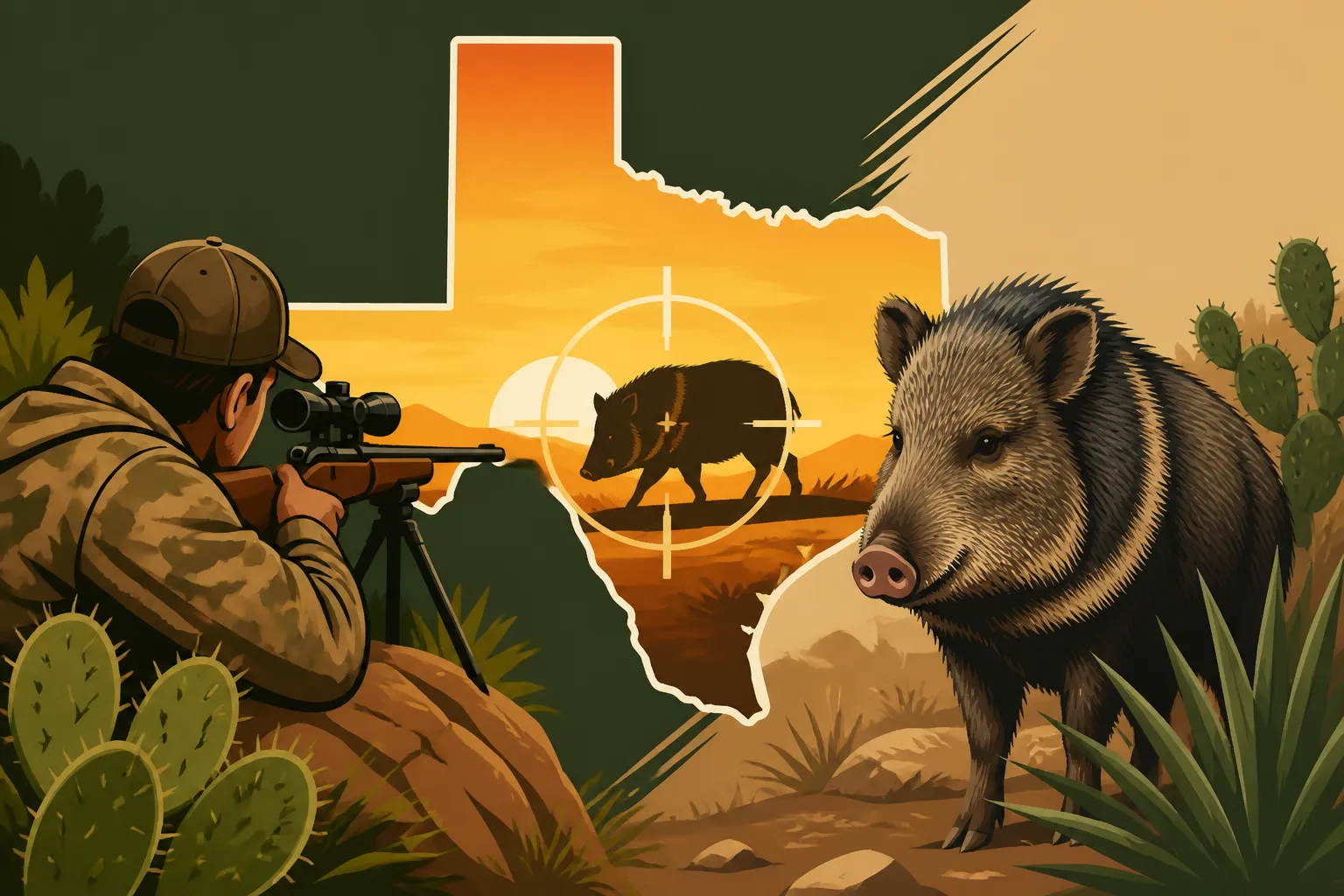
In my years of wandering the brush, nothing beats the spot-and-stalk method for javelina. It is the purest way to hunt them and offers the highest level of engagement. Because javelina have notoriously poor eyesight, you can often get within bow range if the wind is right. However, their sense of smell is elite, and their hearing is sharp.
Mastering the Glassing Game
Success starts with your eyes, not your feet. You want to find a high point—a rimrock in the Trans-Pecos or a high tripod blind in South Texas—and pick apart the edges of the brush. Javelina are grey and blend perfectly with the shadows of mesquite and prickly pear. Look for movement. Specifically, look for the flicker of an ear or the white "collar" across their shoulders when they turn into the sun.
When you are Spot-and-Stalk Hunting in Texas (Exotics & Mule Deer), the goal is to find them while they are feeding. Javelina love prickly pear pads, mesquite beans, and various tubers. If you see a patch of prickly pear where the pads look like they’ve been chewed on from the edges in, stay in that area. Once you spot a herd, don't rush. Watch their direction of travel. They move slowly while feeding, giving you plenty of time to plan your approach.
Playing the Wind and Stealth
The "nose" of a javelina is their primary defense. You can be as quiet as a mouse, but if the wind shifts and blows your scent toward that herd, the hunt is over in a heartbeat. Always keep the wind in your face or at a cross-wind. Because you are often hunting in the "thorny hell" of the South Texas brush, you need to be mindful of your clothing. Loud, nylon fabrics will snag on every thorn and alert the herd.
When you get within 50 yards, move only when the animals are busy feeding or when their heads are down. If a javelina freezes and looks in your direction, you must freeze instantly. They might not see you, but they are incredibly sensitive to movement. If you stay still, they will often go back to feeding, thinking you’re just another prickly pear clump.
Alternative Methods for Success: Calling and Baiting
While spot-and-stalk is the most rewarding, there are times when the brush is simply too thick or the terrain too flat to glass effectively. In these scenarios, you have to bring the javelina to you.
The Power of the Distress Call
One of the most exciting ways to hunt these animals is by using a predator call. Javelina are fiercely protective of their young. If you use a high-pitched "javelina in distress" call, it can trigger an aggressive response from the entire herd. I’ve seen herds of twenty javelina come charging out of the brush, teeth popping and hair standing on end, looking for whatever is hurting one of their own.
This is not a method for the faint of heart. When they respond to a call, they come in fast and they come in "hot." It’s best to do this with a partner or from the safety of a low tripod if you’re using a bow. If you’re on the ground, make sure you have a clear shooting lane and a back-up plan. This method is especially effective when you know a herd is nearby but you can't get a visual through the dense cover.
Hunting Over Bait and Water
In the heat of the afternoon, javelina are slaves to their thirst. If you are on a lease with established water troughs or "pila" tanks, sitting near water can be very productive. They will often hit water mid-morning and again in the late afternoon.
Similarly, javelina are notorious corn thieves. If you are Hunting Over Feeders & Corn in Texas (Legal Guide), you will almost certainly see javelina. They will often dominate a feeder, chasing off even the most stubborn feral hogs. If you are looking for a relaxed hunt or want to introduce a youth hunter to the sport, sitting a feeder is the most consistent way to get a shot.
| Hunting Method | Best Terrain | Difficulty Level | Success Rate |
|---|---|---|---|
| Spot-and-Stalk | Open Brush / Mountains | High | Moderate |
| Calling (Distress) | Dense Thickets | Moderate | Variable |
| Hunting Over Bait | Private Leases | Low | High |
| Water Hole Sit | Arid / Desert Regions | Moderate | Moderate |
| Still Hunting | Dense Creek Bottoms | High | Low |
Gear Essentials for a Texas Javelina Hunt
You don't need a magnum rifle to hunt javelina, but you do need gear that can withstand the harshest environment in North America. The Texas brush is designed to poke, prod, and tear your equipment.
Firearm and Caliber Selection
Javelina are not large; a big one might weigh 50 to 60 pounds. Therefore, small-caliber rifles are ideal. The .223 Remington, .22-250, or even a .243 Winchester are perfect. They provide enough punch to ensure a clean kill without destroying the meat. For handgun hunters, a .357 Magnum or even a .22 Magnum at close range can be effective.
If you are a traditionalist, javelina are a premier target for archery. Because you can often stalk within 20 yards, they are the perfect "gateway" animal for someone looking to get into bowhunting. Just remember that their vitals are slightly further forward than a whitetail deer’s. Aiming just tucked into the "armpit" of the front leg is usually the best bet.
Optics and Field Gear
Since you’ll be spending a lot of time glassing, invest in a good pair of 8×42 or 10×42 binoculars. You need optics that handle low light well, as javelina are most active during the "golden hours" of dawn and dusk. Additionally, never step into the South Texas brush without a pair of high-quality snake boots or gaiters. Rattlesnakes love the same rocky outcrops and prickly pear flats that javelina frequent.
Lastly, you’ll need a sharp knife. Javelina have very thick, coarse hair and a lot of grit in their coat from wallowing. If you plan on keeping the meat—which you should, as it makes excellent chorizo—you need to be careful during the skinning process. Avoid touching the scent gland on the back and then touching the meat, as the musk will taint the flavor instantly. Understanding How to Field Dress a Deer in Hot Weather will give you the basic skills needed, but with javelina, the scent gland removal is the critical first step.
Legal Requirements and Seasonality
Before you head out, you must ensure you have the proper paperwork. In Texas, the javelina is classified as a game animal, not a non-game animal like the feral hog. This means there are specific seasons and bag limits you must follow.
License and Tags
You will need a valid Texas hunting license. Depending on where you are hunting, you might be in a county with a year-round season or one with a specific fall and spring window. Most of the South Texas counties allow for a two-javelina annual limit. Always check the latest Texas Javelina Season by Zone maps before your trip, as regulations can change.
For those coming from out of state, the Texas Non-Resident Hunting License Cost is a factor to consider, but it often covers your ability to hunt exotics and predators as well, making it a great value for a multi-species trip. Make sure you also understand the Javelina vs Feral Hog: What's the Difference? to avoid any legal mishaps, as shooting a javelina during a closed season because you thought it was a pig is a costly mistake.
Finding a Place to Hunt
Most javelina hunting occurs on private land, but there are excellent opportunities for Public Hunting in Texas: WMAs & Annual Public Hunting Permit. Many of the Wildlife Management Areas (WMAs) in the South Texas plains offer drawn hunts or walk-in access for javelina. These hunts are often overlooked because everyone is chasing trophy whitetails, which means you can often have thousands of acres of "stink pig" heaven all to yourself.
If you are looking for a more curated experience, many outfitters offer How to Hunt Javelina in Texas (Step by Step) packages that include lodging and guiding. This is a great way to learn the ropes and see the high density of animals that South Texas is famous for. Regardless of the method you choose, the key is patience, playing the wind, and respecting the incredible nose of the collared peccary.
Disclaimer
Hunting involves inherent risks, including exposure to wild animals, harsh weather, and the use of firearms or archery equipment. Always follow the official Texas Parks and Wildlife Department (TPWD) regulations and safety guidelines. Ensure you have the correct licenses and land permissions before hunting. The information provided in this guide is for educational purposes and reflects personal experience and general knowledge of Texas hunting practices.