Javelina vs Feral Hog: What’s the Difference?
It's an all too common scenario: you're out in the Texas brush, scanning the horizon, and something moves in the dense cover. Your heart races. Is it a trophy feral hog you can take down year-round, or is it a javelina, a protected game animal with strict seasons and bag limits? Misidentifying these two distinct creatures can lead to a missed opportunity or, worse, a run-in with Texas Parks and Wildlife Department regulations. This guide is here to clear up the confusion, helping you understand the crucial differences between javelinas and feral hogs so you can hunt responsibly and effectively.
Understanding the Javelina: Texas's Unique Peccary
Often mistaken for miniature wild boars, javelinas (also known as collared peccaries) are fascinating native Texan animals with a rich history and a specific role in our ecosystem. They are not pigs, wild or otherwise, but belong to an entirely different family of mammals, the Tayassuidae.
Physical Characteristics and Appearance
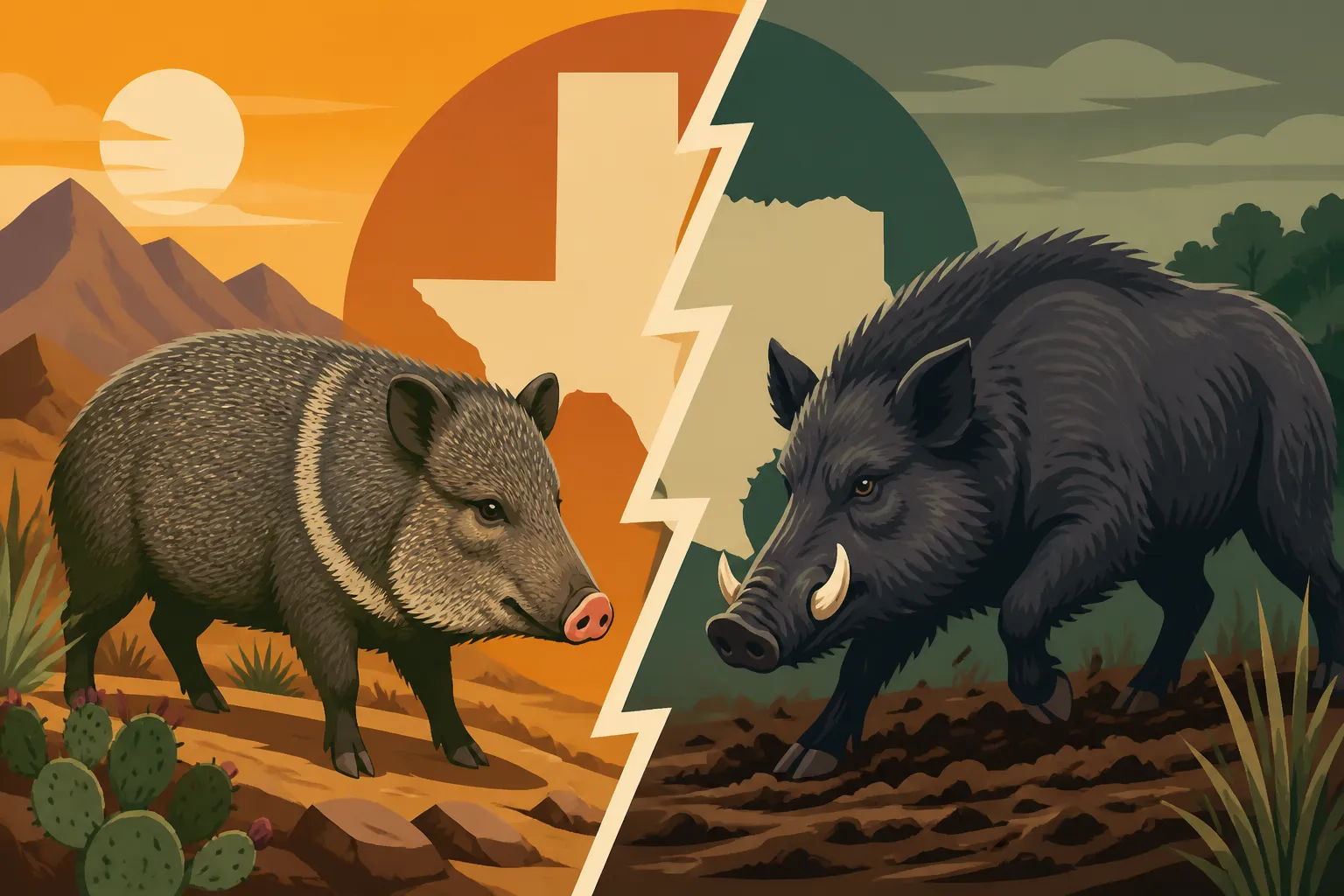
When you first lay eyes on a javelina, you'll immediately notice their compact, stocky build. They typically stand about 20-24 inches tall at the shoulder and weigh between 30 to 60 pounds, making them significantly smaller than most mature feral hogs. Their coat is a coarse, grizzled mixture of black, gray, and brown hairs, often appearing blackish from a distance. The most distinctive feature, and the origin of their common name "collared peccary," is the band of lighter, whitish-yellow hair that runs around their neck, creating a visible "collar."
Their snout is notably more pointed and less disk-like than a pig's, and their tusks are small, straight, and point downwards, unlike the curved, outward-pointing tusks of a feral hog. Another key identifier is their tail, which is practically non-existent – just a tiny nub barely visible. Javelinas also possess a prominent musk gland on their rump, which they use to mark territory and each other, often emitting a distinct, pungent odor, especially when alarmed or excited. This scent is a dead giveaway if you're close enough!
Habitat, Diet, and Behavior
Javelinas are perfectly adapted to the arid and semi-arid regions of Texas, thriving in the dense brush country of South Texas, the rugged terrain of the Trans-Pecos, and parts of the Edwards Plateau. They prefer areas with thorny shrubs, cacti, and rocky outcrops, which provide both food and protection from predators like coyotes and bobcats. These creatures are true survivors in harsh environments.
Their diet primarily consists of succulents, especially prickly pear cactus pads, roots, tubers, bulbs, and mesquite beans. They're not picky, though, and will also forage for insects, grubs, and even small vertebrates if the opportunity arises. This plant-heavy diet often means you'll find them rooting around, but their rooting is generally shallower and less extensive than that of feral hogs.
Javelinas are highly social animals, living in herds or "covys" that typically range from 5 to 15 individuals, though larger groups aren't uncommon. They communicate through various grunts, barks, and scent marking. When a threat is perceived, the entire group will often stand their ground, chattering their teeth and bristling their neck hairs, appearing much larger and more formidable than they actually are. They are most active during the cooler parts of the day – dawn and dusk – and will often bed down in dense brush or under rock ledges during the midday heat.
Legal Status and Hunting Regulations
This is where the rubber meets the road for Texas hunters. Javelinas are classified as a game animal by the Texas Parks and Wildlife Department (TPWD), meaning they are subject to strict hunting regulations. You absolutely need a valid Texas hunting license to pursue them. The season dates and bag limits vary by county and are outlined annually in the Outdoor Annual. Generally, the season runs in the fall and winter, with specific dates for archery, general gun, and often a very generous bag limit. For instance, in many counties, you might be allowed two javelinas per license year. It's crucial to check the specific regulations for your hunting location, as ignoring these can lead to serious legal penalties. Understanding the nuances of the "Texas Javelina Season by Zone" is paramount before you head into the field.
The Prolific Feral Hog: An Invasive Challenge
Feral hogs, on the other hand, are a different beast entirely. These animals are descended from domestic pigs that either escaped or were released and have since adapted to survive and thrive in the wild. They are a serious ecological and agricultural threat across Texas.
Physical Traits and Size Variations
Feral hogs are, to put it mildly, variable. Their size can range from small piglets weighing a few pounds to massive boars tipping the scales at over 400 pounds. Most adult feral hogs in Texas average between 100 to 200 pounds. Their coat color is just as diverse; you'll see everything from solid black, brown, and red to spotted, striped, or patched individuals. Their hair is typically coarse and bristly, often forming a ridge along their spine.
A feral hog's snout is distinctively longer, more robust, and disk-like, perfectly designed for rooting deep into the soil. Their tusks, which are actually continuously growing canine teeth, are a defining feature. The upper tusks grow upwards and outwards, while the lower tusks rub against them, keeping them razor-sharp. These can grow to impressive lengths, especially on older boars, and are a formidable weapon. Unlike javelinas, feral hogs have a noticeable tail, which can be long and thin, often with a tuft of hair at the end, and they'll wag it much like a domestic pig.
Ecosystem Impact and Destructive Habits
Feral hogs are perhaps the most destructive invasive species in Texas. Their constant rooting causes extensive damage to crops, pastures, and natural habitats, disrupting delicate ecosystems and contributing to soil erosion. They are opportunistic omnivores, eating almost anything: crops like corn, soybeans, and wheat, native plants, acorns, invertebrates, and even small mammals, reptiles, and ground-nesting birds. This broad diet, coupled with their rapid reproduction rate, allows them to outcompete native wildlife for resources and wreak havoc on agricultural operations.
It's estimated that feral hogs cause hundreds of millions of dollars in damages to Texas agriculture annually. Their presence also contaminates water sources and can spread diseases to livestock and even humans. Because of their severe impact, they are considered a nuisance animal by the state.
Hunting Opportunities and Lack of Season
Here's the good news for hunters looking to make a difference: there is no closed season for hunting feral hogs in Texas. That's right, it's year-round, 24/7! There are also no bag limits, which means you can harvest as many as you can find. What's more, on private land, a landowner or their agent (which includes hunters with permission) does not need a hunting license to take feral hogs. This makes them an incredibly accessible and popular target for hunters across the state.
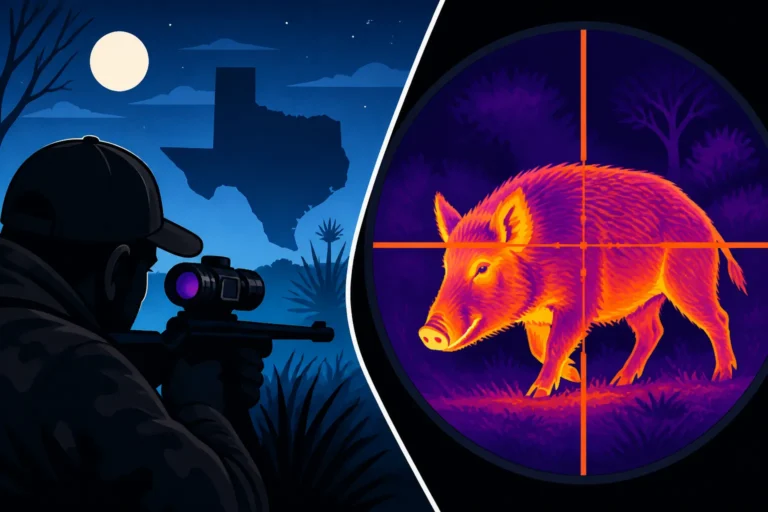
This lack of restrictions is a direct response to their invasive status and the urgent need for population control. Hunters are encouraged to pursue them using a variety of methods, including thermal hunting at night, trapping, and hunting over feeders. If you're looking for an ethical and impactful way to contribute to wildlife management, targeting feral hogs is it. You can learn more about "Texas Feral Hog Hunting Regulations 2026" to ensure you're always within the bounds of the law, especially when using specific tactics like night hunting.
Key Differences: A Side-by-Side Comparison
While both animals might occupy similar habitats and, from a distance, possess a superficial resemblance, their differences are profound. Understanding these distinctions is not just for academic interest; it's vital for ethical and legal hunting.
Genetic Lineage and Evolutionary Paths
This is the most fundamental difference: javelinas are not pigs.
- Javelinas belong to the family Tayassuidae, native to the Americas. They are New World peccaries, a completely separate evolutionary branch from pigs. Their lineage split millions of years ago, long before humans even entered the picture. Think of them more like distant cousins to pigs, rather than actual pigs themselves.
- Feral Hogs belong to the family Suidae, originating from the Old World. They are Sus scrofa, the same species as domestic pigs and European wild boars. They are genetically identical to the pigs found on farms, just wilder and often tougher.
This genetic divergence means that despite some shared characteristics like rooting behavior and bristly hair, they are entirely different biological species.
Social Structures and Group Dynamics
Their social lives also exhibit notable differences:
- Javelinas live in cohesive, territorial "covys." These groups are tight-knit, often moving and foraging together, and defending their territory as a unit. If one javelina is spotted, there are usually more nearby. Their social structure emphasizes mutual defense and cooperative foraging.
- Feral Hogs can be found in various social configurations. Sounders (groups of sows and their offspring) can be quite large, sometimes numbering 20 or more. Mature boars, however, are often solitary and only join sounders for breeding. While they can be social, their groups tend to be less cohesive and territorial than javelina covys, and individuals may split off more readily.
Practical Field Identification Tips
When you're out in the field and need to make a quick decision, here's a table summarizing the key identifiers:
| Feature | Javelina (Collared Peccary) | Feral Hog (Wild Pig) |
|---|---|---|
| Size | Small (30-60 lbs), 20-24" shoulder height | Variable (100-400+ lbs), 24-40+" shoulder height |
| Coat Color | Grizzled black/gray/brown; prominent white collar | Highly variable (black, brown, red, spotted) |
| Snout | Pointed, delicate | Robust, disk-like, prominent for rooting |
| Tusks | Small, straight, point downwards | Larger, curved, point outwards and upwards |
| Tail | Vestigial (nub, almost non-existent) | Distinct (long, thin, often tufted) |
| Musk Gland | Present on rump (distinct odor) | Absent |
| Young | Uniformly reddish-brown, no stripes | Often striped piglets (disappear with age) |
| Legal Status | Game Animal (licensed, season, bag limit) | Nuisance Animal (no license on private, no season/limit) |
| Family | Tayassuidae (New World Peccary) | Suidae (Old World Pig) |
Remember, size is often the most immediate indicator. A genuinely large animal is almost certainly a feral hog. The "collar" is also a dead giveaway for a javelina. If you're ever in doubt, it's always best to err on the side of caution. Utilizing tools like the GoHunt app can be invaluable for quickly cross-referencing species identification guides and current regulations right from your phone.
Why Distinguishing Them Matters for Texas Hunters
The ability to tell a javelina from a feral hog isn't just a parlor trick for bragging rights; it's a fundamental skill for any responsible hunter in Texas.
Avoiding Costly Mistakes
Hunting in Texas is a privilege, and it comes with responsibilities. Mistakenly shooting a javelina out of season, without a valid tag, or over your bag limit can lead to significant legal repercussions. These can include hefty fines, confiscation of your firearm or harvested animal, and even loss of hunting privileges. TPWD game wardens are highly skilled and take these violations seriously.
Imagine being on a lease where you're specifically targeting feral hogs, and you accidentally harvest a javelina because you didn't take the time to confirm identification. Not only could you face legal trouble, but you might also disappoint your lease mates and, more importantly, have compromised your ethical standing as a hunter. This is why resources like GoHunt, which often have regulatory summaries and maps, can be helpful for on-the-spot verification. Getting it right ensures a smooth, legal, and enjoyable hunting experience for everyone involved. For a deep dive into "How to Hunt Javelina in Texas (Step by Step)" or "How to Hunt Feral Hogs in Texas (Step by Step)", consult our dedicated guides.
Ethical Hunting Practices
Beyond the legal ramifications, accurately identifying your target is a cornerstone of ethical hunting. Responsible hunters respect the animals they pursue and the regulations designed to manage wildlife populations. Javelinas, as native game animals, are managed for sustainable populations, and their harvest is carefully controlled. Feral hogs, as an invasive species, require aggressive control measures to protect native wildlife and agricultural interests.
Approaching the hunt with the intent to correctly identify your quarry demonstrates respect for the animal, the land, and the hunting tradition itself. It reinforces your role as a conservationist, understanding that not all "wild pigs" are created equal. Knowing the difference allows you to apply appropriate tactics and legal considerations, whether you're stalking "Javelina Hunting in Texas" for a challenging hunt or contributing to conservation efforts by aggressively targeting "Feral Hog Hunting in Texas: Year-Round Guide".
Ultimately, being able to confidently distinguish between a javelina and a feral hog empowers you to be a more knowledgeable, responsible, and effective hunter in the diverse landscapes of Texas. Take the time to study these animals, and you'll not only enhance your hunting skills but also your appreciation for Texas's unique wildlife.
Disclaimer
Please be aware that hunting regulations, seasons, and licensing requirements can change. Always consult the most current Texas Parks and Wildlife Department Outdoor Annual or their official website before engaging in any hunting activities. This guide is for informational purposes only and should not be considered a substitute for official legal advice or regulations.