Llano County Antler Restriction & Bag Limit
It’s easy to feel lost in the maze of Texas hunting regulations, especially when it comes to specific county rules. Trying to decipher the nuances of antler restrictions and bag limits for a particular county like Llano can be frustrating, leaving you second-guessing if that buck in your crosshairs is truly legal. This comprehensive guide is here to cut through the confusion, detailing everything you need to know about the white-tailed deer antler restrictions and bag limits specifically for Llano County, ensuring you hunt confidently and legally.
Understanding Texas Antler Restrictions Generally
Before we dive into the specifics of Llano County, it’s really helpful to grasp the broader picture of why Texas has antler restrictions in the first place. Many hunters new to the state, or even those who’ve hunted elsewhere, find these rules a bit perplexing at first, especially when they differ from county to county.
Why Antler Restrictions Exist
Antler restrictions aren't just arbitrary rules designed to make your life harder; they are a critical tool in modern wildlife management, specifically for improving the health and age structure of the white-tailed deer herd. Think about it: for decades, the general hunting trend was to shoot the biggest buck you could find, which often meant taking out the prime breeding bucks. Over time, this practice can skew the age structure of the buck population, leading to fewer mature animals and potentially smaller antler sizes overall.
The Texas Parks and Wildlife Department (TPWD) introduced antler restrictions to essentially protect younger bucks, giving them a chance to mature and reach their full genetic potential. By passing on those 1.5 and 2.5-year-old bucks with smaller racks, we allow them to grow for another year or two, contributing to a healthier and more balanced herd, which ultimately means better hunting for everyone in the long run. It’s a biological investment, aiming to produce a greater number of older, larger-antlered bucks across the landscape. This approach also helps balance the sex ratio, ensuring enough mature bucks are present for breeding during the rut.
The Statewide 13-Inch Rule vs. County-Specific Rules
Here's where it can get a little tricky for folks who hunt in different parts of the state. Many people hear about the "13-inch rule" and assume it applies everywhere in Texas, but that's not quite right. While a significant portion of the state does operate under a version of this rule, there are critical exceptions and variations, particularly in counties that have opted into specific management programs or where local conditions warrant different regulations.
The standard statewide antler restriction, often referred to as the "13-inch rule," dictates that a buck must have at least one unbranched antler, or an inside spread of at least 13 inches to be legal. The "unbranched antler" part is key here because it allows hunters to take a young buck that might not meet the 13-inch spread but has a spike or fork on one side only. However, you can only harvest one buck per season that has an unbranched antler. It's a system designed to protect the majority of young, genetically superior bucks while still offering some harvest opportunity for younger animals that might not contribute as much to the trophy potential of the herd.
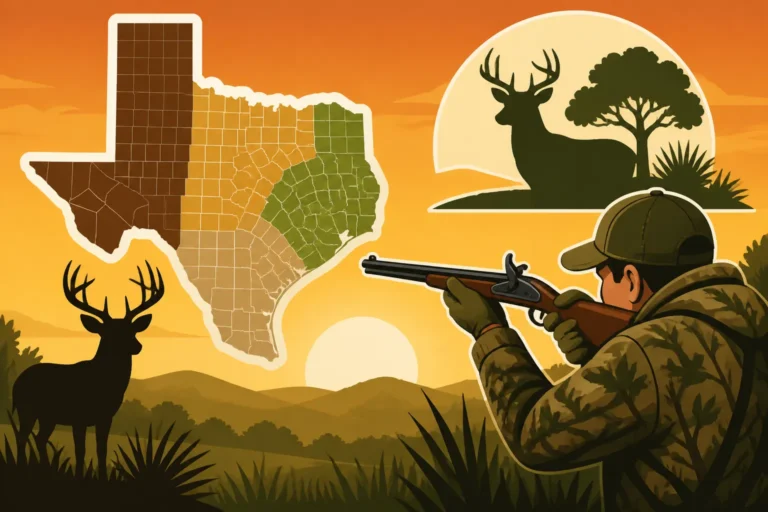
However, some counties, like those in the Panhandle, have entirely different antler restriction systems, or even no antler restrictions at all. The Hill Country, where Llano County is located, is a prime example of a region where the 13-inch rule is applied, but understanding its specific application is crucial. Always check the current year’s Outdoor Annual for the exact rules in your hunting county, as they can sometimes change or have subtle nuances. This is why knowing the specific regulations for areas like Llano County is so vital, rather than relying on a general understanding. For more general guidance on Texas deer season dates, check out our guide on Texas Deer Season 2026-2027: Dates by Zone.
Llano County Antler Restrictions Explained
Now, let's zero in on Llano County itself. This part of the Texas Hill Country is beautiful and renowned for its deer hunting, but it's also an area where knowing the specific antler regulations can make or break your hunt. Getting it wrong can lead to serious consequences, so paying close attention to these details is paramount.
Specific Antler Regulations for Llano County
Llano County falls under the general framework of Texas's antler restrictions, which means the 13-inch rule is in effect here. This regulation is designed to improve the quality of the deer herd by allowing younger bucks to mature. Here’s a breakdown of what that means for hunters in Llano:
To legally harvest a white-tailed buck in Llano County, the buck must meet one of the following two criteria:
- Possess an Antler With an Unbranched Main Beam: This means that at least one of the buck's antlers must be a spike or have no points branching off its main beam. If a buck has a main beam that does not branch (a spike), it satisfies this requirement. You are allowed to take only one buck per hunting season that meets this specific "unbranched antler" criterion. This allows hunters to take a young buck while still protecting those with good antler growth.
- Have an Inside Spread of 13 Inches or Greater: For a buck that has branched antlers, the distance between the tips of its main beams (the "inside spread") must be 13 inches or wider. If a buck has branched antlers, and its inside spread is less than 13 inches, it is not a legal buck to harvest under this rule, unless it qualifies under the "unbranched antler" rule on one side.
It's a "one or the other" situation, but with a critical caveat about the "unbranched" buck. You can't just shoot any branched buck under 13 inches spread. The intent is to pass up those young, developing bucks, giving them a chance to become mature trophies. This rule helps maintain a healthy age structure in the local deer population, something that the TPWD actively monitors and manages. For a more detailed look at these statewide rules, you can refer to our article on Texas Antler Restrictions: 13-Inch Rule & Counties.
Identifying a Legal Buck in Llano
Field judging a buck to determine if it meets the 13-inch rule or has an unbranched antler can be challenging, especially in the excitement of the moment. Many hunters, even seasoned ones, have been tripped up by this. The key is practice and having a clear mental image of what you’re looking for.
A good rule of thumb for judging the 13-inch spread is to compare the antler spread to the width of the buck’s ears when they are in an alert position. For most mature bucks, the ear-tip-to-ear-tip measurement is roughly 14-15 inches. So, if the antlers extend noticeably outside the ears, it’s very likely over 13 inches. If the antlers are inside or just barely at the ear tips, it’s probably under. However, deer ear sizes can vary, and a younger buck's ears might be a bit smaller, making this comparison tricky. It’s always safer to err on the side of caution.
When looking for an unbranched antler, it’s pretty straightforward. Is one of the main beams a smooth spike without any points coming off it? If so, and the other side is branched, that buck would qualify as your one "unbranched antler" buck for the season. If both antlers are branched, then you must rely solely on the 13-inch spread rule.
Hypothetical Scenario: Imagine you’re sitting in your deer blind in Llano County, early morning. A young 8-point buck steps out. You glass him and notice his antlers look pretty narrow, definitely within his ear tips. He’s got good tine length, but his spread seems small. You decide to pass because he doesn't meet the 13-inch spread, and both his antlers are branched (no unbranched main beams). Later that day, a young spike buck walks out. He has two unbranched main beams. This buck would be legal as your one unbranched antler buck for the season, provided you haven't already taken one. If you had, then he would not be legal to harvest. This decision-making process is a real part of hunting in Llano. You can learn more about this in our guide on How to Field Judge a 13-Inch Buck.
Consequences of Non-Compliance
Let me tell you, the Texas Parks and Wildlife game wardens do not take antler restriction violations lightly. It's not just a slap on the wrist. If you harvest a buck that does not meet Llano County's antler restrictions, you could face significant fines, potentially lose your hunting license, and even forfeit your harvested animal. These consequences are severe because the rules are in place for the long-term health of the deer population.
A common scenario involves a hunter misjudging a buck in the field. Even if it was an honest mistake, ignorance of the law is not a valid defense. That’s why it’s absolutely critical to be confident in your identification before pulling the trigger. Always ensure you have a clear, ethical shot and ample time to confirm the antler characteristics. If there's any doubt, it's always best to let the deer walk. A deer not harvested today could be a trophy buck next year.
Deer Bag Limits in Llano County
Beyond antler restrictions, understanding the total number of deer you can harvest in Llano County – the bag limit – is equally important. This sets the maximum number of animals you can take in a single hunting season, broken down by sex and sometimes by specific season dates.
Annual Bag Limit for White-Tailed Deer
For white-tailed deer in Llano County, the annual bag limit is four (4) deer. This is a collective limit, encompassing both bucks and does. It’s not four bucks and four does; it’s a total of four deer. This limit applies to the entire regulatory year, which typically runs from September 1st to August 31st.
Within this overall limit, there are further specifications regarding the sex of the deer you can harvest:
- No more than two (2) bucks: Of your four-deer total, you are limited to taking a maximum of two bucks during the season. These bucks must, of course, adhere to the antler restrictions we just discussed.
- No more than two (2) does: Similarly, you can take a maximum of two antlerless deer (does). These doe tags are often tied to specific seasons or dates, which we'll cover next.
This structure aims to control the overall harvest pressure on the deer population while also providing flexibility for hunters. It's important to remember that these limits apply to your license year-round, regardless of where in Texas you might hunt (as long as those areas share the same limits). This is a pretty common bag limit structure for many counties in the Hill Country, a region known for having one of the highest deer densities in the state. For a broader overview of buck rules, check out Texas Whitetail Bag Limit & Buck Rules.
Buck and Doe Limits and Seasons
The specific timing for harvesting bucks and does is crucial. While the general deer season dates apply to buck harvest, doe harvest often has more stringent regulations.
For bucks in Llano County, you can typically harvest them during:
- Archery-Only Season: Usually runs for about a month before the general season, offering bowhunters an early opportunity. All antler restrictions apply during this time.
- General Season: The main rifle season, usually starting the first Saturday in November and running through the first weekend in January. Antler restrictions and bag limits are in full effect.
- Special Late Season: Some counties offer a short special late season (usually two weeks in January) for bucks, often with different weapon restrictions. Always check the current Outdoor Annual for Llano.
For does (antlerless deer) in Llano County, the two-doe limit usually has tighter windows:
- General Season Doe Days: Typically, antlerless deer may only be harvested during specific portions of the general season. For many Hill Country counties, this means the first few weeks, or possibly longer, of the general season. It's critical to verify these dates in the Outdoor Annual.
- Archery-Only Season: Antlerless deer can generally be harvested during the archery-only season, usually without specific "doe days" like the general season.
- Youth-Only Season: Special youth-only seasons also provide opportunities for antlerless deer harvest, often outside the main general season framework.
Managed Lands Deer Permits (MLDP): If you're hunting on a property enrolled in TPWD's MLDP program, the bag limits and season dates can be different. MLDP properties often have extended seasons and customized bag limits based on the specific management plan for that ranch. These properties receive special tags directly from TPWD, which supersede the county's general regulations. If you hunt on an MLDP property, make sure you understand those specific regulations from the landowner or guide.
It’s easy to get these dates mixed up, especially if you hunt in different counties. My advice is always to have the current year’s Texas Parks and Wildlife Outdoor Annual handy, whether it's the physical book or the app on your phone, and highlight the specific pages for Llano County.
Importance of Harvest Reporting
This is one of those rules that often gets overlooked, but it's critically important for white-tailed deer in many Texas counties, including Llano. You must report your harvest of white-tailed deer bucks within 24 hours of harvest. This is done through the TPWD’s "My Texas Hunt Harvest" app or online system. It's mandatory, and failing to report can result in a citation.
Why is this so important? This data is invaluable for wildlife biologists. When hunters accurately report their buck harvests, TPWD can collect real-time data on deer populations, age structures, and success rates. This information helps them make informed decisions about future regulations, ensuring the long-term health and sustainability of the deer herd. Without accurate reporting, they're essentially flying blind.
Example: Imagine a year with unusually harsh drought conditions. If harvest reports show a significant drop in buck harvests, especially among older age classes, TPWD might consider adjusting future antler restrictions or bag limits to give the population a chance to recover. Conversely, consistent high harvests of mature bucks might indicate a thriving, well-managed herd. So, when you take a buck in Llano, take the extra few minutes to report it via the Texas Hunting Tags & Harvest Reporting (My Texas Hunt Harvest) system. It’s part of being a responsible hunter.
Navigating the Texas Outdoor Annual for Llano County
The Texas Outdoor Annual is your Bible for hunting regulations, but let's be honest, it can be a bit intimidating to navigate, especially for specific counties with unique rules. It's packed with information, which is great, but finding what you need quickly for Llano County requires a specific approach.
How to Interpret the Outdoor Annual
When you open the Outdoor Annual, whether in print or on the app, you'll notice it's organized by species and then often by zones or specific counties. Here's a step-by-step approach to finding Llano County's regulations:
- Start with "White-tailed Deer": Go directly to the white-tailed deer section. This is usually near the front of the game animal regulations.
- Locate the County-Specific Table: Within the white-tailed deer section, there will be a large table (or series of tables) that lists counties alphabetically. Find "Llano" in this list.
- Identify Your Zone/Region: Texas is divided into several deer zones (North, South, Central). Llano County is in the Central Texas Deer Zone. This will confirm the general season dates for the county.
- Check Antler Restrictions: In the column for "Antler Restrictions," you'll see a specific entry for Llano County. It will likely state "AR" (meaning antler restrictions apply) and then refer to a footnote or a preceding paragraph that details the 13-inch rule, including the "one unbranched antler" clause.
- Verify Bag Limits: Look for the "Bag Limit" column. It will specify the total number of deer, as well as the buck and doe limits (e.g., 4 deer, 2 bucks, 2 does).
- Note Antlerless Days/Seasons: Crucially, check the column or footnotes regarding "Antlerless Days" or "Special Antlerless Seasons." This is where you'll find the specific dates when doe harvest is permitted during the general season in Llano County. These dates can be quite limited, so don't miss them.
- Review Special Provisions: Always scan for any special provisions or footnotes unique to Llano County that might impact your hunt. This could include CWD (Chronic Wasting Disease) regulations, specific weapon restrictions, or youth-only season details.
Reading the Outdoor Annual for your specific county is a skill, and it gets easier with practice. Many seasoned hunters make it a ritual to review it thoroughly before each season, even if they've hunted the same lease for years. You can find more tips on this in our article How to Read the Texas Outdoor Annual.
Common Misconceptions and Updates
One of the biggest misconceptions is assuming that if you hunted in an adjacent county like Gillespie County or Mason County last year, the rules for Llano County will be identical. While often similar in the Hill Country, there can be subtle but important differences in specific dates, limits, or even how antler restrictions are applied. These small variations can be enough to get you into trouble.
Another common pitfall is relying on outdated information. Regulations do change from year to year. TPWD reviews biological data, harvest reports, and public input annually to make adjustments. What was true for Llano County five years ago might not be true today. This is why it's imperative to consult the current year's Outdoor Annual every single season. Don't rely on memory or what your buddy heard at the deer camp.
Staying informed means:
- Downloading the TPWD Outdoor Annual App: It’s free, always up-to-date, and available on your phone for quick reference in the field.
- Checking the TPWD Website: The official TPWD website (tpwd.texas.gov) is a primary source for regulation updates.
- Attending Public Meetings: While less common for the average hunter, TPWD holds public meetings where regulation proposals are discussed.
- Subscribing to TPWD Newsletters: Stay informed about changes and important notices directly from the source.
By understanding how to properly read the Outdoor Annual and staying vigilant for updates, you’ll avoid unnecessary headaches and ensure your hunting experience in Llano County is both successful and legal. It's a small investment of time that pays off big in peace of mind.
Here’s a quick summary table of Llano County's regulations for white-tailed deer:
| Regulation Type | Specifics for Llano County, Texas |
|---|---|
| Antler Restrictions | 13-inch Rule Applies: A buck must have an inside spread of 13 inches or greater, OR have an unbranched antler. Only one buck with an unbranched antler may be taken per license year. (This means if you shoot a spike or a buck with one spike and one branched antler, that counts as your "unbranched" buck for the year, and any other buck must meet the 13-inch spread.) |
| Annual Bag Limit | 4 deer total. |
| Buck Limit | No more than 2 bucks per license year. |
| Doe (Antlerless) Limit | No more than 2 does per license year. Must be taken during the general open season for antlerless deer or during the youth-only seasons. |
| Reporting Requirement | Mandatory harvest reporting for white-tailed deer bucks within 24 hours of harvest via My Texas Hunt Harvest app or online. |
| General Season Dates | Check the current year's Texas Hunting Seasons: Complete Calendar by Species and the Outdoor Annual for specific dates in the Central Texas Deer Zone. Typically from early November to early January. |
| Archery-Only Season | Check the current year's Outdoor Annual for specific dates. |
| Special Late Season | Check the current year's Outdoor Annual for specific dates and weapon restrictions. |
Disclaimer
Hunting regulations can change, and interpretations may vary. While this guide aims to provide accurate and up-to-date information for Llano County, Texas, it is ultimately the hunter's responsibility to review and comply with the most current regulations published by the Texas Parks and Wildlife Department (TPWD) in their annual Outdoor Annual before participating in any hunting activity. Always confirm all dates, bag limits, and specific rules directly from official TPWD sources.