Sutton County Antler Restriction & Bag Limit
Hunting deer in Texas is a cherished tradition for many, but let's be honest, trying to decipher the ever-evolving regulations can feel like tackling a riddle wrapped in an enigma, especially when it comes to specific county rules. Sutton County, nestled in the heart of the Edwards Plateau, is no exception, and its antler restrictions and bag limits are critical for every hunter to understand. This guide will cut through the confusion, detailing exactly what you need to know to hunt legally and ethically in Sutton County, ensuring your season is successful and compliant.
Navigating Deer Hunting Regulations in Sutton County
Texas, being the vast and diverse state it is, doesn't operate under a one-size-fits-all hunting regulation system. While there are statewide frameworks, many counties, particularly those with strong deer populations and robust wildlife management programs like Sutton County, have specific regulations tailored to local conditions. This county-specific approach is designed to promote healthy deer herds, encourage the harvest of a balanced number of bucks and does, and ultimately, improve antler quality over time. It can be a little frustrating to keep up with, especially if you hunt in multiple counties, but understanding the why behind these rules often helps make sense of the what.
The Texas Parks and Wildlife Department (TPWD) is the primary authority, and their Outdoor Annual is your bible for all things regulation. However, just knowing where to find the rules isn't enough; you really need to grasp the nuances. Sutton County, situated in a prime whitetail area, sees a lot of hunting pressure and actively manages its deer population, which directly translates to particular rules for antlered and antlerless deer. Ignoring these details isn't just a risk for a ticket; it's a missed opportunity to be a responsible steward of the land and its wildlife. Understanding these regulations is paramount before you even step foot on your lease or public hunting ground. If you're new to the game or just haven't hunted here before, taking the time to truly digest these specifics will save you a lot of headache and potentially a costly fine. For a broader look at what you need to hunt, check out the comprehensive guide on the Texas Hunting License: Cost, Types & How to Buy (2026).
Why County-Specific Rules Matter
You might wonder why Sutton County needs its own set of rules when Texas already has general regulations. The answer lies in local ecology and deer management objectives. The Edwards Plateau, where Sutton County resides, is known for its high deer densities. Without specific controls, certain age classes or sexes could become over-harvested, leading to imbalances in the herd. For instance, without antler restrictions, younger bucks might be taken before they have a chance to mature, impacting future trophy potential. Conversely, without adequate doe harvest, overpopulation can lead to habitat degradation and smaller, less healthy deer overall. These county-specific rules are often the result of years of biological data collection, hunter feedback, and expert analysis, all aimed at creating a sustainable and thriving deer population that offers quality hunting opportunities year after year. It's about ensuring that the deer you hunt today are part of a healthy, vibrant population for generations to come.
Resources for Staying Up-to-Date
The TPWD Outdoor Annual is truly your most important resource. It's updated annually and provides a county-by-county breakdown of all regulations, including season dates, bag limits, and antler restrictions. You can find it online, or pick up a physical copy at most license retailers. While online forums and word-of-mouth can offer insights, they are no substitute for the official source. Always double-check any information against the current Outdoor Annual. Additionally, many local TPWD biologists host public meetings or have contact information readily available. If you're ever in doubt about a specific rule, particularly if you’re enrolled in a special program like MLDP, reaching out to a TPWD biologist directly is the safest bet. Their job is to help you understand and comply, ensuring both hunter and deer populations benefit. Keeping an eye on any Texas Hunting Regulations Changes for 2026 is also a smart move to stay informed before the season kicks off.
Understanding Sutton County's Antler Restrictions
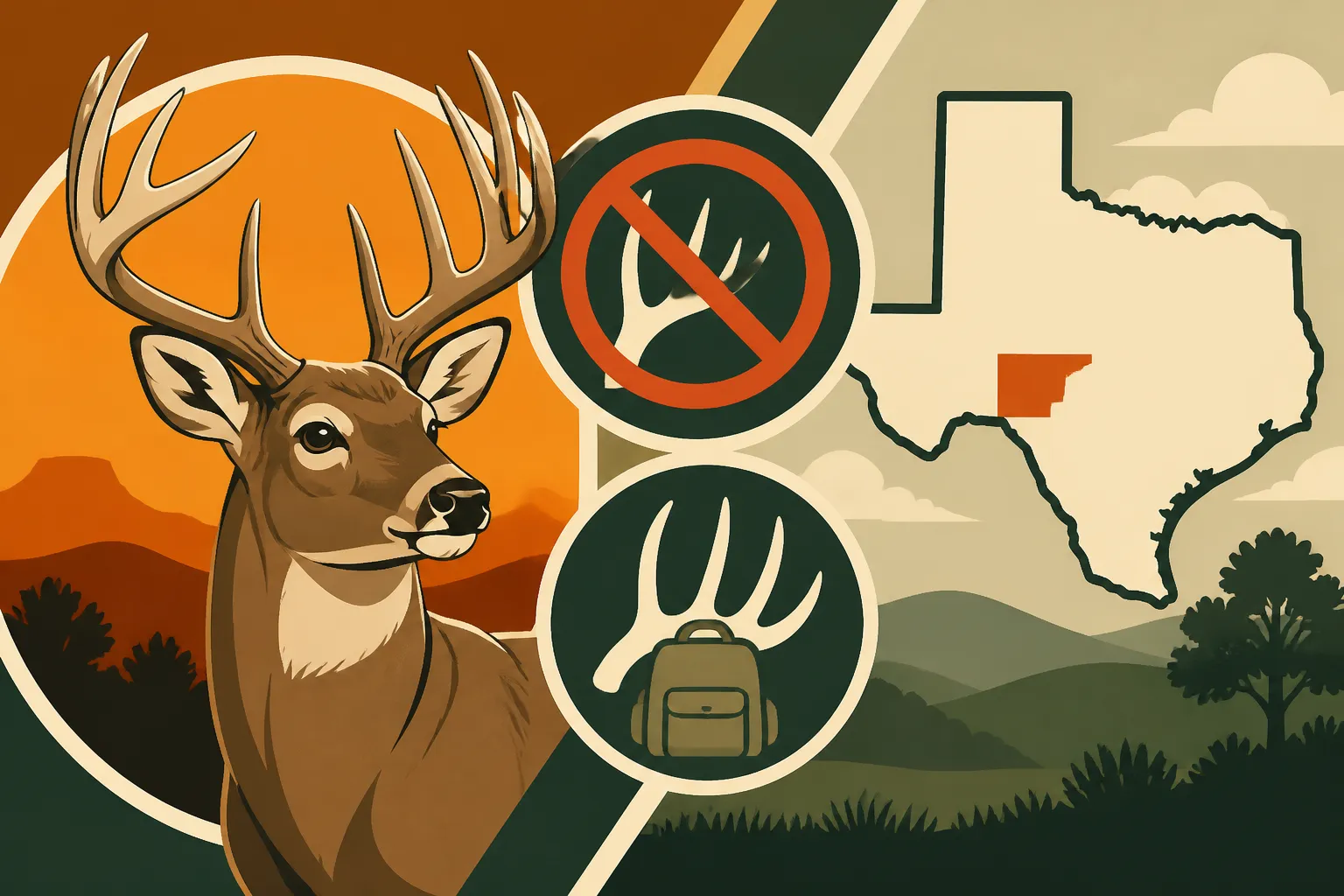
Now, let's get into the nitty-gritty of Sutton County’s antler restrictions, which can be a point of confusion for many. Sutton County falls under the general statewide antler restriction framework, which, as often stated, is designed to protect younger bucks while allowing for the harvest of older, larger-racked animals or specific management bucks. This isn't just about growing big antlers; it's about shifting the harvest pressure from younger, developing bucks to older, more mature ones, which ultimately contributes to a healthier age structure within the deer herd.
A legal buck in Sutton County must meet one of two criteria:
- Have an inside spread of 13 inches or greater. This is measured at the widest point between the main beams.
- Have at least one unbranched antler. This means a spike on at least one side.
This is where the "exception" comes into play, which is often misinterpreted. You are allowed to take one buck during the season that has an inside spread of less than 13 inches AND has two branched antlers. If you take such a buck, it must be your first buck of the season, and it counts towards your overall buck limit. You cannot take a second buck that falls into this specific category. This rule is often referred to as a "management buck" provision, allowing hunters to remove bucks that may not meet the spread criteria but are still mature or undesirable for herd genetics, thereby helping to improve the herd's overall quality.
Deciphering the 13-Inch Rule and Unbranched Antler Criteria
The 13-inch inside spread rule is straightforward in principle but can be tricky in practice. When you're out in the field, judging an animal's spread can be difficult, especially under low light conditions, at a distance, or when a buck is moving. This is where experience, good optics, and patience become absolutely essential. Many seasoned hunters use ear-tip to ear-tip measurements as a general guide, as a mature buck’s ears are typically about 13-15 inches wide when alert. However, this is just an approximation; the legal definition refers strictly to the inside spread of the main beams.
The "unbranched antler" criterion refers to a spike, meaning a main beam with no points or forks. This allows for the harvest of young spike bucks, which in some management philosophies are seen as genetically inferior. However, it's important to remember that a spike buck might simply be a young deer with undeveloped antlers, so responsible management often involves assessing the buck's age and overall body condition, not just its antler configuration. The rule permits taking a spike even if its spread is less than 13 inches, and it doesn't count against your "exception" buck. This distinction is crucial for legal compliance. For more in-depth knowledge on how to accurately judge a buck in the field, check out our guide on How to Field Judge a 13-Inch Buck.
Common Misconceptions and Field Challenges
One of the biggest misconceptions about Sutton County's antler restrictions, and indeed the statewide rule, is that you must shoot a 13-inch spread buck. That's not entirely accurate. You can shoot a spike, regardless of spread, or you can shoot a buck with an inside spread of 13 inches or more. The "exception" buck (less than 13 inches spread AND two branched antlers) is the one that causes the most confusion. Many hunters believe they can shoot any small-racked buck as their "first," but it specifically must have two branched antlers to qualify for that exception. If it's a tiny 8-point with a 10-inch spread, that's fine for your first buck. If it's a spike, that's also fine and doesn't use up your exception. If you accidentally shoot a buck that has a spread under 13 inches and two branched antlers, and it's your second buck, you're in violation.
The challenge of field judging cannot be overstated. Bucks rarely stand perfectly broadside, giving you a clear view of their inside spread. They might be quartering away, have their head down feeding, or be partially obscured by brush. This is why having quality binoculars or a good rifle scope is essential. Take your time. Use your optics. If you're unsure, it's always better to let a deer walk than risk an illegal harvest. This requires discipline, especially when adrenaline is pumping. Practice judging antlers with trail camera photos or mounted deer before the season begins to hone your skills.
MLDP Properties and Antler Restrictions
Many properties in Sutton County participate in the Managed Lands Deer Program (MLDP), a TPWD program that allows landowners to manage their deer herds more intensively. For hunters on MLDP properties, the antler restrictions often differ significantly. Properties enrolled in MLDP Culling or Conservation options are typically issued specific MLDP tags that allow hunters to harvest deer based on the property's management plan, rather than the general county regulations. This means that on an MLDP property, you might be able to shoot a buck that wouldn't be legal under the general Sutton County rules, as long as it aligns with the property's MLDP permits.
It is absolutely crucial for hunters on MLDP properties to understand their specific tags and what kind of deer they are permitted to harvest. The landowner or lease manager should provide clear instructions. Always confirm if the property you are hunting on is under MLDP and what specific tags you should be using. This program offers flexibility for landowners to achieve specific management goals, but it places a greater responsibility on the hunter to know and follow those particular rules. For more details on this program, read our guide on MLDP Tags in Texas: How They Work.
Sutton County Deer Bag Limits Explained
Beyond antler restrictions, understanding the bag limits for deer in Sutton County is equally important. These limits dictate how many deer, and specifically how many bucks and does, you can legally harvest during the season. These numbers are carefully determined by TPWD to maintain a healthy population balance and ensure sustainable hunting opportunities.
For Sutton County, the general bag limit for white-tailed deer is:
- Four (4) deer total per person per season.
- No more than two (2) antlered bucks.
- The remaining two (2) deer must be antlerless (does).
This means you could harvest two bucks and two does, or one buck and three does, or even zero bucks and four does (if allowed by landowner tags or "doe days"). What you cannot do is harvest three bucks.
Buck Bag Limits
As mentioned, you are limited to two antlered bucks per season in Sutton County. Remember, each of these bucks must adhere to the antler restrictions discussed above, unless you are hunting on a property specifically operating under an MLDP permit. The first buck you harvest may be the "exception" buck (inside spread less than 13 inches AND two branched antlers). Your second buck must meet the general legal criteria (13-inch spread OR at least one unbranched antler). You cannot take two "exception" bucks. This structured approach ensures that a certain number of mature, genetically strong bucks are preserved in the breeding population, while still allowing hunters to take a reasonable number of animals.
When you harvest a buck, you must immediately fill out the appropriate section of your hunting license tag and attach it to the deer. This is a critical step in the harvest reporting process, which helps TPWD monitor deer populations across the state. Failure to properly tag your harvest can result in fines. Make sure you understand the rules for Texas Hunting Tags & Harvest Reporting (My Texas Hunt Harvest).
Antlerless Deer (Doe) Bag Limits and Seasons
The bag limit for antlerless deer in Sutton County contributes to the overall four-deer limit. You can harvest up to two antlerless deer under general county regulations, provided they are taken during the appropriate seasons and under the correct authority.
Antlerless deer can typically be harvested during:
- Archery Season: Usually the first few weeks of the deer season, allowing for either-sex harvest.
- General Season: During specific "doe days" or with Antlerless Deer Permits (ADPs) issued by TPWD to landowners.
- Special Late Season: An additional period after the general season, often allowing for antlerless and spike buck harvest.
The ability to harvest antlerless deer on a given property often depends on whether the landowner has Antlerless Deer Permits (ADPs) or participates in MLDP. Without these specific permits or during designated "doe days," taking a doe can be illegal. Always confirm with the landowner or lease manager what permits are in place and when antlerless harvest is allowed. This is vital for proper herd management, as controlling doe populations is crucial for preventing overbrowsing and maintaining healthy deer.
Here's a quick overview of Sutton County's general bag limits:
| Category | Limit Per Season | Notes |
|---|---|---|
| Total Deer | 4 | Applies to all white-tailed deer (bucks and does). |
| Antlered Bucks | No more than 2 | Each buck must meet antler restrictions (13-inch spread OR one unbranched antler). One exception buck (less than 13-inch spread AND two branched antlers) allowed as first buck. |
| Antlerless Deer | Up to 2 | Counts towards total deer limit. Harvest typically requires Antlerless Deer Permits (ADPs) from landowner or must occur during designated "doe days." Consult landowner/lease manager for specific property rules. |
| MLDP Properties | Varies | Properties enrolled in Managed Lands Deer Program (MLDP) follow specific tag allocations. Hunters must use MLDP tags and adhere to property's management plan, which may supersede general county limits. |
Always consult the current TPWD Outdoor Annual for the most up-to-date and specific regulations, as rules can change annually.
Youth Hunters and Special Provisions
Texas often has special provisions for youth hunters, recognizing the importance of introducing the next generation to hunting. In many counties, including Sutton, youth hunters (typically under 17) may be exempt from antler restrictions during youth-only seasons or even during a portion of the general season. This allows them to focus on the experience of hunting and successfully harvesting a deer, regardless of antler size.
These youth-only seasons provide a fantastic opportunity for young hunters to learn the ropes without the added pressure of complex antler judging. However, youth hunters must still adhere to the general bag limits. Always check the specific dates and rules for Texas Youth Hunting Weekend Dates in the Outdoor Annual. It's a great way to foster a love for the outdoors and conservation in younger generations, making it a truly family-friendly pursuit.
Practical Tips for Hunting Within Sutton County Regulations
Navigating Sutton County's deer hunting regulations might seem daunting at first, but with the right preparation and mindset, it becomes second nature. It's not just about avoiding fines; it's about ethical hunting and contributing positively to deer management efforts.
Pre-Season Preparation and Scouting
The work for a successful, compliant hunt begins long before you even draw your bow or shoulder your rifle. Thorough pre-season scouting is invaluable. Use trail cameras to pattern deer movement, identify potential legal bucks, and get a sense of the herd's overall health on your property. This practice helps you become familiar with the antler characteristics of the bucks in your area, making in-the-field judging much easier. Trail cameras like the popular Tactacam Reveal or Moultrie Edge can provide valuable intel on local deer.
Beyond deer, scouting also involves understanding the terrain, identifying travel corridors, bedding areas, and food sources. Knowing your hunting area intimately will help you anticipate deer movements and set up effectively. Make sure your maps are up to date and mark down property lines. This is especially crucial when hunting near public land boundaries, or even adjacent private properties. Consider using a hunting app like onX Hunt or HuntStand to precisely define boundaries and mark deer activity.
Ethical Shot Placement and Patience
Once you're in the blind or stand, patience is your greatest ally. Don't rush a shot, especially when dealing with antler restrictions. Wait for a clear, ethical shot opportunity, and if you're unsure about a buck's legal status, let it walk. There will always be another deer. An unethical shot not only risks wounding an animal but can also lead to misjudging antler size under pressure.
Always aim for a clean kill, which typically means a shot to the vital organs (heart/lungs). Practice regularly at the range to ensure your accuracy is top-notch. Knowing the Best Shot Placement for Whitetail Deer is fundamental. A clean kill minimizes suffering and ensures you can recover your animal quickly. Remember, the goal is not just to harvest a deer, but to do so humanely and respectfully.
Field Judging in Real-Time
Field judging a buck's antlers can be one of the most challenging aspects of hunting in an antler-restricted county. As previously discussed, using a mature buck’s ear-tip width (typically 13-15 inches) as a reference point for the 13-inch inside spread can be helpful, but it's not foolproof. Practice with photos or even taxidermy mounts before the season. When a buck appears, take a deep breath. Use your binoculars to assess the antlers carefully. Look for clear indications of either an unbranched antler or the spread width. If you’re truly uncertain, it's always best to pass. The thrill of a legal, ethical harvest far outweighs the momentary disappointment of letting a questionable buck walk.
Remember, your rifle scope is for aiming, not for initial antler judging. Always use quality binoculars first to identify and judge the animal before ever raising your firearm. This reduces the risk of making a snap decision under pressure. For more on essential gear, check out our guide on the Best Hunting Optics for Texas: Scopes, Binos & Rangefinders.
Importance of Reporting Your Harvest
Harvest reporting is not just a bureaucratic formality; it's a vital component of wildlife management. When you report your harvest through the My Texas Hunt Harvest app or online portal, you are contributing valuable data to TPWD. This information helps biologists track deer populations, monitor harvest trends, and make informed decisions about future regulations, including those for Sutton County.
Properly tagging your deer and then reporting it accurately is your responsibility as a hunter. Make sure you understand how to use the My Texas Hunt Harvest system and comply with all reporting requirements, including deadlines. This collective effort ensures that the robust deer populations we enjoy in Texas, and particularly in counties like Sutton, continue to thrive. Remember, every piece of data helps paint a clearer picture of the health and dynamics of the deer herd, ultimately benefiting all hunters in the long run.
Disclaimer
Please be aware that hunting regulations, including antler restrictions and bag limits, can change annually. While we strive to provide the most accurate and up-to-date information, it is ultimately the hunter's responsibility to consult the current Texas Parks and Wildlife Department (TPWD) Outdoor Annual and any other relevant official publications before heading into the field. This guide is for informational purposes only and should not be considered a substitute for official TPWD regulations.