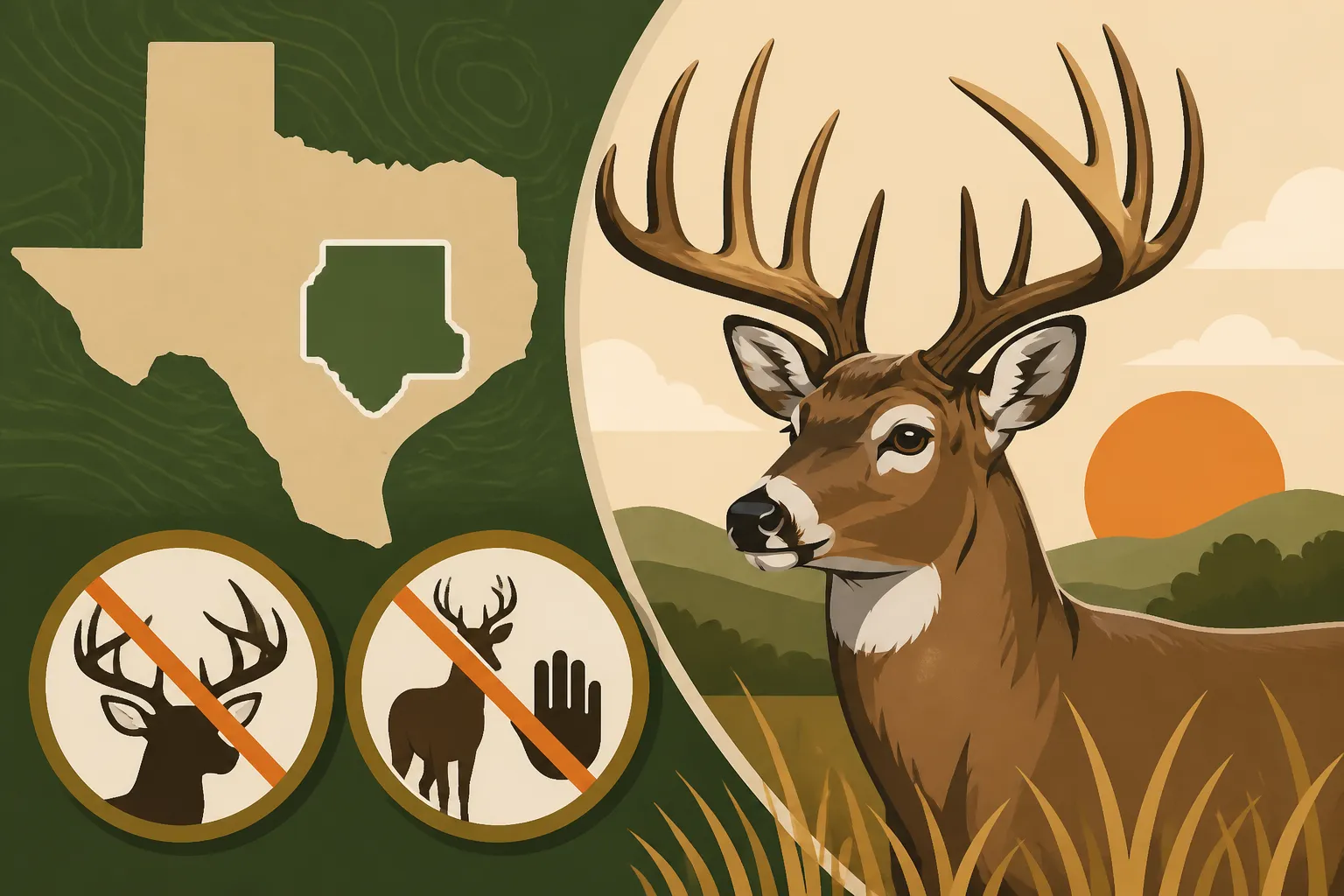
Edwards County Antler Restriction & Bag Limit
One of the biggest headaches for Texas deer hunters is keeping up with all the different rules and regulations, especially when it comes to antler restrictions. It seems like every county has its own twist on things, and it can get downright confusing trying to figure out what’s a legal buck before you even step foot in the woods. If you’re planning a hunt in Edwards County, you’re in luck, because this guide is going to break down everything you need to know about the antler restrictions and bag limits specific to this popular Hill Country hunting destination.
Understanding Texas Antler Restrictions in General
Before we dive into the nitty-gritty of Edwards County, it's really helpful to understand the philosophy behind antler restrictions across Texas. It's not just about making things complicated; there's a real, science-backed reason these rules are in place, and knowing that helps us appreciate why they matter so much.
Why Antler Restrictions Exist
Antler restrictions are a cornerstone of modern deer management in Texas, specifically designed to improve the age structure and antler quality of the buck population. For years, hunters often focused on harvesting the largest-antlered bucks, which, while understandable from a trophy perspective, inadvertently led to a younger buck population. Think about it: if all the big, mature bucks are taken early, the younger bucks don't get a chance to grow into their full potential. They're genetically capable, but they just need time and good nutrition.
The Texas Parks and Wildlife Department (TPWD) introduced antler restrictions to essentially "protect" these younger, but still promising, bucks. By requiring hunters to pass on bucks with smaller antlers, they allow a greater number of 1.5 and 2.5-year-old bucks to survive another year or two. This means those bucks get more time to mature, both physically and in terms of antler development. The result? A healthier deer herd with a more natural age distribution among bucks, and ultimately, more opportunities for hunters to encounter truly mature, larger-racked deer. It's a long-term investment in the quality of the herd. This management strategy is covered in more detail in our comprehensive guide on Texas Antler Restrictions: 13-Inch Rule & Counties.
The Importance of County-Specific Rules
While there’s a general statewide framework for deer hunting, Texas is a massive state with incredibly diverse habitats and deer populations. What works for the dense brush country of South Texas might not be appropriate for the rugged terrain of the Trans-Pecos or the oak-filled woodlands of the Hill Country. That's why not all counties follow the exact same antler restriction rules. Many counties, like Edwards, have specific regulations tailored to their unique ecological conditions, herd demographics, and local hunting traditions.
These county-specific rules are developed based on extensive research, data collected from harvest reports, and local wildlife biologist recommendations. They account for factors like habitat quality, deer density, and the genetic potential of the local deer. It’s absolutely critical for hunters to consult the official Texas Parks and Wildlife Department Outdoor Annual or their website every single year, as these rules can change, and they vary significantly from one county line to the next. Ignorance of the law is never an excuse, and a simple mistake can lead to serious consequences.
Edwards County Antler Restrictions: The Specifics
Edwards County is a prime example of a region with its own distinct set of antler restrictions and bag limits. Located in the heart of the Hill Country, it's known for its rugged terrain, live oaks, and a healthy deer population. Hunters here cherish the opportunity to pursue mature whitetails, and the specific regulations are designed to enhance that experience and maintain the quality of the herd.
The "Legal Buck" Definition in Edwards County
In Edwards County, the antler restrictions are a bit different from the standard statewide 13-inch rule. It's crucial to understand these nuances to avoid accidentally harvesting an illegal buck. For white-tailed deer in Edwards County, a legal buck must meet one of the following criteria:
- Have an inside spread of 13 inches or greater. This is often the most straightforward way to identify a legal buck for many hunters. You're looking for the distance between the main beams at their widest point.
- Have an unbranched antler. This rule allows for the harvest of older, mature bucks that might have a spike on one side but multiple points on the other, or bucks that, due to injury or genetics, simply don't grow complex antlers on one side.
- Have at least 1 legal point on one antler and 3 or more points on the other antler. This is where it gets a little more complex. A "point" is generally defined as a projection at least one inch long from a main beam or tine. This provision allows for the harvest of bucks that might not have a wide spread but are clearly mature and have multiple points.
It’s important to remember that these rules are not cumulative. A buck only needs to meet one of these conditions to be legal. For example, a buck with a 12-inch spread but 4 points on one side and 1 unbranched spike on the other would be legal because it meets the third criteria.
This specific set of rules is an adaptation from the broader Texas Antler Restrictions: The 13-Inch Rule Explained and is tailored to the deer genetics and habitat found in areas like the Edwards Plateau Hunting: Highest Deer Density. It’s designed to allow for the harvest of some mature but non-typical bucks, while still protecting the younger deer that need more time to grow into the wider spreads often desired by hunters.
Bag Limits for White-tailed Deer in Edwards County
Beyond antler restrictions, every county also has specific bag limits, dictating how many deer a hunter can legally harvest during the season. For Edwards County, the bag limit for white-tailed deer is generally four deer total, but with a very important breakdown:
- No more than two bucks: This means you can harvest two legal bucks during the season, provided they both meet the antler restrictions described above.
- No more than two antlerless deer (does): These can be taken either under a valid antlerless deer permit issued by the landowner (often part of a Managed Lands Deer Program or MLDP) or during specific "doe days" if applicable for the county.
It’s crucial to understand that these limits are for the entire deer season, which typically runs from early November through early January for general season, with an earlier Texas Archery Season Dates and a later Texas Muzzleloader Season & Counties. Always check the most current Texas Deer Season 2026-2027: Dates by Zone for precise opening and closing dates.
For antlerless deer, many properties in Edwards County operate under the Managed Lands Deer Program (MLDP), which allows landowners to have specific harvest recommendations and extended seasons. If you're hunting on an MLDP property, the rules for antlerless deer will be dictated by the tags issued through that program, potentially allowing for a more flexible harvest. If not on an MLDP property, you'll need to strictly adhere to the general open season dates for antlerless deer, often referred to as "doe days," and ensure you have the appropriate Texas Antlerless Deer Permits & Doe Days if required.
Identifying a Legal Buck: Practical Tips for Hunters
Now, knowing the rules is one thing, but actually applying them in the field when that heart-pounding moment arrives can be a whole other challenge. Field judging a buck, especially quickly and accurately, takes practice, a good set of optics, and a calm demeanor.
- Use Binoculars or a Spotting Scope: This is non-negotiable. Trying to judge antler characteristics with the naked eye, especially in low light or at a distance, is a recipe for error. Invest in quality binoculars, like those mentioned in our guide on Best Binoculars for South Texas Brush, and use them to carefully assess the buck's antlers. Don’t just look at the overall size; specifically look for the inside spread, the number of points, and any unbranched antlers.
- Focus on the Inside Spread First: The 13-inch inside spread is a common hurdle for many hunters. A good rule of thumb often used in the field is to compare the spread to the buck's ear width. On an adult whitetail, the distance from ear-tip to ear-tip, when the ears are alert and pointing forward, is typically around 14-15 inches. So, if the inside spread of the antlers looks narrower than the ears, it's likely not a 13-inch buck. If it looks wider, you're probably good to go. If it's close, that's when you move to the other criteria.
- Count Points Carefully: Remember, a point must be at least one inch long to count. In the heat of the moment, a small bump or burr might look like a point. Take your time.
- Look for Unbranched Antlers: This is fairly straightforward. If one main beam has no tines, it's unbranched. This can be an easy way to qualify a buck that might otherwise be illegal by spread or point count.
- Practice, Practice, Practice: The best way to get good at field judging is to spend time observing deer. Before the season, or even during, use your optics to watch bucks and try to make a judgment call. You can even use trail cameras to get a clearer picture of deer on your property, helping you understand the typical antler growth in the area. Our article on How to Field Judge a 13-Inch Buck offers more detailed strategies for this crucial skill.
- When in Doubt, Pass: This is the golden rule. If you're not absolutely 100% sure a buck is legal under Edwards County's specific regulations, let it walk. There will always be another deer. It’s far better to pass on a marginal buck than to face the penalties for an illegal harvest.
Navigating Edwards County Hunting Regulations
Understanding the regulations is one thing, but knowing how to access them, what programs might affect them, and what happens if you make a mistake, is equally important. Edwards County, like all Texas counties, is under the umbrella of TPWD, and they provide all the resources you need.
The Role of the Texas Outdoor Annual
The Texas Outdoor Annual is your bible for hunting and fishing regulations in the Lone Star State. It's published annually by the Texas Parks and Wildlife Department (TPWD) and is available both in print at license retailers and, more conveniently, online and through a dedicated mobile app. This publication contains all the official, up-to-date rules, season dates, bag limits, and specific county regulations you could ever need.
For Edwards County specifically, you'll want to navigate to the "County Listing" section, or use the search function on the digital version. There, you'll find a detailed entry for Edwards County, outlining the white-tailed deer season dates, the exact antler restrictions, and the bag limits. Never rely on outdated information or hearsay from a buddy; always consult the official source. The Outdoor Annual is designed to be user-friendly, with maps, diagrams, and clear explanations that make understanding complex rules much simpler. It is an indispensable tool for any hunter in Texas.
Consequences of Violating Antler Restrictions
Let's be frank: making a mistake in the field and harvesting an illegal buck can have serious repercussions. It's not just a slap on the wrist. Violating antler restrictions or exceeding bag limits are considered Class A or Class C misdemeanors, depending on the severity and whether it's a first offense.
Typical penalties can include:
- Significant Fines: These can range from hundreds to thousands of dollars.
- Civil Restitution: On top of criminal fines, you'll often have to pay civil restitution to the state for the illegally taken animal, which can be substantial, especially for game animals like deer.
- Loss of Hunting Privileges: Your hunting license can be suspended for a period, potentially for several years, meaning you won't be able to hunt anywhere in Texas during that time.
- Confiscation of Equipment: Your firearm, vehicle, or other equipment used in the commission of the violation could be seized.
Beyond the legal ramifications, there's the ethical consideration. Respecting game laws is a fundamental part of being a responsible hunter. These regulations are in place for the long-term health of the deer population and the integrity of the hunting tradition. Making an effort to understand and adhere to them is a commitment to conservation. If you do make a mistake, it’s always best to contact a game warden immediately to report it. Honesty can often influence the outcome.
MLDP and Special Permits in Edwards County
Edwards County is a popular area for land management, and many landowners participate in the Managed Lands Deer Program (MLDP). This program is a cooperative effort between TPWD and landowners to actively manage their deer populations to meet specific habitat and harvest goals. Properties enrolled in MLDP receive special permits and often have customized harvest recommendations that can differ significantly from the general county regulations.
If you are hunting on an MLDP property in Edwards County:
- Extended Seasons: MLDP properties often have extended deer seasons, allowing for hunting outside the general season dates, both earlier and later.
- Flexible Bag Limits and Antler Restrictions: The property will be issued specific MLDP tags. These tags essentially override the general county antler restrictions and bag limits. For example, a property might receive tags that allow for the harvest of more bucks or does than the county general limits, and the definition of a legal buck might be different, based on the specific management plan for that property. Our guide on MLDP Tags in Texas: How They Work provides an in-depth look at this program.
- Antlerless Permits: Even outside MLDP, landowners can often apply for antlerless deer permits to help manage doe populations. These permits authorize the harvest of does on specific properties during the general season, even if "doe days" aren't otherwise open.
It’s absolutely critical that if you’re hunting on an MLDP property, you confirm with the landowner or lease manager what the specific MLDP regulations are for that particular tract of land. Always ensure you have the correct tags in your possession and understand how they apply to the deer you intend to harvest.
Here's a quick summary of the key regulations for Edwards County:
| Category | Edwards County Regulation | Statewide General Rule (for comparison) |
|---|---|---|
| Legal Buck Antler Criteria | Must have at least one of the following: 1. An inside antler spread of 13 inches or greater, OR 2. An unbranched antler, OR 3. At least 1 legal point on one antler and 3 or more points on the other antler. |
Only one buck may have an inside spread of 13 inches or greater. All other bucks must have an unbranched antler or at least 1 legal point. |
| Total Deer Bag Limit | 4 white-tailed deer total | 5 white-tailed deer total |
| Buck Bag Limit | No more than 2 bucks | No more than 2 bucks |
| Antlerless Bag Limit | No more than 2 antlerless deer (does) – requires a valid antlerless deer permit or must be taken during county-specific "doe days" (check current Outdoor Annual for specific dates). | No more than 3 antlerless deer. |
| Season Dates | Consult the current Texas Deer Season 2026-2027: Dates by Zone for specific general, archery, and muzzleloader seasons. MLDP properties may have extended seasons. | Varies by zone and weapon type. |
| Harvest Reporting | All harvested white-tailed deer must be immediately tagged with the appropriate license tag and reported to TPWD within 24 hours via the My Texas Hunt Harvest app, online, or by phone. Our guide on Texas Hunting Tags & Harvest Reporting (My Texas Hunt Harvest) explains this process in detail. | Required for all deer harvested. |
Hunting in Edwards County offers some fantastic opportunities, whether you're interested in White-Tailed Deer Hunting in Texas: Complete Guide or simply enjoying the beautiful Hill Country landscape. By taking the time to thoroughly understand and abide by these specific antler restrictions and bag limits, you're ensuring a responsible and successful hunt while contributing to the sustainable management of Texas's valuable wildlife resources. Always remember that safety, ethics, and adherence to the law are the cornerstones of a great hunting experience.
Disclaimer
The information provided in this guide is for general informational purposes only and is subject to change. Hunting regulations are dynamic and can be updated by the Texas Parks and Wildlife Department. It is the hunter's sole responsibility to consult the most current official Texas Parks and Wildlife Outdoor Annual or their website for the precise and up-to-date regulations before engaging in any hunting activities. Failure to do so may result in legal penalties.