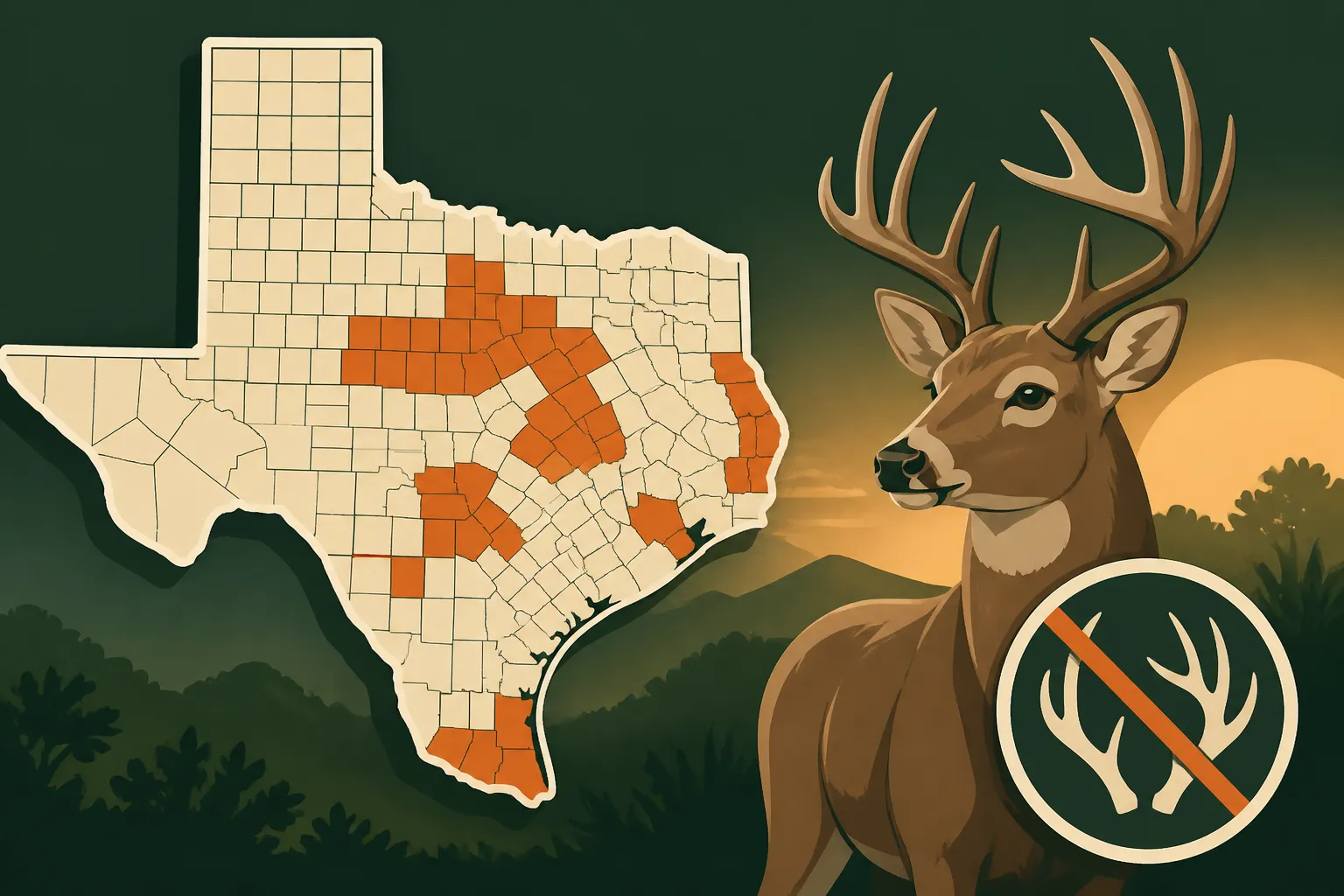
What Counties Have Antler Restrictions in Texas?
It’s a tale as old as time for Texas deer hunters: you’re out in the stand, a nice buck steps out, and then the agonizing internal debate begins. Is he legal? Is that main beam truly past his ear? The stress of ensuring your hard-earned harvest adheres to the complex antler restrictions across our vast state can definitely take some of the joy out of the moment. This guide will walk you through which counties currently enforce specific antler restrictions, what those rules mean, and how to navigate them so you can hunt confidently and ethically.
Understanding Texas Antler Restrictions: More Than Just a Number
For many years, the primary focus in Texas deer hunting was often on antler size, leading to the harvest of younger bucks with promising genetics. This approach, while satisfying for some, didn't always contribute to a healthy, balanced deer population with a strong age structure. That's where antler restrictions come into play – a set of regulations designed to shift the harvest pressure from younger, smaller-racked bucks to older, more mature animals, or to deer that exhibit certain antler characteristics. It's a game-changer that has transformed deer management across much of the state.
The "Why" Behind the Rules: Promoting Quality Deer
The core idea behind these rules is simple: let young bucks walk. By protecting yearling bucks and some two-year-olds from harvest, these regulations allow more bucks to survive to older age classes. When bucks get older, they typically develop larger antlers, leading to a higher quality deer herd overall. This also helps improve the buck-to-doe ratio and allows more opportunities for bucks to breed, which is crucial for herd health. It's not just about bigger racks, though that's certainly a popular outcome; it’s about fostering a more natural age structure within the deer population. This management strategy aims for sustainable hunting and more rewarding experiences for everyone in the long run.
The Infamous 13-Inch Rule for Whitetails
The most common antler restriction you'll encounter in Texas is what we affectionately call the "13-inch rule." For a buck to be legal under this rule, at least one of its main beams must be 13 inches or longer. On top of that, it must have an unbranched antler (a spike) or at least one main beam with an inside spread of 13 inches or greater, or at least one main beam with three or more points. This regulation can be confusing, so let's clarify the intent. The key here is typically the 13-inch main beam length or the 13-inch inside spread, coupled with the unbranched antler or three points. However, the exact wording is crucial: "at least one unbranched antler OR an inside spread of 13 inches or greater." In practice, most hunters focus on the 13-inch spread or main beam length.
This rule specifically targets the protection of younger, smaller-racked bucks. A buck that meets the 13-inch requirement is generally at least 3.5 years old, sometimes older, depending on nutrition and genetics. It forces hunters to be more selective, to study the deer, and to make quick, informed decisions in the field. It’s definitely a learning curve for many, and it often leads to those heart-pounding moments where you’re trying to quickly judge a buck's antlers. If you're new to this, learning How to Field Judge a 13-Inch Buck is an invaluable skill.
Counties Under the 13-Inch Antler Restriction Rule
The 13-inch antler restriction rule is widespread, encompassing a large portion of Central, South, and East Texas. It's important to note that these regulations apply to white-tailed deer. Always double-check the current Outdoor Annual for specific county regulations, as they can occasionally be updated. This isn't an exhaustive list for every single acre of Texas, but it covers the vast majority of counties under this specific rule for whitetail.
South Texas Brush Country Counties
The legendary brush country of South Texas, known for producing massive whitetail bucks, is largely governed by the 13-inch rule. This area thrives on quality deer management, and these regulations are a big part of that success. Counties like Webb, La Salle, Dimmit, Maverick, and McMullen are prime examples where this rule is firmly in place. These counties are a hotspot for South Texas Trophy Whitetail: Brush Country Bucks, and the antler restrictions play a significant role in maintaining that reputation.
- Webb County: A prime example, often cited for its trophy whitetails.
- La Salle County: Another South Texas giant, where the rule helps mature bucks.
- Dimmit County: Known for its dense brush and strong deer numbers under these guidelines.
- Maverick County: Borders Mexico, with similar brush country dynamics.
- McMullen County: Offers excellent hunting opportunities, with regulations designed to enhance herd quality.
- Jim Hogg County, Brooks County, Duval County, Frio County, Zavala County: These, among others, round out the deep South Texas region where the 13-inch rule is standard practice, aiming to consistently produce bigger, older bucks for hunters.
Hill Country and Central Texas Counties
Moving north into the rugged, beautiful landscapes of the Texas Hill Country, the 13-inch rule continues to be a dominant factor in deer management. The Hill Country, with its rocky terrain and diverse flora, holds the highest deer density in Texas. Managing these herds is critical, and antler restrictions help ensure healthy populations. Hunters looking for Hill Country Deer Hunting in Texas will find these rules in effect in many counties.
- Kerr County: A central hub of Hill Country hunting, where hunters meticulously measure antlers.
- Llano County: Known for its granite outcrops and impressive deer.
- Mason County: Another popular Hill Country destination under the rule.
- Gillespie County: Famous for its peaches and its deer, all managed under the 13-inch guideline.
- Edwards County, Kimble County, Menard County, Real County, San Saba County, Sutton County: These counties and many others stretching across the Edwards Plateau and surrounding areas implement the 13-inch antler restriction to promote a healthier age class structure.
Other Regions with 13-Inch Restrictions
Beyond the traditional South Texas and Hill Country strongholds, the 13-inch rule also applies to many counties throughout the state, particularly in East and parts of North Texas. It's less common in the Panhandle and Trans-Pecos regions, which have different deer species and management challenges.
For example, many counties in the Post Oak Savannah and Cross Timbers ecoregions also adhere to these rules, ensuring that management practices are consistent across large swathes of whitetail habitat. To get a precise understanding for your specific hunting area, always consult the current "Legal White-tailed Deer Harvest" section in the Texas Parks and Wildlife Department's Outdoor Annual, which breaks down rules by county for Texas Deer Season 2026-2027: Dates by Zone.
Here's a simplified table to help visualize common antler restrictions for white-tailed deer by region (remembering that this is a general overview, and specific county rules must be verified annually):
| Region | Primary Antler Restriction | Typical Counties Included | Notes |
|---|---|---|---|
| South Texas Brush Country | 13-inch main beam or inside spread rule | Webb, La Salle, Dimmit, Maverick, McMullen, etc. | Focus on trophy potential and age structure. |
| Texas Hill Country | 13-inch main beam or inside spread rule | Kerr, Llano, Mason, Gillespie, Edwards, etc. | High deer density, crucial for herd health. |
| East/Central Texas | 13-inch main beam or inside spread rule | Many counties, consult TPWD Outdoor Annual | Extends quality management to various habitats. |
| North Texas | Varies, many 13-inch counties | Consult TPWD Outdoor Annual for specifics | Mix of rules, often includes 13-inch. |
| Panhandle/Trans-Pecos | Generally no 13-inch rule for whitetail | Briscoe, Childress, Cottle, Hall, Motley, etc. | Different whitetail subspecies, lower density. |
This table provides a snapshot, but the best way to be sure about your specific hunting spot is to check the TPWD website or the printed Outdoor Annual. Hunting apps like GoHunt can also be fantastic resources, often providing quick access to regulations for specific properties or areas, helping you understand Texas Antler Restrictions: The 13-Inch Rule Explained right in the field.
Special Antler Regulations Beyond the 13-Inch Rule
While the 13-inch rule is prevalent, it's not the only antler restriction Texas hunters need to be aware of. The state also has unique regulations for mule deer and a special program that can alter antler restrictions on private lands.
Mule Deer Antler Restrictions in West Texas
When you head out to the vast, open spaces of the Trans-Pecos and Panhandle regions, you're primarily hunting mule deer, a magnificent species with different management needs than whitetails. Consequently, the antler restrictions for mule deer are different. For mule deer, the general rule is that a legal buck must have an outside spread of 20 inches or greater. This is often referred to as the Texas Mule Deer Antler Restrictions 20-Inch Rule.
This rule is designed to protect younger mule deer bucks, allowing them to reach a more mature age class, much like the whitetail rules. Mule deer often have wider antler spreads at a younger age than whitetails, so a 20-inch spread is generally indicative of an older, more mature buck. Counties like Briscoe, Childress, Cottle, Hall, Floyd, and Motley in the Panhandle, and others in the Trans-Pecos such as Jeff Davis and Presidio, will follow these specific mule deer regulations. Always ensure you're aware of which species you're targeting and the corresponding rules for that area.
The Managed Lands Deer Program MLDP Exceptions
Now, here's where things can get a little more complex, but also more flexible for landowners committed to intensive deer management. The Managed Lands Deer Program (MLDP) is a voluntary program offered by Texas Parks and Wildlife Department (TPWD) to private landowners. It provides land managers with site-specific recommendations and harvest authorization to help them achieve their deer management goals.
Under an MLDP permit, participating landowners can receive special tags that often supersede the general county antler restrictions. For example, a property enrolled in MLDP might be authorized to harvest bucks based on age criteria (e.g., any buck aged 4.5 years or older) rather than strictly adhering to the 13-inch rule. This allows for more nuanced management, enabling hunters to take bucks that might be "cull" bucks (genetically inferior, injured, or past their prime) even if they don't meet the general public antler restrictions. The types of tags issued are specific to the MLDP level (e.g., Harvest Option or Conservation Option). If you're hunting on a lease or private land, it's crucial to ask if the property is enrolled in MLDP and to understand how those specific tags and rules apply to your hunt. Knowing MLDP Tags in Texas: How They Work is essential for hunting on managed lands.
Hunting Smart in Antler-Restricted Counties
Navigating antler restrictions requires a combination of patience, skill, and sometimes, a little help from modern technology. It can be frustrating to pass on a buck that looks "borderline," but understanding how to field judge and utilizing available tools can make a significant difference.
Field Judging and Making the Call
This is where the rubber meets the road. In counties with the 13-inch rule, you’re often trying to determine if one main beam extends past the tip of the deer’s ear when the deer is looking directly at you. Most mature whitetails will have ears that measure around 6-7 inches from base to tip, meaning the distance from ear tip to ear tip is roughly 14-16 inches. So, if a main beam extends clearly past the tip of the ear, it's often a good indicator it meets the 13-inch minimum. Similarly, if the inside spread of the antlers looks wider than the deer's ears, it's a good candidate for meeting the 13-inch spread rule.
Practice makes perfect, and many seasoned hunters spend hours looking at photos and videos of bucks, guessing their measurements, and then confirming them. Trail camera photos can be an invaluable tool for this, allowing you to study specific bucks on your property long before the season begins. Understanding How to Pattern Bucks With Trail Cameras can give you a leg up, letting you familiarize yourself with the deer on your lease and make more confident decisions in the field. Remember, when in doubt, let him walk. A healthy herd is always the goal.
Leveraging Technology for Compliance and Strategy
In today's hunting world, technology isn't just about bigger binoculars or quieter bows; it's also about staying legal and maximizing your success within the rules. Hunting apps like GoHunt are incredibly useful for hunters operating in antler-restricted counties. These apps often overlay property lines, public land boundaries, and crucially, relevant hunting regulations directly onto a map interface. This can help you confirm which rules apply to your exact location, preventing any accidental infractions.
Beyond just regulatory compliance, these apps can help with strategic planning. You can use them to mark where you've seen bucks, noting their estimated antler size, and track their movements. This kind of data can be vital for developing a long-term strategy for your lease, especially if you're trying to selectively harvest certain bucks while allowing others to mature. Combining digital mapping with scouting tactics like understanding How to Scout for Deer Before Season in Texas can truly elevate your hunting game, making you a more effective and compliant hunter.
Disclaimer
Please remember that hunting regulations, including antler restrictions, can change. While this guide provides a comprehensive overview based on current information, it is absolutely essential to consult the most recent Texas Parks and Wildlife Department Outdoor Annual or their official website before heading out to hunt. Always verify the specific regulations for the county and property where you plan to hunt to ensure full compliance.