Where to Hunt Mule Deer in Texas
Hunting mule deer in Texas can feel like trying to find a needle in a haystack if you're used to the sprawling whitetail country. Unlike the plentiful whitetail found across most of the state, mule deer populations are far more concentrated and demand a different approach to hunting. This guide will help you understand precisely where to focus your efforts for a successful mule deer hunt in the Lone Star State, delving into the specific regions and access methods available.
The Primary Mule Deer Territory in Texas: West Texas
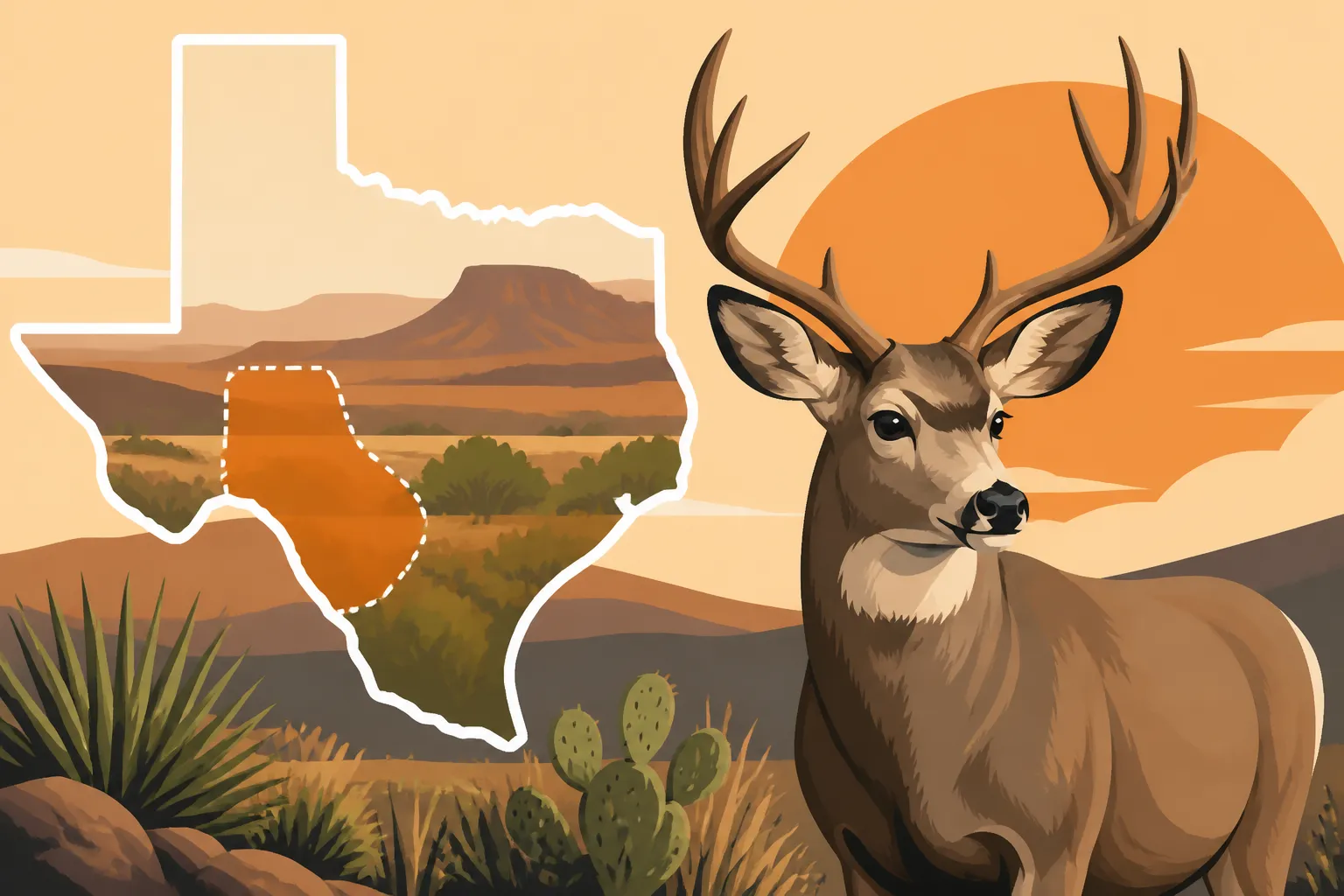
When most hunters talk about mule deer in Texas, their minds immediately go to the vast, rugged landscapes of West Texas. This region, characterized by its stunning mountains, sprawling desert, and hidden canyons, is where the vast majority of the state's mule deer population resides. It's a stark contrast to the thick brush country or pine forests, offering a unique hunting experience that often involves long-range glassing and physically demanding treks.
Trans-Pecos Region
The Trans-Pecos region is, without a doubt, the undisputed king of Texas mule deer hunting. This expansive area encompasses the state's westernmost counties, touching New Mexico to the north and Mexico to the south. We're talking about places like Brewster, Presidio, Jeff Davis, Pecos, Reeves, Culberson, and Hudspeth counties. The terrain here is incredibly diverse, ranging from the Chisos Mountains in Big Bend National Park to the Guadalupe Mountains, and the vast, arid plains in between.
Hunting here is an adventure in itself. You'll often be glassing vast expanses of rocky hillsides, deep arroyos, and desert flats, searching for the tell-tale white rump or high antlers of a mule deer buck. The sheer scale of the landscape can be intimidating, but it's also what makes it so rewarding. Mule deer here are masters of camouflage and can disappear into seemingly sparse cover in an instant. Hunters frequently spend days meticulously scanning ridges and draws, often covering miles on foot just to get within range. Finding a good spot requires extensive scouting, understanding the local water sources, and recognizing key bedding areas on the wind-swept slopes. For those looking to dive deep into this unique hunting experience, our guide on Mule Deer Hunting in Texas: Panhandle & Trans-Pecos offers even more granular detail on tactics and expectations for this region.
Panhandle Region
While the Trans-Pecos gets all the glory, don't completely overlook the Texas Panhandle. This region, though less known for its mule deer, does hold huntable populations, primarily in the Rolling Plains and Breaks ecosystems. Counties like Briscoe, Childress, Cottle, Motley, Floyd, Hall, and others that border the Caprock Canyon system can offer opportunities.
The topography here is quite different from the Trans-Pecos. Instead of jagged mountains, you'll find deep, erosion-carved canyons, breaks, and rolling mesquite and cedar-covered hillsides. Mule deer in the Panhandle often stick to these rougher areas, using the cover and elevation changes to their advantage. The populations aren't as dense as in the Trans-Pecos, and finding a suitable hunting spot can be a challenge. Often, it involves gaining access to private ranchland that has these canyon systems running through them. It’s not uncommon for hunters to use tools like GoHunt’s mapping features to identify these topographical features and potential access points, even before they set foot on the ground. Hunters typically spend their time glassing down into the breaks or walking the rimrock, trying to catch a glimpse of deer moving between bedding and feeding areas.
Public Land Opportunities for Mule Deer
For many hunters, the idea of hunting public land in Texas is both exciting and daunting. While the state boasts some incredible public hunting opportunities, finding mule deer on these lands often requires a special permit and a lot of luck. Texas has a limited amount of true public hunting land compared to many western states, and the prime mule deer areas are no exception.
Texas Parks and Wildlife Department WMAs
The most reliable way to hunt mule deer on public land in Texas is through the Texas Parks and Wildlife Department's (TPWD) Public Hunt Draw System. These "drawn hunts" offer coveted permits to hunt on various Wildlife Management Areas (WMAs) and other properties, some of which are specifically managed for mule deer.
The Black Gap WMA, located deep in the Trans-Pecos, is probably the most famous public land opportunity for mule deer in Texas. This vast, rugged WMA offers a true backcountry hunting experience. However, the catch is that spots are highly competitive. Hunters apply for these permits months in advance, and the odds of being drawn can be quite low. Persistence is key, as is applying consistently year after year. For more information on navigating this system, check out our guide on Texas Drawn Hunts & Public Hunt Draw 2027. Other WMAs in the Panhandle might occasionally offer mule deer draws, but they are generally less frequent and for smaller populations. If you're serious about drawing a mule deer tag, you'll want to review the annual public hunting guide carefully and strategically apply for the specific mule deer categories.
Limited National Grasslands and BLM Lands
Unlike many Western states with vast tracts of Bureau of Land Management (BLM) land or National Forests open to hunting, Texas has very limited options for these types of federal public lands, especially in areas with significant mule deer populations. There are National Grasslands in the Panhandle, such as the Rita Blanca National Grassland, which can offer some hunting, but mule deer populations there are typically sparse and highly localized.
Hunting these areas requires extensive scouting and knowledge of the specific regulations for each unit. Access can be fragmented, often interspersed with private land, making it tricky to navigate property lines. While it's technically public land, it's not the vast, easily accessible public land that many envision when thinking about mule deer hunting out West. Most hunters will find their public land mule deer success, if any, through the TPWD drawn hunt system rather than these federal lands.
Navigating Private Land Leases and Day Hunts
The reality for most successful mule deer hunters in Texas is that they are hunting on private land. Texas is over 95% privately owned, and this holds true for the prime mule deer country. Access to these lands typically comes in two forms: a long-term hunting lease or a guided day hunt. Both come with their own set of considerations, particularly financial ones.
Finding a Mule Deer Lease
Securing a long-term hunting lease for mule deer in West Texas or the Panhandle can be a significant undertaking, both in terms of effort and cost. These leases are often held by groups for decades, passed down through generations, and rarely become available. When they do, the demand is high, and prices can reflect the quality of the hunting. You're typically looking at larger acreages, sometimes tens of thousands of acres, to get enough ground to support a healthy mule deer herd.
Networking is paramount here. Talking to local landowners, other hunters, and searching online forums or lease broker sites are common approaches. You might also find properties advertised through specialized hunting real estate agents. A key advantage of having a lease is the ability to thoroughly scout the area year-round, set up game cameras, and truly learn the movement patterns of the deer. Resources like GoHunt can be invaluable even for lease holders, providing satellite imagery and topographical maps that can aid in scouting and understanding game movements across vast, rugged terrain. For a deeper dive into the world of Texas hunting leases, explore our comprehensive guide on Hunting Leases in Texas: Complete Guide (Cost & How to Find).
Day Hunts and Outfitters
For many, especially those who don't live in Texas or prefer a less hands-on approach, guided day hunts or all-inclusive outfitter packages are the most practical way to hunt mule deer. Outfitters specialize in managing private land for mule deer and provide everything from guides and lodging to transportation and game retrieval.
These hunts are generally expensive, with prices varying based on the ranch, the trophy potential, and the length of the hunt. A typical mule deer hunt with a reputable outfitter in the Trans-Pecos could range anywhere from $4,000 to well over $10,000, depending on the services included and the quality of the deer. However, they offer a high success rate and take much of the logistical burden off the hunter. When choosing an outfitter, it's crucial to research their reputation, ask for references, and understand exactly what's included in the price. Some outfitters also partner with mapping platforms like GoHunt to showcase their properties and success rates, giving potential clients a better overview.
Here’s a quick comparison of the two main mule deer regions in Texas:
| Feature | Trans-Pecos Region | Panhandle Region |
|---|---|---|
| Terrain | Rugged mountains, desert basins, deep arroyos | Rolling plains, deep canyons, breaks, mesquite/cedar brush |
| Mule Deer Population | Higher density, often larger trophy potential | Lower density, localized in canyon systems |
| Access Methods | Primarily private leases/outfitters, some drawn WMAs | Primarily private leases/outfitters, very limited public land |
| Hunting Style | Extensive glassing, spot-and-stalk, physically demanding | Glassing canyon rims, still-hunting breaks, spot-and-stalk |
| Average Cost (Private) | Generally higher for trophy quality | Can be slightly lower, but still significant |
Key Considerations for Texas Mule Deer Hunting
Regardless of where you choose to hunt, successful mule deer hunting in Texas demands preparation, patience, and the right mindset. This isn't your typical whitetail hunt from a box blind over a feeder; it's a true test of your hunting skills and physical endurance.
Understanding Mule Deer Behavior
Mule deer are creatures of habit but are also incredibly wary. They thrive in wide-open spaces, using their keen eyesight and hearing to detect danger from a distance. In the vastness of the Trans-Pecos, they often bed on elevated positions, allowing them to survey their surroundings. Spot-and-stalk is a primary tactic here, meaning you'll spend hours, if not days, glassing for deer before attempting a careful approach. Their behavior in the Panhandle's canyon country is similar, often utilizing the deep cuts and breaks for cover and travel. For techniques on approaching game in open country, check out our article on Spot-and-Stalk Hunting in Texas (Exotics & Mule Deer).
Remember, mule deer are very sensitive to pressure. If you bump them, they often won't stop until they've put significant distance between themselves and the perceived threat. Knowing how to read their body language and understand their escape routes is critical. They also have distinct seasonal movements, often seeking higher elevations during warmer months and moving to lower, more protected areas during colder weather or breeding season.
Essential Gear and Preparation
A successful mule deer hunt in Texas hinges significantly on your gear. High-quality optics are non-negotiable. This means a solid pair of binoculars (10x or 12x) and a spotting scope with a tripod are absolutely essential for covering the vast terrain. A good rangefinder is also crucial for accurately judging distances in open country, where landmarks can be deceiving. Consider reviewing our guide on Best Hunting Optics for Texas: Scopes, Binos & Rangefinders to help you make informed gear choices.
Physical fitness is another huge component. You'll be covering significant distances, often over uneven, rocky, or sandy terrain, and sometimes at higher elevations. Being in good shape will not only make the hunt more enjoyable but also increase your chances of success. Sturdy, broken-in hiking boots are a must to protect your feet. Hydration is also paramount, especially in the arid conditions of West Texas. Carry more water than you think you'll need, along with high-energy snacks. Finally, familiarity with your rifle and practicing long-range shooting is highly recommended, as shots over 300 yards are not uncommon in this type of country.
It's also worth noting that mule deer season dates can vary by county and zone, so always double-check the current Texas Mule Deer Season Dates 2026 to ensure you're hunting legally and within the correct timeframe. Using a reliable hunting app with satellite imagery and property boundaries, such as those offered by GoHunt, can be a game-changer for scouting before your hunt and navigating during it, especially on larger leases or public lands like the Black Gap WMA. It allows you to mark potential water sources, bedding areas, and travel corridors, even before you physically get there.
Disclaimer
Please remember that hunting regulations, seasons, and access rules can change frequently. Always consult the most current Texas Parks and Wildlife Department Outdoor Annual or website before planning any hunting trip. This article is intended for informational purposes only and does not constitute legal advice.