How to Hunt Blue Quail on a Texas Lease
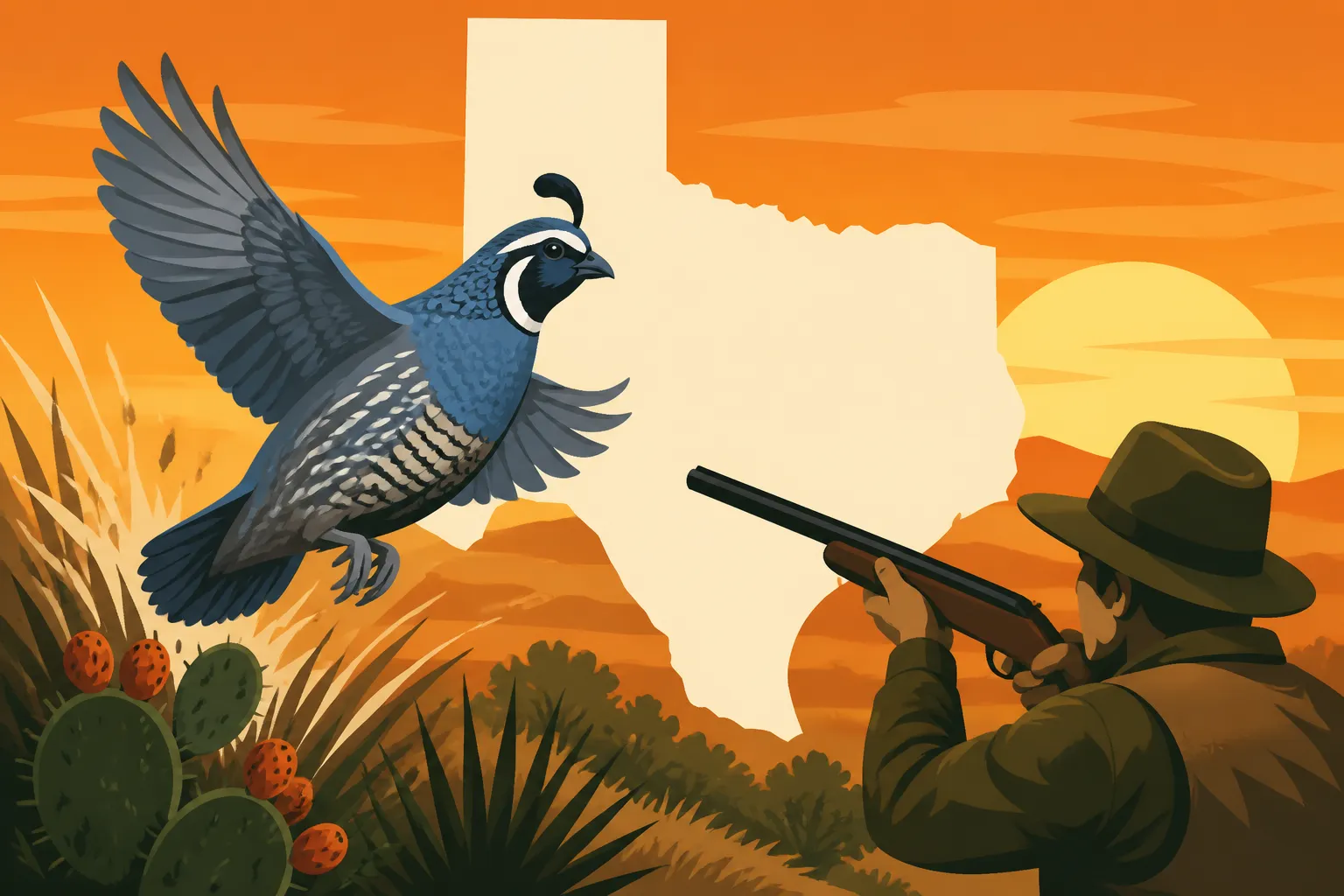
If you have ever spent a grueling afternoon in the Trans-Pecos heat chasing a covey of "blue ghosts" only to watch them disappear into a distant cactus patch without ever taking flight, you know the specific frustration of blue quail hunting. This guide provides the strategic roadmap and tactical adjustments necessary to master How to Hunt Blue Quail on a Texas Lease and finally turn those long desert walks into a heavy game bag.
Understanding the Blue Quail Environment on a Texas Lease
Chasing blue quail, or scaled quail, is fundamentally different from hunting bobwhites in East or South Texas. On a typical lease in the Panhandle & Trans-Pecos Hunting in Texas regions, the terrain is your primary adversary. Blue quail thrive where other birds perish, specifically in arid, rocky, and thorny environments. When you step onto your lease, you aren't looking for lush grass; you are looking for what I call "the mix." This is a combination of bare ground, scrawly brush, and overhead cover like prickly pear, agarita, or lotebush.
Blue quail are built for running. Their legs are their primary defense mechanism, and they use the open spaces between desert shrubs like a highway system. If your lease has vast stretches of thick, tall grass, you likely won't find many blues. They need the bare dirt to reach top speed. However, they also require "loafing cover." On a hot October morning, you will find them tucked under the shade of a single, large mesquite or a dense clump of tasajillo. These spots provide protection from the relentless Texas sun and aerial predators like Harris's hawks.
Understanding the "water factor" is also critical for success on a large lease. While blues are remarkably drought-resistant, they gravitate toward windmills, stock tanks, and overflow puddles. If your lease has active cattle troughs, start your morning scouting there. You will often see the birds "watering" just after sunrise before they move into the greasewood flats to feed. If you can identify these transition zones between water and feeding grounds, you have already won half the battle.
| Feature | Blue Quail (Scaled Quail) | Bobwhite Quail |
|---|---|---|
| Primary Habitat | Arid desert, rocky slopes, scrub | Grasslands, brush edges, farmland |
| Flight Behavior | Running first, flushing as a last resort | Holding tight, explosive flushing |
| Covey Size | 20 to 100+ birds in good years | 8 to 20 birds typically |
| Best Method | Ground-covering walks, pinching tactics | Pointing dogs, walking edges |
| Texas Range | West Texas, Panhandle, South Texas | Statewide (mostly East/Central/South) |
Essential Gear and Logistics for the Desert Hunt
Preparation for a blue quail hunt requires a different mindset than a casual dove shoot. The environment in West Texas is actively trying to poke, scratch, or bite you. Start with your footwear. You need a sturdy, leather boot with excellent ankle support for navigating rimrock and arroyos. Because you are in rattlesnake country, I highly recommend investing in the Best Gear for Blue Quail on a Texas Lease which includes high-quality snake boots or heavy-duty gaiters.
Your choice of firearm and ammunition can also make or break your day. While a 20-gauge is a classic choice for quail, many veteran blue quail hunters prefer a 12-gauge for the extra reach. Blues often flush 25 to 30 yards out after they have finished their initial sprint, meaning you need a load that carries energy at a distance. I typically suggest a 1 1/8 oz load of #6 or #7.5 shot. Avoid light target loads; these birds are hardy, and the wind in West Texas will push light pellets off course before they ever reach the target.
Logistically, you must account for the heat. Even during the Texas Quail Season Dates 2026, afternoon temperatures can climb into the 80s or 90s. This isn't just about your comfort—it’s about your dogs. If you are using pointers or flushers, you need to carry at least a gallon of water per dog in your vest or truck. The rocky soil is also incredibly abrasive. Many hunters find that "booting" their dogs is the only way to keep them in the field for more than a few hours without their pads wearing raw on the volcanic rock and caliche.
Finally, don't overlook your hunting license and endorsements. Ensure you have the migratory bird endorsement if you're combo hunting, and keep your documentation handy. For a full breakdown of requirements, check the Texas Hunting License: Cost, Types & How to Buy (2026) guide to ensure you are fully legal before hitting the pasture.
Tactical Approaches for Hunting the Blue Ghost
The most common mistake hunters make is treating blue quail like bobwhites. If you walk directly at a covey of blues, they will simply outrun you. You cannot "walk them up" in the traditional sense. The Best Hunting Method for Blue Quail in Texas involves a tactic often called "pinching" or "checkmating." This requires at least two hunters working in tandem. When a covey is spotted running through the brush, one hunter stays on the trail while the second hunter makes a wide, fast arc to get ahead of the birds.
By positioning a hunter in the birds' projected path, you force the quail to choose between running into a human or taking to the sky. This is usually the only time they will provide a clean, vertical flush. If you are hunting solo, your best bet is to move at a fast "power walk" toward the birds to pressure them into flight. It feels more like a light jog than a hunt, but it is the only way to get them off the ground.
Using dogs for blue quail is a debated topic. A traditional pointing dog that expects a bird to hold tight will often become frustrated and "bump" birds. The best dogs for this terrain are those that have a "big" range and can relocate quickly. A dog that points, realize the birds have moved, and immediately circles to head them off is worth its weight in gold. If you are just starting out, consult a guide on Best Hunting Gear for Beginners in Texas (By Budget) to find the right vests and GPS collars to keep track of your four-legged partners in the vast desert expanses.
Once you finally break a covey, do not stop. Blue quail coveys are often massive, and they don't all flush at once. Mark where the "singles" land. Unlike bobwhites, which might fly a quarter-mile, blues often fly just far enough to put a large bush between you and them. If you can get to the landing zone quickly, you can often pick up three or four more birds as they try to sneak away individually. This is where Blue Quail Hunting Tactics for Texas really come into play; it is a game of persistence and rapid movement.
Lease Management for Blue Quail Success
If you are fortunate enough to have a long-term lease, you shouldn't just show up and shoot; you should be managing the habitat. Blue quail populations are notoriously "boom or bust," tied heavily to spring rainfall. While you can't control the weather, you can control the "usable space" on your property. This begins with understanding Texas Quail Decline: Why & Where to Still Hunt and what factors actually support bird survival during the lean years.
One of the most effective management tools is the installation of "quail guzzlers." These are rainwater collection systems that provide a consistent source of water in remote corners of your lease where natural water is scarce. By spreading out water sources, you allow the quail to utilize more of the acreage, which prevents over-hunting in a single "honey hole" near a windmill. Additionally, maintaining "half-cutting" practices on mesquite trees can create instant loafing cover. By cutting halfway through a limb and letting it fall to the ground while still attached, you create a living "tent" that protects birds from hawks.
Supplemental feeding is another common practice, though its effectiveness is often debated. If you choose to feed, use a high-quality milo or "scratch grain" and place it near heavy cover. Scattering feed in the middle of a bare road is just an invitation for hawks to have a quail dinner. You should also be aware of the variety of Texas Game Animals: What You Can Hunt on your lease, as managing for one species often helps others. For example, controlling the feral hog population can significantly reduce nest predation, giving your quail a much better chance of a successful hatch in the spring.
Finally, keep an eye on your harvest numbers. In a "boom" year, it is easy to think the birds are infinite. However, blue quail are social creatures, and they need a certain "critical mass" in a covey to survive the winter huddles and avoid predators. A good rule of thumb is to never shoot a covey down to fewer than eight birds. If you find a small group, leave them alone and go find one of the mega-coveys. Responsible harvest ensures that when the spring rains finally do return, you have a healthy brood stock ready to repopulate your West Texas paradise.
Disclaimer
The information provided in this guide is for educational and informational purposes only. Hunting regulations, including season dates, bag limits, and legal methods of take, are subject to change by the Texas Parks and Wildlife Department (TPWD). Always consult the current Texas Outdoor Annual and verify specific county regulations before heading into the field. Access to private leases requires legal permission from the landowner, and hunters must possess a valid Texas hunting license with all necessary endorsements. Safety should always be the top priority when handling firearms and navigating rugged terrain.