Are Nilgai Hard to Hunt?
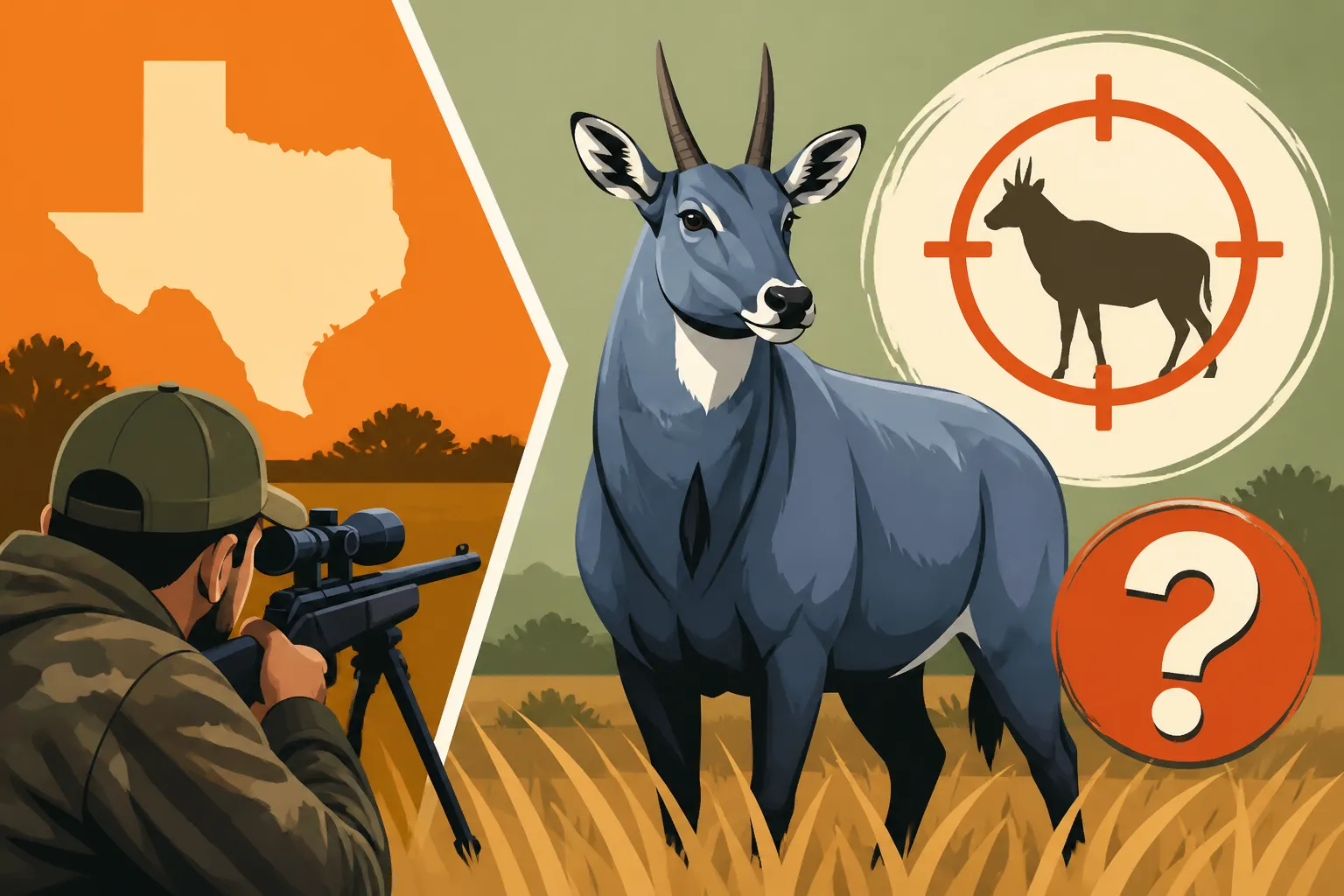
Many hunters dream of taking a Nilgai, but the sheer size and reputation of these "blue bulls" often leave folks wondering: are Nilgai really that hard to hunt in Texas? The truth is, they present a unique and formidable challenge, far different from chasing whitetail, and they'll test your resolve and hunting skills. This comprehensive guide will dive deep into what makes Nilgai hunting so tough, offer practical strategies, and help you prepare for a successful hunt.
The Unique Challenge of Hunting Nilgai in Texas
Let's be honest, Nilgai aren't your typical deer. These magnificent animals, native to India and Pakistan, have established a thriving free-range population primarily in South Texas, particularly along the Gulf Coast and in counties like Kenedy and Willacy. They are an exotic species that doesn't fall under typical deer regulations, making them a year-round hunting opportunity for many. However, their sheer presence on the landscape doesn't equate to an easy hunt.
A Formidable Adversary: Size, Speed, and Toughness
One of the first things that strikes you about a Nilgai, especially a mature bull, is its imposing size. These "blue bulls" can weigh anywhere from 400 to a whopping 700 pounds, standing taller at the shoulder than many horses. Their massive build is backed by incredible speed and stamina. If spooked, a Nilgai can cover ground at an astonishing pace, disappearing into the thick brush faster than you can blink.
Beyond their physical prowess, Nilgai are legendary for their toughness. Their hide is incredibly thick, almost like armor, especially around the neck and shoulders of a bull. This dense hide, combined with their robust bone structure and deep-set vitals, means that shot placement is absolutely critical. A poorly placed shot, even with a powerful caliber, often results in a long, difficult, and sometimes unsuccessful tracking job. It's not uncommon for Nilgai to absorb hits that would drop a large whitetail in its tracks and still keep going. This makes them one of the most challenging animals to cleanly dispatch in North America.
The Elusive Nature of the Blue Bull
While their size is impressive, it's their elusive and wary nature that truly ramps up the difficulty factor. Nilgai are inherently shy and incredibly skittish creatures. They are constantly on high alert, always scanning their surroundings, and will bolt at the slightest hint of danger. Unlike some game animals that might stand for a moment after sensing a threat, Nilgai are known to vanish into dense cover with remarkable speed and silence.
Hunting these animals often involves navigating vast expanses of the infamous South Texas brush country, where visibility can be limited to mere yards. This environment plays directly into the Nilgai's defensive strategy. They use the thick mesquite, huisache, and thorny scrub to their advantage, making them exceptionally difficult to spot, approach, and get a clear shot at. Many hunters find that simply getting within shooting distance of a Nilgai, let alone a mature bull, is a monumental achievement in itself. Their uncanny ability to blend into their surroundings, despite their size, is a testament to their natural wariness.
Key Factors Influencing Nilgai Hunt Difficulty
The challenges of Nilgai hunting extend beyond their impressive physicality and shy demeanor. The unique Texas environment and the Nilgai's finely tuned senses contribute significantly to making them a truly difficult quarry.
Habitat and Terrain Challenges
Nilgai are primarily found in the vast, private ranches of South Texas, such as the legendary King Ranch and other expansive properties in Kenedy, Brooks, and Willacy counties. This region is characterized by dense, thorny brush, often referred to as "chaparral" or "brush country." Imagine miles upon miles of thick mesquite, prickly pear cactus, and various other thorny shrubs that can create an impenetrable fortress for wildlife. This environment is beautiful in its ruggedness, but it's also incredibly unforgiving for hunters.
Visibility is often severely limited, making it hard to spot Nilgai from a distance. The dense cover also makes it incredibly noisy to move through, virtually guaranteeing that any approaching hunter will be heard by these wary animals long before they are seen. Vehicle access is often restricted to senderos (cleared lanes) or two-track roads, which means much of the hunting involves arduous walking and stalking through thick, unforgiving terrain. Navigating this landscape requires not only physical endurance but also serious thorn-resistant clothing and reliable footwear. If you're planning a trip to this region, you'll find plenty of helpful insights in our guide to South Texas Deer Hunting: Brush Country Guide.
Superior Senses and Alertness
Nilgai possess an incredibly advanced sensory system that rivals, and in some aspects, surpasses even that of a mature whitetail buck. Their eyesight is truly exceptional, allowing them to spot movement from far away, even in dim light or through patchy cover. They are constantly scanning, and any slight flicker or unnatural shape can send them fleeing. This makes camouflage and careful movement absolutely essential.
Their hearing is equally impressive. The slightest crunch of a twig or rustle of clothing can instantly put them on high alert. Combined with the dense, noisy brush, this means hunters must move with extreme caution and patience, often taking minutes to cover just a few yards. Finally, their sense of smell is highly developed. The wind direction is paramount when stalking Nilgai, as they will readily detect human scent long before you get a visual. Ignoring wind direction is a surefire way to educate your target and send them running into the next county. All three senses work in concert, creating an animal that is incredibly difficult to surprise or sneak up on.
Nilgai Behavior and Social Dynamics
Nilgai typically live in herds, which means there are always multiple eyes, ears, and noses looking out for danger. While bulls might sometimes be found solitary or in bachelor groups, cows and calves are almost always in larger family units. One alert animal in the group can instantly spook the entire herd, creating a domino effect where every member flees at top speed. This makes targeting a specific animal, especially a trophy bull, even more challenging, as you often have to contend with multiple wary animals.
Their tendency to "vanish" is almost legendary. They don't just run; they sprint into the densest, nastiest cover they can find, often putting significant distance between themselves and the perceived threat in a matter of seconds. They know their territory intimately and use every fold of the land and every thorny thicket to disappear from sight. This behavior highlights why patience, stealth, and a deep understanding of their habits are crucial for success when you're looking to learn How to Hunt Nilgai in Texas (Step by Step).
Effective Strategies for Successful Nilgai Hunting
Given the Nilgai's formidable defenses and the challenging South Texas environment, success hinges on employing smart strategies and unwavering patience. It's not about brute force, but about cunning and precision.
The Spot-and-Stalk Approach
While incredibly demanding, the spot-and-stalk method is often the most effective for hunting Nilgai, especially mature bulls. This involves patiently driving or walking senderos, glassing vast distances with high-quality optics, and attempting to locate Nilgai in the distance. Once spotted, the real work begins. You'll need to meticulously plan your approach, taking into account wind direction, cover, and the animals' escape routes. This is where a good hunting app like GoHunt can really shine, allowing you to mark locations, track your movement, and evaluate terrain features.
The stalk itself must be excruciatingly slow and deliberate. Every step needs to be mindful of noise, and you'll often have to crawl or move through dense vegetation on your hands and knees. Patience is your greatest ally here; it can take hours to cover what might seem like a short distance. Long-range shooting skills are also a huge advantage, as getting within 100 yards of a Nilgai can be incredibly difficult. Being proficient with shots out to 200 or 300 yards will significantly increase your opportunities. Learn more about mastering this technique with our guide on Spot-and-Stalk Hunting in Texas (Exotics & Mule Deer).
Hunting from Blinds and Elevated Positions
Another viable strategy, though often requiring even more patience, is hunting from blinds, particularly well-placed box blinds or tripod blinds. These are typically set up near known water sources, preferred feeding areas, or travel corridors where Nilgai are known to frequent. The key here is to have a blind that offers maximum concealment and minimizes your scent. Blinds that have been in place for a while and blend into the environment are usually more productive.
This method often involves long waits, sometimes for hours on end, usually during dawn and dusk when Nilgai are most active. You'll need to be prepared for a quick, accurate shot when an opportunity finally arises. Because Nilgai can appear and disappear quickly, having a stable shooting platform and being ready is essential. While not as thrilling as a spot-and-stalk, blind hunting offers a more controlled environment and can be highly effective if you've done your scouting. For tips on choosing the right setup, check out Box Blind vs Tripod vs Ground Blind in Texas.
Tracking and Recovery Challenges
Successfully shooting a Nilgai is only half the battle; recovering it can be an entirely different beast. Their legendary toughness means that even a well-placed shot might not drop them instantly. They can often run for significant distances, even when mortally wounded, leaving minimal blood trails in the dense, thorny brush. This is where the difficulty skyrockets.
Tracking a Nilgai in the South Texas environment is incredibly challenging. The thick cover quickly obscures any faint blood sign, and the ground can be hard and unforgiving for discerning tracks. Many outfitters and experienced Nilgai hunters rely heavily on trained blood tracking dogs. These dogs are invaluable for locating a downed animal that might have traveled hundreds of yards into seemingly impenetrable thickets. Without a good tracking dog, your chances of recovering a wounded Nilgai plummet significantly. Always be prepared for a difficult recovery, and consider the services of a professional tracker if you're not confident in your own abilities. Proper field dressing is also crucial, especially in the Texas heat; our article on Field Dressing & Processing Game in Texas Heat provides essential tips.
Essential Gear and Preparation for Nilgai Hunts
Going after Nilgai isn't a casual affair; it demands serious preparation and the right equipment to stand a chance against these robust animals and their challenging environment.
Choosing the Right Firearm and Ammunition
Given the Nilgai's size and toughness, this is not the time to bring a light caliber. Many experienced hunters recommend calibers in the .300 magnum class (like the .300 Win Mag, .300 WSM, or .300 PRC) as a minimum. Even better options include the .338 Win Mag, .375 H&H Magnum, or even larger calibers if you're comfortable with them. The goal is to deliver maximum energy and deep penetration.
Ammunition choice is equally, if not more, critical. You'll want to use premium, heavy-for-caliber bullets specifically designed for deep penetration and controlled expansion. Think bonded bullets, monolithic solids, or other heavy-duty hunting projectiles. Avoid lighter, frangible bullets that might break up on their thick hide or bone before reaching vital organs. Accuracy is paramount, so practice extensively with your chosen setup. A reliable rifle scope capable of handling the recoil and providing clear optics at various ranges is also a must; consider options discussed in Best Rifle Scope for Texas Deer Hunting.
Optics and Scouting Tools
High-quality optics are non-negotiable for Nilgai hunting. You'll be spending a lot of time glassing, trying to pick out parts of an animal in dense cover or across vast distances. A good pair of 10x or 12x binoculars with excellent light-gathering capabilities will be your best friend. For even longer distances, a spotting scope can be invaluable, especially when trying to judge a bull's size or confirm a target.
A reliable rangefinder is also essential, particularly given the potential for longer shots and the need for precise bullet drop compensation. Know your trajectory and practice ranging targets in varying terrain. Beyond physical optics, digital scouting tools are increasingly important. Apps like GoHunt offer detailed mapping features, satellite imagery, and public/private land boundary information, which can be incredibly useful for pre-hunt planning, identifying potential travel corridors, and even marking blood trails. This kind of technology can give you a real edge in unfamiliar territory, helping you understand the lay of the land and potential Nilgai hotspots before you even set foot on the ground. For more on this, check out our guide to Best Hunting Optics for Texas: Scopes, Binos & Rangefinders.
Clothing, Footwear, and Safety
The South Texas brush country is not kind to unprepared clothing. You'll need durable, thorn-resistant pants, shirts, and jackets. Ripstop fabrics and heavy-duty canvas are often preferred over typical lightweight hunting apparel. Long sleeves and gloves are advisable to protect against scratches and thorns. Layering is also a good idea, as temperatures can fluctuate throughout the day.
Footwear is another critical component. High-quality, comfortable, and durable snake boots are absolutely essential. Not only do they provide ankle support for rugged terrain, but they also offer crucial protection against rattlesnakes, which are common in the Nilgai's habitat. Beyond attire, personal safety gear is paramount. Always carry plenty of water, especially during warmer months. A good first-aid kit, a reliable GPS device or charged phone with offline maps, and some form of satellite communication (like a Garmin inReach or similar device) are highly recommended, as cell service can be spotty to non-existent in remote areas. Knowing how to protect yourself from venomous encounters is critical, so be sure to read our article on Best Snake Boots for Texas Hunting.
Nilgai Hunting Difficulty Comparison
To give you a clearer perspective on why Nilgai are considered hard to hunt, let's compare some of their key characteristics against a more commonly hunted animal like the white-tailed deer in Texas. This table highlights just how different the challenges can be.
| Characteristic | Nilgai | White-tailed Deer |
|---|---|---|
| Average Size (Adult Bull/Buck) | 400-700 lbs (Bulls) | 100-200 lbs (Bucks) |
| Speed/Endurance | Extremely fast, high endurance, can run for miles | Fast, moderate endurance |
| Habitat Preference | Dense, thorny brush, often near coast | Woodlands, open fields, mixed cover |
| Primary Defense | Flight into impenetrable cover, camouflage | Freezing, flight, scent masking |
| Senses | Exceptional sight, hearing, and smell | Excellent smell, good hearing, good sight |
| Shot Placement Criticality | Very High (thick hide, deep, forward vitals) | High (standard vitals) |
| Tracking Difficulty | Extremely Difficult (minimal blood, dense cover) | Moderate to Difficult (depending on shot/terrain) |
| Typical Range of Shot | 150-300+ yards often required | 50-200 yards common |
Final Thoughts on Hunting Nilgai
So, are Nilgai hard to hunt? Without a doubt, yes. They are one of the most challenging exotic game animals you can pursue in Texas, requiring a combination of physical endurance, honed hunting skills, powerful equipment, and above all, immense patience. They offer a unique hunting experience that will push your limits and reward you with an incredible trophy and an unforgettable story.
However, the difficulty is precisely what makes the hunt so rewarding. When you finally connect with a magnificent "blue bull" after days of arduous stalking, battling the elements, and overcoming their incredible senses, the sense of accomplishment is unparalleled. Don't go into a Nilgai hunt expecting it to be easy, but go in prepared, respectful of the animal, and ready for an adventure. Success will be hard-earned, but absolutely worth it. If you're looking for other unique hunting experiences, consider exploring options for Exotic Hunting in Texas: Axis, Aoudad, Blackbuck & More, or perhaps planning your seasons using our Texas Hunting Seasons: Complete Calendar by Species. When it comes to finding a hunting spot, check out our guide on Hunting Leases in Texas: Complete Guide (Cost & How to Find), and remember to pack an excellent cooler to bring home your game, like those reviewed in Best Coolers for Texas Hunting (Yeti & Alternatives).
Disclaimer
Hunting is an activity with inherent risks. Always prioritize safety, understand and follow all Texas Parks and Wildlife Department regulations, and consider consulting with experienced guides or outfitters, especially when pursuing challenging game like Nilgai. This content is for informational purposes only and not a substitute for professional guidance or official regulations.