Best Gear for Axis Deer on a Texas Lease
Hunting axis deer on a Texas lease can be incredibly rewarding, but these intelligent exotics present a unique challenge, often disappearing into the brush before you even know they were there. Between their incredibly keen eyesight, excellent hearing, and the diverse, often unforgiving Texas terrain, selecting the right gear is paramount to your success and comfort. This comprehensive guide is designed to help you sort through the endless options to identify the essential equipment that will truly make a difference on your next axis deer hunt.
Understanding Axis Deer and Their Habitat on a Texas Lease
Before you even start thinking about what to pack, it's crucial to understand the animal you're pursuing and the environment you'll be hunting in. Axis deer are not your typical whitetails, and Texas leases offer a vast array of ecological zones.
The Elusive Nature of Axis Deer
Axis deer, often called Chital or Spotted Deer, originated from India and are renowned for their incredible senses. Their eyesight is legendary, rivaling that of an antelope, making them exceptionally difficult to approach unnoticed in open country. They also possess very acute hearing, with large, rotating ears that can pick up the slightest rustle, and a highly developed sense of smell that quickly detects human presence.
This combination of senses means you need to prioritize stealth, scent control, and the ability to spot them before they spot you. Unlike many native deer, axis are often more skittish and prone to immediate flight once alerted, making follow-up shots or tracking a significantly harder task. If you've ever felt the frustration of a whitetail bolting, imagine that amplified. This behavior impacts everything from your choice of camouflage to the type of optics you'll rely on.
Typical Texas Lease Environments for Axis
Texas leases can range from the dense, thorny brush of South Texas to the rolling hills and live oaks of the Hill Country, and even the more open, mesquite-dotted pastures of Central Texas. Axis deer thrive in diverse habitats, often preferring areas with a mix of dense cover for bedding and open grazing areas. This variability in terrain directly influences your gear choices.
For instance, hunting in thick brush demands robust, puncture-resistant clothing and snake boots, while open country might call for lighter gear and superior long-range optics. The Texas climate is another major factor. Summers are notoriously hot, meaning breathable, moisture-wicking fabrics are non-negotiable, and the ability to keep game cool quickly is vital. Even in winter, temperatures can fluctuate wildly, requiring adaptable layering systems. Considering the specific environment of your lease – whether it's full of prickly pear and mesquite or more open grasslands – will guide many of your gear decisions. Many experienced hunters looking for "Axis Deer Hunting in Texas: Cost & Where" often find that leases in varied terrains yield the best results for these adaptable animals.
Essential Optics for Spotting and Ranging Axis Deer
When hunting axis deer, your eyes are your most critical tool, and high-quality optics are an extension of that. Their spotted coats blend surprisingly well with dappled light and varied vegetation, making them incredibly hard to pick out.
High-Quality Binoculars and Spotting Scopes
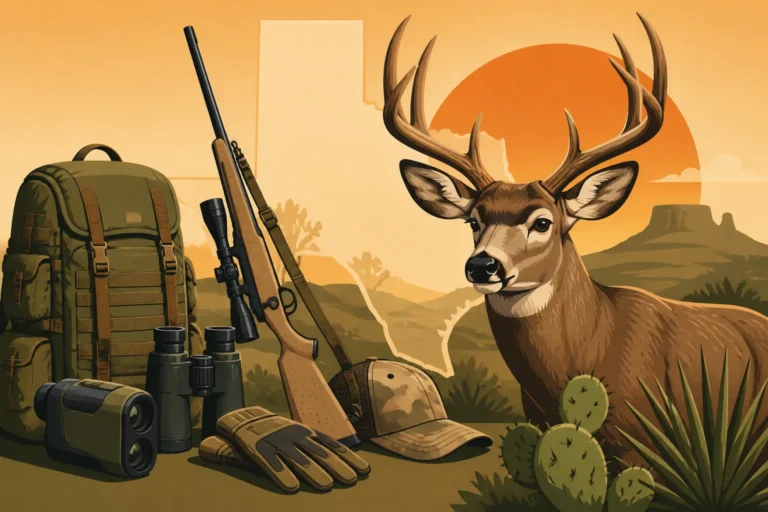
You simply cannot overstate the importance of good glass for axis deer hunting. Because of their exceptional camouflage and tendency to graze in groups in open areas before retreating to cover, you’ll spend a lot of time scanning. A quality pair of 10×42 or 12×50 binoculars is a must-have. Look for brands known for clarity, light transmission, and durability, as you'll be using them constantly. These aren't just for finding the deer; they're for evaluating the animal, assessing its trophy potential, and confirming it's a legal animal if antler restrictions apply.
For larger leases with expansive views, a spotting scope (typically 15-45x or 20-60x) mounted on a sturdy tripod can be a game-changer. It allows you to pick apart distant hillsides or tree lines without moving from your vantage point, saving you precious boot leather and minimizing your scent footprint. This extra magnification helps confirm sex, antler size, and even the subtle movements that give away a bedded deer. When preparing for your hunt, you might consider checking out articles like "Best Hunting Optics for Texas: Scopes, Binos & Rangefinders" for detailed recommendations.
Reliable Rangefinders
Axis deer are often found in relatively open country, and judging distance accurately can be tricky, especially in unfamiliar terrain. A reliable rangefinder with angle compensation is absolutely critical. These animals are typically smaller-bodied than a mature whitetail buck, meaning your margin for error on shot placement is reduced. Knowing the exact distance is paramount for making an ethical shot.
Modern rangefinders come with features like "scan mode" to range multiple objects, and some even integrate with ballistic data for your specific rifle and ammunition. Look for one that can easily range targets out to 800-1000 yards, even if your comfortable shooting distance is much closer. This extended range capability ensures you can range landmarks or other objects far beyond your actual shot, helping you map out your approach and escape routes. Platforms like GoHunt, which often emphasize detailed planning and understanding your hunting area, frequently highlight the necessity of precise ranging.
Rifle and Ammunition Choices for Axis Deer
Choosing the right firearm and ammunition for axis deer is all about achieving a clean, ethical harvest. They are tough animals, and while not as large as elk, they are certainly more robust than a typical whitetail.
Recommended Calibers for Axis
When selecting a rifle, you'll want something that can deliver sufficient energy and accuracy at moderate to longer ranges, as axis deer don't often let you get up close and personal. Popular calibers that hunters successfully use for axis deer in Texas include:
- .270 Winchester: A classic, flat-shooting cartridge that has proven itself on deer-sized game worldwide. It offers a great balance of recoil and terminal performance.
- .30-06 Springfield: Another legendary cartridge, the .30-06 offers a bit more punch than the .270, particularly with heavier bullets, making it a very versatile choice.
- .308 Winchester: Known for its inherent accuracy and efficient use of powder, the .308 is a compact and capable round, ideal for shots out to several hundred yards.
- 6.5 Creedmoor: This newer darling of the shooting world offers exceptional accuracy and mild recoil, making it easy to shoot well. Its ballistic coefficient makes it perform very well at longer ranges.
- 7mm-08 Remington: A fantastic medium-recoil option, the 7mm-08 delivers impressive energy for its size and is very pleasant to shoot.
While many smaller calibers can take an axis, leaning towards these slightly more powerful options ensures a clean kill, especially if you encounter a larger stag.
Bullet Construction and Performance
Perhaps more critical than the caliber itself is the bullet you choose. For axis deer, you need a bullet designed for controlled expansion and deep penetration. Avoid varmint bullets or those designed for rapid fragmentation, as they may not penetrate the thick hide and bone of an axis stag sufficiently to reach vital organs, leading to a wounded animal.
Look for bullets with bonded cores, solid copper construction, or partition designs. Brands like Barnes TTSX, Nosler AccuBond, Hornady InterBond, or Federal Premium with Trophy Bonded Tip are excellent choices. These bullets retain their weight, expand reliably, and drive deep, ensuring maximum energy transfer and tissue damage through the vitals. This is particularly important for a quick, humane kill on a tough animal like an axis deer. Remember, a well-placed shot with a quality bullet from a reliable caliber is always your best bet.
| Caliber | Typical Bullet Weight (gr) | Pros | Cons |
|---|---|---|---|
| .270 Winchester | 130-150 | Flat trajectory, moderate recoil | Can be light for larger stags |
| .30-06 Springfield | 150-180 | Powerful, versatile, proven | Heavier recoil than .270, 6.5 Creedmoor |
| .308 Winchester | 150-180 | Accurate, efficient, good terminal ballistics | Not as flat-shooting as .270 or 6.5 |
| 6.5 Creedmoor | 130-147 | Low recoil, excellent accuracy, good BC | Less kinetic energy than .30-calibers |
| 7mm-08 Remington | 120-150 | Moderate recoil, good power, flat-shooting | Less common ammo availability |
Apparel and Footwear for Texas Axis Hunting
Texas weather is notoriously unpredictable, and the terrain can be brutal on clothing and boots. Your gear needs to protect you, keep you comfortable, and help you remain undetected.
Camouflage and Layering Systems
Axis deer have incredible eyesight, so breaking up your human silhouette is crucial. While full-blown military-grade camouflage isn't strictly necessary, patterns that mimic the local vegetation (like mesquite, oak, or tall grass) can be very effective. However, the most critical aspect of clothing for Texas hunting is comfort and functionality.
For early season hunts, which often coincide with prime axis activity, it can still be very hot. Prioritize lightweight, breathable, moisture-wicking fabrics that will keep you cool and dry. Synthetic blends or merino wool are excellent for managing sweat. As the day progresses or if you're hunting during a cooler period, layering is key. A good base layer, a mid-layer for insulation (if needed), and a quiet outer layer are ideal. Look for quiet fabrics that won't make a lot of noise when you move through brush, as axis deer are quick to react to unnatural sounds. For more on this, check out "Best Early-Season Camo for Texas Heat".
Durable and Comfortable Footwear
The terrain on many Texas leases can be unforgiving. Thorns, prickly pear, rocks, and uneven ground are common. Investing in high-quality, comfortable, and durable footwear is non-negotiable. Look for boots that offer excellent ankle support, a stiff sole to protect against punctures, and aggressive tread for traction on varied surfaces.
Waterproofing is also a huge plus, not just for unexpected rain but also for walking through dewy grass or crossing shallow creeks. Many hunters opt for snake boots, especially in regions known for rattlesnakes and copperheads. Brands like Lacrosse or Irish Setter offer excellent options that combine protection with comfort. A bad pair of boots can ruin a hunt faster than almost anything else. Ensure they are well broken in before your hunt to avoid blisters and discomfort. You can learn more about this by reading "Best Snake Boots for Texas Hunting".
Supplementary Gear for a Successful Axis Hunt
Beyond the essentials, several other items can significantly improve your chances and overall experience when hunting axis deer on a Texas lease.
Trail Cameras for Scouting and Patterning
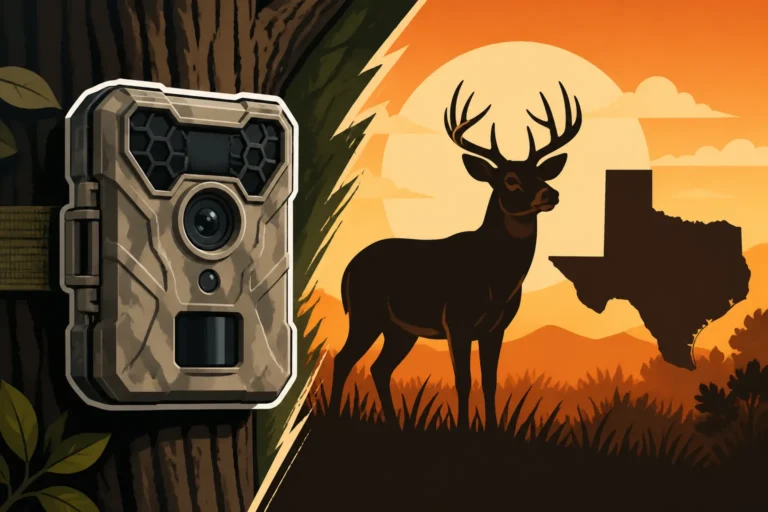
Trail cameras are invaluable tools for understanding axis deer movement patterns on your lease. Unlike native whitetails, axis deer can be somewhat unpredictable in their daily routines, but cameras can help you identify preferred travel corridors, bedding areas, and feeding locations. Place them near water sources, mineral licks, or natural funnels.
Modern cellular trail cameras have become incredibly popular because they allow you to monitor activity remotely, saving you trips to the camera and reducing your scent disturbance on the property. Brands like Tactacam Reveal and Moultrie Edge are widely used and can provide real-time intelligence. This intelligence, combined with knowledge of the local terrain, can save you countless hours of blind searching. Knowing "How to Pattern Bucks With Trail Cameras" can apply equally well to patterning axis deer.
Scent Control and Wind Indicators
Given the axis deer's incredibly sensitive nose, scent control is paramount. While you'll likely never be 100% scent-free, minimizing your human odor can give you a crucial edge. This includes showering with scent-eliminating soaps, washing hunting clothes in scent-free detergent, and storing them in airtight bags or containers. Sprays can also help, but don't rely solely on them.
Perhaps even more important than scent sprays is understanding and playing the wind. Always carry a small bottle of wind-checker powder or a simple milkweed pod to frequently check wind direction. Even a slight shift in wind can carry your scent directly to a wary axis. Approaching from downwind is a fundamental hunting principle that applies even more strongly to these keen-nosed exotics.
Field Dressing and Game Recovery Tools
Once you've successfully harvested an axis deer, the work isn't over. Texas heat can spoil meat quickly, so efficient field dressing and cooling are critical. You'll need a sharp, reliable hunting knife (or several, for different tasks like skinning and gutting), a game bag to protect the meat from flies and debris, and a good pair of disposable gloves for hygiene.
A sturdy game cart can be a lifesaver for hauling your animal out of thick brush or across long distances, especially if you're hunting alone. Once the deer is field-dressed, getting it cooled down quickly is paramount. This means having a large, high-quality cooler filled with ice ready to go back at camp. For detailed guidance, consult "Field Dressing & Processing Game in Texas Heat" and "Best Coolers for Texas Hunting (Yeti & Alternatives)". Remember, fresh game meat is a prized reward, and proper handling ensures it stays that way.
Making the Most of Your Lease with the Right Gear
Having a lease is a fantastic opportunity, but maximizing it means more than just showing up with a rifle. It's about preparedness, strategy, and understanding your equipment.
Planning and Preparation with Gear in Mind
Successful axis deer hunting on a Texas lease starts long before you ever step foot in the field. This includes thorough pre-season scouting, which can be done with boots on the ground or even remotely using mapping apps like onX Hunt or HuntStand. These tools, coupled with insights from platforms like GoHunt, allow you to study terrain, identify potential bedding and feeding areas, and mark water sources. With this knowledge, you can then make informed decisions about where to place blinds or set up for stalks.
Your gear selection should directly support your hunting strategy. If you plan to spot-and-stalk vast pastures, lightweight optics and comfortable hiking boots are key. If you're sitting over a food plot or feeder, a comfortable blind and quiet clothing are more important. Always check your gear before the season: ensure your rifle is sighted in, batteries are fresh in your electronics, and your boots are in good repair. A well-maintained kit means fewer surprises when it matters most. For more tips, refer to "How to Scout a New Hunting Lease in Texas".
The Value of Investing in Quality Gear
It's tempting to cut corners when buying hunting gear, but for animals like axis deer, and in demanding environments like Texas, investing in quality pays dividends. Cheaper optics can be dim and prone to fogging, leading to missed opportunities at dawn or dusk. Inferior boots can lead to blisters and painful encounters with thorns. Unreliable rifles or ammunition can lead to wounded game.
Quality gear is typically more durable, performs better, and lasts longer, often saving you money in the long run by avoiding repeated replacements. It enhances your comfort, confidence, and ultimately, your success rate. Think of your gear as tools, and like any craftsman, having the right, high-quality tools makes all the difference. While the initial outlay might seem steep, the frustration averted and the successful hunts achieved make it a worthwhile investment.
Disclaimer
Please note that hunting regulations, seasons, and licensing requirements in Texas can change. Always consult the most current Texas Parks and Wildlife Department (TPWD) Outdoor Annual before any hunting activity to ensure compliance with all state and local laws. This guide is for informational purposes only and does not substitute for official regulations.