Best Budget Thermal Scope Under $2000
Let's be honest, the thought of investing in a thermal scope can send shivers down your spine faster than a north Texas blue norther. The price tags on some of the top-tier units are enough to make you think twice about even entering the world of night hunting. But what if I told you that you don't need to empty your retirement fund to get a capable, effective thermal optic for hunting feral hogs or coyotes in the vast expanses of Texas? This guide is all about cutting through the noise and finding you the best budget thermal scope under $2000 that genuinely performs when it matters most.
Why Budget Thermal Scopes Are Crucial for Texas Hunters
For many years, thermal imaging was largely out of reach for the average hunter, confined to military applications or deeply specialized industries. But times have changed! The technology has advanced, production costs have come down, and now, even with a budget under $2000, you can get a serious piece of equipment that will revolutionize your night hunting game.
The High Cost Barrier of Premium Thermal
It’s no secret that top-of-the-line thermal scopes from brands like Pulsar or Trijicon can easily run you $4,000, $5,000, or even more. For many folks, especially those maintaining a hunting lease, buying feeders, and covering fuel costs for those long drives, that kind of investment just isn't feasible. The sticker shock alone can deter hunters from even considering thermal, leaving them stuck with traditional night vision or powerful lights, which, while effective in some scenarios, simply don't offer the same advantages as thermal imaging. The frustration is real when you know thermal would make a difference, but your wallet says otherwise.
The Unmatched Advantage of Thermal for Night Hunting
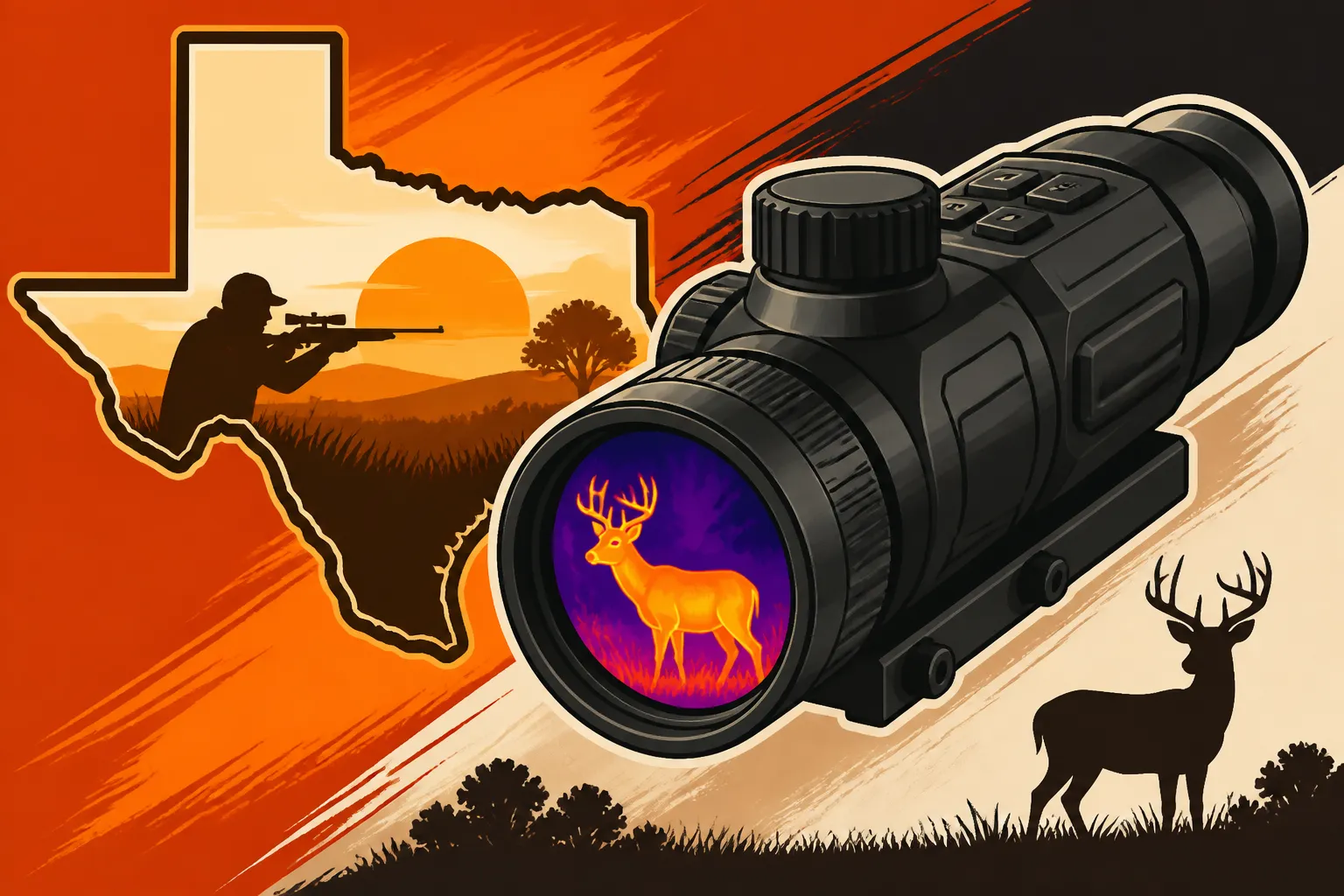
There's simply no substitute for thermal when it comes to detecting heat signatures in the dark. Whether it's a sounder of hogs rooting in a distant field or a lone coyote slipping through the brush, a thermal scope cuts through darkness, fog, and even light brush that would render traditional optics useless. Imagine being able to scan a field and instantly pick out warm bodies against a cool background. It dramatically increases your chances of spotting game before they spot you, giving you a critical edge. For hunters specifically targeting pests like feral hogs, a thermal scope means you can truly make a dent in populations without waiting for daylight. It's truly a game-changer for many hunting methods, especially when you're considering something like how to hunt hogs at night with thermal.
Dispelling Myths About "Cheap" Thermal
When people hear "budget thermal," often a few myths pop up: that it won't be durable, it'll have terrible image quality, or it'll constantly break down. While it's true that you might not get the absolute highest resolution or the most advanced features of a $6,000 unit, modern budget thermal scopes are far from being unreliable toys. Many manufacturers have stepped up their game, offering surprisingly robust optics with decent image quality that are perfectly capable of distinguishing between a hog and a deer at ethical shooting distances. The technology has matured to a point where "budget" no longer means "junk." You can absolutely find a reliable workhorse that will stand up to the rigors of Texas hunting.
Essential Features to Prioritize in Your Under-$2000 Thermal
When you're trying to stay within a budget, it's all about making smart choices and knowing which features genuinely matter for your hunting style, and which ones you can do without. For Texas hunting, especially at night, certain specifications will make a much bigger difference than others.
Sensor Resolution and Refresh Rate
These two aspects are arguably the most critical for thermal performance.
- Resolution: Think of this like the number of pixels on a screen. Common budget resolutions include 256×192, 384×288, or occasionally 400×300. While 640×480 is the gold standard for clarity and detail, it's usually outside our $2000 budget. A 384×288 sensor is generally considered the sweet spot for budget thermal scopes. It offers a good balance between image quality and price, allowing you to not just detect an animal but often discern its species and size at reasonable hunting distances. You might find a 256×192 unit for significantly less, but the detail might be frustratingly low for confident shot placement.
- Refresh Rate: This is how many times the image updates per second, measured in Hertz (Hz). A lower refresh rate (e.g., 9Hz) will result in a choppy, laggy image, especially when you or the target are moving. A higher refresh rate (e.g., 50Hz or 60Hz) provides a much smoother, fluid image, which is crucial for tracking moving animals and minimizing motion blur. For hunting, a 50Hz or 60Hz refresh rate is highly recommended, as it makes target acquisition and tracking much more intuitive and less fatiguing on the eyes.
Magnification and Field of View
Finding the right balance here is key for hunting in varied Texas terrain.
- Base Magnification: Budget thermals often come with a relatively low base magnification, typically 1.5x to 3x. This is often a good thing! A lower base mag gives you a wider field of view (FOV), making it much easier to scan large areas and acquire fast-moving targets. Texas hogs often move quickly, and a wide FOV means you're less likely to miss an animal that pops up unexpectedly close. Digital zoom can then be used to increase magnification, but remember that digital zoom inherently degrades image quality.
- Field of View (FOV): This refers to how much area you can see through the scope at a given distance. For hunting in dense brush or open fields where targets can appear anywhere, a wider FOV is invaluable. It helps you keep track of multiple animals in a sounder and quickly pick up targets without excessive panning. When you're comparing different models, websites like GoHunt can be invaluable resources for checking detailed specifications like FOV and comparing how various models stack up side-by-side.
Battery Life and Durability for Texas Conditions
Texas can be brutal on electronics. Your thermal scope needs to be able to handle it.
- Battery Life: Night hunting often means long hours out in the field. A scope with poor battery life will leave you in the dark prematurely. Look for units that offer at least 4-6 hours of continuous runtime on a single charge or set of batteries. Many modern scopes utilize internal rechargeable batteries or common CR123A/18650 cells. If it uses external batteries, consider carrying spares. USB-C charging capability is a huge plus, allowing you to use power banks for extended hunts.
- Durability and Weatherproofing: Texas weather can be unpredictable. You need a scope that's IP67 rated (waterproof and dustproof) to withstand sudden downpours, humidity, and dusty conditions. The construction should feel solid, capable of handling minor bumps and the recoil of your hunting rifle. Checking user reviews, especially on platforms like GoHunt, can offer real-world insights into how a particular scope holds up to actual field conditions over time. Pay attention to how the controls feel and operate, ensuring they're robust enough for gloved hands in the dark.
User Interface and Ease of Use
When you're out in the dark, possibly under pressure, the last thing you want is a complicated menu system.
- Intuitive Controls: Look for scopes with simple, easily navigable menus and physical buttons that are distinguishable by touch. You should be able to quickly adjust brightness, contrast, color palettes, and zoom without having to stare at the screen or fumble through complex sub-menus. Many budget scopes now feature simplified interfaces that are quick to learn and operate, which is a major benefit when you're trying to stay focused on the hunt.
- Startup Time: Nobody wants to wait minutes for their scope to power on when a target suddenly appears. A fast startup time (ideally under 10 seconds) is a significant advantage, ensuring you don't miss an opportunity.
- Mounting Options: Ensure the scope comes with or is compatible with a reliable mounting system (e.g., a Picatinny QD mount). Quick detach mounts are handy if you plan to swap the scope between rifles or use it as a scanner.
Top Budget Thermal Scopes Under $2000 for Texas Hunting
The good news is that the market for thermal optics under $2000 has exploded, giving hunters more choices than ever before. While the absolute best in the business often sits above this price point, several brands offer exceptional value and performance that will more than get the job done for hog and coyote hunting.
Popular Models and Their Strengths
When you dive into the sub-$2000 thermal scope market, you'll quickly encounter a few key players that consistently deliver. These brands have carved out a niche by offering robust performance without the premium price tag.
- AGM Rattler Series: The AGM Rattler line, particularly models like the Rattler TS19-256 or the TS25-384, are incredibly popular choices. AGM Global Vision has made a name for itself by offering fantastic features for the price. The TS25-384, for instance, often falls right around the $2000 mark (or sometimes slightly above depending on sales, but worth looking for deals). It boasts a 384×288 sensor and a 50Hz refresh rate, which is excellent for clear, fluid imaging. The TS19-256 is an even more budget-friendly option, offering a 256×192 sensor which is still very capable for detection, especially within closer ranges common in dense Texas brush. Many hunters rave about their user-friendly interface and respectable battery life. For a deeper dive, check out our comparison on Pulsar vs AGM Thermal Scopes for Hogs.
- Pulsar Axion XM/Key Series (Monoculars, but worth mentioning for scanning): While not rifle scopes, Pulsar's entry-level thermal monoculars like the Axion Key XM30 are sometimes under $2000 and pair exceptionally well with a budget scope. They're excellent for scanning before you bring your rifle up. As for scopes, Pulsar's dedicated rifle scopes typically start above the $2000 threshold, but keeping an eye out for sales on older models like a Thermion 2 XQ38 might occasionally yield a gem, though it's rare.
- ATN ThOR LT Series: ATN has focused heavily on making thermal accessible with their ThOR LT line. Models like the ThOR LT 320 3-6x or 4-8x (with a 320×240 sensor) are consistently found well within the sub-$2000 range. They are lightweight, have a traditional scope-like form factor, and are known for their long battery life. While the resolution might be a step below some 384 units, the price point and ease of use make them very attractive for many hunters getting into thermal for the first time. They are simple to operate and get you into the thermal game without breaking the bank.
- InfiRay Outdoor (formerly iRay) RICO Micro RL25/RH25 (Hybrid options): InfiRay offers some interesting hybrid options that can function as monoculars or clip-on scopes. The RICO Micro series (like the RL25 or RH25) provides excellent image quality, often with higher resolutions like 384×288, and can sometimes be found close to the $2000 mark. These are versatile units for those who might want a device that can pull double duty as a handheld scanner and a weapon-mounted optic, though dedicated scope platforms often offer better ergonomics for sustained shooting.
Key Specifications Comparison
To help you visualize the differences and make an informed decision, here's a quick comparison of some popular budget-friendly thermal scopes. Keep in mind that prices fluctuate, and sales can always bring higher-end models into range, so always check current listings.
| Feature | AGM Rattler TS19-256 | AGM Rattler TS25-384 | ATN ThOR LT 320 3-6x | InfiRay Outdoor RICO Micro RL25 |
|---|---|---|---|---|
| Sensor Resolution | 256×192 | 384×288 | 320×240 | 384×288 |
| Pixel Pitch | 12µm | 12µm | 12µm | 12µm |
| Refresh Rate | 50Hz | 50Hz | 60Hz | 50Hz |
| Base Magnification | 2.5x | 2.5x | 3x | 1x (Clip-on/Monocular) |
| Digital Zoom | 1x, 2x, 4x, 8x | 1x, 2x, 4x, 8x | 2x | 1x, 2x, 4x |
| Detection Range | ~950m | ~1250m | ~1000m | ~1300m |
| Battery Life | ~4.5 hours | ~4.5 hours | ~10 hours | ~4 hours |
| Weight | ~1.1 lbs | ~1.1 lbs | ~1.4 lbs | ~0.6 lbs |
| Price (Approx.) | $1300 – $1600 | $1800 – $2200 | $1000 – $1500 | $1900 – $2300 |
Note: Prices are approximate and subject to change based on retailers and promotions.
Where to Find Deals and Read Reviews
Scoring a great deal on a thermal scope under $2000 often requires a bit of savvy shopping. Don't just jump on the first listing you see.
- Online Retailers: Sites like OpticsPlanet, EuroOptic, and Outdoor Legacy Gear frequently run sales. Keep an eye out during major holidays (Black Friday, Cyber Monday, Fourth of July) for significant discounts. Sometimes, refurbished units directly from the manufacturer or authorized dealers can also offer substantial savings with a full warranty.
- Forums and Social Media Groups: Hunting forums and Facebook groups dedicated to thermal hunting can be goldmines for user reviews, personal experiences, and even "for sale" posts from other hunters. Just be careful and ensure any private sales are legitimate.
- Manufacturer Websites: Always check the manufacturer's official website. Sometimes they have promotions, factory outlet sections, or authorized dealer lists that might point you to a local deal.
- User Reviews: Before pulling the trigger, read as many unbiased user reviews as you can find. Look for consistent feedback on image quality, battery life, customer service, and durability. Websites like GoHunt also compile detailed reviews and specifications, helping you weigh the pros and cons of different models. Real-world feedback from other hunters who have put these scopes through their paces in similar conditions to yours is invaluable.
Real-World Performance: What to Expect in the Texas Brush
Having the right specs on paper is one thing, but how a budget thermal scope actually performs when you're out in the scorching Texas heat or battling the unpredictable humidity of a South Texas night is another story. Understanding the limitations and strengths of your chosen optic in real hunting scenarios is key to success.
Detection vs. Recognition Range
This is a critical distinction that new thermal users often misunderstand.
- Detection Range: This is the maximum distance at which your scope can simply see a heat signature—meaning, you know something is out there. Even a budget thermal can detect a heat source at surprising distances, sometimes over a mile. You'll see a white blob against a dark background.
- Recognition Range: This is the distance at which you can identify what that heat signature is. Can you tell if it's a hog, a deer, a cow, or a coyote? Can you determine its size and, crucially, confirm it's a legal or ethical target? For a budget thermal scope, the recognition range will be significantly less than the detection range. While you might detect a hog at 1000 yards, you might only be able to clearly recognize it as a hog and confirm shot placement at 150-250 yards, depending on the scope's resolution and environmental conditions. This is where a 384×288 sensor truly shines over a 256×192, giving you that extra bit of confidence at longer distances. Always hunt within your scope's effective recognition range for ethical shots, as outlined in guides like Best Shot Placement for Hogs.
Environmental Factors: Humidity, Fog, and Heat
Texas weather is a beast, and it impacts thermal performance.
- Humidity: High humidity, especially common in East Texas and coastal areas, can scatter infrared radiation, reducing the effective range and clarity of your thermal image. It makes everything look a bit hazier. While premium scopes handle this better, even budget models will suffer. On those muggy nights, expect your effective recognition range to shrink.
- Fog: True fog is a thermal killer. Dense fog essentially creates a thermal blanket, making it very difficult for infrared energy to penetrate. Don't expect your thermal to cut through thick fog; it simply can't see heat through it effectively.
- Temperature Differences: Thermal imaging works by detecting temperature differences. On cool nights, animals stand out dramatically against the cold background. On hot Texas summer nights, however, the ground and vegetation can retain a lot of heat, reducing the contrast between the animal and its surroundings. This "thermal crossover" can make detection harder. You might need to adjust your contrast and brightness settings more frequently to optimize the image.
- Rain: Light rain can reduce visibility, but heavier rain can also create thermal noise, making it harder to discern clear targets. Ensure your scope has good waterproofing, as mentioned earlier.
Ethical Considerations and Shot Placement
Just because you can see a heat signature at a distance doesn't mean you should take the shot.
- Target Identification: Always be 100% certain of your target before pulling the trigger. Thermal helps with detection, but sometimes discerning a young hog from a mature sow, or distinguishing between a javelina and a small hog, can be tricky at longer ranges with lower resolution optics. Take the time to get closer if needed.
- Backstop: In the dark, it's incredibly difficult to assess what's beyond your target. Always ensure you have a safe and clear backstop, even when hunting at night. Thermal doesn't help you see through the animal or through hills.
- Movement: Hogs rarely stand still for long. Ensure you can confidently track and place a shot on a moving animal. A 50Hz refresh rate will be a huge asset here. Understanding effective ranges for your specific budget thermal is paramount. Even with excellent equipment, remember to practice and know your limits, always prioritizing safety and an ethical harvest. For deeper insights into targeting specific species, check out guides like Best Shot Placement for Whitetail Deer or Best Shot Placement for Hogs.
Maximizing Your Budget Thermal Scope's Value
Getting a budget thermal scope is a fantastic first step into night hunting, but the scope itself is only one part of the equation. To truly get the most out of your investment and enhance your success in the field, you'll want to employ some smart tactics and pair it with complementary strategies.
Pairing with a Thermal Monocular for Scanning
One of the best pieces of advice for any thermal hunter, especially those on a budget, is to separate your scanning duties from your shooting duties. Trying to scan large areas with a heavy rifle scope attached to your face is cumbersome, tiring, and limits your field of view.
- Dedicated Scanner: A lightweight, entry-level thermal monocular (often available for well under $1000) is perfect for scanning. You can hold it up to your eye for long periods, quickly survey fields, and detect game. When you spot something, you can then slowly bring your rifle up and confirm the target through your mounted thermal scope. This two-device approach significantly increases your situational awareness and reduces fatigue. You can find excellent options by looking into a Best Thermal Monocular for Scanning in Texas.
- Why it helps the budget scope: By using a monocular for scanning, you reduce the "wear and tear" on your more expensive rifle-mounted scope, conserve its battery life, and ensure it's always ready for the shot. It also means you don't need a super wide field of view on your rifle scope, as your monocular handles the broad scanning.
Proper Zeroing and Ballistics
Just like any other rifle optic, your thermal scope needs to be precisely zeroed to your rifle and ammunition. This isn't a "set it and forget it" process; thermal scopes often have different points of impact compared to traditional daytime optics.
- Dedicated Zero: Zero your thermal scope specifically for the ammunition you plan to hunt with. Many budget thermals come with multiple reticle options and zero profiles, allowing you to save settings for different rifles or loads.
- Thermal Targets: You can't just use a regular paper target. You'll need specialized thermal targets, which are typically chemical heat patches or custom-made targets that present a clear heat signature. You can also use household items like hand warmers or even just aluminum foil crumpled up to create areas of contrasting thermal signatures.
- Ballistics Apps: Given that many night shots are taken at varying distances, understanding your bullet's trajectory is vital. Utilize a reliable ballistics calculator app to dial in your holdovers or adjustments for different ranges. Many hunters also utilize ballistics calculators, often found on apps or platforms like those recommended by GoHunt, to dial in their shots. This is crucial because budget thermals often have lower optical magnification, requiring you to rely more on holdovers for precise shots at longer distances.
Maintenance and Care for Longevity
To ensure your budget thermal scope lasts for many seasons, proper care is paramount. These are sophisticated electronic devices, and while many are built tough, they still benefit from attentive maintenance.
- Lens Cleaning: Always use a proper lens cleaning kit designed for optics. Thermal lenses are delicate. Never wipe them with your shirt or abrasive materials, as this can scratch the germanium lens coating, significantly degrading performance. Use a soft brush to remove loose debris, then a lint-free cloth with an optical cleaning solution.
- Battery Management: If your scope uses removable batteries, store them separately when not in use, especially for long periods. For internal batteries, follow the manufacturer's charging recommendations. Avoid completely draining lithium-ion batteries too often, as this can shorten their lifespan.
- Storage: Store your thermal scope in a cool, dry place, ideally in a protective case, when not in use. Avoid extreme temperatures. Condensation can be an enemy, so if you bring it from a cold environment into a warm, humid one, let it acclimate slowly in a sealed case or bag.
- Recoil Management: While most scopes are rated for standard rifle calibers, excessive recoil can still take a toll. Ensure your mount is secure and properly torqued. If using a high-recoil rifle, consider a scope specifically rated for that caliber. Investing in a good mount is often overlooked but crucial for maintaining zero and protecting your optic.
Beyond the Scope: Complementary Gear for Night Hunts
Your thermal scope is undoubtedly the star of the show for night hunting, but it operates within an ecosystem of other gear that can significantly enhance your safety, comfort, and success. Thinking beyond just the optic itself will set you up for more enjoyable and productive outings. This is where you put together your complete kit for Best Gear for Hog Hunting at Night in Texas or even Coyote Hunting in Texas: Night & Thermal.
Illumination and Navigation Tools
Even with thermal, you'll need supplemental light and reliable navigation.
- Red or Green Headlamp: A headlamp with red or green light options is invaluable for tasks like walking to your stand, baiting, or field dressing. These colors are less disruptive to your night vision and less likely to spook game compared to white light. Don't rely solely on your thermal's screen glow.
- GPS or Mapping App: In the darkness, disorientation can happen quickly, especially in unfamiliar terrain or dense brush. A reliable GPS device or a smartphone app like onX Hunt or HuntStand is essential for navigation. Use it to mark your vehicle, stand location, and any property lines. Knowing exactly where you are and where you're going helps you stay safe and ensures you don't accidentally trespass. These apps are also great for scouting during the day to identify potential hotspots for How to Pattern Hogs on Your Lease or How to Scout for Deer Before Season in Texas.
- Backup White Light: While you want to minimize its use, a powerful handheld white flashlight is a critical safety item. It can be used to quickly illuminate something suspicious, signal for help, or find dropped gear in an emergency.
Stable Shooting Platforms and Rests
Accuracy is paramount, especially at night when visual cues are limited.
- Tripod or Shooting Sticks: A sturdy shooting rest is non-negotiable for consistent accuracy, particularly when shooting at night. A bipod attached to your rifle, or a set of shooting sticks or a tripod, will provide the stability needed for precise shot placement. Brands like Bog-Pod or Caldwell offer excellent, portable options. This is especially true for longer shots where even a slight wobble can result in a missed or wounded animal. For ground blind hunting, a solid shooting rest built into the blind or a simple sandbag can be highly effective.
- Box Blind or Tripod Blind: Hunting from a stable elevated position, like a box blind or a tripod blind, not only offers comfort and concealment but also provides a naturally steady platform for shooting. This can significantly improve your accuracy compared to shooting freehand or off less stable improvised rests. Consider our guide on Box Blind vs Tripod vs Ground Blind in Texas to choose the right setup.
Communication and Safety Protocols
When hunting at night, especially alone, safety is your utmost priority.
- Two-Way Radio or Satellite Messenger: Cell service can be spotty in many Texas hunting areas. A reliable two-way radio (if hunting with a group) or a satellite messenger (like a Garmin InReach) is crucial for communication and emergencies. Always let someone know where you're going and when you expect to return.
- First-Aid Kit: A basic first-aid kit should always be part of your hunting gear. Minor cuts, scrapes, or insect bites can be easily treated, preventing them from becoming bigger issues.
- Hearing Protection: Even at night, gunshots are loud. Always wear appropriate hearing protection when shooting to prevent permanent hearing damage.
- Hunting Buddy: Whenever possible, hunt with a buddy, especially at night. There's safety in numbers, and an extra set of eyes and hands can be invaluable in case of an emergency or for field dressing.
By considering all these aspects and carefully selecting your gear, you can build a highly effective night hunting setup in Texas, even with a budget thermal scope under $2000. It's about smart choices, thoughtful preparation, and a commitment to safe, ethical hunting practices. Happy hunting, and may your nights be filled with glowing heat signatures!
Disclaimer
The information provided in this guide is for general informational purposes only and does not constitute professional advice. Hunting regulations, seasons, and licensing requirements can change, and it is the hunter's responsibility to always consult the latest official Texas Parks & Wildlife Department (TPWD) Outdoor Annual and local regulations before hunting. Always prioritize safety and ethical hunting practices.