Best Gear for Sandhill Crane on a Texas Lease
Hunting sandhill cranes on a Texas lease is an unforgettable experience, but let's be honest, these "ribeye of the sky" birds didn't get smart by accident. They're incredibly discerning, and showing up unprepared is a sure fire way to watch them cup their wings a mile away from your setup, never giving you a shot. This guide is all about cutting through the guesswork, providing you with the essential gear rundown you'll need to confidently set up and successfully hunt sandhill cranes across the diverse landscapes of Texas.
The Foundation: Permits, Scouting, and Regulatory Smarts
Before you even think about loading up your truck with decoys and shotguns, you've got to cover the essentials. Texas crane hunting, like all migratory bird hunting, comes with its own set of rules, and knowing them inside and out is your first piece of "gear."
Securing Your Texas Sandhill Crane Permit
This is non-negotiable, folks. Sandhill cranes are migratory birds, which means federal regulations come into play alongside state rules. You'll need your standard Texas hunting license, but beyond that, you'll need a federal Sandhill Crane Permit. This permit is typically free but absolutely mandatory. Think of it as your golden ticket. You'll also need a Texas Migratory Bird Endorsement and be HIP (Harvest Information Program) certified. It's easy to overlook these small steps, especially if you're primarily a deer hunter, but missing even one can turn a great hunt into a legal headache. Make sure to check the current year's requirements through the Texas Parks and Wildlife Department (TPWD) website. For more details on the specific steps and where to get yours, check out our guide on Texas Sandhill Crane Season & Free Permit to ensure you're squared away.
Strategic Scouting for Crane Hotspots on Your Lease
Even with all the right permits, you won't kill cranes if you don't know where they are. This is where your scouting gear and smarts come in. Cranes are creatures of habit, typically feeding in agricultural fields like corn, milo, or wheat, and then heading to large bodies of water or open fields for roosting. Before the season even begins, you should be putting in windshield time, observing flight patterns, and identifying major feeding areas on or near your lease.
Platforms like GoHunt offer incredible mapping tools that can help you pinpoint potential roosting lakes, ponds, and feeding fields, allowing you to mark key areas and observe patterns from a distance. A good pair of binoculars, like a 10×42, is indispensable for watching from a discreet location without spooking the birds. Pay attention to how they enter and exit fields, which parts of the fields they prefer, and what time of day they're most active. This isn't just about finding birds; it's about understanding their daily routine, which is critical for setting up your decoys and blinds effectively. You might find our post on How to Scout a New Hunting Lease in Texas helpful for developing a comprehensive scouting strategy.
Understanding Season Dates and Zone Regulations
Texas is a big state, and sandhill crane seasons are split into zones: North, Central, and South. The dates vary significantly between these zones, and sometimes even between specific counties. It's absolutely crucial to know which zone your lease falls into and what the specific season dates are. Bag limits can also differ. For instance, the Central Zone often has a more generous bag limit and a longer season than the North Zone.
These details are usually published well in advance in the annual Outdoor Annual from TPWD. Don't rely on last year's dates or hearsay from a buddy. Always verify the current regulations. Overlooking a zone line or a slight change in season dates can result in a citation. Knowing your specific zone and adhering to its dates and bag limits is as important as having the right shotgun. For a complete overview of all hunting periods, our Texas Hunting Seasons: Complete Calendar by Species guide is a valuable resource.
Decoys and Blinds: Mastering the Crane Deception
Cranes are known for their eyesight and wariness. They've seen it all, and a poor decoy spread or a visible blind will send them soaring away. Your decoy and blind setup is arguably the most critical component of your sandhill crane hunting gear.
Choosing Realistic Sandhill Crane Decoys
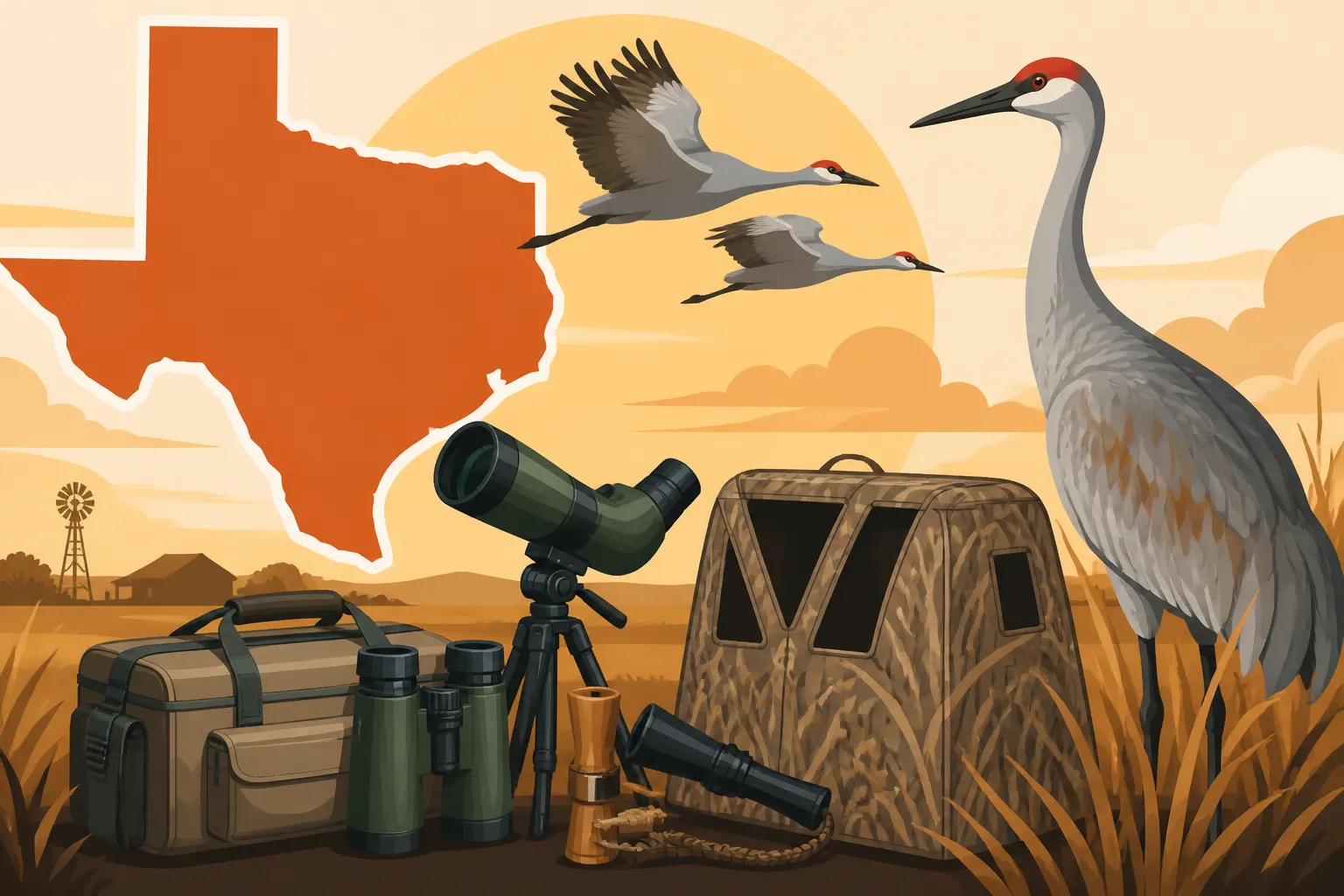
Forget those old, beat-up goose shells you might have gathering dust in the garage; cranes are simply too smart for them. You need dedicated sandhill crane decoys, and the more realistic, the better. Full-body decoys are king here. Brands like Avian-X and White Rock Decoys offer excellent options that mimic the natural coloration, postures (feeding, sentry, resting), and sheer size of actual cranes. You'll want a good mix of these poses to create a lifelike scene.
The number of decoys is also important. Cranes often travel in large groups, so a spread of 12-24 decoys is a good starting point, but don't be afraid to go bigger if your budget and space allow. More often than not, a larger, more realistic spread will bring in wary birds. Motion decoys, even subtle ones like a flapper or a feeder with a slight head bob, can add a layer of realism that really sells the spread, especially on calm days. For more insights on effective setups, check out Sandhill Crane Decoy Setup in Texas.
Effective Blind Setups for Wary Birds
Just as important as convincing cranes with your decoys is hiding yourself. Cranes can spot movement and unnatural shapes from incredible distances. Layout blinds are a popular choice for their low profile, allowing you to blend seamlessly into cut fields. Brands like Avery Outdoors and Rogers Sporting Goods make excellent layout blinds that are comfortable and easy to conceal. You'll want to brush in your layout blind heavily with local vegetation – stubble, corn stalks, whatever's in the field. Don't be lazy here; a poorly brushed-in blind sticks out like a sore thumb.
If you're hunting along a fence line or treeline, A-frame blinds can be effective, but again, concealment is paramount. Use natural materials to break up the outline. Sometimes, the best blind is no blind at all – just an expertly brushed natural hide along a depression or clump of trees. The key is to disappear completely. You'll be amazed at how quickly cranes will flare if they see anything out of place.
Crafting the Perfect Decoy Spread
This isn't just about throwing decoys out; it's an art form. Your spread should mimic a natural feeding or resting flock. Cranes prefer to land into the wind, so understanding wind direction is crucial. Set up your blinds downwind of your spread, creating a landing zone right in front of you. A common and effective spread involves creating a "J" or "U" shape, with the open end facing the direction you expect the birds to approach from, and the landing zone within your shooting range.
Place your decoys in family groups, with some feeding, some looking around (sentry positions). Don't make them too uniform; nature is messy. Ensure there's enough space for birds to comfortably land without feeling crowded. The goal is to make your spread look so inviting that passing cranes feel compelled to join. This strategic thinking is similar to what we discuss in Best Duck Decoy Spread for Texas Coast, just applied to a different species and habitat.
Shotguns, Ammunition, and Choke for Cranes
Once you've lured them in, you need the right tools to bring them down ethically. Cranes are big, tough birds, and hitting them effectively requires specific considerations for your firearm and ammunition.
Ideal Shotgun for Sandhill Crane Hunting
A 12-gauge shotgun is the overwhelming favorite for sandhill crane hunting, and for good reason. It offers the versatility to handle heavier shot payloads and larger shot sizes, which are often necessary for these resilient birds. While a 20-gauge can be effective with the right loads and a skilled shooter, the 12-gauge provides a bit more margin for error and range.
As for action, semi-automatic shotguns are highly favored for their faster follow-up shots and reduced recoil, which can be a blessing when you're taking multiple shots at incoming flocks. Popular choices include the Benelli SBE series, Beretta A400, or a reliable Remington Versa Max. Pump-action shotguns can also get the job done, but ensure you're practicing those quick follow-ups. Whatever you choose, reliability in field conditions is paramount. The last thing you want is a jam when a flock of cranes is cupping over your spread.
Steel Shot Requirements and Smart Shell Selection
This is critical: federal law mandates the use of non-toxic shot for all migratory bird hunting, including sandhill cranes. That means no lead shot. Steel shot is the most common non-toxic option, but you can also use bismuth or tungsten if your budget allows. For sandhill cranes, you'll want to opt for larger steel shot sizes to ensure enough energy to penetrate their dense feathers and robust bodies.
Common and effective steel shot sizes range from BB, BBB, to T shot. Many hunters find that BBB or T shot delivers the best combination of pellet count and knockdown power for cranes, especially at longer ranges. Shells with higher velocities and heavier payloads (e.g., 3-inch or 3.5-inch magnum loads) are often preferred, as they provide more pellets and greater energy downrange. Always pattern your shotgun with your chosen load to see how it performs at typical shooting distances (30-50 yards) to understand your effective range.
| Shotgun Gauge | Recommended Steel Shot Sizes | Choke Tube Recommendation | Common Load Types |
|---|---|---|---|
| 12-Gauge | BB, BBB, T | Modified, Improved Modified, Full | 3" or 3.5" Magnum |
| 20-Gauge | #1, BB | Modified, Improved Modified | 3" High Velocity |
Choke Tube Choices for Long-Range Success
The right choke tube can make a significant difference in your pattern density, which translates directly to how many pellets hit your target. For sandhill cranes, given their size and typical shooting distances, most hunters gravitate towards more constrictive chokes.
An Improved Modified (IM) or Full choke is often recommended when using steel shot for cranes. While a Modified choke might be sufficient for closer shots (25-35 yards), an IM or Full choke will give you a tighter pattern, increasing your chances of a clean kill on birds that might be hanging at 40-50 yards. Be aware that not all shotgun barrels are rated for steel shot through a Full choke, so always check your manufacturer's recommendations to avoid damaging your barrel. Patterning your shotgun at various distances with different chokes and your chosen ammunition is the only way to truly know what works best for your specific setup.
Apparel, Comfort, and Essential Accessories
Beyond the core hunting gear, your personal comfort and ability to operate effectively in the field are crucial. Texas weather is notoriously unpredictable, and being uncomfortable or unprepared can quickly ruin a hunt.
Camouflage and Layering for Texas Weather
Texas weather can throw anything at you, from a chilly morning to a sweltering afternoon, all in the same day. For sandhill cranes, you'll want camouflage patterns that blend into open fields – think browns, tans, and stubble patterns. Avoid dense woodland patterns unless you're hunting specifically from heavy timber cover. Many waterfowl-specific patterns with cattail or stubble elements work perfectly.
Layering is your best friend. Start with a moisture-wicking base layer, add an insulating mid-layer (fleece or synthetic down), and top it with a waterproof and windproof outer shell. This allows you to shed or add layers as the temperature changes, ensuring you stay comfortable. Don't forget a warm hat and gloves for those chilly dawns. Our guide on Best Early-Season Camo for Texas Heat can help you pick the right patterns and materials for comfort.
Footwear and Field Comfort
You'll be walking through fields, potentially muddy or uneven terrain, and sometimes dealing with thorny brush. Durable, waterproof boots are a must. Look for options with good ankle support. If you're hunting in areas known for rattlesnakes or other venomous critters, investing in a good pair of snake boots or snake gaiters is a smart move. Brands like LaCrosse and Rocky offer reliable snake protection. No one wants a trip to the emergency room cutting short their crane hunt.
Sitting in a blind for hours can be tough on your back and backside. A comfortable, low-profile blind chair or cushion can make a world of difference. Many layout blinds come with integrated padded seats, but if yours doesn't, consider adding one. Staying comfortable allows you to remain still and focused longer, which is vital for wary birds like cranes. You can find excellent advice on footwear in our article, Best Snake Boots for Texas Hunting.
Essential Retrieval and Safety Gear
Once you've harvested a crane, you'll need to retrieve it. Cranes are large birds, and a good game carrier or even a reliable hunting dog can make the retrieval process much easier. If you use a dog, make sure it's well-trained for retrieving large birds and is comfortable with decoys and gunfire.
Beyond retrieval, safety and navigation are paramount. A GPS device or a reliable hunting app like onX Hunt or HuntStand is crucial for navigating your lease, marking decoy locations, and ensuring you don't inadvertently wander onto neighboring properties. These apps also provide property lines, which are incredibly valuable on a lease. Don't forget a good rangefinder to accurately gauge shot distances, a first-aid kit, plenty of water, and some snacks. Many hunters also rely on resources like GoHunt to research the latest gear trends and find community insights that can further refine their hunting strategies and gear choices. For a deeper dive into useful technology, check out our guide on Best Hunting Apps for Texas (onX, HuntStand & More).
Disclaimer
Hunting is an activity with inherent risks. Always prioritize safety, follow all local, state, and federal regulations, and obtain proper landowner permission. The information provided in this guide is for informational purposes only and should not replace professional guidance or personal judgment.