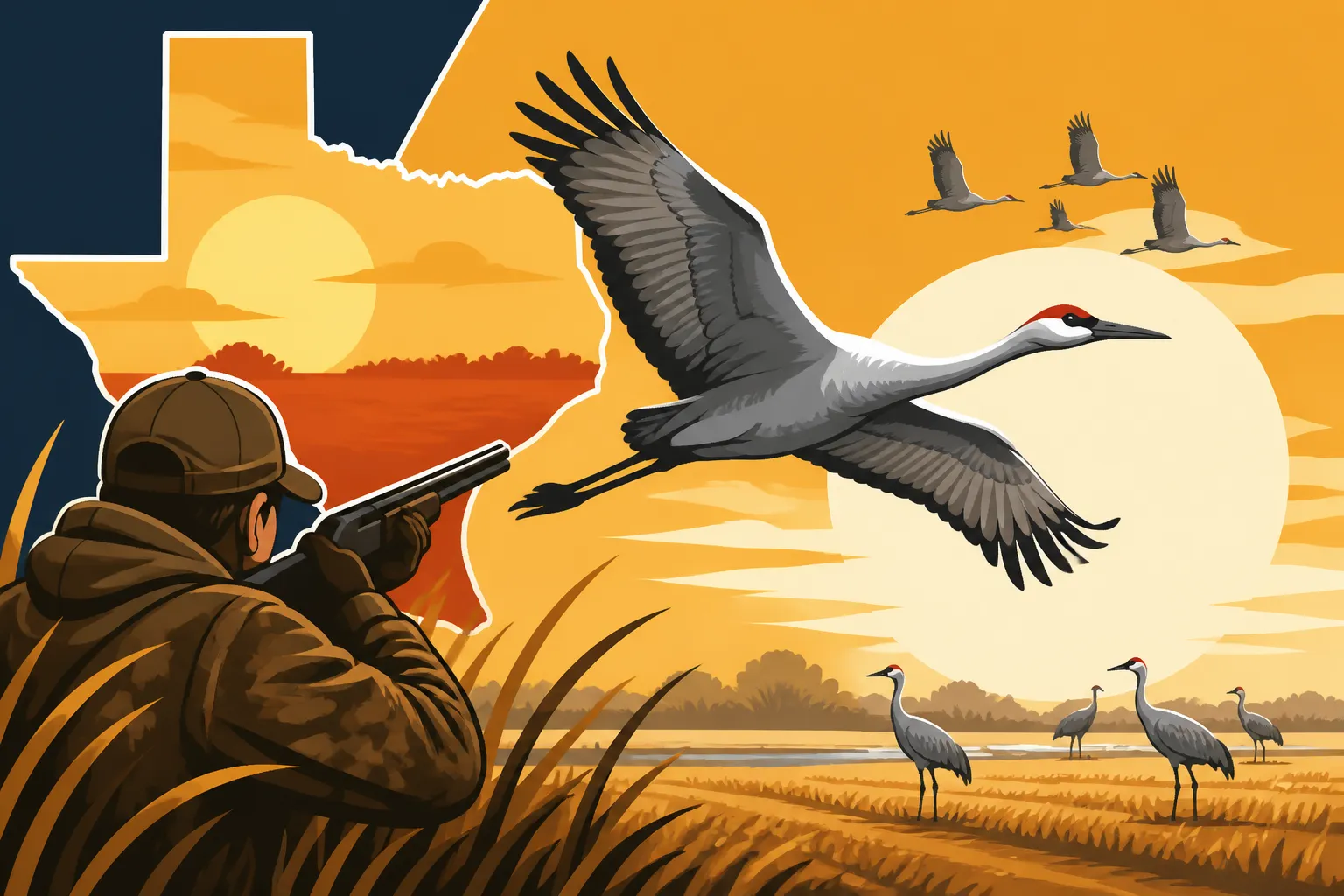
Best Time to Hunt Sandhill Crane in Texas
It's a question every passionate bird hunter in Texas eventually asks: when exactly is the absolute best time to hit the fields for those majestic "ribeye of the sky" — the sandhill cranes? Trying to pinpoint the prime window can feel like chasing a phantom, especially with their migratory nature and incredible wariness. This guide is here to unravel the mystery, diving deep into the seasonal patterns, daily habits, and environmental cues that will maximize your chances of a truly unforgettable sandhill crane hunt in the Lone Star State.
Understanding Sandhill Crane Migratory Patterns in Texas
Sandhill cranes are truly magnificent birds, known for their distinctive calls and impressive wingspan. While some cranes might be seen year-round in certain parts of Texas, the vast majority we hunt are migratory, traveling thousands of miles to spend their winters in our relatively warmer climate. Understanding this annual journey is the first crucial step to figuring out the best time to intercept them.
The Annual Migration Cycle
These incredible birds begin their southward migration from their breeding grounds in Canada and the northern United States as early as September and October, typically arriving in Texas by late October or early November. They follow distinct flyways, often funneling into the central and western parts of the state. It’s not a single, massive wave, but rather a continuous flow of birds, with different populations arriving and settling throughout the late fall and early winter. This gradual arrival means that the "best time" can shift depending on when new birds are pushing into an area, offering fresh opportunities. Hunters who follow these patterns closely are often the most successful.
Key Wintering Grounds and Roosting Habits
Once in Texas, sandhill cranes typically settle into specific wintering grounds that offer abundant food and safe roosting sites. The Texas Panhandle and the adjacent Rolling Plains are classic hotspots, renowned for their vast agricultural fields. Further south, parts of the High Plains and even some coastal areas can hold significant numbers. Cranes are creatures of habit: they'll spend their days feeding in large, open fields – often recently harvested corn, milo, or wheat – and then fly to large, shallow water bodies at dusk to roost. These roosting sites can be playa lakes, large stock tanks, or even wide, shallow rivers. Finding these patterns is paramount, as their daily movements between roost and feed dictate much of the hunting strategy. This intimate knowledge of their habitat and movements is what separates a lucky hunt from a consistently successful one, much like understanding specific deer patterns for a successful season.
Prime Hunting Seasons for Sandhill Cranes in Texas
Texas, being the enormous and ecologically diverse state it is, divides its sandhill crane hunting into three distinct zones, each with its own season dates. Knowing these zones and their typical opening windows is critical to planning your hunt for the best possible success. You'll always want to consult the current year's Texas Hunting Seasons: Complete Calendar by Species or the Texas Parks and Wildlife Department's Outdoor Annual for the most up-to-date information, but we can look at the general patterns.
Official Season Dates and Zones
Historically, Texas offers three Sandhill Crane zones, designated A, B, and C. Zone A generally covers the western Panhandle and High Plains, Zone B extends south and east from there, and Zone C encompasses the central and southern parts of the state where cranes are found.
Here's a look at typical season dates, but remember these are approximate and subject to change annually:
| Zone | Typical Start Date | Typical End Date | Primary Location | Key Characteristics |
|---|---|---|---|---|
| Zone A | Late October | Late January | Western Panhandle, High Plains | First to open, often sees early migrants |
| Zone B | Mid-November | Late January | Central Panhandle, Rolling Plains | Overlaps with peak migration for some areas |
| Zone C | Mid-December | Late January | Central & South Texas | Last to open, typically more settled birds |
These dates are crucial. For example, if you're looking to hunt in the Panhandle, Zone A will give you the earliest crack at birds. Securing your Texas Migratory Bird Endorsement & HIP Certification is also a must before heading out, regardless of the zone you choose.
Early Season Advantages Zone A Focus
For many experienced crane hunters, the early part of the season in Zone A, typically starting in late October, offers some of the best opportunities. Why? Because the birds are generally "fresher." They haven't been pressured by hunters for weeks on end, making them potentially less wary and more responsive to decoy spreads and flagging. During this time, there's often a consistent influx of new migrants, keeping the population dynamic and providing new chances even if local birds become educated. The weather is often still pleasant, though cold fronts can definitely start pushing through, which can be a double-edged sword – bringing in new birds but also making hunting conditions more challenging. This early window is prime for those who can scout effectively and get set up on newly arrived flocks.
Mid-Season Persistence and Late Season Challenges
As the season progresses into November and December, particularly in Zones B and C, the hunting dynamic changes. By mid-season, many cranes have settled into their winter routines. Their flight patterns between roost and feed fields are well-established, but they've also become significantly warier due to sustained hunting pressure. This is where meticulous scouting becomes even more critical. You might find fewer "new" birds, and those present have seen plenty of decoy spreads and heard plenty of flagging.
The late season, stretching into January, can be tough. Birds are highly educated, and competition for prime fields might be higher. However, persistent cold weather or significant snow events further north can sometimes push another wave of birds south, offering a late-season boost. For those who are tenacious and adaptable, late-season success is still possible, but it demands even greater attention to detail and patience. Think of it like trying to pattern a mature buck in January – it takes a different level of cunning than an early-season deer hunt.
Daily Hunting Strategies: Timing Your Approach
Beyond the broader seasonal windows, the time of day you choose to hunt sandhill cranes is equally critical. These birds are creatures of routine, and understanding their daily cycle will help you place yourself in the best position for a shot. It's not just about being in the field; it's about being in the right field at the right moment.
Morning Flights from Roost to Feed
Without a doubt, the morning flight is often considered the prime time for sandhill crane hunting. Cranes spend the night congregated on large, shallow bodies of water, known as roosts, for safety. As the first hint of dawn breaks, they begin to stir, eventually lifting off in smaller groups and larger flocks, heading towards their chosen feeding fields for the day. This exodus typically happens within the first hour or two of legal shooting light.
To capitalize on this, you need to be set up well before sunrise. Scouting the previous day will tell you where they're feeding, and ideally, you'll be able to position your blind and Sandhill Crane Decoy Setup in Texas directly under their flight path or in a field they've been consistently using. The sight of dozens, or even hundreds, of cranes heading straight for your spread is an exhilarating experience, but they are incredibly sharp-eyed. Effective concealment and a convincing decoy spread are paramount. This morning ritual is a reliable window if you've done your homework.
Mid-Day Lulls and Afternoon Returns
Once the morning feeding frenzy subsides, crane activity often slows significantly. They might continue to feed, loaf, or even fly short distances to different parts of the same field or an adjacent one. For hunters, this typically means a lull in consistent incoming flights. This can be a good time to pack up from a morning hunt, move to a new location if the morning didn't pan out, or simply take a break.
However, a second, albeit often less predictable, opportunity can arise in the late afternoon. As evening approaches, cranes will start making their way back from the feeding fields to their roosting sites. While not usually as concentrated as the morning departure, these return flights can still offer shooting opportunities. The challenge here is that their flight paths might be more dispersed, and setting up an effective decoy spread in a return flight path can be trickier than anticipating their morning feed. Still, for those who have the dedication and flexibility to stay out, the late afternoon can sometimes surprise you with a bonus flock.
Scouting for Success: Patterning the Birds
The "best time" to hunt sandhill cranes on any given day isn't just about the clock; it's about understanding the birds themselves. This requires diligent scouting. Just like you'd How to Scout for Deer Before Season in Texas, you need to spend time observing cranes from a distance, usually with a good set of binoculars or a spotting scope. Look for where they're feeding, how they enter and exit fields, and what their preferred flight corridors are. Pay attention to how they react to different crops and field conditions.
A field that's hot one day might be barren the next if a new food source opens up or if they've been pressured too heavily. Cranes are smart, and they learn quickly. Patterning their exact movements day-to-day will be your most valuable tool for knowing precisely when and where to set up. Don't be afraid to put in the windshield time; it almost always pays off when hunting these magnificent birds.
Weather and Environmental Factors for Sandhill Crane Success
Beyond migration and daily routines, external factors like weather and the availability of food and water play a massive role in where cranes will be and how they'll behave. Overlooking these elements is a surefire way to miss out on prime opportunities.
Impact of Cold Fronts and Weather Changes
One of the most significant influences on sandhill crane hunting in Texas is the weather, especially cold fronts. A strong cold front pushing down from the north can have two major impacts. First, it can trigger a new wave of migration, pushing fresh, unpressured birds into the Texas wintering grounds. This sudden influx can revitalize an area that might have seen a lull in activity. Second, colder temperatures often make birds more active feeders as they need more energy to maintain their body heat. This can lead to more aggressive decoying and better overall hunting.
Wind also plays a critical role. Cranes, like many large birds, prefer to land into the wind. A steady breeze helps them control their descent and provides lift. Knowing the wind direction is essential for proper blind placement and decoy spread orientation. While hunting Dove Field Setup: Where to Stand has its own wind considerations, for large, wary cranes, perfect wind positioning is even more critical. Calm days can make decoying much harder, as birds have no preference for a landing direction and often circle endlessly, inspecting every detail.
Crop Cycles and Food Availability
Sandhill cranes are primarily vegetarians, and their diet consists largely of waste grain left behind in agricultural fields. This means that crop cycles are hugely influential on their presence and patterns. In the Texas Panhandle and other farming regions, fields of harvested corn, milo, and wheat are magnets for cranes. They'll spend their days gleaning leftover kernels, making these fields the most desirable places to hunt.
The "best time" to hunt is often directly correlated with when these preferred crops are available after harvest. If all the corn has been picked clean, or if a field has been disked under, the cranes will move on. This is why keeping up with local farming practices and scouting for recently harvested fields, especially those with plenty of waste grain, is paramount. Different crops become available at different times, so understanding the agricultural landscape of your hunting area is just as important as knowing the bird's migratory schedule.
Water Sources and Roosting Site Importance
While food fuels their day, water is where sandhill cranes seek safety for the night. Large, open water bodies that offer protection from predators are critical roosting sites. In the Panhandle, these are often the numerous playa lakes. Further south, large stock tanks or even shallow areas of bigger reservoirs can serve the same purpose. The proximity of these water sources to abundant feeding fields dictates the daily flight paths and, by extension, the best locations for setting up a hunt.
A field that's directly between a major roost and a prime feeding area is gold. Cranes will use the shortest, most efficient route. If you can identify these key travel corridors, you've found a truly "best time" and place to be. Always observe where the birds are heading in the morning and returning to in the evening; this intel is invaluable. Using Best Hunting Optics for Texas: Scopes, Binos & Rangefinders during your scouting will give you the edge you need to pinpoint these crucial locations without disturbing the birds.
Disclaimer
Hunting regulations and season dates can change annually. Always consult the most current Texas Parks and Wildlife Department Outdoor Annual or website before planning any hunting trip to ensure you are in full compliance with all state and federal laws. Stay safe and hunt ethically.