Best Hunting Method for Blackbuck Antelope in Texas
You’ve spent days glassing the shimmering heat waves of the Texas Hill Country, only to watch a dark-masked blackbuck spiral away into the distance the second you shift your weight. These animals are notoriously skittish, possess eyesight that rivals a hawk's, and rarely offer a second chance. This guide breaks down the most effective hunting methods to help you outsmart these "living corkscrews" and find success in the field.
Mastering the Spot-and-Stalk Technique
For many veteran hunters, the most rewarding and effective way to pursue these animals is through a high-stakes game of cat and mouse. Unlike whitetail that often stick to the edges of heavy brush, blackbuck antelope are creatures of the open plains and short-grass flats. They rely on their vision for survival, meaning they want to be exactly where you can see them—but also where they can see you from a mile away. To succeed with this method, you have to embrace the crawl.
The process usually begins at dawn. You’ll want to find a high point, perhaps a rimrock ridge or a tall tripod stand, and let your glass do the walking. Because blackbuck are relatively small compared to a large deer, you need high-quality optics to distinguish a trophy male from a distance. If you are looking for gear, you can often find great deals on high-end vortex or leupold binoculars on Amazon to save a few bucks before your trip. Once you spot a dominant male—identifiable by his near-black coat and spiraling horns—you have to plan a route that uses every bit of topography available.
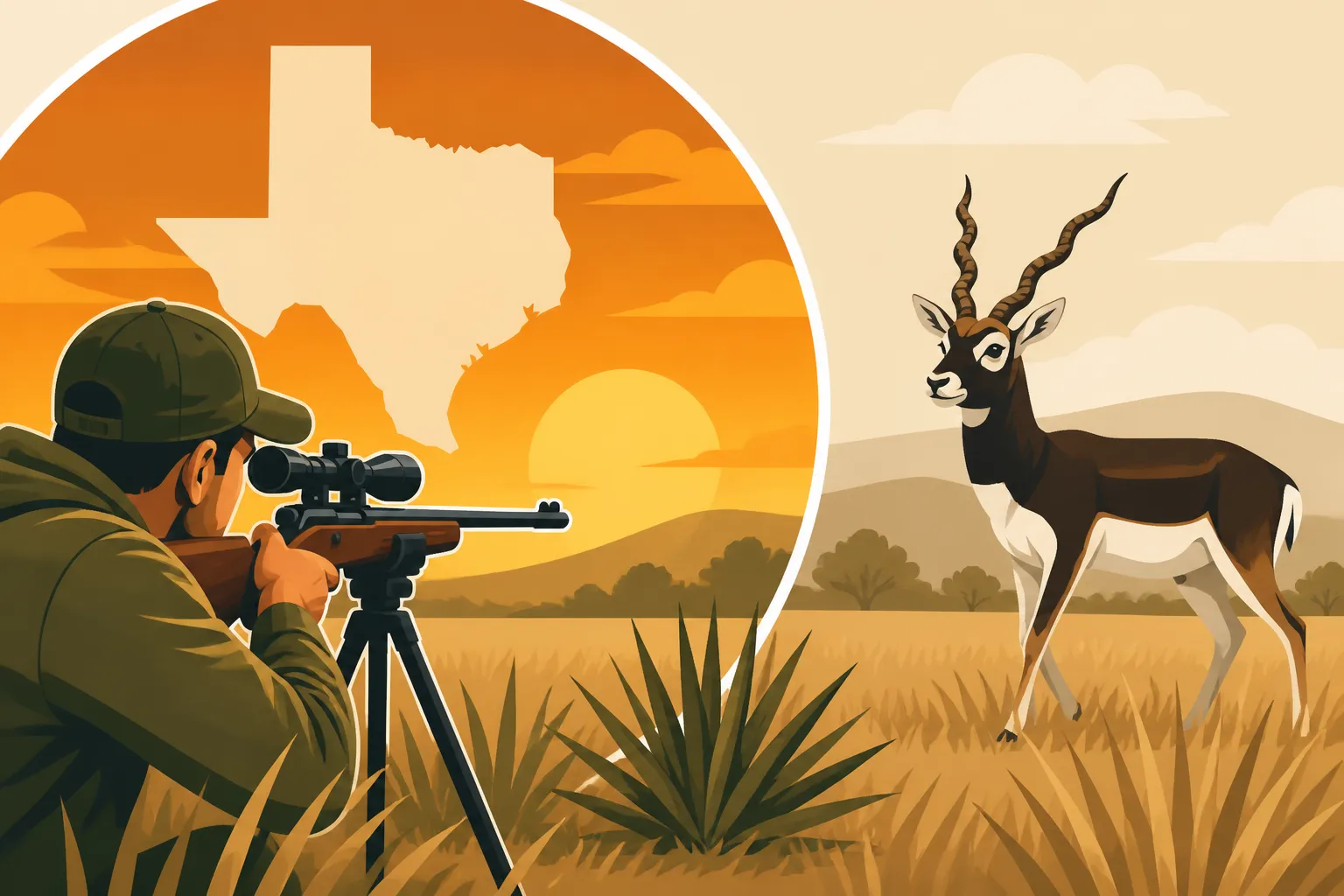
In the Texas landscape, this means looking for dry creek beds, cedar motts, or slight depressions in the soil. You aren't just walking; you are often belly-crawling through prickly pear and limestone rocks. The goal is to get within 200 yards, which is often the "red zone" for blackbuck. If they see a human silhouette standing in an open field, the game is over instantly. This is why Spot-and-Stalk Hunting in Texas (Exotics & Mule Deer) is considered an art form. You have to move when they put their heads down to graze and freeze the moment a single female in the herd looks up. Blackbuck females are the real "sentries" of the group, and they are far more observant than the males who are often distracted by territorial disputes.
Hunting Over Feeders and Water Sources
While the purist might prefer the stalk, many hunters in Texas find the most consistent success by utilizing the state’s well-established feeding infrastructure. Because blackbuck were originally imported from the Indian subcontinent, they are highly adapted to grazing. They absolutely love corn and high-protein pellets, making them frequent visitors to supplemental feeding stations. However, hunting them over a feeder is not as simple as sitting in a box blind and waiting for a "gimme" shot.
Blackbuck are incredibly wary of enclosed spaces. If your blind is too close to the feeder or smells like last night’s campfire, they will circle the area for hours without ever stepping into the open. Successful hunters often place their blinds 150 to 200 yards away from the feeder to give the animals a sense of security. You also need to realize that blackbuck are primarily "daylight" movers. While a whitetail buck might wait for the last five minutes of legal light, a blackbuck is often most active during the heat of the day, specifically between 10:00 AM and 2:00 PM.
Using How to Pattern Bucks With Trail Cameras is a massive advantage here. By checking your camera logs, you’ll likely notice that the blackbuck show up with almost mechanical precision at certain times. If you’re setting up a new site, you can grab a few cellular cameras on Amazon to monitor the activity from your phone without constantly blowing your scent into the area. Water is the other major draw. In the arid regions of the Edwards Plateau or South Texas, a windmill or a water trough is a magnet. During the summer months, sitting on a water source during the midday heat is perhaps the most reliable way to get a shot at a trophy.
Comparative Success by Method
| Hunting Method | Difficulty Level | Best Time of Day | Ideal Terrain | Equipment Needed |
|---|---|---|---|---|
| Spot-and-Stalk | High | Early Morning / Late Evening | Open Plains & Draws | Binos, Rangefinder, Knee Pads |
| Feeder / Blind | Medium | Mid-Morning to Mid-Afternoon | Motts & Pasture Edges | Comfortable Box Blind, Timer |
| Water Hole | Low to Medium | Midday Heat | Arid Brush Country | Ground Blind, Scent Cover |
| High Point Glassing | Medium | All Day | Ridges & Plateaus | Tripod, Spotting Scope |
Regional Strategies and Environmental Factors
Your approach should shift depending on where you are hunting in the Lone Star State. If you are pursuing Exotic Hunting in Texas: Axis, Aoudad, Blackbuck & More, you’ll find that the environment dictates the animal's behavior. In the Hill Country, where the brush is thick with cedar and live oak, blackbuck will often use small clearings as their staging grounds. Here, a tripod stand tucked into a cedar tree offers a vantage point that keeps you above their line of sight.
In contrast, South Texas blackbuck are often found on massive, flat coastal prairies. In these areas, the wind is your greatest enemy. Because the terrain is so flat, the wind can carry your scent for miles. Always check the forecast and ensure you are downwind of where you expect the herd to emerge. If you are hunting on a budget, you might check Blackbuck Antelope Hunting in Texas: Cost & Where to see which regions offer the best value for your preferred style.
One thing many newcomers forget is the impact of temperature. Blackbuck are incredibly sensitive to the cold. During a Texas "blue norther" or a rare freeze, these animals will huddle together in the thickest brush they can find to stay warm. They don't have the heavy winter coats or body fat of a whitetail. If you are hunting during a cold snap, forget the open fields; you need to find south-facing slopes where they can soak up the sun or thick creek bottoms that block the wind. Knowing Is There a Season for Blackbuck in Texas? is helpful, as you'll realize you can hunt them year-round, but your tactics must evolve with the thermometer.
The Importance of Shot Placement and Calibration
Because blackbuck are small—usually weighing between 75 and 110 pounds—hunters often underestimate them. I’ve seen many people show up with a .300 Win Mag thinking they need the power, only to realize that a smaller, faster caliber like a .243 or a 6.5 Creedmoor is much more appropriate. The goal is a flat-shooting rifle that can handle the Texas wind over a 200-yard shot. You can find quality rifle rests and shooting bags on Amazon to help stabilize those long-distance shots in the wind.
The vitals on a blackbuck are tucked further forward and lower than many people realize. If you aim for the center of the body like you might on a large hog, you risk a gut shot that leads to a long, difficult tracking job in the Texas heat. You want to tuck your shot right behind the shoulder, about one-third of the way up the body. Once the animal is down, the work begins quickly. If it's a typical 90-degree Texas afternoon, you need to know Field Dressing & Processing Game in Texas Heat to ensure that delicious venison doesn't spoil.
If you are a first-time exotic hunter, this species is widely considered the Best Exotic to Hunt in Texas for Beginners because they are plentiful, beautiful, and offer a world-class hunting experience without the extreme price tag of a Kudu or an Eland. Whether you are learning How to Hunt Blackbuck Antelope on a Texas Lease or visiting a high-end outfitter, the key remains the same: patience, persistence, and a healthy respect for their incredible eyesight.
Before you head out, always double-check your paperwork. Make sure you have a valid Texas Hunting License: Cost, Types & How to Buy (2026) and that you understand the specific rules of the ranch or public land you are on. Even though they are exotics, the law still requires you to be a licensed hunter. Once the license is in your pocket and your rifle is zeroed, you're ready to tackle one of the most challenging and rewarding hunts Texas has to offer.
Disclaimer on Hunting Regulations
The information provided in this guide is for educational and informational purposes only. Hunting regulations in Texas are subject to change by the Texas Parks and Wildlife Department (TPWD) at any time. Always consult the official TPWD Outdoor Annual or your local game warden to ensure you are in compliance with current licensing, season dates, and harvest reporting requirements. Private ranches may have additional specific rules regarding the take of exotic species. Always obtain written permission before hunting on private property.