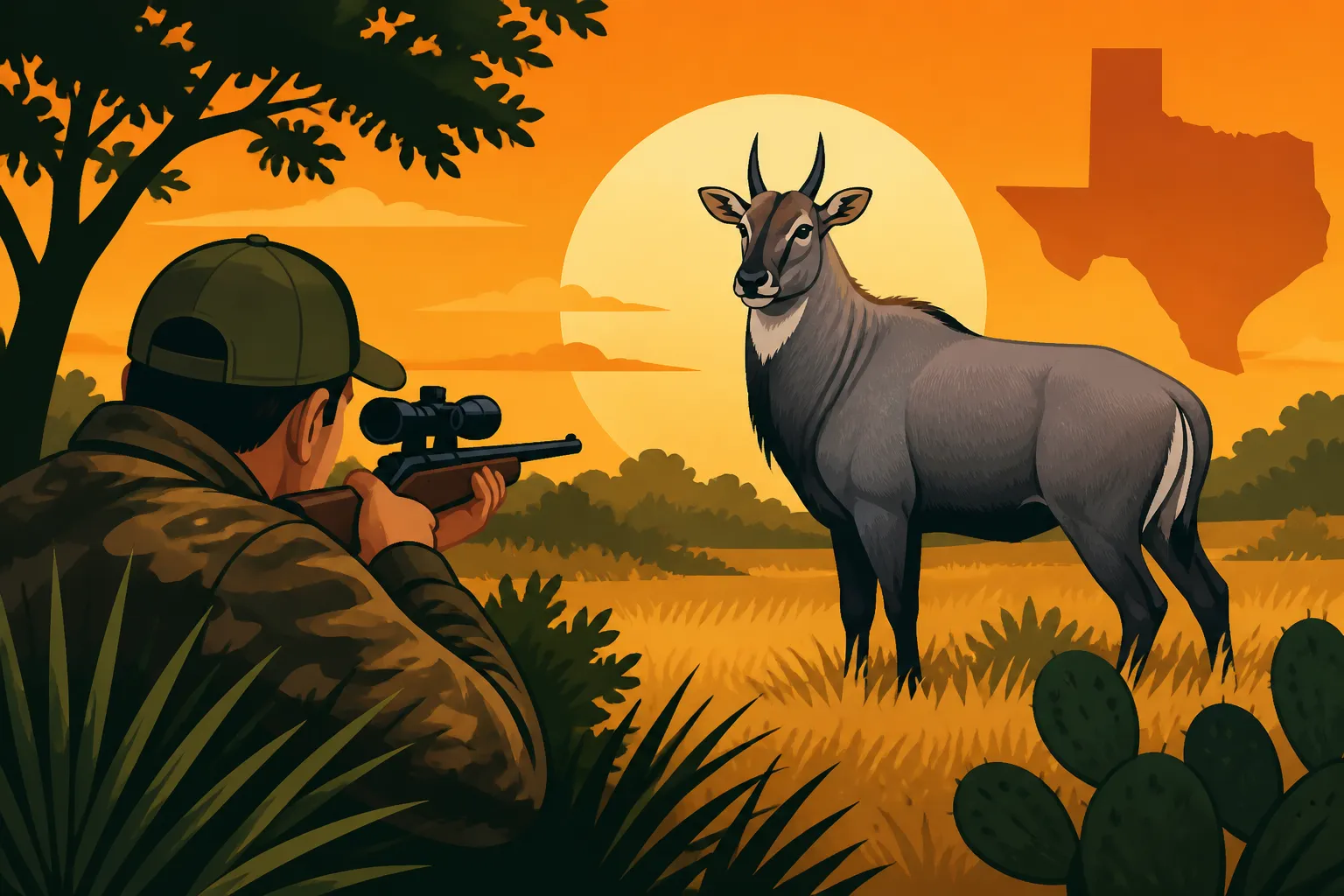
How to Hunt Nilgai in Texas
Nilgai hunting in Texas isn't just another walk in the woods; it's an adventure into the heart of the toughest brush country, chasing an animal that blends the stealth of a whitetail with the sheer resilience of an African antelope. Many hunters underestimate these powerful "blue bulls," only to find themselves grappling with a formidable beast that demands respect, heavy firepower, and a keen understanding of its habitat. This comprehensive guide will walk you through everything you need to know to successfully hunt nilgai in Texas, from understanding their behavior to choosing the right gear and executing a successful stalk.
Understanding Nilgai in Texas: The Blue Bull's Domain
Before you even think about setting foot in the South Texas brush, you've got to understand the animal you're after. Nilgai, often called "blue bulls" for the distinctive blue-grey coat of the mature males, aren't native to Texas. They were introduced to King Ranch in the 1930s and have since established robust free-ranging populations, primarily along the Gulf Coast and into the vast expanse of South Texas. They're a truly unique hunting experience, a taste of Africa right here in the Lone Star State.
Where Nilgai Roam in Texas
When we talk about hunting nilgai, we're almost exclusively talking about a very specific region of Texas: the deep South and coastal plains. Their stronghold is undoubtedly the vast, wild stretches of private ranch land, particularly in counties like Kenedy, Kleberg, Willacy, and Cameron. These areas provide the dense, thorny brush and open grasslands that nilgai thrive in, offering them both abundant forage and incredible cover from predators and hunters alike. You'll find them on large ranches, often pushing toward the coast, where the climate is milder and the vegetation is thick. The dense, almost impenetrable nature of the South Texas brush, often referred to as "brush country," is a key factor in their survival and makes hunting them an immense challenge. If you're looking for where to hunt nilgai in Texas, these are the counties to focus on, though their range can extend into other parts of the Gulf Coast Hunting in Texas: Waterfowl & Nilgai region.
Nilgai are incredibly adaptable, but they truly excel in these semi-arid to sub-humid environments. They love areas with a mosaic of dense cover and open grazing land. Think mesquite thickets, huisache, guajillo, and prickly pear, interspersed with coastal prairie grasses. This varied habitat allows them to browse on leaves and shoots, as well as graze on grasses, making them less dependent on a single food source. Their preference for these remote, rugged landscapes means that public land opportunities are extremely limited, and most nilgai hunting happens on private leases or through guided hunts.
Nilgai Behavior and Characteristics
Nilgai are substantial animals. Mature bulls can stand over five feet tall at the shoulder and weigh anywhere from 400 to 700 pounds, sometimes even more. Their physical toughness is legendary. They have incredibly thick hides and dense bone structure, making them notoriously hard to bring down. The males are the striking "blue bulls," while the females and younger animals are a more tawny brown. Both sexes have distinct white markings on their faces and throats, and the males sport short, conical horns.
Their behavior patterns are fascinating. Nilgai are generally active during the cooler parts of the day – early mornings and late evenings are prime times to find them moving between bedding areas and feeding grounds. During the heat of midday, they'll often bed down in thick cover, making them exceptionally difficult to spot. They are also incredibly wary animals, with excellent eyesight and a keen sense of smell. They can be incredibly skittish, bolting at the slightest disturbance and quickly disappearing into the dense brush. This combination of size, toughness, and wariness is precisely what makes nilgai such a coveted and challenging trophy for hunters. They often move in small herds, sometimes with a dominant bull, and their speed and ability to navigate dense brush are truly impressive.
Essential Gear and Preparations for Nilgai Hunting
Hunting nilgai isn't like hunting whitetail. You can't just show up with your standard deer rifle and expect an easy time. The nilgai's size, incredible toughness, and the unforgiving South Texas environment demand specialized gear and thorough preparation. Skimping on essentials here will only lead to frustration, potentially lost game, and a less enjoyable (and less safe) hunt.
Rifles and Ammunition for Nilgai
This is perhaps the most critical gear decision you'll make. Nilgai are tough, tougher than any North American game animal many hunters are accustomed to. A marginal shot with an underpowered cartridge will almost certainly result in a lost animal and a lot of heartache. You need significant stopping power. Forget about your .243 or .270; while they might work on a perfect, close-range shot, they simply don't offer the margin for error needed for these animals.
Most experienced nilgai hunters recommend cartridges in the .300 magnum class as a minimum, but heavier calibers are strongly preferred. Think along the lines of a .300 Win Mag, .338 Win Mag, .375 H&H Magnum, or even a .416 Rigby if you're feeling adventurous. The key isn't just the caliber, but the bullet itself. You need premium, heavy-for-caliber bullets designed for deep penetration and controlled expansion. Bonded bullets like the Federal Trophy Bonded Tip, Nosler AccuBond, or Swift A-Frame are excellent choices. Monolithic copper bullets such as Barnes TTSX or Hornady CX also perform exceptionally well, retaining nearly 100% of their weight for maximum penetration. A good rule of thumb is to practice extensively with your chosen setup to ensure you can place your shots accurately under pressure.
Here's a quick comparison of common nilgai rifle calibers:
| Caliber | Typical Bullet Weight (gr) | Energy at 100yds (ft-lbs) | Recoil (approx.) | Notes |
|---|---|---|---|---|
| .300 Win Mag | 180-200 | 3000-3500 | Moderate | Minimum recommended, use premium bullets |
| .338 Win Mag | 200-250 | 3500-4000 | Heavy | Excellent choice, offers good balance of power/shootability |
| .375 H&H Magnum | 270-300 | 4000-4500 | Very Heavy | Classic big game round, highly effective |
| .416 Rigby | 400 | 5000+ | Extreme | Overkill for most, but guarantees stopping power |
Note: Energy and recoil are approximate and depend on specific load, barrel length, and rifle weight.
Optics, Apparel, and Other Necessities
Beyond the rifle, your other gear choices are equally important for a successful and safe nilgai hunt.
- Optics: Given the vast, open-to-dense terrain, quality optics are non-negotiable. You'll need good binoculars (10×42 or 12×50 are common) for scanning the horizon and picking out animals in the distant brush. A reliable rangefinder is crucial for confirming distances, especially when nilgai can appear much closer or further than they actually are in the vast landscape. And, of course, your rifle scope needs to be robust, hold zero, and provide a clear sight picture in varying light conditions. For more detail, check out our guide on Best Hunting Optics for Texas: Scopes, Binos & Rangefinders.
- Snake Boots: This isn't a suggestion; it's a requirement. South Texas is rattlesnake country, especially during warmer months. Investing in a good pair of full-length snake boots like those from Lacrosse or Danner, or sturdy snake gaiters over your regular boots, could save your life. You'll be pushing through dense, low-visibility brush, and you absolutely do not want to take chances. Our piece on Best Snake Boots for Texas Hunting offers more insights.
- Apparel: The weather can be extreme. Early morning can be cool, but midday temperatures can soar. Lightweight, breathable, yet durable brush-country camo is ideal. Think greens, browns, and tans to blend with the natural environment. Layers are your friend. A good hat and sunglasses are also essential for sun protection.
- Hydration and Pack: You'll be covering a lot of ground, often in challenging conditions. A comfortable day pack with plenty of water (a hydration bladder is great), snacks, a first-aid kit, a headlamp, and game bags are absolute must-haves.
- Transportation: Many nilgai hunts involve covering large areas in a 4×4 vehicle or on an ATV/UTV. Be prepared for rough terrain, thick brush, and potentially getting stuck. A reliable vehicle is often provided by an outfitter, but if you're on a private lease, ensure your own vehicle is up to the task.
Proven Tactics for Spot-and-Stalk Nilgai Hunting
The primary method for hunting nilgai is spot-and-stalk. This is where the challenge truly lies, combining patience, keen observation, physical endurance, and precise execution. It’s an incredibly rewarding way to hunt, demanding all of your skills as a hunter.
Scouting and Locating Nilgai
Finding nilgai is often half the battle. They are creatures of habit, often moving along established trails, especially between dense bedding areas and preferred feeding zones or water sources. Your scouting efforts should focus on identifying these patterns. Look for fresh tracks in sandy roads or around water holes. Nilgai tracks are large, often resembling cattle tracks but more pointed. Look for fresh droppings (pellets, similar to deer but much larger).
Often, the best way to locate nilgai is simply to drive slowly along ranch roads during the early morning and late evening, glassing constantly with your binoculars into every opening, every senderos (cut lines through the brush), and along fence lines. Nilgai are masters of camouflage in their environment, and their blue-grey coats can blend surprisingly well with the shadows and brush. Sometimes, you'll only catch a glimpse of a leg or a flick of an ear. Once you spot an animal, the real work begins. Pay close attention to wind direction; nilgai have an incredible sense of smell, and a crosswind or direct wind is essential for a successful approach.
The Stalk: Getting Close to a Wary Beast
The stalk is where you earn your nilgai. Unlike some exotic species that might be less wary, nilgai are exceptionally alert. The dense South Texas brush can be both your friend and your enemy here. It offers incredible cover, but also makes silent movement extremely difficult. Every snap of a twig, every rustle of dry leaves, could send your quarry bolting.
When you begin your stalk, always consider the wind. A nilgai will smell you long before it sees you. Plan your approach to keep the wind in your face or on a crosswind. Move slowly. Take one step at a time, checking your footing for dry leaves, loose rocks, or thorny branches. Use every piece of available cover – mesquite trees, prickly pear clumps, even folds in the terrain. Drop to your hands and knees if necessary. The goal is to get within comfortable shooting range, typically 100-200 yards, without being detected. This is a true test of patience and stealth, similar to Spot-and-Stalk Hunting in Texas Exotics & Mule Deer.
As you get closer, use your binoculars to identify the specific animal you want to shoot. Confirm it's a mature bull if that's your target, and identify any obstructions or other animals that might spook. Nilgai can be tough to distinguish from a distance, and you want to be certain of your target before taking a shot.
Shot Placement and Follow-up
Given the nilgai's legendary toughness, shot placement is paramount. A perfectly placed shot is absolutely critical to a clean kill and avoids a potentially difficult or impossible recovery. Aim for the shoulder, targeting the heart-lung area. Their vitals are situated a bit further forward than a whitetail, so resist the urge to aim too far back. A broadside shot is ideal, or a slightly quartering-away shot. Avoid head-on or quartering-to shots, as these present a much smaller vital target and risk insufficient penetration.
Upon taking the shot, immediately reload and be prepared for a follow-up. Nilgai can absorb a tremendous amount of lead, and even a well-hit animal might run a significant distance before succumbing. Watch the animal's reaction closely. Did it hunch, stumble, or show signs of being hit? What direction did it run? Mark the spot where it was standing when you shot and the direction of its escape. This information is vital for tracking.
If the nilgai runs, wait a few minutes (5-10 for a good hit, longer for a questionable one) before beginning to track. Give the animal time to lay down. Then, start tracking slowly and methodically, looking for blood, broken brush, and tracks. This is where the dense brush becomes a real challenge, as blood trails can be sparse. Having a good tracker, or even a tracking dog (where legal and available), can make all the difference. Remember, recovering a nilgai in the Texas heat means you'll want to move quickly, as detailed in our guide on How to Cool a Deer Fast in Texas Heat, but never at the expense of a thorough, safe track.
Common Nilgai Hunting Methods and Challenges
While spot-and-stalk is the most common and arguably the most exciting method, other approaches exist depending on the ranch and the specific hunt. Regardless of the method, the challenges associated with nilgai are consistent.
Hunting from a Blind or High Rack
Some ranches, especially those with more open terrain or those catering to hunters who prefer less strenuous activity, might utilize ground blinds, elevated blinds, or even high racks mounted on vehicles.
- Ground Blinds/Elevated Blinds: If you're hunting from a stationary blind, it will likely be situated near a known nilgai travel corridor, a feeding area, or a water source. The advantage here is stability for your shot and concealment. The downside is limited visibility and a more passive hunting experience. You're waiting for the nilgai to come to you, which can be a test of patience, as nilgai often move through an area quickly.
- High Rack Hunting: This method involves driving slowly in a specially equipped vehicle (a "high rack" or "safari buggy") that allows hunters to stand elevated above the brush, providing a better vantage point for spotting nilgai. When an animal is spotted, the vehicle stops, and hunters dismount for the shot or sometimes shoot from the stationary high rack itself. This is particularly effective in vast, open-to-moderate brush country like some parts of the King Ranch. It allows you to cover vast distances efficiently, increasing your chances of encountering nilgai. However, it still requires quick decision-making and accurate shooting when an opportunity arises. This is a common method for Exotic Hunting in Texas: Axis, Aoudad, Blackbuck & More in general.
No matter the setup, the core principles of nilgai hunting remain: stealth, shot placement, and proper caliber selection. The nilgai's acute senses make them difficult to approach, and their incredible toughness makes a precise, powerful shot non-negotiable.
Managing the Recovered Nilgai
Once you've successfully harvested a nilgai, the work isn't over. In fact, it's just beginning! Due to their immense size and the often scorching Texas heat, immediate and efficient field dressing is crucial to preserve the meat.
Nilgai hide is incredibly thick and tough, often requiring a sharp, heavy-duty knife or even a small hatchet to begin the skinning process. Their sheer weight means you'll definitely need help to load the animal onto a truck or trailer. Many outfitters have dedicated skinning and processing facilities, or at least a hoist to make the job easier. If you're on a private lease, planning for game recovery is a critical part of your preparation. Our detailed guide on Field Dressing & Processing Game in Texas Heat will be an invaluable resource, as the principles apply even more intensely to an animal of this size.
Because nilgai are classified as an exotic species in Texas, there's no closed season or bag limit. This means you can hunt them year-round, which is fantastic for scheduling but also means you'll always be dealing with potentially high temperatures. You don't need a special tag for them either, beyond a general hunting license. For more information, you can research Is There a Season for Nilgai in Texas? and Nilgai Season & Bag Limit in Texas. However, respecting the animal and utilizing the meat is part of ethical hunting. Nilgai venison is lean, flavorful, and highly sought after by many hunters. Planning for proper cooling and transport to a processor or your home freezer is a significant logistical consideration after the hunt. This is one of the many reasons why many hunters opt for guided Nilgai Hunting in South Texas experiences, as the outfitters handle much of this heavy lifting.
Remember, nilgai hunting is a deeply rewarding experience, pushing your skills and endurance. With the right preparation, gear, and tactics, you'll be well on your way to earning your own "blue bull" trophy.
Disclaimer
Hunting is an inherently dangerous activity. This guide provides general information and recommendations. Always consult the most current Texas Parks and Wildlife Department regulations and landowner rules before any hunt. Ensure you have the proper licenses, permits, and hunter education certifications. Practice firearm safety diligently and consider hiring a professional guide or outfitter, especially for challenging game like nilgai. The author and publisher are not responsible for any accidents, injuries, or legal issues that may arise from hunting activities.