Is There a Season for Fallow Deer in Texas?
One of the trickiest things about navigating Texas hunting regulations is figuring out which animals have a specific season and which don't. It can feel like you need a law degree just to understand when and how you can pursue certain game, and Fallow Deer often throw hunters for a loop. This comprehensive guide will clear up the confusion surrounding Fallow Deer hunting in Texas, explaining exactly why there isn't a traditional season for them and what you need to know to hunt these beautiful animals legally.
Understanding Exotic Game Animals in Texas
Let's get right to the heart of the matter: Fallow Deer don't have a designated hunting season in Texas like our native White-tailed Deer or Rio Grande Turkey. This isn't an oversight; it's a deliberate distinction rooted in how Texas Parks and Wildlife Department (TPWD) classifies game animals. Fallow Deer are considered exotic species, meaning they are not native to Texas. They were introduced here, largely for agricultural purposes, to be raised on ranches.
The primary reason this distinction matters is that TPWD's extensive regulations regarding seasons, bag limits, and specific harvest reporting primarily apply to native, indigenous game species. Think of whitetails, mule deer, turkey, or migratory birds – these are heavily regulated to ensure sustainable populations and fair chase. Exotic species like Fallow Deer, Axis Deer, Aoudad, and Blackbuck Antelope fall under a different regulatory umbrella, or rather, a lack thereof in terms of specific seasons.
The Definition of an Exotic Species
An exotic species in Texas is essentially any animal that is not naturally found in the wild here. These animals have been imported from other parts of the world and are typically maintained on private property, often within high-fenced ranches. Because they are not native, their population dynamics and ecological impact are viewed differently by state wildlife agencies.
Unlike native game, which TPWD actively manages through habitat conservation, population surveys, and setting annual seasons and limits, exotic species are largely managed by the landowners who possess them. The state's interest is primarily in ensuring humane treatment and preventing the escape of potentially invasive species, but not in dictating specific hunting seasons. This unique regulatory landscape means that once you have a valid Texas hunting license, you're generally good to go for exotics, assuming you have permission from the landowner. If you're looking into Texas Hunting License: Cost, Types & How to Buy (2026), you'll find that a general hunting license is typically all you need.
The Role of Private Land and High-Fence Ranches
The vast majority of Fallow Deer hunting in Texas occurs on private lands, particularly on ranches that specialize in exotic game. Many of these operations are high-fenced, meaning they have fences tall enough and sturdy enough to contain large game animals. This containment is a crucial aspect of why Fallow Deer don't have seasons. On these ranches, the animals are treated more like livestock or agricultural products from a regulatory standpoint, even though they are hunted as game.
High-fence operations provide a controlled environment where landowners can manage genetics, nutrition, and population numbers without the external pressures of migratory patterns or broad state-mandated seasons. This allows for year-round hunting opportunities, which is a major draw for hunters seeking consistent availability and a unique hunting experience. If you've ever heard of Axis Deer Hunting in Texas (Free-Range vs High-Fence), the same principles apply to Fallow Deer. These ranches often offer various hunting packages, tailored to different preferences and budgets.
The Legalities of Hunting Fallow Deer in Texas
While there isn't a specific season, you can't just go out and hunt a Fallow Deer whenever and wherever you please without any rules. There are still important legal requirements that every hunter needs to understand and follow to ensure a lawful and ethical hunt. Ignoring these could lead to fines, loss of hunting privileges, or worse.
Required Licenses and Permits
For most individuals participating in a Fallow Deer hunt on private land, a valid Texas hunting license is required. This is your fundamental entry ticket into legal hunting activities in the state. While some very specific exemptions might exist for landowners hunting on their own property, or their immediate family, the vast majority of hunters will need a current license.
It's important to note that you won't need specific Fallow Deer tags or any special endorsements beyond your standard hunting license. This simplifies the process considerably compared to hunting native species, where you often need to attach specific tags to your harvest and report it to TPWD. However, the ranch or outfitter you're hunting with will likely have their own internal tagging and reporting system to track their inventory and ensure fair pricing. Always confirm the license requirements with your chosen outfitter before your hunt. If you're curious about other species, learning Texas Hunting Tags & Harvest Reporting (My Texas Hunt Harvest) for native game will highlight the difference.
| Species Category | Example Species | Hunting Season | Tags Required | Harvest Reporting | Primary Hunting Location |
|---|---|---|---|---|---|
| Native Game | White-tailed Deer | Set Annually (Fall/Winter) | Yes, specific to county/zone | Yes, via My Texas Hunt Harvest | Private & Public Lands |
| Native Game | Rio Grande Turkey | Spring & Fall Seasons | Yes | Yes, via My Texas Hunt Harvest | Private & Public Lands |
| Migratory Game | Mourning Dove | Set Annually (Sept 1 opener) | Yes (Migratory Bird Endorsement) | No | Private & Public Lands |
| Exotic Game | Fallow Deer | None (Year-round) | No (General Hunting License only) | No (Ranch may have internal) | Primarily Private Ranches |
| Exotic Game | Axis Deer | None (Year-round) | No (General Hunting License only) | No (Ranch may have internal) | Primarily Private Ranches |
| Exotic Game | Aoudad | None (Year-round) | No (General Hunting License only) | No (Ranch may have internal) | Private Ranches & Limited Public |
Private Land Access and Permission
The concept of "open season" on exotic game means that if you have legal access to private land where Fallow Deer are present, and you possess a valid hunting license, you can generally hunt them any time of the year. This is where securing a reputable hunting lease or booking an guided hunt with an outfitter becomes paramount. You absolutely cannot hunt Fallow Deer on someone else's property without their explicit permission. Trespassing laws are strictly enforced in Texas, and ignorance of property lines is no excuse.
Most hunters seeking Fallow Deer will do so through a booked hunt on a private ranch. These ranches often include guide services, accommodations, and the use of blinds and feeders. This ensures that you're hunting legally on land where Fallow Deer are managed and available. If you're looking for Hunting Leases in Texas: Complete Guide (Cost & How to Find), you'll often find that some leases include exotic game hunting opportunities alongside native species, or specialize in exotics entirely.
Ethical Hunting Practices
Even without strict state-mandated seasons, ethical hunting practices remain a cornerstone of responsible hunting. This includes ensuring a clean, humane kill, respecting the animal, and following all ranch rules. Reputable outfitters will emphasize ethical hunting and often have their own guidelines for shot placement, minimum caliber requirements, and respectful conduct. Just because the state doesn't dictate a season doesn't mean you should throw caution to the wind. Always strive for a quick, ethical harvest, and prioritize safety above all else. When you're successful, knowing Field Dressing & Processing Game in Texas Heat will be crucial, regardless of the species.
Planning Your Fallow Deer Hunt in Texas
So, you've decided a Fallow Deer hunt is on your horizon. Excellent choice! These beautiful deer offer a unique challenge and provide delicious venison. While the lack of a season simplifies some aspects, planning a successful hunt still requires careful consideration of where to go, what to expect, and how to prepare.
Finding Reputable Outfitters and Ranches
The first step in planning your Fallow Deer hunt is finding a reputable outfitter or ranch. Texas is home to hundreds of ranches offering exotic hunts, and the quality can vary significantly. Start by doing your research online, reading reviews, and asking for recommendations from fellow hunters. Look for outfitters who are transparent about their pricing, what's included in the hunt, and their success rates.
When speaking with an outfitter, inquire about:
- Pricing Structure: Is it a trophy fee, daily rate, or package deal?
- Inclusions: Does it cover guides, lodging, meals, field dressing, and caping?
- Guiding Style: Is it spot-and-stalk, blind hunting, or a combination?
- Fallow Deer Quality: What size and antler configurations do they typically offer?
- References: A good outfitter should be happy to provide references from previous clients.
Some well-known areas for exotic hunting, including Fallow Deer, are found throughout the Texas Hill Country and South Texas. Ranches in counties like Kerr, Llano, and Mason often have strong populations of exotics. You might find some excellent options when researching Hunting Outfitters in Texas by Region.
Common Hunting Methods for Fallow Deer
Fallow Deer are known for their striking palmate antlers and can be quite skittish, offering a challenging hunt. While methods can vary by ranch and terrain, here are some common approaches:
Spot-and-Stalk Hunting
This is a popular and often preferred method for Fallow Deer, especially in more open or gently rolling terrain. It involves actively searching for deer, typically from a vehicle or on foot, and then carefully stalking within shooting range. This method requires patience, good optics, and the ability to move quietly and use the terrain to your advantage. Spotting Fallow Deer in their natural habitat, and then executing a successful stalk, is incredibly rewarding.
Blind Hunting Over Feeders
Many ranches utilize blinds (both box blinds and ground blinds) positioned near feeders or water sources. This is a very common and effective method, particularly if you're looking for a more relaxed hunt or if conditions make stalking difficult. It also offers a great opportunity for younger hunters or those with mobility challenges. Feeders are often used to attract Fallow Deer, as well as other exotics and native species, to a predictable location. Understanding Best Deer Feeder Setup for Texas can give you an idea of how these setups work.
High-Rack/Safari Style Hunting
On larger ranches, especially in South Texas brush country, hunting from a high-rack vehicle (also known as a safari rack or high seat) is sometimes employed. This allows hunters to cover a lot of ground, get an elevated vantage point to spot deer over dense brush, and quickly get into position for a shot. While highly effective, some hunters prefer the more traditional challenge of foot-based hunting.
Best Time to Hunt Fallow Deer
Since there's no official season, the "best" time to hunt Fallow Deer is often dictated by weather, antler cycles, and personal preference.
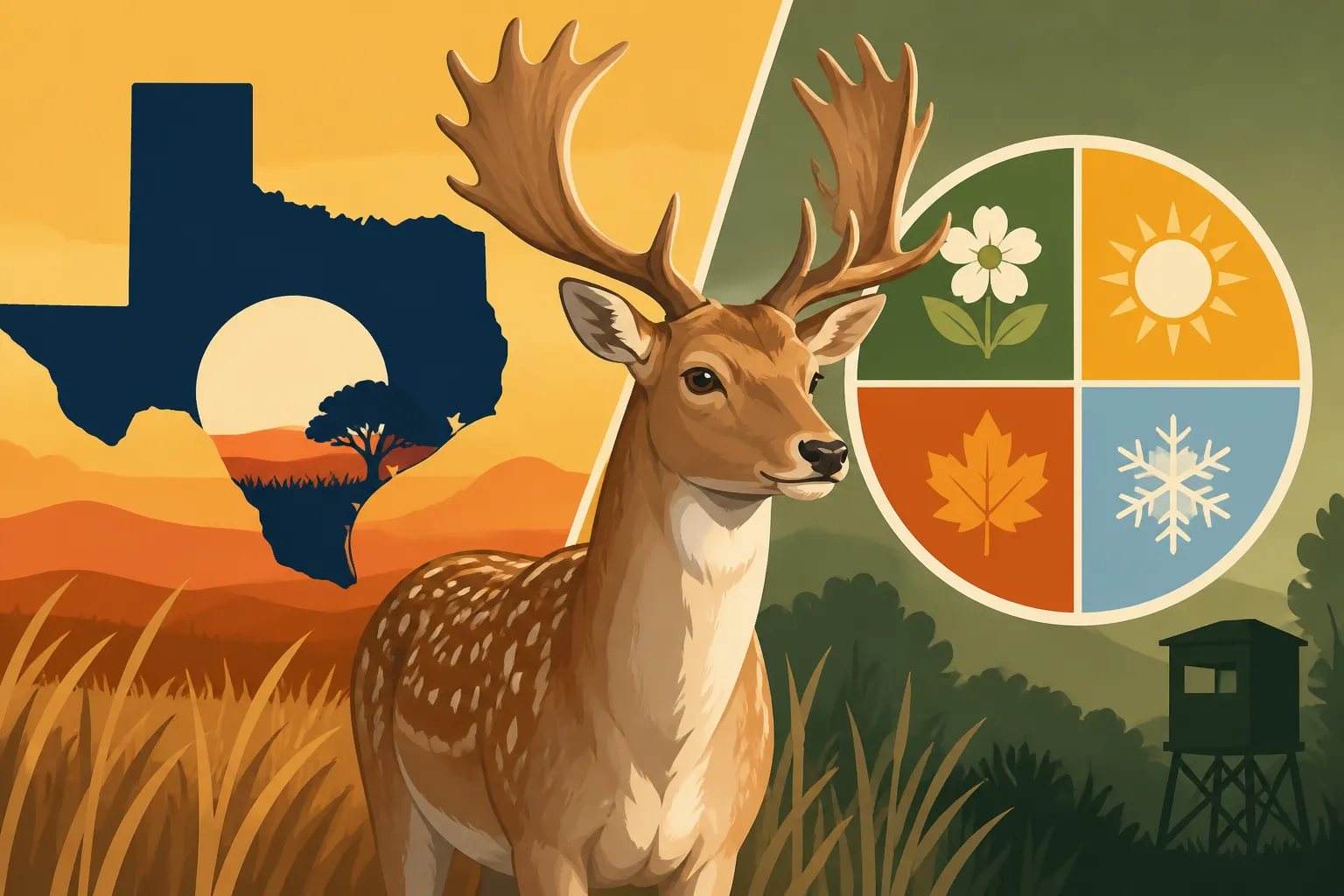
- Antler Hardening: For trophy hunters, the prime time is typically late summer to early fall when their impressive palmate antlers are fully mature and hard. This is when they are at their most visually striking.
- Cooler Weather: Many hunters prefer the cooler months of fall, winter, and early spring. The comfortable temperatures make for a more pleasant hunt, and the deer are often more active during daylight hours. Early season hunts, especially in September and October, can still be quite warm in Texas, so be prepared for the heat.
- Rut Activity: Fallow Deer typically rut in October and November. This can be an exciting time to hunt, as bucks are more active and visible, chasing does and fighting competitors. However, the quality of the venison might be impacted if harvested during the peak rut.
Given their year-round availability, you have the flexibility to schedule your hunt when it best suits your personal calendar and the specific goals for your hunt, whether it's a trophy or meat.
After the Harvest: Processing and Meat Quality
Congratulations! You've successfully harvested a Fallow Deer. Now the work of processing begins. Many ranches offer assistance with field dressing and can direct you to local processors.
Field Dressing Your Fallow Deer
Prompt and proper field dressing is crucial, especially in Texas's often warm climate. The goal is to quickly cool the carcass to prevent spoilage and ensure the highest quality meat. This involves removing the internal organs as soon as possible after the kill. If you're new to this or need a refresher, detailed guides on How to Field Dress a Deer in Hot Weather can be immensely helpful. Always carry a sharp knife, gloves, and plenty of water for rinsing.
Many outfitters will include basic field dressing in their hunt package, but it's good practice for any hunter to know how to do it themselves. Some ranches even have dedicated cooling facilities where your deer can hang before transport to a processor.
Fallow Deer Venison: A Culinary Delight
Fallow Deer venison is highly regarded for its tender texture and mild, delicious flavor. It's often compared to Axis Deer venison, which many consider to be among the best wild game meats. Because Fallow Deer are often raised on managed ranches with good nutrition, their meat tends to be very lean and free of the strong "gamey" taste that some hunters associate with wild whitetail deer.
You can prepare Fallow Deer venison much like you would any other high-quality deer meat. Steaks, roasts, ground meat, and sausage are all excellent options. With proper care in the field and good processing, you'll be enjoying fantastic meals long after your hunt.
Final Thoughts on Fallow Deer Hunting in Texas
So, to definitively answer the original question: no, there is no specific hunting season for Fallow Deer in Texas. As an exotic species, they can be hunted year-round on private land, provided you have a valid hunting license and explicit permission from the landowner. This unique regulatory framework, combined with the efforts of dedicated ranch owners, makes Fallow Deer hunting an accessible and exciting opportunity for hunters seeking a beautiful trophy and exceptional table fare. Do your research, choose a reputable outfitter, and get ready for a fantastic hunting experience in the Lone Star State!
Disclaimer
Please remember that hunting regulations can change. While I strive to provide the most current and accurate information, it is always your responsibility to consult the latest Texas Parks and Wildlife Department (TPWD) Outdoor Annual or visit their official website before any hunting activity. This content is for informational purposes only and should not be considered legal advice.