Texas Eastern Turkey Hunting Regulations 2026
Navigating the specific regulations for Eastern turkey hunting in Texas can feel like deciphering ancient scrolls. You're trying to plan your spring hunt, get everything in order, and just want clear, straightforward answers about what's legal and what's not. This guide is here to untangle all those rules, offering a comprehensive look at the Texas Eastern turkey hunting regulations so you can focus on the gobblers, not the guesswork.
Understanding the Eastern Turkey Zones and Season in Texas
Texas is a big state, and while we're famous for our Rio Grande turkeys, the Eastern subspecies occupies a very particular, albeit smaller, corner of our hunting landscape. Knowing exactly where and when you can hunt these magnificent birds is the first, and arguably most critical, step to a successful and legal hunt.
East Texas: The Eastern Turkey's Primary Domain
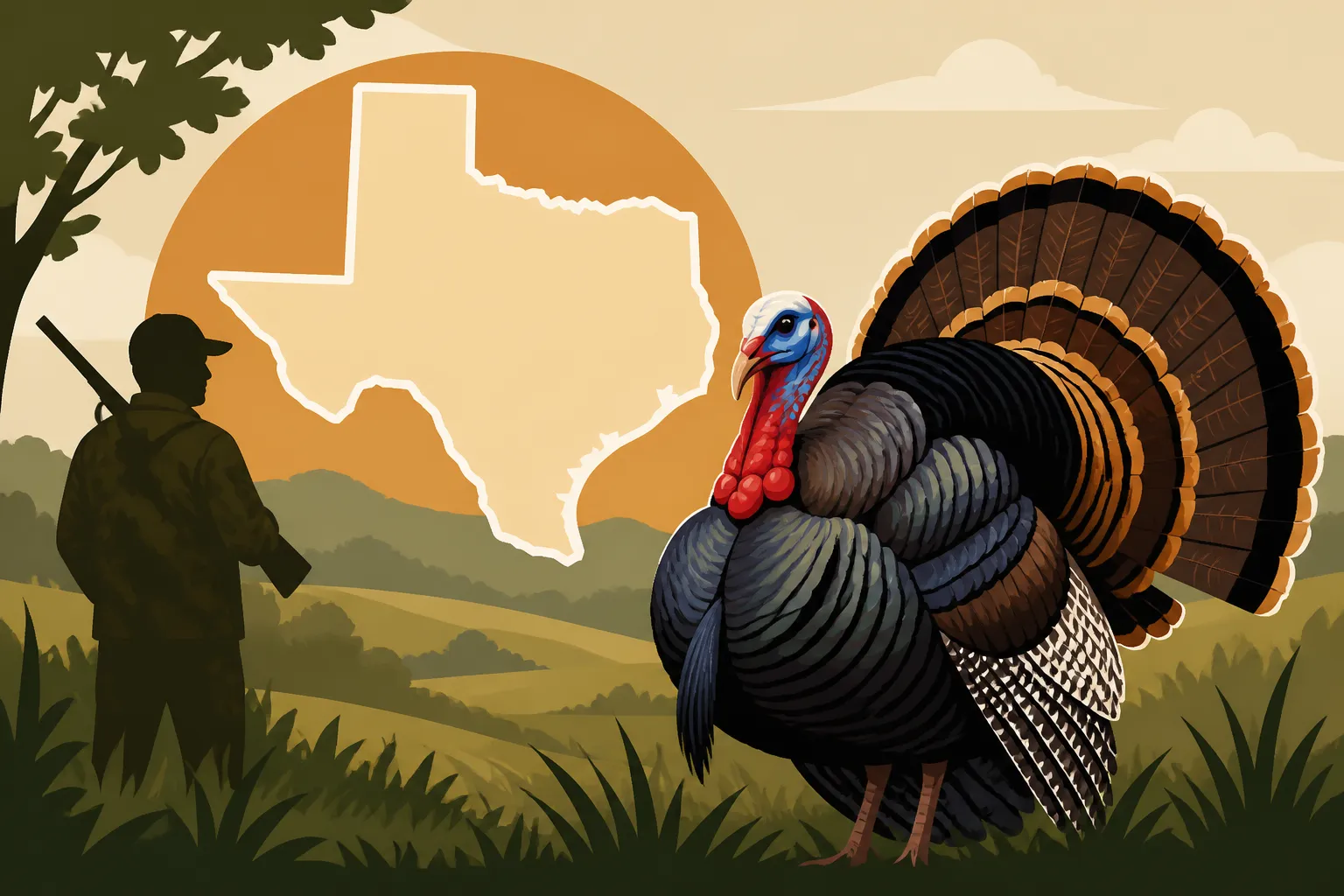
Unlike the vast distribution of their Rio Grande cousins across much of Central, South, and West Texas, Eastern turkeys are much more localized. When we talk about hunting Eastern turkeys, we're almost exclusively talking about a specific chunk of East Texas, primarily within the Pineywoods region. These birds thrive in the dense, mature hardwood and pine forests, often close to river bottoms and creek drainages.
The Texas Parks and Wildlife Department (TPWD) designates specific counties, or portions of counties, where Eastern turkey hunting is permitted. This is crucial because accidentally harvesting an Eastern turkey outside of these designated areas, or during the wrong season, can lead to serious penalties. These specific regulations are designed to protect the often more fragile Eastern turkey populations, which have been subject to restoration efforts over the years. It's a testament to the hard work of conservationists that we even have an Eastern turkey season to begin with! Make sure you're crystal clear on the boundaries and county lists published in the annual Outdoor Annual, as they can sometimes see minor adjustments. If you're planning on hunting in the beautiful, dense woods of counties like those within the Pineywoods & East Texas Hunting region, double-check those maps.
Key Dates for the 2026 Season
The Eastern turkey season is notoriously short and sweet, typically kicking off in late March or early April and running for just a couple of weeks. This brevity is again a conservation measure, ensuring minimal pressure on the breeding populations during critical times. It's a truly exhilarating sprint, and every day counts.
For the 2026 season, while exact dates are finalized closer to the new hunting year, you can generally expect a similar framework to previous years. The season will usually open on a Saturday in late March or early April and conclude on a Sunday about two weeks later. Youth-only weekends often precede or coincide with the general season, offering younger hunters a fantastic opportunity to chase gobblers. These dates are absolutely carved in stone, so mark your calendar, request that vacation time, and ensure your gear is ready well in advance. Missing the window means waiting another year! It’s also worth checking the broader Texas Turkey Season 2026: Spring & Fall Zones to compare with other subspecies seasons.
License and Stamp Requirements for Eastern Turkey Hunters
Before you even think about setting foot in the woods, you need to ensure your paperwork is in order. Hunting turkeys in Texas, regardless of subspecies, requires a valid hunting license. Trying to sneak around this is a surefire way to ruin your season and face hefty fines.
Your Essential Texas Hunting License
First and foremost, every hunter needs a current Texas hunting license. For most residents, the Super Combo License is the go-to, as it covers most resident hunting and fishing needs, including all general game animals and birds. Non-residents will need a non-resident general hunting license. You can purchase these online through the TPWD website, at most sporting goods stores like Academy Sports + Outdoors or Bass Pro Shops, or at local TPWD license retailers across the state. It’s always a good idea to buy yours well before the season starts to avoid any last-minute rushes or technical glitches.
Remember, if you were born on or after September 2, 1971, you'll need proof of hunter education certification unless you are hunting on your own land or are accompanied by a certified hunter. This is a critical requirement for safety and responsible hunting. Understanding the Texas Hunting License: Cost, Types & How to Buy (2026) is fundamental to preparing for any hunting adventure in the state.
Migratory Bird Endorsement (Not for Eastern Turkey, but Good to Know)
While Eastern turkeys are not migratory birds and therefore do not require the federal duck stamp or the state Migratory Game Bird Endorsement, it's important for hunters to understand the difference. Many hunters pursue multiple species, and it's easy to get regulations mixed up. The Migratory Bird Endorsement (and HIP Certification) is specifically for species like ducks, geese, doves, and sandhill cranes. So, when you're geared up for gobblers in the Pineywoods, you don't need to worry about that particular stamp. However, if you plan to extend your hunting season to pursue dove later in the year, you’ll definitely need to look into the Texas Migratory Bird Endorsement & HIP Certification.
Bag Limits and Legal Harvest Specifics
This is where Eastern turkey hunting truly stands apart from its Rio Grande counterpart. The bag limits are significantly stricter, reflecting the more delicate nature of the Eastern populations. Getting this wrong can have severe consequences for you and for the conservation efforts.
The Strict One-Gobbler Rule
For Eastern turkeys, the statewide annual bag limit is one (1) gobbler. That's it. One single gobbler for the entire season, no exceptions. This is a stark contrast to the Rio Grande season, where hunters often have a bag limit of four (4) gobblers. This single gobbler limit underscores the importance of proper identification in the field and careful decision-making before you pull the trigger.
It means that when you are fortunate enough to connect with a tom, your Eastern turkey season is over. This isn't the time to push your luck or assume you might get another chance. It's a one-and-done opportunity that makes the hunt for an Eastern gobbler incredibly rewarding when successful. Many hunters find the challenge and rarity of an Eastern turkey almost mythical, a true testament to the skill and patience required. For more details on this, you can refer to the specific information on Eastern Turkey in East Texas (One-Gobbler).
Understanding Proof of Sex and Tagging
Once you've successfully harvested your Eastern gobbler, the job isn't quite done. Texas regulations require proof of sex to remain attached to the bird until it reaches its final destination and is processed. For a gobbler, this means either the head or a foot with the spur intact must remain attached. This helps game wardens verify that the harvested bird is indeed a legal gobbler.
Additionally, you are required to immediately tag your bird. Your hunting license will come with specific tags for various game animals. For Eastern turkeys, you will use the turkey tag and fill out all the required information, including the date and county of harvest. The tag must then be securely attached to the bird. Finally, within 24 hours of harvest, or before you take the bird to a final destination, you must report your harvest through the TPWD's My Texas Hunt Harvest system. This can be done online or via the mobile app. This data is vital for wildlife biologists to monitor populations and adjust future regulations. Failing to tag or report your harvest can result in fines and legal trouble. Understanding these steps is part of being a responsible hunter, as detailed in Texas Hunting Tags & Harvest Reporting (My Texas Hunt Harvest).
| Requirement | Eastern Turkey | Rio Grande Turkey (Spring) |
|---|---|---|
| Hunting License | Required | Required |
| Proof of Hunter Ed | Required (if applicable) | Required (if applicable) |
| Federal Duck Stamp | Not Required | Not Required |
| Migratory Bird Endorsement | Not Required | Not Required |
| Annual Bag Limit (Gobblers) | 1 | 4 |
| Proof of Sex | Head or Spur-bearing Leg | Head or Spur-bearing Leg |
| Tagging | Immediately required | Immediately required |
| Harvest Reporting | Within 24 hours (My Texas Hunt Harvest) | Within 24 hours (My Texas Hunt Harvest) |
| Counties/Zones | Designated East Texas Counties only | Most of Central, South, and West Texas |
| Season Length | Approximately 2 weeks | Approximately 6-7 weeks (varies by zone) |
Legal Hunting Methods and Restrictions
Just like with any other game animal, there are specific rules about how you can pursue Eastern turkeys in Texas. These regulations are in place to ensure fair chase, promote safety, and maintain sustainable hunting practices.
Permitted Firearms and Archery Equipment
When it comes to weapons, Eastern turkey hunting typically follows the same general guidelines as other upland game birds in Texas. Shotguns are the most popular choice, and they must not be larger than 10-gauge. You can use shot sizes no larger than number 2 lead, or number T for bismuth, steel, or other approved non-toxic shot. Many hunters prefer a 12-gauge or 20-gauge shotgun loaded with specialized turkey loads for maximum pattern density and knockdown power.
Archery equipment, including traditional bows, compound bows, and crossbows, is also perfectly legal during the general Eastern turkey season. Broadheads must be fixed-blade or mechanical, designed for hunting. Bowhunting for turkeys offers a unique challenge and requires even closer encounters, making it an incredibly intense experience. If you’re into the archery side of things, it’s worth brushing up on Bowhunting in Texas: Archery Season Guide.
Rifles and pistols are generally not permitted for hunting Eastern turkeys, nor any wild turkey in Texas. This rule is in place to prevent accidental injury to other hunters or non-target species, especially in the typically dense habitat where turkeys are found. It's all about ensuring the appropriate tool for the job.
Baiting and Decoy Regulations
Hunting turkeys over bait is generally prohibited in Texas. This means you cannot place corn, milo, or any other food attractant with the intent to draw in turkeys for harvest. This is consistent with most turkey hunting ethics nationwide and promotes a fair chase environment. While it might be legal to use feeders for deer in certain contexts, remember that the rules for turkey are different. Be mindful of areas where corn or other feed might be present for other game, like deer. If you're hunting an area with existing feeders, ensure you are not directly hunting over them for turkey. For more information on this, check out Hunting Over Feeders & Corn in Texas (Legal Guide).
However, the use of decoys is absolutely permitted and is, in fact, a cornerstone of successful turkey hunting. Lifelike turkey decoys, whether they simulate a strutting gobbler, a receptive hen, or a jake, are excellent tools to bring a wary tom into close range. Combining decoys with effective turkey calling tactics, such as those used for Rio Grande Turkey Calling & Tactics for Texas Rios, can be a deadly combination. Just be sure to place your decoys in a safe manner, always aware of your backdrop and potential lines of fire, especially if other hunters might be in the vicinity.
Important Safety and Ethical Considerations
Hunting Eastern turkeys, like any hunting pursuit, comes with a responsibility to prioritize safety, follow ethical practices, and respect the land and its wildlife. These aren't just rules; they're the foundations of our hunting heritage.
Hunter Orange and Property Line Awareness
While hunter orange is not strictly required for turkey hunting on private lands in Texas (it is required on public lands during general open seasons for most species), it is always a wise choice, especially when moving through the woods or if hunting on public land where other hunters might be present. Turkeys require a high degree of stealth, and many hunters opt for full camouflage, but remember that safety trumps stealth when you are walking in or out, or moving between calling setups. Consider wearing an orange vest when traveling, then removing it when you get to your calling spot.
Crucially, always be aware of property lines. The designated Eastern turkey hunting counties are a mix of private and some public lands. Texas is predominantly private land, and hunting without landowner consent is illegal and can lead to trespassing charges. Use mapping apps like onX Hunt or HuntStand to clearly identify property boundaries and ensure you have permission for every acre you hunt. Never shoot across a property line or at an animal that is on adjoining property without explicit permission from that landowner. Respect for private property is paramount to maintaining good landowner-hunter relations, which are already so vital for hunting access in Texas.
Respecting the Resource and Landowners
Eastern turkeys are a special resource in Texas, and their populations are often less robust than the widespread Rio Grandes. This is why the one-gobbler limit is so important. Ethical hunting means making clean shots, only taking legal birds, and putting in the effort to recover any game you harvest. If you're fortunate enough to bag an Eastern gobbler, take pride in the accomplishment and remember the conservation efforts that make these hunts possible.
Beyond the birds, remember the landowners. Whether you're hunting on a private lease or have secured a day hunt, treating the land, gates, roads, and facilities with respect is non-negotiable. Always close gates, pack out all your trash, and leave the property better than you found it. Good relationships with landowners are the lifeblood of hunting access in Texas, and one bad actor can spoil it for everyone. By being a responsible, ethical hunter, you contribute to a positive public image of hunting and help ensure that future generations can also experience the thrill of chasing an Eastern gobbler in the Pineywoods.
Eastern Turkey Hunting Regulations at a Glance
For quick reference, here's a summarized table of the critical regulations for Eastern turkey hunting in Texas for the 2026 season. Always consult the official TPWD Outdoor Annual for the most current and complete information.
| Category | Regulation Detail |
|---|---|
| Hunting License | Required (Resident: Super Combo or General; Non-Resident: General) |
| Hunter Education | Required for hunters born on/after Sept 2, 1971 (exceptions apply) |
| Legal Game | Gobblers only |
| Annual Bag Limit | 1 Gobbler |
| Possession Limit | 1 Gobbler |
| Proof of Sex | Head or one spur-bearing leg must remain attached |
| Tagging | Immediately attach properly completed tag to leg |
| Harvest Reporting | Within 24 hours via My Texas Hunt Harvest system |
| Season Dates (2026) | Typically late March/early April for approx. 2 weeks (check TPWD for exact dates) |
| Legal Counties | Specific East Texas counties (check TPWD Outdoor Annual) |
| Legal Weapons | Shotgun (10-gauge or smaller, specific shot sizes); Archery equipment (bows, crossbows, broadheads) |
| Prohibited Weapons | Rifles, pistols |
| Baiting | Prohibited for turkeys |
| Decoys | Permitted |
| Hunter Orange | Recommended, especially when moving or on public land (not strictly required on private land for turkey) |
| Night Hunting | Prohibited for turkeys |
Disclaimer
Please note that hunting regulations can change annually. While this guide provides a comprehensive overview of the expected 2026 Texas Eastern Turkey Hunting Regulations, it is crucial for every hunter to consult the official Texas Parks and Wildlife Department Outdoor Annual or website for the most current and legally binding information before heading afield. Ignorance of the law is not a valid defense.