Frio County Antler Restriction & Bag Limit
Trying to figure out specific hunting regulations for a particular county in Texas can feel like navigating a maze, right? One minute you think you've got it, the next you're questioning whether that buck you just saw is actually legal. It's especially confusing when you're trying to nail down precise details like antler restrictions and bag limits for Frio County. This guide is here to clear up that confusion, giving you the solid, practical information you need to hunt legally and confidently in Frio County this season.
Understanding Texas Antler Restrictions for Whitetail Deer
Texas is a big state, and its deer hunting regulations can be incredibly nuanced, often varying from one county to the next. The system is designed to promote a healthier deer herd, allowing younger bucks to mature and spread their genes. But let's be honest, trying to remember what applies where can be a real headache, especially with the pressure of a big buck in your sights.
The General 13-Inch Rule and Its Purpose
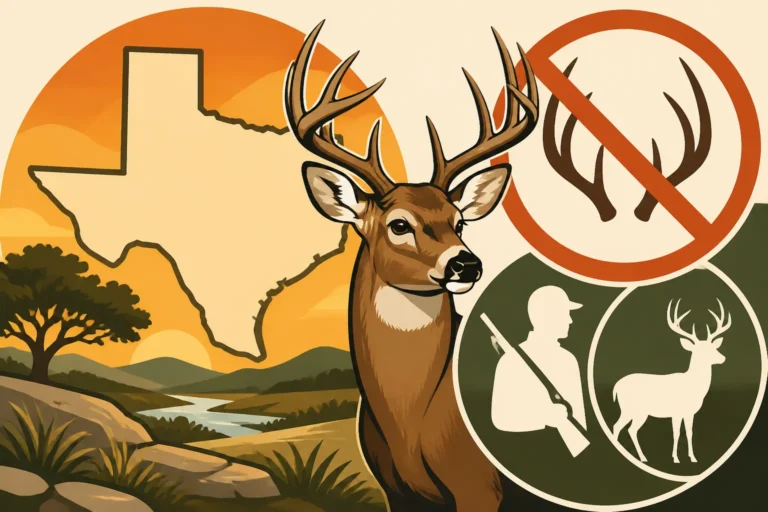
For many years, hunters across Texas faced varying local rules, which made things incredibly complicated. To simplify and standardize regulations, the Texas Parks and Wildlife Department (TPWD) introduced the general antler restriction framework. The idea behind this "13-inch rule" is pretty straightforward: it aims to increase the number of mature bucks in the population by protecting most young, yearling bucks.
Here’s how it generally works: a buck is considered legal if either of these conditions is met:
- He has at least one unbranched antler (meaning a spike, or one side of his rack is a spike, even if the other side is branched).
- Both of his antlers are branched, and the inside spread of his main beams is 13 inches or greater.
The thought process here is to allow most 1.5-year-old bucks, which typically have smaller racks or spikes, to live another year or two. This gives them a chance to grow larger antlers and contribute to breeding, ideally leading to a more robust and older age structure in the deer herd over time. It's a long-term strategy that has proven quite effective in many parts of the state.
How Antler Restrictions Apply to Frio County
Now, let's get specific about Frio County. The good news (or bad, depending on your perspective and experience) is that Frio County does fall under these general antler restrictions. This means that when you're hunting white-tailed deer in Frio County, you'll need to abide by the 13-inch rule. This applies across the entire county, from the dense brush country to the more open areas.
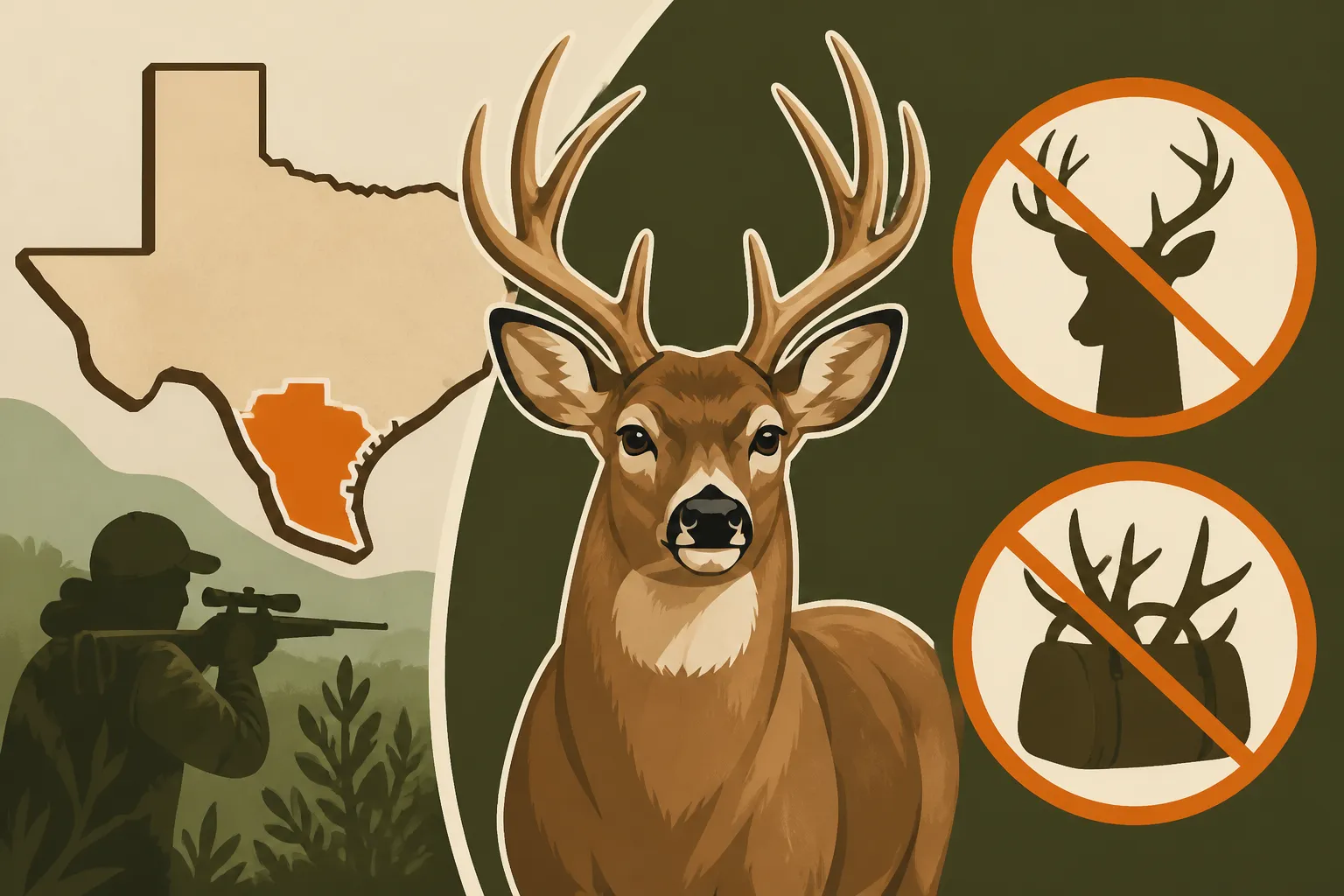
You can't just shoot any buck with antlers; you have to evaluate them carefully. This includes your first buck and your second, if you're lucky enough to tag two. The regulations specify that of the two bucks allowed per season, only one may have an inside antler spread of less than 13 inches, and that buck must have an unbranched antler. The other buck must meet the 13-inch minimum spread and have branched antlers, or have at least one unbranched antler. It can get a little confusing, but the main takeaway is to really scrutinize that rack before pulling the trigger. It’s always best to be absolutely sure.
For a deeper dive into the statewide guidelines, you might find this guide on Texas Antler Restrictions: 13-Inch Rule & Counties helpful.
Distinguishing Legal Bucks from Illegal Bucks
This is where the rubber meets the road, or rather, where your eyeballs meet antlers in the field. Field judging is an art, not a science, and it takes practice. When that adrenaline is pumping, estimating an antler spread can be incredibly challenging.
Here are some practical tips to help you in Frio County:
- Know Your Rifle: If you're using a typical hunting rifle, the distance from the tip of your ear to the tip of your nose is roughly 13 inches. If a buck's antler spread looks wider than that, it's a good starting point.
- Ear-Tip Rule: A general rule of thumb many hunters use is that a mature Texas whitetail buck's ear-tip-to-ear-tip measurement is usually around 13 to 15 inches. If the antlers extend significantly beyond the ear tips, it’s a strong indicator of a legal 13-inch spread. If they barely reach the ears, or are inside them, you should probably pass unless it's a spike or unbranched on one side.
- Focus on the Main Beams: The 13-inch measurement is typically the inside spread of the main beams. Don't include points or forks that extend outwards; focus on the widest distance between the inner edges of the main beams.
- Unbranched Antler Confirmation: For the "one unbranched antler" option, be absolutely certain there are no tiny points or "kickers" off the main beam that would technically make it branched. Sometimes what looks like a spike in low light or from a distance turns out to have a small point.
- Practice with Trail Camera Photos: Use your trail cameras (and check out Best Cellular Trail Cameras for Texas (2027) for good options) throughout the year to practice judging bucks. Take pictures, then measure the racks if you harvest them, comparing your estimates to the actual measurements. This helps train your eye without the pressure of a live animal.
Remember, the goal isn't just to shoot a buck, but to shoot a legal buck. Taking the time to properly identify your target ensures you stay within the law and contribute to responsible wildlife management. For more specific guidance on this tricky skill, consider checking out this article on How to Field Judge a 13-Inch Buck.
Frio County's Specific Bag Limits for White-Tailed Deer
Beyond antler restrictions, you also need to be clear on how many deer you can actually take home. Texas offers fairly generous bag limits in many areas, but those limits are crucial to managing the local deer population effectively.
The Overall Bag Limit for Bucks and Does
For white-tailed deer in Frio County, the bag limit is set at 5 deer per license year. This sounds like a lot, but there are important stipulations:
- Bucks: Of those 5 deer, no more than 2 may be bucks. This is a statewide regulation for counties under antler restrictions. And as we discussed, those two bucks must adhere to the specific antler restriction rules: one can have an unbranched antler regardless of spread, and the other must be 13 inches or wider inside spread with branched antlers (or also an unbranched antler if it applies to your specific buck selection).
- Does (Antlerless Deer): This means you can take up to 3 does. This helps manage the overall deer population, as does are the reproductive engine of the herd. Without adequate doe harvest, populations can quickly outgrow their habitat and negatively impact herd health.
These limits are in place to ensure sustainability. It’s about striking a balance between offering hunting opportunities and maintaining a healthy, vibrant deer population for generations to come. Always double-check the current year's Texas Deer Season 2026-2027: Dates by Zone and the official TPWD Outdoor Annual, because regulations can change.
Antlerless Deer Permits and Doe Days in Frio County
Hunting does has its own set of rules, and it's another area where hunters can easily get confused. In many Texas counties, including Frio, you generally can't just harvest an antlerless deer during the general season without specific authorization.
Here’s what you need to know for Frio County:
- Antlerless Deer Permits (ADPs): During the general open season, a hunter typically needs an Antlerless Deer Permit (ADP) issued by the landowner or their agent for the specific property you are hunting on. These permits are provided by TPWD directly to landowners who apply for them, often based on deer population surveys on their property. This allows for targeted management of antlerless deer.
- Managed Lands Deer Program (MLDP): Many larger ranches or well-managed properties in Frio County participate in the Managed Lands Deer Program (MLDP). Under MLDP, landowners work with TPWD to implement specific management plans. In exchange, they receive MLDP tags (both buck and doe) that replace the general county bag limits and antler restrictions for that specific property. If you're hunting on an MLDP property, you'll use those specific tags and follow the rules outlined by the MLDP plan, which can differ from the county general rules.
- Doe Days: Some counties have designated "doe days" or specific periods when antlerless deer can be harvested without a special permit. However, Frio County typically requires an ADP or MLDP tag during the general season. Always consult the most recent Outdoor Annual to confirm if any "doe days" apply to Frio County in a given year.
- Archery Season: Antlerless deer can generally be taken during the early archery-only season without an ADP, provided you have the appropriate license and endorsements.
- Muzzleloader Season: Similarly, during the special muzzleloader-only season (if applicable in Frio County), antlerless deer can often be taken without an ADP.
It’s absolutely critical to confirm the current year's rules, especially if you plan to hunt antlerless deer. Always ask the landowner or lease manager about their specific ADP or MLDP status. For more detailed information on doe harvest, check out Texas Antlerless Deer Permits & Doe Days.
Special Considerations for Youth Hunters
Texas is committed to fostering the next generation of hunters, and as such, there are often special provisions for youth hunters. In Frio County, as in the rest of the state, youth hunters (under 17 years of age) usually get an opportunity to hunt during a special youth-only season.
During the youth-only season:
- Youth hunters are often exempt from the antler restrictions, meaning they can take any buck (within their legal bag limit) regardless of antler spread or configuration. This is a fantastic way to introduce new hunters to deer hunting without the added pressure of field judging a buck's rack.
- Antlerless deer may also typically be harvested during the youth-only season without the need for an ADP.
These youth seasons are specifically designed to make hunting accessible and enjoyable for young people, giving them a chance to experience success in the field. It’s a wonderful tradition that creates lasting memories. Ensure you check the exact dates for the youth-only seasons in the current Texas Hunting Seasons: Complete Calendar by Species and the Outdoor Annual.
Navigating Harvest Reporting and Tagging in Frio County
You've done the hard work, made a clean shot, and now you have a magnificent deer on the ground. The hunt isn't over yet, though! There are still crucial legal steps you need to take to ensure you're in full compliance with Texas regulations. Neglecting these steps can lead to penalties, so it's vital to get them right.
Mandatory Harvest Reporting Requirements
Texas has moved increasingly towards mandatory harvest reporting, especially for certain species and in specific counties. While Frio County is not typically among the counties requiring mandatory on-site harvest reporting for all white-tailed deer, it's always best practice to report your harvest. More broadly, if you are participating in the MLDP, harvest reporting becomes a mandatory component of that program.
Here’s why it's important to be familiar with reporting, even if not explicitly mandated for every deer in Frio:
- Data Collection: Reporting your harvest provides TPWD with critical data that helps them manage deer populations more effectively. They use this information to assess herd health, population density, and hunter success rates, which in turn influences future regulations.
- MLDP Compliance: If you're hunting on an MLDP property, harvest reporting is a non-negotiable part of the program. This allows TPWD to track the landowner's management efforts and the impact on the deer herd.
- Convenience: The My Texas Hunt Harvest app makes reporting incredibly easy and convenient. You can do it right from your phone in the field.
While not all counties require every deer to be reported, it's a good habit to develop. For a complete understanding of the system, look into Texas Hunting Tags & Harvest Reporting (My Texas Hunt Harvest).
Tagging Your Harvest Correctly
This is perhaps the most critical step immediately after harvesting a deer. Your hunting license comes with a series of tags, and using them correctly is non-negotiable.
Here’s a step-by-step breakdown:
- Detach the Correct Tag: For white-tailed deer, you'll have specific tags for bucks and antlerless deer. Make sure you detach the tag that matches the deer you've harvested (e.g., a "Buck" tag for a buck, or an "Antlerless" tag for a doe).
- Date and County: Immediately after harvesting, you must cut out the month and day the deer was killed on the tag. You also need to write in the county where the deer was harvested (Frio County, in this case). Use a permanent marker to ensure the information doesn't smudge or wash off.
- Attach to the Deer: Securely attach the tag to the deer. The general rule is to attach it to the antler, leg, or ear. The tag needs to remain with the deer until it reaches its final destination (your home, a processor, etc.) and is processed.
- Proof of Sex (for Bucks): For bucks, you must also provide "proof of sex." This means leaving the head or genitalia naturally attached to the carcass until it reaches your home or a processing facility. This allows game wardens to confirm it was indeed a male deer.
- My Texas Hunt Harvest App: Even after physical tagging, consider entering your harvest into the My Texas Hunt Harvest app. It’s an easy way to keep your records straight and contribute to TPWD data.
Failing to properly tag a deer is a serious offense and can result in fines and loss of hunting privileges. Don't let a moment of excitement lead to legal trouble. Always carry extra permanent markers in your hunting pack!
CWD Zones and Transport Restrictions
Chronic Wasting Disease (CWD) is a serious neurological disease affecting deer and other cervids. To prevent its spread, TPWD has established CWD containment and surveillance zones across various parts of Texas. While Frio County has generally not been designated as a CWD zone, it's crucial to stay informed.
If a CWD zone were ever established in or near Frio County, it would introduce strict rules, including:
- Mandatory Sampling: Any harvested deer might be required for CWD testing at designated check stations.
- Carcass Movement Restrictions: You might not be able to transport whole carcasses or certain parts out of a CWD zone. Generally, only deboned meat, clean antlers, hides, and skulls (cleaned of all brain and spinal tissue) are allowed to leave these zones.
Always, always consult the most current version of the Texas Outdoor Annual and TPWD's CWD webpage to see if any CWD zones have been established that would affect your hunting plans in Frio County or your transportation route home. Staying informed protects both the deer herd and your hunting privileges.
Practical Tips for Hunting in Frio County
Hunting in Frio County, nestled in the South Texas Brush Country, offers some incredible opportunities for white-tailed deer. The unique landscape, characterized by dense thorny brush, mesquite, and prickly pear, presents both challenges and rewards. Knowing the regulations is just the starting point; successful hunting also requires preparation and respect for the land and its wildlife.
Scouting and Preparing for Deer Season
Effective scouting is the backbone of a successful hunt, regardless of where you're hunting. In Frio County's often thick terrain, it becomes even more vital. Don't wait until opening weekend to hit the woods.
Here’s what you should be doing:
- Off-Season Exploration: Spend time on your lease or property well before deer season begins. Walk senderos (trails cut through the brush), check around water sources, and look for natural travel corridors.
- Trail Cameras are Your Best Friends: Deploy trail cameras strategically. Place them near feeders, water troughs, pinch points, and rub lines. They’re invaluable for patterning deer, identifying specific bucks, and understanding their movement times. Modern cellular cameras, like those mentioned in Best Cellular Trail Cameras for Texas (2027), can give you real-time updates.
- Look for Sign: Fresh tracks, droppings, rubs, and scrapes are all indicators of deer activity. In Frio County, look for rubs on mesquite and other thorny bushes.
- Identify Food Sources: Deer in Frio County rely heavily on natural browse, forbs, and mast crops like acorns. Pay attention to what's growing and producing food. Consider supplemental feeding with corn or protein if allowed and desired. Understanding Corn vs Protein Feeder for Texas Deer can help with your decision.
- Water Sources: In a dry environment like South Texas, water is a magnet for all wildlife. Identify natural tanks, guzzlers, or man-made water troughs and plan your setups accordingly.
- Learn the Landscape: The brush can be disorienting. Use mapping apps like onX Hunt (see Best Hunting Apps for Texas (onX, HuntStand & More)) to mark key locations – stand sites, feeders, water, and where you've seen sign.
Pre-season scouting will not only increase your chances of success but also help you understand the deer population on your specific property, making those in-field regulation decisions easier. To dive deeper into how to effectively scout, take a look at How to Scout for Deer Before Season in Texas.
Partnering with Landowners and Leases
Most hunting in Frio County, like much of Texas, takes place on private land. This means having a good relationship with the landowner or lease manager is paramount. They are your primary source of information, from property boundaries to specific rules that might go beyond state regulations.
- Communicate Clearly: Before and during the season, have open conversations about expectations, property rules, and any specific deer management goals the landowner might have. They often have an intimate knowledge of the deer on their land.
- Respect the Land: Treat the land as if it were your own, or better. Pick up trash, close gates, avoid driving off-road unnecessarily, and be mindful of your impact.
- Adhere to Lease Agreements: If you're on a hunting lease (and if you're looking for one, check out Hunting Leases in Texas: Complete Guide (Cost & How to Find)), make sure you understand and follow all the terms of your agreement. This includes guest policies, camp rules, and any specific harvest guidelines.
- Share Information: Share your trail camera photos and harvest observations with the landowner. This data can be incredibly valuable for their overall land and wildlife management strategy.
- Offer Help: Offering a hand with ranch chores, feeder filling, or blind maintenance can go a long way in building a positive relationship.
A good relationship with a landowner or lease manager makes for a much more enjoyable and successful hunting experience for everyone involved.
Staying Informed with the Outdoor Annual
Despite all the guides and advice you might get (including this one!), the absolute, undisputed, final word on all Texas hunting regulations is the Texas Parks and Wildlife Department's Outdoor Annual. This document is updated annually and is your legal bible for hunting in the state.
- Download the App: The Outdoor Annual is available as a free app for your smartphone, making it incredibly convenient to access regulations in the field, even when offline.
- Hard Copy: If you prefer, pick up a physical copy at any license retailer. It’s a good idea to have both.
- Read it Annually: Don't assume the rules are the same year to year. Small but significant changes can occur, especially regarding antler restrictions, bag limits, and CWD zones. Make it a ritual to review the relevant sections before each hunting season.
- Specific County Pages: Pay close attention to the specific pages for white-tailed deer and locate Frio County's section. This will confirm the antler restrictions, bag limits, and any special provisions for the current season.
There's a lot to unpack in the Outdoor Annual, but knowing How to Read the Texas Outdoor Annual effectively will save you a lot of headaches and ensure you're always hunting legally. Ignorance of the law is never an excuse.
Disclaimer
Please note that hunting regulations are subject to change. While this guide aims to provide accurate and up-to-date information for Frio County, Texas, it is your sole responsibility to consult the current Texas Parks and Wildlife Department Outdoor Annual and any local regulations before engaging in any hunting activities. This content is for informational purposes only and should not be considered legal advice.