How to Apply for Texas Drawn Hunts Online
Applying for a drawn hunt in Texas can feel like trying to win the lottery, especially when you're dreaming of accessing some of the state's most coveted hunting grounds. The online application process itself, with its various categories, deadlines, and technical requirements, can be a real headache, often leaving even experienced hunters scratching their heads. This comprehensive guide will walk you through every step of applying for Texas drawn hunts online, from understanding the system to maximizing your chances and navigating the digital platform with confidence.
Understanding the Texas Drawn Hunt System
The Texas Parks and Wildlife Department (TPWD) Drawn Hunt System is a fantastic program, but it can be a bit of a labyrinth if you're not familiar with it. Many hunters, myself included, have spent hours pouring over the Outdoor Annual and clicking through various pages on the TPWD website, trying to figure out the best approach. It's a system designed to provide fair access to limited hunting opportunities, but it requires a bit of strategy to navigate successfully.
What Are Drawn Hunts and Why Are They So Popular?
Drawn hunts are essentially lottery-based opportunities to hunt on specific state-managed lands, like Wildlife Management Areas (WMAs) and State Parks, that aren't typically open for general public hunting or that offer very specific, high-quality hunts. Think of it as exclusive access to some of the best hunting experiences Texas has to offer, often for species or in locations that would otherwise be inaccessible or prohibitively expensive on private leases. For many Texans, the dream of bagging a trophy buck or a majestic aoudad in a pristine natural setting is only attainable through these drawn hunts. They democratize access to prime hunting spots, which is a huge relief in a state where private land dominates.
The popularity of these hunts isn't just about bagging a big animal; it's about the quality of the experience itself. Many of these hunts take place in areas that are intensely managed for wildlife, leading to healthier populations and often older, larger animals. They also offer diverse hunting opportunities, from waterfowl to exotic species, in some of the most beautiful and unique landscapes Texas has. Plus, the cost is often incredibly reasonable, especially when compared to a traditional private hunting lease, making these hunts highly sought after by hunters looking for both value and quality.
Types of Drawn Hunts Available
The TPWD offers a wide array of drawn hunt categories to cater to different hunters and species. This is where it can get a little overwhelming, as each category has its own set of rules, dates, and sometimes even unique eligibility requirements. You'll find categories like Archery Deer, General Deer, Youth Only Deer, Exotic Species, Javelina, Alligator, Feral Hog, and various Turkey and Waterfowl hunts, just to name a few. These hunts are spread across the state, from the dense South Texas brush country to the rugged Trans-Pecos mountains, offering everything from a challenging Spot-and-Stalk Aoudad in West Texas to a peaceful morning duck hunt on the coast.
For example, a popular choice might be a general deer hunt at the Kerr WMA Hunting Guide, known for its excellent whitetail population, or perhaps a more adventurous Black Gap WMA: Trans-Pecos Mule Deer hunt in West Texas. Many of these areas are specifically managed to ensure high-quality hunting experiences. The TPWD also frequently offers youth-only hunts, providing fantastic opportunities for younger hunters to gain valuable experience in a controlled environment, often with higher success rates and dedicated support. It's crucial to thoroughly review the specific hunt details for each area, as they can vary greatly in terms of weapon restrictions, game limits, and even the type of accommodations available. Some hunts even allow "group applications," where you can apply with friends or family, which can be a real game-changer for shared hunting experiences.
Eligibility and Preliminary Requirements
Before you even think about clicking that "apply" button, there are a few foundational requirements you need to have in order. Skipping these steps can lead to immediate disqualification, which is a frustrating way to end your drawn hunt dreams before they even begin. It’s like showing up to the deer lease without your rifle – you just can’t hunt!
Essential Licenses and Endorsements
First and foremost, you're going to need a valid Texas hunting license. This isn't just a recommendation; it's a legal requirement for most hunting activities in the state, including drawn hunts. You can typically purchase these online through the TPWD website, at most sporting goods stores like Academy Sports + Outdoors or Bass Pro Shops, or from local license retailers. Understanding the different license types and their costs is important, so I highly recommend checking out our detailed guide on Texas Hunting License: Cost, Types & How to Buy 2026. The good news is that for many general drawn hunts, a basic resident or non-resident hunting license will suffice.
However, some drawn hunts require specific endorsements in addition to your general license. For instance, if you're applying for an archery deer hunt, you'll need an Archery Endorsement. Waterfowl hunts will demand a Federal Duck Stamp and a Migratory Game Bird Endorsement, and often a HIP (Harvest Information Program) certification. It's not uncommon for hunters to overlook these smaller details, only to find out too late that they weren't fully qualified for the hunt they drew. Make sure to double-check the specific endorsement requirements for each hunt category you're interested in, as they are clearly listed in the hunt details on the TPWD website. For our younger hunters, there are specific youth licenses, and it's worth noting whether Is a Hunting License Required for Youth in Texas? depends on their age and the type of hunt.
Hunter Education Certification
Another critical requirement for a vast majority of hunters in Texas is Hunter Education certification. If you were born on or after September 2, 1971, you are legally required to have completed an approved Hunter Education course. This ensures that hunters are knowledgeable about safe firearm handling, wildlife conservation, and ethical hunting practices. While some drawn hunts, particularly youth hunts where an adult mentor is present, might have slight variations, it's generally a non-negotiable prerequisite.
Now, I know some folks might groan at the thought of another course, but it's genuinely valuable, and there are online options available that make it much more convenient. For new hunters, TPWD offers a one-time, annual Hunter Education Deferral option, which allows you to postpone taking the course for one year, provided you are accompanied by a certified hunter. This can be a great way to get your feet wet, but eventually, you'll need that certification. Always verify the current requirements, especially if you're planning a trip. For a deeper dive into this, check out our article on Do You Need Hunter Education in Texas?. Don't risk disqualification; get that cert!
Navigating the TPWD Online Application System
Alright, so you've got your licenses and hunter education squared away. Now it's time to actually get into the digital trenches and apply. The TPWD online system can sometimes feel a bit clunky, but once you understand the flow, it becomes much more manageable. Think of it like learning to call turkeys—it takes practice, but the payoff is worth it.
Creating and Managing Your Account
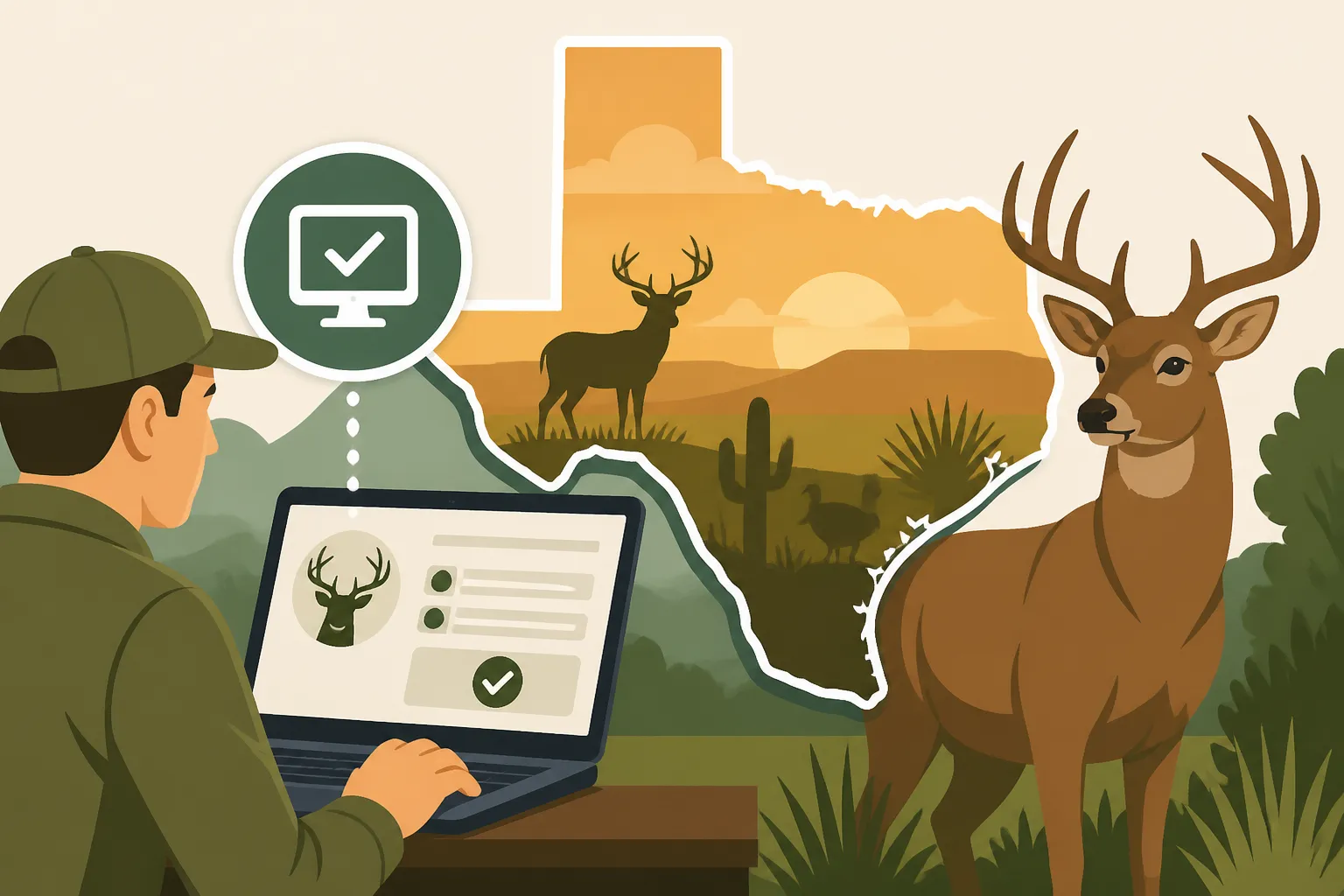
The cornerstone of applying for Texas Drawn Hunts online is your TPWD customer account, often referred to in the context of "My Texas Hunt Harvest" account. If you've ever bought a hunting or fishing license online in Texas, you likely already have a customer ID. If not, don't sweat it! The first step is to visit the TPWD website and look for the "Public Hunt Drawing System" link. From there, you'll be prompted to create an account or log in. This usually involves entering personal details to establish your unique customer ID.
Once you have your customer ID, it's essential to ensure all your information is correct and up-to-date. This includes your contact information, hunter education details, and any linked licenses. Sometimes, new hunters or those who haven't purchased a license in a while might encounter issues linking their historical data. If you run into any trouble, don't hesitate to contact TPWD customer service. They are generally helpful and can get you sorted out. This account is also where you'll eventually go to report your harvest if you're successful in a drawn hunt, so it’s something you'll use throughout your hunting career in Texas. Keep your login credentials secure – you'll be returning to this portal often, especially when checking Texas Hunting Tags & Harvest Reporting My Texas Hunt Harvest.
Step-by-Step Online Application Process
Once logged into your TPWD account, you'll navigate to the "Public Hunt Drawing System" section. Here’s a breakdown of the typical application process:
- Browse Hunt Categories: You'll see a list of various hunt categories (e.g., "Javelina," "Archery Deer," "Exotic," etc.). Click on the categories that interest you to see the available specific hunts within them.
- Review Specific Hunts: Each hunt listing provides critical details: the WMA or State Park name, species, hunt dates, number of permits available, any special restrictions (e.g., "youth only," "shotgun only"), and the application fee. Read these thoroughly. It's vital to understand what you're applying for; don't just look at the dates.
- Select Your Choices: You can select multiple hunts across different categories, and in some cases, apply for multiple hunt periods within the same area. This is where strategy comes into play—you might apply for an archery deer hunt and a feral hog hunt in different locations to diversify your chances.
- Add Applicants: For individual hunts, you'll apply for yourself. For group hunts, you'll add other hunters' customer IDs. Ensure everyone in your group meets the eligibility requirements, including hunter education and necessary endorsements. If you’re applying for a youth-only hunt, make sure the youth’s information is correctly entered.
- Payment: The application fee is typically low, usually around $3-$10 per application, but it varies by hunt category. You’ll pay securely online with a credit card. Remember, this fee is usually non-refundable, regardless of whether you're drawn or not.
- Confirmation: After successful payment, you'll receive a confirmation number and an email. Keep this email! It's your proof of application and often includes a summary of the hunts you applied for.
It's a straightforward process once you get the hang of it, but rushing through can lead to errors. Take your time, double-check everything, and imagine yourself already out in the field.
Strategic Application: Choosing Your Hunts and Boosting Your Odds
Applying for drawn hunts isn't just about filling out a form; it's a strategic game. With thousands of applicants vying for a limited number of permits, understanding how the system works and playing your cards right can significantly impact your chances of success. It often feels like a constant puzzle, especially for the high-demand hunts.
Understanding Application Categories and Preference Points
The TPWD system uses different categories for drawn hunts, and this is crucial because it directly affects how preference points work. For some categories, like General Deer or Archery Deer, applicants earn a preference point each year they apply and are unsuccessful. These points accumulate and can give you a better chance in subsequent draws within that same category. For instance, if you apply for General Deer for five years and don't get drawn, you'll have five preference points, theoretically increasing your odds against someone with fewer points.
However, here's the kicker: preference points often don't carry over to all categories. Exotic species hunts, for example, often operate as pure lottery draws, meaning everyone starts with a clean slate each year, regardless of how many times they've applied for deer hunts. This can be frustrating when you've diligently built up points in one category only to find them irrelevant in another. It’s also common for hunters to apply for a popular hunt category year after year, accrue many points, but still not get drawn due to the sheer volume of applicants. The system aims for fairness, but sometimes the numbers just aren't in your favor. Knowing these nuances is key to developing an effective strategy.
Researching Hunts and Developing a Strategy
To truly boost your chances, a little homework goes a long way. The TPWD website publishes past hunt statistics, including the number of applicants for each hunt, draw odds, and even harvest success rates. This information is gold! You can use it to identify hunts that are less popular but still offer a quality experience. For example, a hunt at Chaparral WMA Hunting South Texas might have different odds and success rates than one in the Texas Hill Country, even for the same species.
Here are some tips for developing your strategy:
- Review Hunt Details Meticulously: Go beyond the species and dates. Look at weapon restrictions (e.g., Crossbow Hunting in Texas: Rules & Tactics, Muzzleloader, Archery), specific antler restrictions, bag limits, and whether guides are provided or if it's a self-guided hunt. Some hunts require specific caliber firearms or even provide lodging.
- Consider "Less Glamorous" Hunts: Everyone wants a trophy whitetail or a majestic aoudad, but consider applying for hunts that are less competitive. Feral hog hunts, javelina, or certain waterfowl hunts might have significantly higher draw odds and still provide an incredibly fun and rewarding experience. Don't underestimate the thrill of a successful hog hunt!
- Balance High-Odds vs. Dream Hunts: You might apply for one or two "dream hunts" with low odds, knowing that your preference points are accumulating. But then, strategically fill out the rest of your applications with hunts that have historically better odds to increase your chances of drawing something.
- Youth Hunts as an Entry: If you have children, explore the youth-only hunts. These often have better odds and are fantastic opportunities to introduce young hunters to the sport in a supportive environment. Our guide on Is a Hunting License Required for Youth in Texas? provides more specific information.
- Group Applications: Applying as a group might increase your odds for some categories, as the group is treated as a single application, but it also means everyone needs to be on the same page regarding commitment and preparation.
| Hunt Category | Average Odds (Estimate) | Preference Points Apply? | Common Locations (Examples) |
|---|---|---|---|
| General Deer | 1:100 – 1:500 | Yes | WMAs like Kerr, Gus Engeling |
| Archery Deer | 1:50 – 1:200 | Yes | State Parks, select WMAs |
| Exotic Species (Axis) | 1:200 – 1:1000 | No | Mason Mountain WMA, Big Bend Ranch SP |
| Javelina | 1:20 – 1:100 | No | Chaparral WMA, Big Bend Ranch SP |
| Feral Hog | 1:5 – 1:50 | No | Many WMAs, State Parks (often high odds) |
| Turkey | 1:30 – 1:150 | Yes | Matador WMA, Gene Howe WMA |
| Waterfowl | 1:10 – 1:80 | No | Coastal WMAs, Cooper Lake WMA |
Note: These odds are highly variable and depend on the specific hunt area and year. Always consult the latest TPWD drawn hunt statistics for accurate information.
Ultimately, the best strategy is a well-informed one. Use resources like the Texas Drawn Hunt Odds: What Are Your Chances? and our guide on How to Read the Texas Outdoor Annual to make informed decisions.
The Post-Application Journey: Notifications and Permits
After you've submitted your applications and paid your fees, there's nothing left to do but play the waiting game. This period can feel like an eternity, especially when you've got your heart set on a particular hunt. Many of us have experienced that gut-wrenching moment of checking the results, hoping for the best but preparing for disappointment.
Checking Application Status and Notification
Once the application period closes for a particular hunt category, TPWD processes all the applications and conducts the drawing. The results are typically posted online within a few weeks, sometimes even sooner for certain categories. You can check your application status by logging back into your "My Texas Hunt Harvest" account on the TPWD website. There will be a section specifically dedicated to your drawn hunt applications, where each one will show a status like "Pending," "Not Drawn," or hopefully, "Drawn."
In addition to checking online, TPWD also sends out email notifications to successful applicants. This is why it's absolutely crucial to have an up-to-date email address associated with your customer ID and to regularly check your spam or junk folders. Many a hunter has missed a golden opportunity because the notification email got lost in the digital ether. The moment that email arrives, confirming you've drawn a hunt, is a fantastic feeling! However, don't be discouraged if you're not drawn; it's a common outcome, and that's precisely why understanding preference points and applying strategically across multiple categories is so important.
Accepting a Permit and Preparing for Your Hunt
If you are one of the lucky few to draw a permit, congratulations! But don't celebrate too much just yet—there's still a critical step: accepting your permit. TPWD typically provides a specific window of time (usually a few weeks) during which you must log back into your account and formally accept your drawn hunt permit. There's often a small permit fee associated with this, which you'll pay at the time of acceptance. If you fail to accept the permit within the specified timeframe, it will be forfeited and likely offered to an alternate applicant. No one wants to miss out on a hunt because they forgot to click a button!
Once you've accepted your permit, you'll receive detailed information about your hunt, including specific check-in times and locations, maps, rules unique to that WMA or State Park, and contact information for the hunt coordinator. This is where the real planning begins. Start researching the specific area, understanding the terrain, and reviewing the species you'll be hunting. For instance, if you drew a mule deer hunt, you might consult our Mule Deer Hunting in Texas: Panhandle & Trans-Pecos guide for tips. Prepare your gear, practice your shooting, and if allowed, consider a pre-hunt scouting trip to familiarize yourself with the area. Remember, these permits are typically non-transferable, so only the designated hunter can use it. Be sure to review all official communications from TPWD carefully to ensure you’re fully prepared for your exciting adventure!
Common Pitfalls and Pro Tips for Texas Drawn Hunts
Navigating the Texas Drawn Hunt system can feel like a game of chess against thousands of other passionate hunters. While the thrill of drawing a coveted tag is undeniable, it's just as easy to make a small mistake that costs you the opportunity. I've seen it happen to the best of us, and it's always a tough pill to swallow.
Avoiding Costly Mistakes and Disqualifications
The biggest heartbreaker is getting disqualified from a drawn hunt due to an avoidable error. Here are some of the most common pitfalls and how to steer clear of them:
- Incorrect Applicant Information: Always, always, always double-check every piece of information you input. Ensure your customer ID is correct, your hunter education status is up-to-date, and your contact details are accurate. A misspelled name or an old address can cause critical delays or even disqualification if TPWD can't reach you. This is especially vital when applying as a group – ensure everyone's information is spotless.
- Missing Application Deadlines: This is arguably the most common and absolute disqualifier. Each hunt category has specific application periods and hard deadlines. There are no exceptions for late submissions. Mark your calendar, set reminders, and apply well in advance, rather than scrambling on the last day. The system can get bogged down with heavy traffic near deadlines, leading to technical glitches.
- Not Understanding Hunt-Specific Rules: Each drawn hunt, whether it's at Chaparral WMA Hunting South Texas or a state park closer to home, comes with a unique set of rules regarding weapons, bag limits, antler restrictions, and even specific blinds or stands. Don't assume anything. Read the "Hunt Details" section for each specific hunt thoroughly. Showing up with the wrong caliber rifle or trying to take an antlerless deer on a bucks-only hunt is a sure way to get in trouble.
- Payment Issues: Ensure your credit card information is correct and has sufficient funds. A failed payment means an unsubmitted application. Confirmations are key here; if you don't get a confirmation email, your application probably didn't go through.
- Neglecting Hunter Education: As we discussed earlier, if you need it, get it. A temporary deferral is just that—temporary. If you show up for a hunt without proper certification when required, you won't be hunting.
Insider Tips for a Better Drawn Hunt Experience
Beyond avoiding mistakes, there are also some proactive steps you can take to make your drawn hunt journey more successful and enjoyable:
- Apply with a Trusted Group: For hunts that allow group applications, consider applying with experienced hunters you trust. Not only can this sometimes increase your odds (as the group acts as one "entry"), but it also makes for a much more enjoyable and safer hunt. Sharing the experience, splitting costs, and having extra hands for tasks like field dressing makes a huge difference.
- Prioritize Youth Hunts: If you have children, leverage the youth-only hunt categories. These hunts often have better odds, fewer applicants, and are designed to provide a positive, educational experience for young hunters. It's a fantastic way to pass on the tradition and create lasting memories, and they might even have specific gear recommendations like those in our Best Gear for White-Tailed Deer Hunting in Texas guide.
- Consider Standby Opportunities: Sometimes, permits go unclaimed or applicants fail to show up. Many WMAs and State Parks offer "standby" opportunities on a first-come, first-served basis on the day of the hunt. While there's no guarantee, if you live close to a WMA or are flexible with your schedule, this can be a great way to sneak into a quality hunt. Always check the specific WMA's policy beforehand, as not all offer standby.
- Be Flexible with Species and Location: Don't get tunnel vision on one specific species or area. Expand your horizons! A less popular javelina hunt might be just as exciting as a high-demand deer hunt, and exploring new areas like the Public Hunting in Texas: WMAs & Annual Public Hunting Permit can open up a world of possibilities. The more flexible you are, the higher your chances of drawing something.
- Study the "Texas Outdoor Annual": This publication is your bible for all things hunting in Texas. It outlines all seasons, regulations, bag limits, and often has summaries of the drawn hunt program. Take the time to read it cover-to-cover. We have a helpful guide on How to Read the Texas Outdoor Annual to get you started. The more knowledgeable you are, the better prepared you'll be to make smart application choices and execute a successful hunt.
By following these guidelines and maintaining a positive, persistent attitude, you'll significantly improve your chances of experiencing the incredible drawn hunts that Texas has to offer. Good luck, and happy hunting!
Disclaimer
This guide is intended for informational purposes only and does not constitute legal advice. Hunting regulations in Texas can change, and it is the hunter's responsibility to review the most current Texas Parks and Wildlife Department (TPWD) Outdoor Annual and regulations before participating in any hunting activity. Always confirm specific requirements, seasons, and bag limits directly with TPWD.