Texas Javelina Hunting Regulations 2026
Navigating the specific rules for hunting javelina in Texas can sometimes feel like a wild goose chase, especially when you're trying to plan for an upcoming season. With slightly different regulations compared to deer or even hogs, it’s easy to get confused about licenses, bag limits, and legal methods. This comprehensive guide is here to cut through the noise, offering a clear and detailed look at the Texas javelina hunting regulations, so you can head out prepared and confident.
Understanding Javelina as a Game Animal in Texas
Javelina, often mistakenly called "wild pigs" or "peccaries," are fascinating creatures that hold a unique place in the Texas ecosystem and its hunting traditions. They're not actually pigs at all, but rather collared peccaries, a distinct species. Their quirky nature and challenging pursuit make them a favorite among many hunters.
What Exactly is a Javelina?
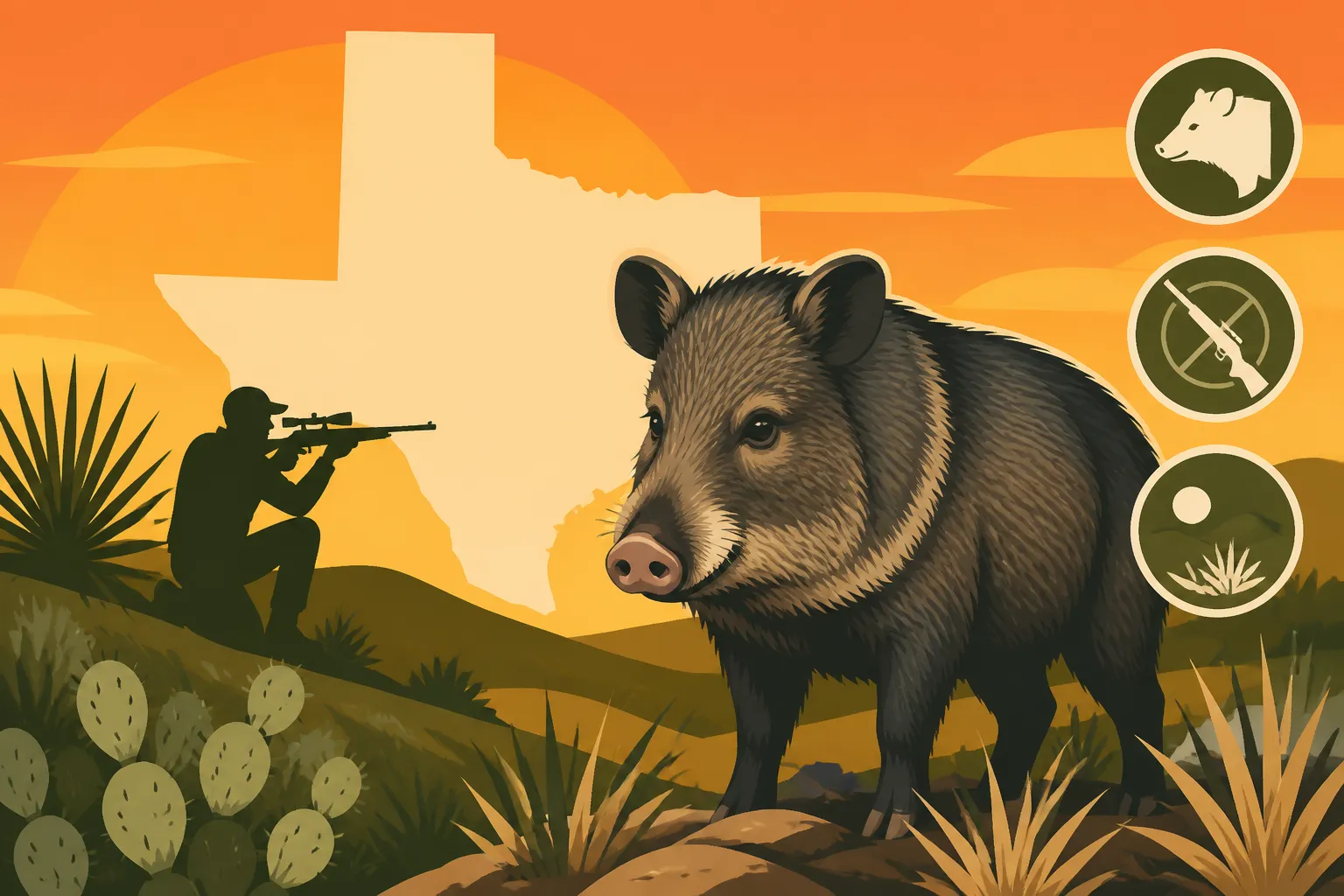
First things first, let's clear up a common misconception: javelina are not feral hogs. They belong to their own family, Tayassuidae, while pigs are in the Suidae family. A javelina is a small, pig-like mammal, typically weighing between 30 to 60 pounds, characterized by its coarse, grizzled salt-and-pepper hair, a distinctive white "collar" band around its neck, and relatively small tusks that point downwards. They have poor eyesight but an excellent sense of smell and hearing, often moving in groups called "herds" or "squadrons."
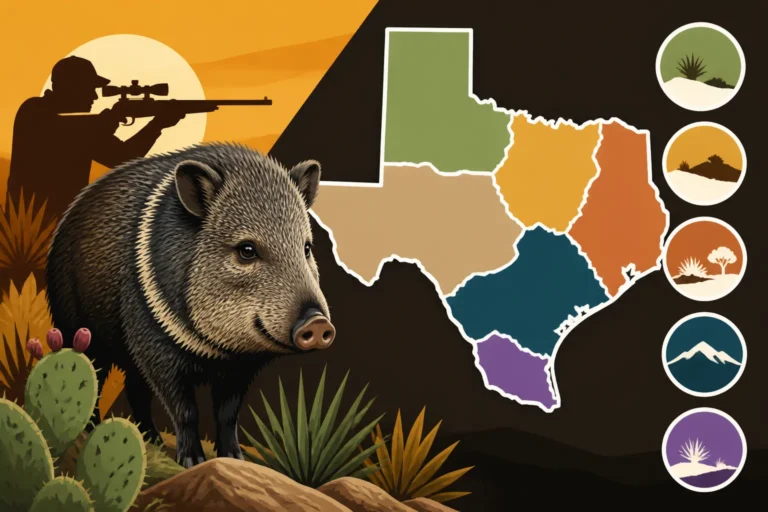
You'll typically find them in the arid and semi-arid regions of Texas, preferring the dense brush of South Texas and the rocky, thorny landscapes of the Trans-Pecos. These areas provide the perfect cover and food sources, like prickly pear cactus, roots, and insects, that javelina thrive on. Spotting a herd rooting through the brush is an unmistakable sign you're in prime javelina country. Their territorial nature means they often stick to established ranges, making scouting for fresh tracks and rooting signs a vital part of your hunt.
Why are Javelina Regulated Differently?
Unlike the pervasive feral hog, which is considered an exotic invasive species and can be hunted year-round with no bag limit and often no license on private land, javelina are native Texas wildlife. This distinction is crucial to understanding why their hunting is regulated. As native game animals, javelina populations are carefully managed by the Texas Parks and Wildlife Department (TPWD) to ensure their long-term health and sustainability. The regulations aim to balance hunting opportunities with conservation efforts, preventing overharvesting while still allowing for recreational and management hunting.
Their slower reproductive rate compared to feral hogs also plays a role. Feral hogs reproduce rapidly, leading to exponential population growth and significant agricultural and environmental damage. Javelina, on the other hand, have smaller litter sizes and fewer breeding cycles per year, making them more vulnerable to population declines if not properly managed. This biological difference necessitates stricter regulations, including specific bag limits and designated seasons, to protect their numbers. These rules are put in place not to make hunting harder, but to ensure that future generations of Texans can also experience the unique challenge and reward of hunting these fascinating creatures.
Essential Javelina Hunting Regulations for 2026
Planning your javelina hunt requires a clear understanding of the legal framework. Texas hunting regulations are designed to be comprehensive, ensuring fair chase, conservation, and public safety. Here's what you need to know to stay on the right side of the law.
Licensing and Permits You'll Need
Just like hunting any other game animal in Texas, you absolutely need a valid hunting license to pursue javelina. For most residents and non-residents, this means purchasing a general hunting license, such as the Resident Hunting License or the Non-Resident General Hunting License. There typically isn't a specific javelina tag you need to buy or attach if you're hunting on private land, unlike deer or turkey. However, your general hunting license covers javelina as a listed game animal.
It's vital to remember that the specific type of license might vary slightly if you are a youth hunter, a senior hunter, or hold a special disability license. For instance, youth under 17 might only need a Youth Hunting License. Always check the official Texas Hunting License: Cost, Types & How to Buy (2026) information from TPWD or the Outdoor Annual before your trip to ensure you have the correct documentation. If you're planning to hunt javelina on public land through the Texas Public Hunt Draw, you'll need to apply for and obtain a specific drawn hunt permit, in addition to your general hunting license. These drawn hunts have their own unique requirements and fees.
Bag Limits and Season Dates by Zone
This is where javelina regulations get a bit more nuanced than, say, deer. For most of Texas, especially on private land, javelina can often be hunted year-round. However, this doesn't mean "unlimited." The statewide bag limit for javelina is two animals per license year. This means that regardless of whether there's an open or closed season in your particular county on private land, you can only harvest a maximum of two javelina from September 1st through August 31st of the next year.
It's crucial to consult the official Texas Outdoor Annual for the most up-to-date and county-specific information for 2026. While many counties in the javelina range, particularly in South Texas and the Trans-Pecos, do not have a closed season on private land, there are exceptions and specific dates that apply to certain management units or on public lands. For example, some counties might have a prescribed season that falls within the larger September 1 – August 31 license year, but the two-animal bag limit still holds.
Public lands, such as Wildlife Management Areas (WMAs) or other public hunting units, will almost certainly have very specific, restricted seasons and bag limits that differ from private land rules. These are often managed through the Texas Drawn Hunts program, and details will be provided in the specific hunt permit. You should also check the Texas Javelina Season by Zone for any specific regional variations that may come into effect.
Here’s a simplified breakdown, though always verify with the official Outdoor Annual:
| Category | Regulation Details (2026 Projections) | Notes |
|---|---|---|
| Hunting License | Valid Texas Hunting License (e.g., Resident Hunting License, Non-Resident General Hunting License). | No special javelina tag required for private land. Drawn hunts on public land require specific permits. Youth and Senior licenses may apply. |
| Bag Limit | Two (2) javelina per license year. (September 1 – August 31) | This is a statewide limit. Once you harvest two, you are done for the license year, regardless of where or when you hunted them. This limit applies to all hunters, whether on private or public land. |
| Private Land Season | Generally year-round in most counties within the javelina range, but always verify county-specific rules in the Outdoor Annual. | Some specific counties may have defined seasons, but the general trend is year-round on private land. The two-animal bag limit still applies. |
| Public Land Season | Specific dates designated by TPWD for individual WMAs or drawn hunts. Often much shorter and more restrictive than private land. | Public land hunts require applying for and obtaining a drawn hunt permit. Seasons, methods, and access are strictly controlled. Check the Texas Drawn Hunts & Public Hunt Draw 2027 for application info. |
| Harvest Reporting | Generally not required for javelina, unlike deer or turkey. | While not legally mandated for javelina, responsible hunters often keep personal records. Always double-check this in the Outdoor Annual. |
Legal Hunting Methods and Restrictions
When it comes to the "how-to" of javelina hunting, Texas provides a good bit of flexibility, but with important restrictions.
-
Weapon Types: You can hunt javelina with most legal means, including:
- Firearms: Rifles, shotguns (with single slug or buckshot), and handguns are all permissible. There are no minimum caliber requirements specifically for javelina, but using an ethical caliber that ensures a clean kill is always recommended.
- Archery: Bows and crossbows are legal. Bowhunting in Texas: Archery Season Guide can provide more details if you're an archer.
- Muzzleloaders: Also legal for javelina.
- Air Guns: High-powered air guns are generally legal for javelina, but always check the most recent Outdoor Annual for specific air gun requirements, as these can sometimes change.
-
General Restrictions:
- Spotlighting: Generally, it is illegal to hunt javelina at night with the aid of artificial light, including vehicle headlights or spotlights, unless on private land with landowner consent and without crossing a public road. This differs from feral hog hunting, where night hunting with lights is widely permitted. Make sure you're clear on the distinction.
- From Vehicles: You cannot hunt from a public road or the right-of-way of a public road. Discharging a firearm across a public road is strictly prohibited. Hunting from a motor vehicle on private land is typically allowed with landowner permission, but check for any specific local ordinances.
- Fair Chase: Texas emphasizes fair chase principles. This means no hunting from aircraft, or using illegal baiting methods. Hunting over feeders or corn is generally legal for javelina in Texas, similar to deer, but always verify this for your specific county or WMA. You can find more details on Hunting Over Feeders & Corn in Texas (Legal Guide).
- Hunter Orange: While not always strictly required for javelina hunting on private land, wearing hunter orange is highly recommended for safety, especially if other hunters are in the area. It is often mandatory on public lands during certain seasons.
Always consult the official Outdoor Annual for any updates or regional variations that might impact your chosen hunting method.
Where to Find Javelina and Regional Considerations
Successfully hunting javelina often comes down to knowing their preferred stomping grounds. Texas is a big state, and while javelina aren't everywhere, certain regions are absolute hotspots.
Prime Javelina Habitat in Texas
When you think of prime javelina habitat, two regions immediately come to mind: South Texas and the Trans-Pecos. These areas offer the unique blend of dense cover, water sources, and specific vegetation that javelina thrive on.
- South Texas Brush Country: This is arguably the epicenter of javelina hunting in Texas. Counties like Webb, Dimmit, La Salle, and Maverick are synonymous with thick, thorny brush, mesquite, prickly pear, and guajillo — all staples in a javelina's diet. The impenetrable nature of the South Texas brush provides excellent concealment for these herds, making spot-and-stalk hunting challenging but incredibly rewarding. Look for signs like fresh rooting, distinct javelina tracks (they have four toes on the front feet but only three typically show in the track, and two on the rear), and their strong, musky odor, which indicates a recent presence. The best way to hunt them here is often by moving slowly through the dense cover, glassing ahead, or waiting patiently near water sources or feeding areas. This region is also famous for its trophy whitetails, so you might find yourself in an area popular for South Texas Trophy Whitetail: Brush Country Bucks too.
- Trans-Pecos Region: Moving west, the vast, rugged landscapes of the Trans-Pecos also hold healthy javelina populations, particularly in the lower elevations and mountain foothills. Here, you'll find them in areas dominated by desert scrub, ocotillo, lechuguilla, and, of course, more prickly pear. Counties like Brewster, Presidio, and Hudspeth offer a completely different hunting experience compared to the brush country. The more open terrain can lend itself better to long-range glassing and patient observation, followed by a strategic stalk. Water holes in this arid environment are critical magnets for javelina, especially during drier periods. The challenge here is the sheer vastness and ruggedness of the land.
While these two regions are primary, javelina can occasionally be found in other parts of the state with suitable habitat, though in much smaller, more scattered populations. Always do your scouting and research specific to your hunting area. For detailed strategies on pursuing these animals, check out Javelina Hunting Tactics for Texas.
Public vs. Private Land Regulations
The distinction between hunting on public versus private land is significant for javelina in Texas, especially when it comes to season dates and access.
- Private Land: The vast majority of Texas is privately owned, and this is where most javelina hunting occurs. As mentioned, the general rule on private land is a year-round open season with a two-animal bag limit. Access to private land requires explicit permission from the landowner, typically through a lease, a guided hunt, or a direct invitation. Many landowners welcome javelina hunting as a way to manage populations, as javelina can cause minor agricultural damage, though not to the extent of feral hogs. When you have private land access, you have more flexibility with your hunting schedule, within the statewide bag limit. Always be sure you have clear permission and understand any specific rules the landowner might have.
- Public Land: Hunting javelina on public land in Texas is a different ballgame. While opportunities exist, they are far more limited and come with much stricter regulations. Public hunting for javelina is primarily managed through the Texas Drawn Hunts: Public Hunt Draw System 2026. This means you must apply for specific drawn hunts on various Wildlife Management Areas (WMAs) or other public hunting units.
- Drawn Hunts: These hunts are highly sought after and often have very specific season dates, bag limits (sometimes less than two, or even one), and permitted hunting methods. The application period usually occurs months in advance, and drawing a permit is not guaranteed. If you are successful in the draw, you'll receive detailed instructions for your specific hunt, including check-in procedures, hunt boundaries, and any special regulations.
- Annual Public Hunting Permit (APH): In some cases, a limited number of WMAs might offer javelina hunting opportunities that are accessible with an Annual Public Hunting Permit, which allows access to designated public hunting lands for a year. However, these opportunities are usually secondary to drawn hunts for javelina, and you must meticulously check the specific WMA regulations for any javelina seasons or restrictions. Always refer to the Public Hunting in Texas: WMAs & Annual Public Hunting Permit guide for more details.
The key takeaway here is: if you're hunting private land, understand the statewide bag limit and verify any local county rules. If you're hoping for a public land javelina hunt, start planning early, understand the drawn hunt system, and be prepared for much shorter, more restrictive seasons.
Staying Compliant and Ethical Javelina Hunting Practices
As hunters, we have a responsibility not only to follow the law but also to uphold the highest ethical standards. This ensures the future of hunting and respects the wildlife we pursue.
The Importance of the Texas Outdoor Annual
I cannot stress this enough: the Texas Parks and Wildlife Department's Outdoor Annual is your bible for hunting regulations. While this guide provides a comprehensive overview of what to expect for 2026, regulations can and do change. New county-specific rules, minor adjustments to season dates, or clarifications on hunting methods are introduced annually. It is your responsibility as a hunter to be fully informed of the current regulations before you step foot in the field.
The Outdoor Annual is available both in print at license retailers and online, typically updated each August before the new hunting season officially begins on September 1st. Make it a ritual to review the sections pertaining to javelina, your specific county, and any public lands you plan to hunt. Don't rely solely on word-of-mouth or last year's memory. A quick check can save you from a costly citation or, worse, unintended harm to wildlife. This resource also contains information on Texas Hunting Tags & Harvest Reporting (My Texas Hunt Harvest) and other crucial details for all game animals.
Ethical Hunting and Conservation
Beyond simply following the rules, ethical hunting is about respecting the animal, the land, and the hunting tradition. For javelina, this means a few things:
- Shot Placement: Javelina are relatively small animals. Aim for a clean, humane kill by understanding proper shot placement. Their vitals are similar to a hog's but are slightly forward in the chest cavity compared to a deer. A broadside shot into the shoulder region is generally ideal. Avoid hasty shots, especially when a herd is moving quickly, to prevent wounding an animal.
- Minimizing Waste: Once an animal is harvested, it's our duty to utilize the meat. Javelina meat is lean and flavorful, often compared to pork. Field Dressing & Processing Game in Texas Heat is crucial knowledge, especially given the warm Texas climate. Don't just take the tusks and leave the rest. Proper field dressing immediately after the harvest will help cool the carcass and preserve the meat. While not as universally sought after as deer venison, javelina meat can make excellent sausage, chili, or stew.
- Respecting Landowners: If you're hunting on private property, always leave the land better than you found it. Close gates, don't litter, avoid damaging fences or property, and communicate clearly with the landowner. Your respectful behavior ensures continued access for yourself and other hunters in the future.
- Being a Good Steward: Javelina are an integral part of the Texas ecosystem. By adhering to bag limits, understanding their habitat, and making ethical choices, you contribute to their conservation. Responsible hunters are conservationists first and foremost. This commitment helps maintain healthy populations and ensures that future generations can also experience the unique challenge and thrill of How to Hunt Javelina in Texas (Step by Step).
Hunting javelina offers a truly unique experience in Texas. By understanding and respecting these regulations and ethical practices, you can ensure a successful and responsible hunt for 2026 and beyond.
Disclaimer
Please note that hunting regulations are subject to change annually. While every effort has been made to provide accurate and up-to-date information based on current projections for 2026, hunters are solely responsible for verifying all regulations with the official Texas Parks and Wildlife Department (TPWD) Outdoor Annual before engaging in any hunting activities. This guide is for informational purposes only and should not be considered legal advice.