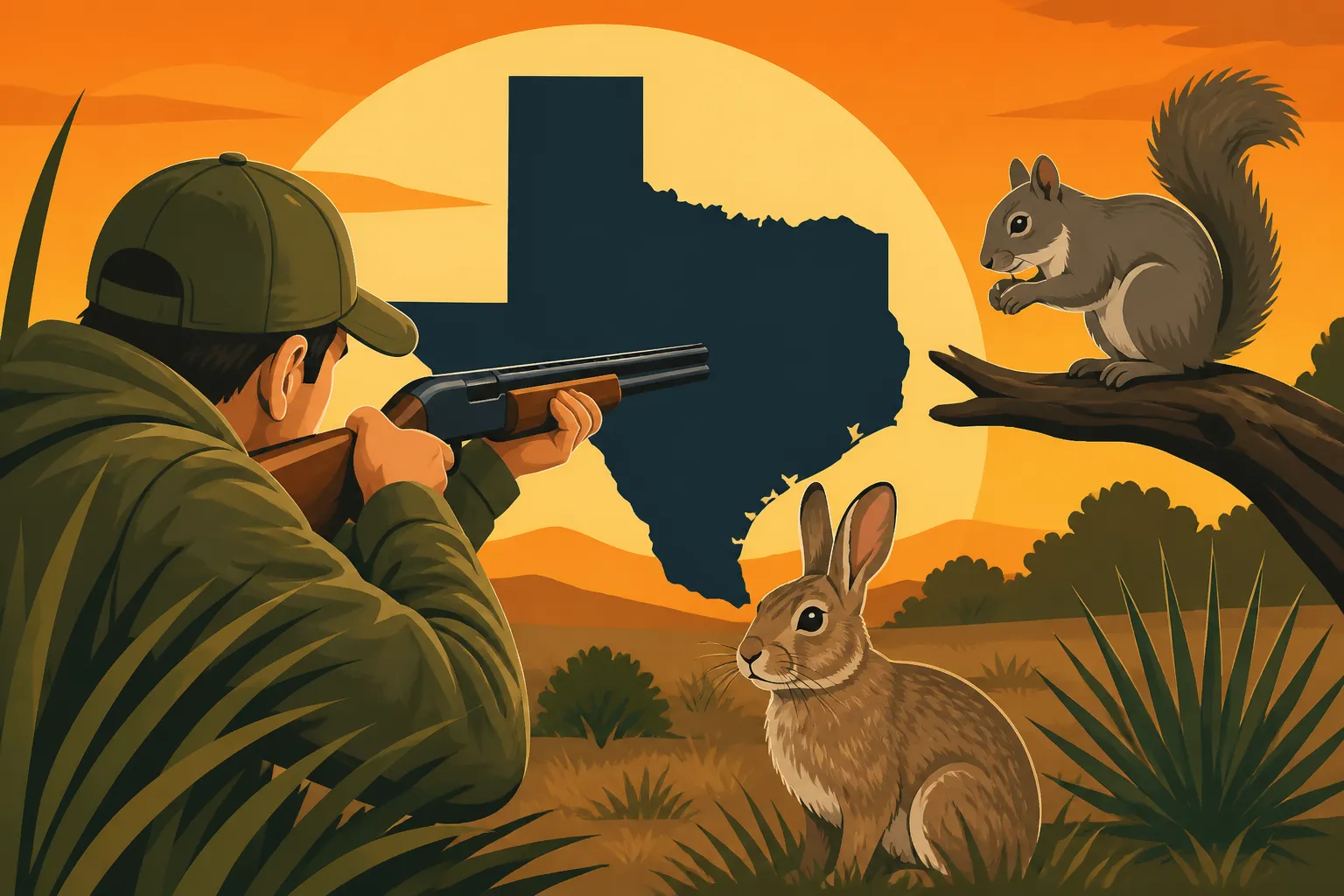
Texas Squirrel & Rabbit Hunting Guide
There’s a unique charm to hunting small game in Texas, but if you’re new to it, or even a seasoned big game hunter looking for a different challenge, figuring out the nuances of pursuing squirrels and rabbits can feel like a maze. From understanding their habits to navigating the regulations and finding good spots, it’s easy to feel a little lost. This comprehensive guide will walk you through everything you need to know to successfully hunt squirrels and rabbits across the vast landscapes of Texas.
Understanding Squirrel Hunting in Texas
Squirrel hunting might not have the same glory as chasing a trophy buck, but it offers an incredibly rewarding experience, honing your stalking skills and providing delicious wild game. Texas offers ample opportunities for squirrel hunters, primarily targeting fox and gray squirrels.
Common Squirrel Species and Their Habitats
In Texas, you’ll primarily be after two main species: the Eastern Fox Squirrel and the Eastern Gray Squirrel. While their names suggest distinct differences, they often share similar wooded habitats, although fox squirrels tend to prefer more open woodlands and smaller timber stands, while gray squirrels are more associated with dense, mature hardwood forests.
Fox squirrels are the larger of the two, often sporting reddish-brown fur with an orange-tinged belly. They’re a bit slower and more deliberate in their movements compared to their smaller, more agile gray cousins. You’ll typically find fox squirrels in mature pecan bottoms, oak hammocks, and mixed pine-hardwood forests, especially where there's an abundance of mast-producing trees like oaks, pecans, and hickories. They spend a lot of time on the ground foraging, making them a good target for still-hunting or stalking.
Eastern gray squirrels, on the other hand, are smaller, quicker, and generally more elusive. Their fur is typically gray with a white belly, and they’re masters of camouflage and aerial acrobatics through the canopy. These squirrels thrive in dense, mature hardwood forests, particularly those found along creek bottoms and river drainages. Think large stands of oak, elm, and hackberry, where they can easily escape danger by disappearing into tree hollows or scurrying up trunks. When you’re hunting gray squirrels, you’ll often find yourself craning your neck, as they spend a significant amount of their time high in the trees.
Knowing the difference in their preferred stomping grounds can be a real game-changer when you’re scouting or setting up for a hunt. Don’t just look for trees; look for the right kind of trees in the right kind of density for the species you’re targeting.
Essential Gear for Squirrel Hunting
You don't need a truckload of expensive gear to hunt squirrels, but having the right tools for the job will certainly improve your success and enjoyment. Small-bore firearms are king here, particularly a .22 caliber rimfire rifle. A good .22 rifle, like a Ruger 10/22 or a Marlin Model 60, allows for precise shot placement, which is crucial when trying to bag a squirrel without destroying too much meat. Using hollow-point or segmented bullets can increase your chances of a clean kill, but always ensure you know your rifle and ammunition’s capabilities.
For those who prefer a shotgun, a .410 or a 20-gauge with light game loads (like 6 or 7 ½ shot) works wonderfully, especially if you’re hunting in thicker cover or when squirrels are particularly active and moving quickly through the branches. The wider pattern increases your chances, though it can be a bit more destructive to the meat if you’re not careful with your shot distance. Many hunters opt for a combination, carrying a .22 for headshots when possible and a small gauge shotgun for running shots or squirrels in dense foliage.
Beyond the firearm, comfortable, quiet clothing in muted earth tones or camouflage is a must. You’ll be doing a lot of walking and sitting, so layers are essential for adapting to Texas's unpredictable weather. A good pair of comfortable, sturdy boots is non-negotiable, especially when traversing uneven terrain or thick underbrush. Don’t forget a small game vest or a comfortable backpack to carry your squirrels, water, snacks, and extra ammo. Sometimes, a pair of binoculars (even a compact 8×20 or 10×25) can be incredibly helpful for spotting squirrels high in the canopy or identifying movement in distant trees.
Best Times and Tactics for Squirrels
The great thing about squirrel hunting in Texas is the season is quite generous, often running from late spring through late winter, depending on the zone. This gives you plenty of opportunities. Early morning and late afternoon are generally the best times, right after sunrise and a couple of hours before sunset, when squirrels are most active foraging for nuts and seeds. During the middle of the day, especially when it’s warm, they tend to bed down or simply move less.
Still-hunting is a classic and highly effective tactic. This involves slowly moving through the woods, stopping frequently (often for 10-15 minutes at a time) to scan the trees and listen. Squirrels are naturally curious and, if you’re quiet, they’ll often resume their activities after a short pause. Look for movement, listen for the tell-tale sounds of scratching claws on bark, falling nut husks, or chattering. Using the sun to your advantage, keeping it at your back, can help illuminate squirrels and prevent them from spotting you easily.
Stalking is another popular method, particularly when you spot a squirrel at a distance and need to close the gap for a shot. This requires careful, quiet foot placement and using natural cover to conceal your approach. Pay close attention to wind direction; while squirrels don't rely on scent as much as deer, it can still carry sound. For a truly unique experience, some hunters also enjoy using squirrel dogs, typically cur breeds or feists, which tree squirrels and bark to alert the hunter. This can be a very active and exciting way to hunt, especially if you enjoy working with a canine partner.
Mastering Rabbit Hunting in Texas
Rabbit hunting is a fantastic way to introduce new hunters to the field or simply enjoy a fast-paced, action-packed outing. Rabbits are abundant across Texas, providing consistent opportunities and excellent table fare.
Common Rabbit Species and Preferred Habitats
Texas is home to several rabbit species, but the Eastern Cottontail and the Swamp Rabbit are the most commonly hunted. These furry dynamos are found throughout the state, often in diverse habitats.
The Eastern Cottontail is by far the most widespread and recognizable rabbit in Texas. They’re adaptable creatures and can be found almost anywhere there’s a mix of open areas for foraging and dense cover for escape. Think brushy fields, briar patches, fencerows, agricultural edges, thickets along creek beds, and even suburban greenbelts. They thrive in areas with tall grasses, weeds, and dense shrubs that provide both food and protection from predators. If you’re seeing lots of activity near a landowner’s field edge, chances are good you’re looking at cottontails.
Swamp rabbits, as their name suggests, prefer wetter habitats. You’ll find them in bottomland hardwood forests, marshes, swamps, and along the banks of rivers and streams, particularly in East Texas and along the coast. They are larger than cottontails and are excellent swimmers, often taking to the water to escape danger. Hunting swamp rabbits often means dealing with muddy terrain, so suitable footwear is a must. Knowing their watery preference can help you narrow down your hunting grounds if you’re specifically targeting these robust rabbits.
Understanding the specific cover these animals prefer is crucial. They are masters of concealment, and knowing where they’re likely to be hiding will drastically increase your success rate. A thick briar patch that looks impenetrable to you is probably a rabbit’s favorite safe haven.
Must-Have Gear for Rabbit Hunting
Like squirrel hunting, you don’t need an arsenal, but smart gear choices make all the difference. For rabbit hunting, a shotgun is often the primary tool of choice due to the fast-flushing nature of rabbits. A 12-gauge or 20-gauge shotgun loaded with game loads (7 ½ or 6 shot) is ideal. The wider pattern is excellent for hitting quick-moving targets as they burst from cover. Many hunters swear by an open choke, like improved cylinder or modified, for closer shots in thick brush. If you’re hunting in more open terrain and prefer a more challenging shot, a .22 caliber rifle can be used, but it demands precise aim on a small, fast-moving target.
Durability is key for rabbit hunting apparel. You’ll likely be pushing through thick brush, thorns, and briars, so rugged pants or chaps are highly recommended to protect your legs. Carhartt-style brush pants or dedicated briar-proof chaps will save you a lot of discomfort and torn clothing. A brightly colored vest or hat (blaze orange is always a good idea for safety, especially if hunting with a group or dogs) ensures you’re visible to others.
Comfortable, waterproof boots are essential, especially in damp or muddy areas that rabbits often inhabit. Your feet will thank you after a long day of walking. A small game vest or backpack to carry your rabbits, water, and extra shells is also vital. A good compass or a GPS device, like those found on the GoHunt app, can also be invaluable, especially when you’re pushing through unfamiliar dense cover, ensuring you always know where you are and how to get back to your starting point. You don’t want to get turned around in a large WMA while chasing a cottontail!
Effective Rabbit Hunting Strategies
Rabbit hunting can be as simple as walking a field edge or as involved as a full-blown drive with a pack of beagles. One of the most common and effective methods is simply walking up rabbits. This involves moving slowly and deliberately through areas of good rabbit cover, such as thickets, fencerows, and brush piles, flushing rabbits out as you go. Focus on transitional areas, like the edge of a field meeting a woodline, or where different types of cover converge. You’ll be surprised how many rabbits will hold tight until you’re almost on top of them.
If you’re hunting with a partner or a small group, a simple drive can be very productive. One or two hunters walk through a block of cover, pushing rabbits towards others positioned at the ends or along the sides of the cover. This can be particularly effective in larger, denser patches of habitat. Communication is key during a drive, so everyone knows where others are located.
For many, rabbit hunting isn’t complete without a pack of beagles. These small hounds are bred for trailing rabbits, their melodious baying a signature sound of the hunt. The dogs will jump a rabbit, chase it in a circle (rabbits often circle back to their original cover when pursued), and bring it past the waiting hunters. This method is incredibly exciting and offers a great social experience. When utilizing this method, consider the advice of seasoned hunters on the How to Hunt Feral Hogs in Texas (Step by Step) article, as some of the dog-handling principles for tracking can overlap. Remember, patience is a virtue in rabbit hunting; rabbits often pause just outside of cover before making a dash, giving you a quick window for a shot.
Texas Regulations and Licensing for Small Game
Understanding the rules is paramount for any hunter in Texas. The Texas Parks and Wildlife Department (TPWD) sets the regulations, and it’s critical to know them to hunt legally and ethically.
Licensing Requirements and Seasons
To hunt squirrels and rabbits in Texas, you absolutely need a valid Texas hunting license. For residents, the Super Combo license is a popular choice, covering most common hunting and fishing activities, but a General Hunting License will also suffice for small game. Non-residents will need a Non-Resident General Hunting License. Remember, even if you’re planning a quick hunt, neglecting the license is a serious offense. You can purchase your license easily online through the TPWD website or at most sporting goods stores like Academy Sports + Outdoors or Walmart. For more detailed information on obtaining your license, check out our guide on the Texas Hunting License: Cost, Types & How to Buy (2026).
One of the best parts about rabbit hunting in Texas is that there is no closed season and no bag limit on feral rabbits (Eastern Cottontail, Swamp Rabbit). This means you can pursue them year-round, which is fantastic for hunters looking for continuous opportunities or those wanting to practice their skills outside of big game seasons. For squirrels, the season is typically long and generous, often extending for several months, usually with different dates for the Eastern and Western zones of the state. It’s crucial to consult the current Texas Parks and Wildlife Outdoor Annual or the TPWD website for the exact dates for the upcoming season, as they can vary slightly year to year. You can also find a comprehensive overview of all seasons in our Texas Hunting Seasons: Complete Calendar by Species article.
Bag Limits and Legal Considerations
While feral rabbits generally have no bag limit, it’s always a good idea to confirm this with the most current regulations, just in case there are any county-specific or special public land rules. For squirrels, there is usually a daily bag limit, often set at 10 squirrels per day with a possession limit. This means you can harvest up to 10 in a single day, but cannot possess more than the possession limit (e.g., 20) in total. These limits are in place to ensure sustainable populations and fair chase.
Beyond licensing and bag limits, remember general hunting laws apply. This includes respecting property boundaries, ensuring hunter safety, and following all firearm regulations. If hunting on private land, written permission is always required. On public lands, be aware of any specific regulations for that area, such as restrictions on certain firearms or hunting methods. Always be sure of your target and what’s beyond it. Hunting small game often means shooting at low angles, so diligence is key to avoid accidental discharge or hitting non-targets. While most small game hunting doesn’t involve antler restrictions, the ethical considerations of fair chase and responsible hunting practices are just as important as when pursuing larger species.
Finding Prime Small Game Hunting Spots in Texas
Texas is a massive state with diverse landscapes, which means there are plenty of places to find squirrels and rabbits, if you know where to look. The challenge often lies in accessing those prime areas.
Public Lands and WMAs
Don't let the thought of private land access discourage you from small game hunting in Texas. The state offers a surprising number of public hunting opportunities, especially through its Wildlife Management Areas (WMAs) and National Forests. To hunt most public lands managed by TPWD, you'll need to purchase an Annual Public Hunting (APH) Permit, often in conjunction with your general hunting license. This permit unlocks access to hundreds of thousands of acres across the state.
WMAs like Gus Engeling WMA in Anderson County or Granger WMA near Granger offer diverse habitats that can hold good populations of small game. These areas are actively managed for wildlife, meaning they often have excellent cover and food sources for squirrels and rabbits. However, specific regulations, seasons, and access rules can vary significantly from one WMA to another, so always check the area-specific regulations in the Outdoor Annual or on the TPWD website before you go. Detailed information can often be found in resources like the Public Hunting in Texas: WMAs & Annual Public Hunting Permit guide.
Another excellent option is hunting in the National Forests of East Texas, such as the Sam Houston National Forest, Davy Crockett National Forest, or Angelina National Forest. These vast tracts of timberland offer ample room to roam and are prime squirrel habitat, especially the mature pine and hardwood mixes. Rabbit populations can also be found in clear-cut areas or along forest edges. Just like WMAs, National Forests have their own set of rules and regulations you need to adhere to, so familiarize yourself with them before heading out. Our guide on National Forest Hunting in Texas provides more in-depth information. Utilizing a mapping tool like GoHunt can be incredibly beneficial for identifying public land boundaries, scouting satellite imagery for prime habitats, and even marking potential game sightings or access points on these larger public tracts.
Gaining Private Land Access
While public lands offer great opportunities, let's be honest, much of the best hunting in Texas is on private property. Gaining access to private land for small game hunting can be less daunting than for big game, but it still requires effort and respectful communication. Start by asking friends, family, or acquaintances if they know anyone with land who might allow small game hunting. Often, landowners are more willing to grant permission for squirrel or rabbit hunting than for deer, as small game is less impactful on their property and can even be seen as a nuisance by some, especially rabbits eating crops.
Knocking on doors (respectfully, during daylight hours, and when it’s convenient for the landowner) can also work. Be polite, explain exactly what you want to hunt, and offer to share some of your harvest. Dress presentably and be prepared to show your hunting license and insurance. Emphasize your commitment to safety and leaving no trace. Sometimes, a "work for access" arrangement can be struck, where you offer to help with chores around the property in exchange for hunting privileges. This builds trust and can lead to long-term access.
Another avenue is to explore day leases or even annual hunting leases. While most leases are geared towards deer or other big game, some smaller landowners or less expensive leases might be open to small game hunting. Websites like Texas Hunting Online or TexasLand.com list available leases, though you might need to specifically inquire about small game opportunities. Regardless of how you gain access, always treat the landowner and their property with the utmost respect. This includes closing gates, not driving on wet fields, and picking up all your trash. A good relationship with a landowner can provide incredible small game hunting opportunities year after year.
Comparison of Small Game Hunting Gear
| Gear Type | Squirrel Hunting (Primary Focus) | Rabbit Hunting (Primary Focus) | Notes & Crossover |
|---|---|---|---|
| Firearm | .22 LR Rifle (precision shots), .410/20-gauge | 12-gauge/20-gauge Shotgun (fast-flushing) | A .22 can be used for rabbits in open terrain; small gauge shotguns for squirrels in thick cover. |
| Ammunition | .22 LR hollow point/segmented, #6 or #7.5 shot | #6 or #7.5 shot game loads | Light loads preserve meat. |
| Clothing | Quiet camo/earth tones, layers | Rugged pants/chaps (briar-proof), blaze orange | Durability is key for rabbits; stealth for squirrels. |
| Footwear | Comfortable, sturdy hiking boots | Waterproof, durable boots | Essential for varied Texas terrain. |
| Optics | Compact Binoculars (8×20, 10×25) | N/A (sometimes useful for long-distance spotting before closing in) | Binoculars help spot treed squirrels. |
| Calls | Squirrel call (bark, distress) | N/A (dogs are more common for calling out rabbits) | Not essential but can be useful for squirrels. |
| Navigation | GPS, Smartphone with app (e.g., GoHunt) | GPS, Smartphone with app (e.g., GoHunt) | Indispensable for public land, especially dense cover. |
| Carry System | Small game vest, comfortable backpack | Small game vest, durable backpack | For carrying game, water, and essentials. |
Disclaimer
Hunting is an inherently risky activity. Always prioritize safety, follow all local, state, and federal regulations, and obtain proper landowner permissions. The information provided in this guide is for informational purposes only and should not be considered legal advice. Consult the official Texas Parks and Wildlife Department Outdoor Annual for the most current and accurate regulations before any hunting activity.