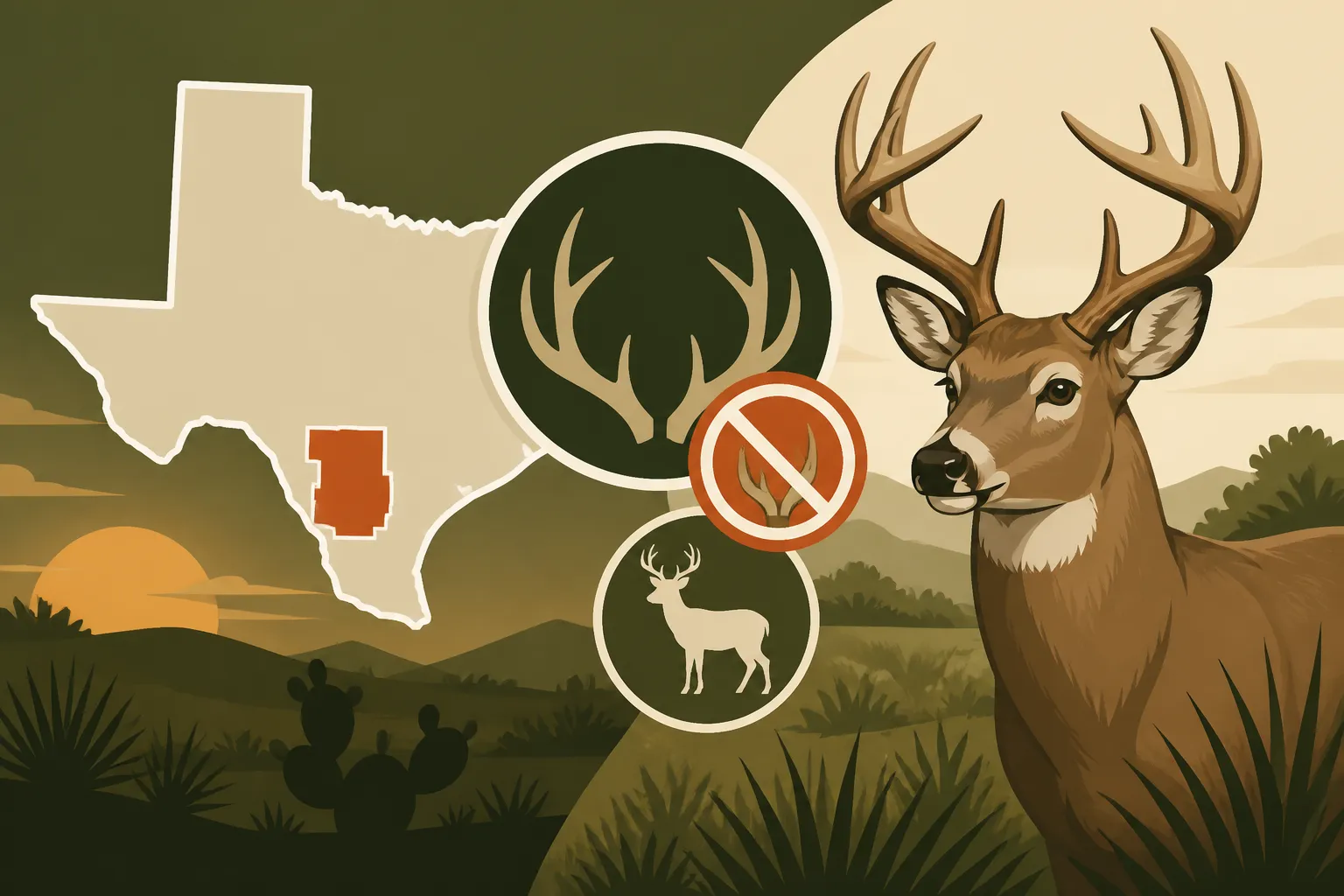
Zavala County Antler Restriction & Bag Limit
Understanding the ins and outs of deer hunting regulations can often feel like deciphering a secret code, especially when you factor in county-specific rules that vary across our vast state. Many hunters express frustration trying to keep up with the changing bag limits and antler restrictions. This guide is here to untangle the specifics for Zavala County, ensuring you understand the legal requirements for buck and doe harvests, helping you hunt confidently and responsibly.
Understanding Zavala County's Antler Restrictions
Zavala County, nestled in the heart of the famed South Texas Brush Country, is renowned for its potential to produce impressive white-tailed deer. However, to maintain and enhance the quality of these deer, the Texas Parks and Wildlife Department (TPWD) implements specific antler restrictions. These aren't just arbitrary rules; they're designed to help young bucks mature and improve the overall age structure of the herd. If you're hunting in Zavala, you absolutely need to be intimately familiar with these rules before you even think about pulling the trigger.
The 13-Inch Rule in Practice
For many years now, Zavala County has been part of a large contingent of counties operating under the "13-inch rule" for white-tailed bucks. This regulation is a cornerstone of deer management in many parts of Texas, and it's something every hunter needs to master. Essentially, it states that a buck is legal to harvest if its main beam inside spread is 13 inches or greater. But there's a crucial caveat: if a buck doesn't meet the 13-inch spread, it can still be legal if at least one of its antlers has an unbranched beam. This is often referred to as a "spike" rule or an "unbranched antler" rule.
Think about it this way: You're out in a box blind on a crisp November morning, and a beautiful 8-point walks out. Before you even shoulder your rifle, you're trying to judge that spread. Is it wide enough? How do you eyeball 13 inches? Many seasoned hunters use the deer's ears as a benchmark. The average ear-tip-to-ear-tip measurement on a mature whitetail is roughly 15-16 inches. So, if the main beams extend noticeably outside the ears, it's likely over 13 inches. If they're inside the ears, or just barely at the tips, it's probably not. The real challenge comes with those bucks that are right on the cusp – a 12-inch wide 8-point can look mighty tempting, but it’s illegal under this rule unless it has that unbranched point. It’s a common mistake for hunters to misjudge, leading to potential citations, so always err on the side of caution. For a deeper dive into the statewide impact, check out the comprehensive guide on Texas Antler Restrictions: 13-Inch Rule & Counties.
Exemptions and "Bonus" Bucks
The regulations aren't just about the 13-inch spread. The "unbranched antler" portion of the rule provides a vital exemption that allows for the harvest of young, genetically inferior bucks while still protecting the majority of the yearling class. A legal buck in Zavala County must meet one of the following two criteria:
- An inside spread of 13 inches or greater. This is the primary rule we just discussed.
- At least one unbranched antler. This means one of the main beams has no points coming off it, or it could be a true spike with no forks at all. This allows hunters to take younger bucks that might not contribute positively to herd genetics by having poor antler development, regardless of their spread. This is sometimes called a "management buck" or a "spike buck" opportunity.
What this system aims to do is remove spikes and genetically inferior deer from the population, while allowing the bucks with good genetics to live another year or two and reach their full potential. It's about letting those 1.5 and 2.5-year-old bucks with promising genetics walk, so they can become 3.5 and 4.5-year-old trophy deer. This system contributes significantly to the reputation of South Texas for producing those impressive brush country bucks.
Why Antler Restrictions Matter for Deer Management
The implementation of antler restrictions, like the 13-inch rule in Zavala County, is rooted deeply in sound wildlife management principles. Before these rules, many hunters would often harvest the largest antlered bucks they saw, regardless of age. This led to a disproportionate removal of mature, genetically superior bucks, potentially skewing the herd's age structure towards younger, less developed animals.
The primary goal is to allow more bucks to survive to older age classes. When bucks are allowed to age, their antler quality generally improves, leading to larger, more impressive racks. This also contributes to a more natural breeding dynamic, as older, more dominant bucks typically do most of the breeding, leading to healthier fawns. By protecting yearling and 2.5-year-old bucks with good potential, these regulations foster a more balanced deer population, both in terms of age and sex ratios. This approach has transformed many areas of Texas, including Zavala County, into premier destinations for quality deer hunting, benefiting both the deer herd and the hunting experience.
Deer Bag Limits in Zavala County
Beyond the antler restrictions, understanding the specific bag limits for both bucks and does in Zavala County is absolutely critical. These limits dictate how many deer you can legally harvest during the season and are another vital component of responsible wildlife management. Don't just assume the statewide general limits apply; always verify the county-specific rules.
Buck Bag Limits
In Zavala County, the general bag limit for white-tailed deer allows for the harvest of not more than two bucks per hunter per license year. This means you can take two legal bucks over the course of the season, provided they meet the antler restriction criteria discussed earlier (inside spread of 13 inches or greater, or at least one unbranched antler).
It's important to understand how this limit interacts with the season dates. The regular firearms season typically runs from early November through early January. However, you also have opportunities during the archery-only season which usually precedes the general season, and sometimes a late muzzleloader season. Regardless of the method or season, your total buck harvest cannot exceed two. If you harvest a buck during archery season, that counts towards your two-buck limit. This setup ensures that while hunters have ample opportunity, the total pressure on the buck population remains within sustainable limits, allowing for herd growth and maintenance of quality animals. For details on general season dates, you can check out Texas Deer Season 2026-2027: Dates by Zone.
Antlerless Deer Doe Bag Limits
When it comes to does, the regulations can be a little more nuanced, primarily due to the Managed Lands Deer Program (MLDP) and specific "doe days." In Zavala County, as in many counties, the general open season typically allows for the harvest of two antlerless deer. However, these antlerless deer often require an Antlerless and Spike Deer Control Permit (LAP) issued by TPWD to the landowner or lease manager, or they may be taken only on designated "doe days" if those are in effect.
Many properties in Zavala County participate in the MLDP, which provides landowners with permits (MLDP tags) that allow for a more flexible harvest of deer, including antlerless deer, outside of general season restrictions. If you're hunting on an MLDP property, you'll use the specific tags provided by the landowner, and your individual bag limit for does will be dictated by those tags, often allowing for more than two. It's absolutely crucial to communicate with your lease manager or landowner to understand if the property is under MLDP and what the specific doe tags allow. Harvesting a doe without the proper permit or outside of designated doe days (if applicable) is a serious violation.
Here's a quick overview of bag limits:
| Deer Category | Zavala County Bag Limit (General) | Notes |
|---|---|---|
| Bucks | 2 | Not more than 2 bucks per license year. Must meet antler restriction (13-inch inside spread OR at least one unbranched antler). |
| Antlerless | 2 | Generally 2 antlerless deer. Requires a valid Antlerless and Spike Deer Control Permit (LAP) from TPWD to the landowner, or may be taken only during designated "doe days" if applicable. MLDP properties have specific tags that supersede general limits. |
| Total Deer | 4 | Total bag limit of 4 white-tailed deer, not more than 2 bucks. |
Always consult the current Texas Outdoor Annual for the most up-to-date regulations.
Total Deer Bag Limits and Reporting Requirements
Combining both bucks and does, the overall bag limit for white-tailed deer in Zavala County is four deer total, with the stipulation that no more than two of these can be bucks. So, you could take two bucks and two does, or one buck and three does, or four does (if permits allow). This total limit helps manage the overall deer population, preventing overharvesting while still providing ample opportunities for hunters. To get a better sense of how tags work statewide, take a look at How Many Deer Tags Do You Get in Texas?.
Beyond just understanding the limits, harvest reporting is a mandatory and critical part of hunting in Texas. In Zavala County, all harvested white-tailed deer, both bucks and does, must be reported to TPWD. This is usually done through the "My Texas Hunt Harvest" app or website. You need to report your harvest within 24 hours of leaving the county or before processing the deer, whichever comes first.
Why is this so important? This data provides wildlife biologists with crucial information about the deer population. It helps them track harvest rates, monitor herd health, and make informed decisions about future regulations. Accurate reporting ensures that the management strategies, like the antler restrictions and bag limits in Zavala County, are effective. Skipping this step not only means you're breaking the law, but you're also hindering the very conservation efforts that make great hunting possible. If you need a refresher on the process, we have a detailed guide on How to Report Your Harvest in Texas.
Navigating the Regulations: Tips for Zavala County Hunters
Hunting in Zavala County, with its specific antler restrictions and bag limits, requires more than just good shooting skills; it demands careful preparation and keen observation. Knowing the rules is one thing, but applying them effectively in the field is where many hunters face their biggest challenges.
Pre-Season Scouting and Trail Camera Strategies
Effective pre-season scouting is your secret weapon, especially in counties with antler restrictions. Before opening day, spend time walking your lease, looking for deer sign, and strategically placing trail cameras. This isn't just about finding deer; it's about patterning them and, crucially, identifying potential legal bucks.
With a good cellular trail camera, you can get real-time photos of bucks visiting your feeders or food plots. Look for deer with that tell-tale wide spread. Pay close attention to young bucks. If you get a photo of a spike or a young buck with an unbranched antler, you know that deer is legal, assuming it’s mature enough. Use your trail cameras to establish a baseline of what kind of deer are frequenting your property. This knowledge can give you confidence when a deer steps out during legal shooting light. You can learn more about this by reading How to Pattern Bucks With Trail Cameras.
Field Judging and Making the Call
This is where the rubber meets the road. When a buck steps out, you've got a limited window to make a decision. The stress and excitement can make field judging incredibly difficult. Here are some pointers for Zavala County:
- Know Your Benchmarks: As mentioned, the deer's ears are your first and best reference. Most mature whitetails have an ear-tip-to-ear-tip measurement of around 15-16 inches. If the antlers clearly extend outside the ears, you're likely good on the 13-inch spread. If they are inside or just barely at the tips, be extremely cautious.
- Look for the Unbranched Antler: If the spread seems questionable, immediately shift your focus to the main beams. Does one side have absolutely no points coming off it? Is it a single spike? If so, that buck is legal regardless of spread. This is your "safety net" for bucks that don't meet the spread requirement.
- Practice, Practice, Practice: Before the season, look at photos and videos of deer. Challenge yourself to field judge them. Go to local deer scoring events and see actual racks. The more you train your eye, the better you'll become under pressure. Don't forget, if you're ever in doubt, let him walk. There will always be another deer. We’ve covered this topic in depth in How to Field Judge a 13-Inch Buck.
Staying Informed and Legal
The Texas Outdoor Annual is your Bible for hunting regulations. Period. Before every season, and even during, you should be reviewing the current year's version, paying special attention to the county-specific regulations for Zavala. Regulations can change, even slightly, from year to year. Don't rely on what you remember from last season or what your buddy told you.
Ignorance of the law is not an excuse. Game wardens are diligent, and violations carry serious penalties, including fines, loss of hunting privileges, and confiscation of game and equipment. Beyond the legal ramifications, respecting these regulations is about ethical hunting and supporting conservation efforts. Being a responsible hunter means doing your homework and ensuring every harvest is legal and properly reported. This proactive approach ensures you contribute positively to Texas's rich hunting heritage.
Impact on the Hunting Experience in Zavala County
The antler restrictions and bag limits in Zavala County aren't just about rules; they significantly shape the hunting experience itself. For many, these regulations have transformed South Texas hunting from a simple harvest opportunity into a more strategic and rewarding pursuit focused on quality over quantity.
Managing Your Lease for Quality Deer
For landowners and hunting lease managers in Zavala County, the 13-inch rule and specific doe limits are integral to their deer management plans. Properties that consistently produce larger, older bucks often do so because they actively manage their herds according to these guidelines. This might involve:
- Selective Harvest: Encouraging hunters to pass on younger, narrow-racked bucks, even if they're legal, in favor of older, wider deer or true spikes.
- Doe Management: Using MLDP tags to strategically reduce the doe population to maintain a healthy buck-to-doe ratio, which can improve fawn recruitment and buck antler development.
- Habitat Improvement: Investing in food plots, water sources, and cover that support a healthy, thriving deer population, knowing that the regulations provide a framework for these efforts to succeed.
If you're part of a hunting lease in Zavala County, understanding these regulations helps you contribute positively to the lease's goals. Your decisions in the stand directly impact the future quality of hunting on that property. Proper feeder setup can also play a role in managing your deer, so it's worth checking out How to Set Up a Box Blind Over a Feeder for more insights.
Patience and Strategy
Perhaps the most significant impact of antler restrictions is the emphasis they place on patience. In a county like Zavala, known for its potential for trophy whitetails, hunters are encouraged to be more selective. This means letting that 2.5-year-old 8-point with a 12-inch spread walk, even though he might be the biggest buck you've seen all season, knowing that with another year or two, he could become a truly magnificent animal.
This shift in mindset elevates hunting beyond just punching a tag. It becomes about understanding deer behavior, knowing your property, and making ethical choices that benefit the herd. It fosters a deeper appreciation for the animals and the intricate ecosystem they inhabit. Hunters become more strategic, focusing on scouting, understanding deer movement patterns, and often spending more time observing rather than just shooting. This leads to a richer, more fulfilling hunting experience, where the reward is not just the size of the antlers, but the satisfaction of a well-executed hunt that respects the regulations and the wildlife. To fine-tune your approach, consider exploring tips like Best Time of Day to Hunt Whitetail in Texas.
In Zavala County, the regulations are a testament to Texas's commitment to wildlife conservation and quality hunting. By understanding and adhering to these rules, every hunter plays a vital role in ensuring that the South Texas brush country continues to be a premier destination for white-tailed deer hunting for generations to come.
Disclaimer
Please remember that hunting regulations, including antler restrictions and bag limits, are subject to change. Always consult the official Texas Parks and Wildlife Department (TPWD) Outdoor Annual or their website for the most current and accurate information before planning any hunting trip. This guide is intended for informational purposes only and should not be considered a substitute for official TPWD regulations.