Webb County & Laredo Area Deer Hunting
The vast, sun-drenched landscapes of South Texas can be incredibly intimidating for any hunter, especially when you’re looking at an area as renowned and yet demanding as Webb County and the Laredo vicinity. Many hunters feel overwhelmed by the sheer scale of the brush country, the specific local regulations, and the challenge of finding a good hunting opportunity. This guide is dedicated to breaking down everything you need to know to successfully navigate the unique world of deer hunting in the Laredo area, from understanding the terrain and regulations to effective hunting strategies and finding that perfect lease.
Why Webb County and the Laredo Area Draw Hunters In
There’s a reason hunters from across Texas and beyond set their sights on Webb County: it’s synonymous with big whitetail deer. The reputation isn't just a legend; it's built on a foundation of ideal habitat and dedicated wildlife management. However, what makes it so appealing also presents its own set of challenges, often leaving new hunters feeling a bit lost in the vast, thorny landscape.
The Legend of South Texas Bucks
When you talk about trophy whitetail deer in Texas, Webb County almost always comes up. This region is part of the legendary South Texas Brush Country, an ecosystem perfectly designed for growing large-antlered bucks. The unique mix of nutrient-rich browse, favorable climate, and typically lower population densities on large ranches allows deer to reach their full genetic potential. It’s not uncommon to hear tales of massive bucks sporting impressive racks that exceed the coveted 13-inch inside spread, which, as we’ll discuss, is a critical measurement here. The sheer potential for harvesting a truly magnificent animal is what truly draws the most dedicated hunters to this storied region.
Imagine spending years hunting smaller deer in other parts of the state, only to come to Webb County and realize the sheer difference in antler growth and body size. The deer here are simply a different caliber, a testament to the rich environment. But don't let the "trophy" allure fool you; these deer are exceptionally wary, having grown up in a dense, natural fortress. It's a game of wits and patience, making the eventual success all the more rewarding. The chase for these elusive giants is often as thrilling as the harvest itself, creating a hunting experience that many consider the pinnacle of whitetail hunting. If you want to dive deeper into the appeal of these deer, check out our guide on South Texas Trophy Whitetail: Brush Country Bucks.
Proximity and Accessibility to Laredo
Laredo, nestled right on the U.S.-Mexico border, serves as the major hub for this prime hunting territory. For many, its accessibility is a double-edged sword. On one hand, it's a bustling city with all the amenities hunters might need – hotels, restaurants, hunting supply stores, and processing facilities. On the other, its growth means that some areas directly surrounding the city are becoming more developed, pushing prime hunting further out.
For those flying in, Laredo International Airport offers a convenient entry point, while numerous major highways, including I-35, make it easily reachable by vehicle from other parts of Texas. This connectivity, however, doesn't negate the vastness of the surrounding ranchland. Once you leave the city limits, you quickly find yourself enveloped in the endless brush, often traveling significant distances on unpaved roads to reach your hunting destination. It means planning is key, and ensuring your vehicle is up to the task of traversing rough terrain is paramount. You might be just a short drive from Laredo, but feel a world away once you're on a remote hunting lease.
Understanding the Terrain and Habitat of Webb County
The heart of Webb County hunting lies in understanding its unique landscape: the famed South Texas brush country. This isn't your open prairie or dense pineywoods; it's a world unto itself, tough and beautiful, and it dictates every aspect of how you'll hunt.
Brush Country: A Deer's Paradise and Hunter's Challenge
The South Texas brush country is characterized by dense, thorny vegetation that can feel impenetrable. Mesquite, blackbrush acacia, guajillo, granjeno, huisache, and prickly pear cactus dominate the landscape, forming thickets that provide incredible cover and forage for deer. This isn't just about hiding from predators; these plants offer a rich and diverse diet that contributes significantly to the health and antler growth of whitetail bucks.
For the deer, it’s a paradise. They can move through these natural mazes almost silently, disappearing in an instant. For hunters, it's a formidable challenge. Visibility is often limited to mere yards, making traditional spot-and-stalk tactics incredibly difficult, though not impossible for those with keen eyes and patience for slow, deliberate movement. The dense cover also means temperatures can feel even more intense, and navigating on foot requires specialized gear, like snake boots, to protect against the numerous venomous snakes that also call this brush home. It’s a harsh environment that truly tests a hunter’s grit, making every successful hunt feel like a hard-earned victory.
Water Sources and Their Importance
In an arid region like South Texas, water is life, and understanding its distribution is crucial for deer hunting success. Natural water sources can be scarce, especially during dry spells. Ponds, ephemeral creeks, and the occasional resaca (an old river channel) are invaluable, but many ranches rely on man-made water tanks (often called charcos or tanks), windmills, or troughs to provide consistent hydration for livestock and wildlife.
Deer, like all animals, need water daily, especially during the hot Texas fall and early winter months. Concentrating your hunting efforts around reliable water sources can be incredibly effective, particularly during periods of drought. During the rut, bucks will often cruise known water points, looking for does. Identifying these critical water holes on your lease, whether natural or artificial, should be a top priority during your scouting efforts. Using tools like onX Hunt can help you identify potential water sources on satellite imagery, but nothing beats boots on the ground to confirm their reliability and game sign.
Deer Hunting Regulations Specific to Webb County
Navigating hunting regulations can be a headache, but it’s absolutely essential, especially in a region like Webb County known for its specific rules designed to promote mature bucks. Ignorance of the law is never an excuse, and game wardens in this area are vigilant.
The Webb County Antler Restriction
One of the most critical regulations for deer hunting in Webb County, and much of South Texas, is the antler restriction. Webb County is included in the vast majority of Texas counties that adhere to the 13-inch antler restriction for white-tailed deer. This rule is in place to allow younger bucks more time to mature and contribute to a healthier age structure within the deer population, ultimately leading to more trophy-class animals.
Here’s the gist: for a buck to be legal, it must have an outside spread of antlers that is at least 13 inches wide. Alternatively, if it doesn't meet the 13-inch spread, it must have an unbranched antler (a spike) AND an antler with at least one point measuring 1 inch or longer. Most hunters simplify this by always looking for the 13-inch spread unless it’s a truly obvious spike-on-one-side scenario. Misjudging this can lead to serious fines and loss of your hunting privileges, so always err on the side of caution. It's a system designed to protect young bucks, so if you're ever in doubt about a buck's spread, let it walk. You can find more detailed information on specific counties and exceptions in the Texas Antler Restrictions: 13-Inch Rule & Counties guide.
Season Dates and Bag Limits
Understanding the precise season dates and bag limits is critical for hunting in Webb County. While the general deer season in Texas typically runs from early November through mid-January for general gun hunters, specific zones and counties can have slight variations. Webb County falls under the South Texas deer hunting zone.
The bag limit for white-tailed deer in Webb County is usually 4 deer total, with a maximum of 2 bucks. One of those bucks must meet the antler restriction (13-inch outside spread or spike-on-one-side with a branched antler on the other). The other buck can be any legal buck, meaning it doesn't have to meet the 13-inch spread rule, but it must have at least one unbranched antler, or a main beam that is shorter than 10 inches. This often means your second buck could be a "cull" buck or a young 8-point with less than a 13-inch spread. Doe days, or antlerless harvest periods, are also specific to the county and often require a doe tag or Managed Lands Deer Program (MLDP) permit from the landowner. Always consult the current year's Outdoor Annual from the Texas Parks and Wildlife Department (TPWD) for the most up-to-date and accurate dates and bag limits. You can look up the specific details for Webb County Antler Restriction & Bag Limit.
CWD Considerations
Chronic Wasting Disease (CWD) is a serious concern for wildlife managers across North America, and Texas is no exception. While Webb County has not historically been a CWD positive zone, it's crucial to stay informed about potential CWD zones and regulations, as these can change annually. If a CWD positive animal is detected in or near Webb County, special regulations regarding carcass movement and mandatory CWD testing might be implemented.
For hunters, this could mean mandatory check stations, restrictions on transporting certain parts of a harvested deer out of the county, and a need to be extra vigilant about the health of any deer you harvest. Always check the latest TPWD regulations before heading into the field, especially concerning CWD. These rules are in place to protect the health of Texas's deer herd, and adhering to them is part of being a responsible hunter.
Hunting Strategies for Webb County Whitetails
Hunting in the thick brush of Webb County requires a different approach than what you might use in the Hill Country or East Texas. It’s less about long-range shots and more about patience, close encounters, and understanding the deer's movements within their dense habitat.
The Role of Feeders and Blinds
Given the limited visibility in brush country, hunting over feeders from a blind is arguably the most common and effective strategy in Webb County. Spin-cast feeders dispensing corn are widely used to attract deer, bringing them into an open area where a shot can be taken. Protein feeders are also prevalent, especially for landowners focused on supplementing nutrition for antler growth. You'll often find these feeders paired with sturdy hunting blinds.
Box blinds are particularly popular due to the comfort they offer during long hours and varying weather, and their ability to conceal movement and scent. Tripod blinds are also common, offering a raised vantage point over the brush. Placing feeders and blinds strategically, often along senderos (cleared lanes) or natural openings in the brush, is key. It's not just about putting corn out; it's about observing deer patterns, identifying travel corridors, and setting up where deer naturally feel safe to approach. For a comprehensive overview of setup strategies, check out Best Deer Feeder Setup for Texas and Deer Hunting in Texas: Feeders, Blinds & Tactics.
Scouting with Trail Cameras and Apps
Even with feeders and blinds, successful hunting in Webb County starts long before the season opens with diligent scouting. Trail cameras are an indispensable tool here. The dense brush makes visual scouting difficult, so cameras do the heavy lifting, providing invaluable intel on deer activity, travel times, and the presence of mature bucks.
Placing cellular trail cameras on senderos, near water sources, or along known game trails allows you to monitor activity remotely, saving countless hours of disturbing the area. Brands like Tactacam and Moultrie offer excellent cellular options that can send photos directly to your phone. Pair this with a robust hunting app like onX Hunt, which lets you mark feeder locations, game sightings, and property lines with incredible precision. You can layer satellite imagery with topographical maps, creating a detailed picture of the terrain. This digital scouting, combined with physical scouting, helps you pattern deer, understand their movements, and identify potential stand locations or pinch points. For more on this, our guide on How to Scout for Deer Before Season in Texas offers great tips.
Rut Hunting in South Texas
The whitetail rut in South Texas is an intense, high-stakes affair, and timing your hunt during this period can dramatically increase your chances of encountering a mature buck. While the exact timing can vary slightly year to year based on environmental factors, the peak rut in Webb County typically falls in mid-December.
During the rut, bucks become far more active and less cautious, driven by the urge to breed. They will actively seek out does, making scrapes, rubs, and cruising travel corridors. This is a prime time for rattling antlers or using grunt calls to entice a curious buck into range. Patience is still paramount, but the likelihood of a daytime encounter with a big buck significantly increases. However, the brush is still thick, so visibility remains a challenge, and you often need to be prepared for a quick shot. Understanding the local rut patterns is key to maximizing your success during this exciting time. Learn more about regional rut timing in The Texas Rut: When Do Bucks Rut by Region?.
Finding a Hunting Lease or Outfitter in the Laredo Area
Unless you own land in Webb County, securing a place to hunt often means looking for a lease or booking with an outfitter. This can be one of the most challenging aspects of hunting in South Texas, given the high demand and specialized nature of the properties.
Navigating Lease Options: Day Hunts vs. Season Leases
The majority of hunting in Webb County occurs on private lands, primarily through hunting leases. You generally have two main options: day hunts or season-long leases.
- Day Hunts: For hunters with limited time or budget, or those wanting to experience the area without a long-term commitment, day hunts are a fantastic option. Many outfitters and landowners near Laredo offer guided day hunts for whitetail, often including lodging, meals, and guides. Prices can vary widely based on the size of the buck you're targeting and the amenities offered, but they provide a streamlined, often high-success experience. It's a great way to "test the waters" of Webb County hunting without the full financial and time investment of a season lease.
- Season Leases: A season lease, typically running from fall through winter, offers more freedom and the ability to manage the property and deer herd more actively. These leases can range from small parcels to thousands of acres. They are often shared among a group of hunters, dividing the cost and responsibilities. The challenge lies in finding available leases, as many are passed down through generations or filled quickly by word-of-mouth. Expect prices to be higher per acre than in many other parts of Texas due to the quality of hunting. Finding a good group with similar hunting philosophies is crucial for a successful season lease. For a deeper dive into how these work, read our Hunting Leases in Texas: Complete Guide (Cost & How to Find).
Working with Local Outfitters
For many hunters, especially those new to the region or without existing connections, an outfitter is the easiest way to access prime Webb County hunting land. Laredo and the surrounding areas host numerous reputable hunting outfitters specializing in whitetail, as well as hogs and exotics.
When choosing an outfitter, do your homework. Look for reviews, ask for references, and inquire about their success rates, typical buck size, and what's included in the package (guides, meals, lodging, field dressing, etc.). A good outfitter will be transparent about their operations and the type of hunt you can expect. They often have established relationships with landowners and access to well-managed properties, significantly increasing your odds of a successful and enjoyable hunt. Websites like GoHunt and local hunting forums can be good resources for finding reputable operations and reading real hunter experiences.
Essential Lease Agreement Considerations
Whether it’s a day hunt contract or a multi-year lease agreement, understanding the terms and conditions is paramount. Don’t rush through the paperwork. For a season lease, pay close attention to details like:
- Access: Clearly defined access routes, gates, and keys.
- Bag Limits & Harvest Rules: Does the landowner have additional rules beyond TPWD regulations? Are there specific doe tags (MLDP) or buck quotas?
- Guest Policies: Can you bring family or friends? Are there additional fees?
- Maintenance & Improvements: Who is responsible for feeder filling, blind maintenance, road upkeep, or habitat improvements?
- Liability: Ensure there’s clear language regarding liability, and consider investing in hunting lease insurance.
- Start & End Dates: Confirm the exact duration of the lease.
A solid lease agreement protects both you and the landowner, preventing misunderstandings down the road. It’s also wise to walk the property boundaries with the landowner or lease manager, using a GPS app like onX Hunt to confirm property lines and access points, especially in areas where fencing might not be clear.
Beyond Whitetail: Other Hunting Opportunities in the Laredo Area
While whitetail deer are undoubtedly the main draw, Webb County and the Laredo area offer a diverse range of hunting opportunities that can enhance your trip or provide year-round action. Don't limit your focus to just one species when the landscape offers so much more.
Feral Hogs: Year-Round Opportunity
Feral hogs are abundant throughout South Texas, including Webb County, and present a year-round hunting opportunity with no closed season or bag limit on private land. These destructive animals are a nuisance to landowners, rooting up crops and pasture, and competing with native wildlife for resources. For hunters, they offer an exciting challenge and a chance to put some delicious wild pork in the freezer.
Hogs can be hunted in a variety of ways: over feeders, still-hunting through the brush, or at night with thermal and night vision equipment. The Laredo area is particularly popular for thermal hog hunting, offering thrilling nighttime pursuits. Many outfitters offer dedicated hog hunts, sometimes even bundled with deer or exotic hunts. Whether you're filling freezer space or just looking for some extra action, hogs are a readily available target. To learn more about how to pursue these animals, check out our Feral Hog Hunting in Texas: Year-Round Guide.
Exotics: Axis, Aoudad, and More
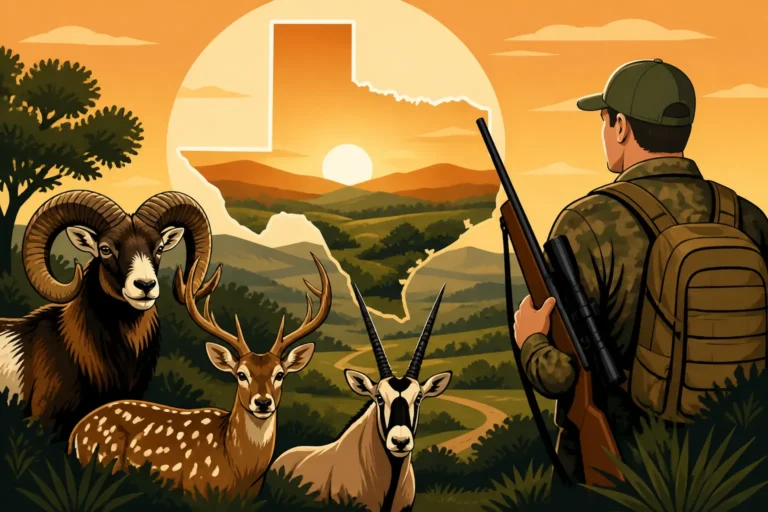
South Texas is also well-known for its thriving populations of free-range and high-fence exotic game animals. Many ranches in and around Webb County manage populations of species like Axis deer, Aoudad sheep, Blackbuck antelope, Fallow deer, and Sika deer. These hunts offer a unique experience, often with flexible season dates and different challenges than native species.
Axis deer, with their striking antlers and delicious meat, are a particularly popular exotic to hunt. They are often active during the heat of the day, providing an alternative to traditional whitetail hunting times. Aoudad sheep offer a truly challenging hunt, especially in more rugged terrain. While most exotic hunting is done on high-fenced ranches, some properties boast impressive free-range populations, adding another layer of excitement. If you're looking to expand your hunting horizons, consider adding an exotic hunt to your Laredo area adventure. Our guide on Exotic Hunting in Texas: Axis, Aoudad, Blackbuck & More covers many of these species.
Migratory Birds
Beyond big game, the Laredo area is also a prime destination for migratory bird hunting, particularly dove. South Texas is a major flyway for both Mourning dove and White-winged dove, making the September 1st opener an almost religious holiday for many hunters. The fields of sunflowers, milo, and native grasses provide excellent forage, attracting huge numbers of birds.
Setting up in a field, under a canopy of mesquite trees, or near a water hole, with decoys spread out, can lead to fast-paced action and generous bag limits. Later in the season, waterfowl hunting, particularly for various duck species, can also be productive on larger tanks and ponds, especially those with good cover. Always ensure you have the appropriate migratory bird endorsements and HIP certification on your hunting license. Consult the Texas Dove Season 2026: Zones & Dates for specific opening dates and bag limits.
| Hunting Opportunity | Typical Season | License Requirement | Key Features in Webb County |
|---|---|---|---|
| White-tailed Deer | Nov – Jan | General Hunting License + Deer Tags | Trophy bucks, 13-inch antler restriction, dense brush. |
| Feral Hogs | Year-Round | General Hunting License (Private Land) | Abundant, destructive, year-round harvest, thermal hunting popular. |
| Exotic Species | Year-Round | General Hunting License (Private Land) | Axis, Aoudad, Blackbuck. Varies by ranch (high-fence/free-range). |
| Mourning/White-winged Dove | Sept – Jan | General Hunting License + Migratory Bird Endorsement & HIP | Major flyway, fast-paced action, abundant food sources. |
| Waterfowl (Ducks) | Oct – Jan | General Hunting License + Federal Duck Stamp, State Endorsement & HIP | Good numbers on larger tanks/ponds, diverse species. |
| Javelina | Oct – Feb | General Hunting License (Specific Counties) | Limited opportunity, smaller game, unique challenge. |
Always remember to cross-reference with the latest Texas Parks and Wildlife Department Outdoor Annual for the most current regulations and dates for all species.
Disclaimer
Please be aware that hunting regulations, season dates, and specific county rules can change. Always consult the most current Texas Parks and Wildlife Department (TPWD) Outdoor Annual before planning any hunting trip. This guide is for informational purposes only and should not be considered legal advice.