Hog Trapping in Texas: Methods That Work
Feral hogs are a relentless challenge for landowners and hunters across Texas, destroying crops, damaging property, and outcompeting native wildlife. If you've spent countless hours trying to manage these destructive creatures with limited success, you know the frustration. This guide is dedicated to breaking down the most effective hog trapping methods that actually work here in the Lone Star State, offering practical, real-world advice to help you regain control.
Understanding the Feral Hog Problem in Texas
The feral hog population in Texas isn't just a nuisance; it's an ecological and economic crisis. These highly intelligent and adaptable animals reproduce at an alarming rate, making eradication an almost impossible task. They are often called the most prolific large mammal in North America, with sows capable of having 1-2 litters per year, averaging 4-6 piglets per litter. Without sustained control efforts, their numbers can quickly spiral out of control on any given property.
Why Hogs Are Such a Nuisance
From a rancher's perspective, the damage is heartbreakingly clear. Feral hogs root up pastures, costing millions in agricultural losses annually. They contaminate water sources, spread diseases to livestock and wildlife, and even prey on vulnerable fawns and ground-nesting birds. Beyond agriculture, hunters often find their well-maintained senderos and food plots decimated overnight, ruining carefully planned hunting seasons. The sheer scale of their impact is staggering, affecting everything from property values to native plant ecosystems. They can destroy several acres of crops in a single night, and their wallowing habits degrade vital water sources.
The Importance of Population Control
Given their reproductive capacity and destructive habits, effective population control isn't just about reducing numbers; it's about mitigating widespread damage and protecting our natural resources. Trapping stands out as one of the most efficient methods for removing large numbers of hogs, especially when targeting entire sounders (a group of feral hogs). Unlike sporadic hunting, which often only scatters a sounder, well-executed trapping can eliminate many animals at once, providing a more impactful solution for long-term management. This is why many landowners lean heavily on trapping as a primary strategy, often alongside hunting methods like Feral Hog Hunting Tactics for Texas. It’s a continuous battle, and trapping helps tip the scales.
Essential Principles of Effective Hog Trapping
Successfully trapping feral hogs isn't about setting out a trap and hoping for the best. It requires strategy, patience, and a deep understanding of hog behavior. Think of it as a chess match against a very clever opponent. The most crucial elements involve luring them into a false sense of security and ensuring your equipment is up to the task.
Pre-Baiting: The Foundation of Success
Before you even think about setting a trap, you need to establish a consistent baiting regimen. This phase, known as pre-baiting, is absolutely critical. You want the hogs to associate a specific spot with a reliable, easy food source, building their confidence to feed there regularly, often for a week or more. Start by placing a generous amount of bait directly on the ground in the area where you plan to put your trap. Observe their activity using trail cameras; you want to see an entire sounder feeding comfortably and consistently before introducing the trap itself. If you rush this step, the hogs might be wary of a new structure, and your efforts could be wasted. Patience here truly pays off.
When you see consistent traffic, gradually move the bait closer to where the trap will be, and eventually, inside the unset trap. The goal is to make them walk in and out of the trap without any negative association. It’s a slow game, but vital for tricking these smart animals. For more insights on hog behavior, check out resources like How to Pattern Hogs on Your Lease.
Trap Placement and Scent Management
Where you place your trap is almost as important as the bait you use. Hogs prefer areas with cover and easy escape routes. Look for natural travel corridors, shaded areas near water sources, or edges of dense brush. Avoid open fields where they might feel exposed. Once you've chosen a spot, consider scent management. Hogs have an incredible sense of smell, and human scent can make them extremely wary. Wear gloves when handling trap components and try to minimize your presence around the trap site after setup. Many trappers even "season" their traps by letting them sit in the field for a while, allowing natural scents to accumulate and human scent to dissipate.
Think about the prevailing wind direction; you want the bait's scent to carry downwind into areas where hogs are likely to be traveling or bedding. Sometimes, placing the trap near an existing feeder that hogs already frequent can be effective, but ensure it's not too close to deter deer. You might also find tips on optimal feeder placement in guides like Best Setup for Hunting Hogs Over a Feeder.
Common and Effective Hog Trap Designs
The world of hog traps offers a variety of designs, each with its strengths and ideal applications. Choosing the right trap depends on factors like the size of the sounder you're targeting, your budget, and how often you can monitor it. The most common designs fall into two main categories: large corral traps and smaller box traps.
Corrals and Large Enclosures
Corral traps are the workhorses of serious hog eradication efforts. These large, circular or square enclosures, typically made of heavy-duty hog panels, are designed to catch entire sounders at once. Their size, often 10-20 feet in diameter, allows multiple hogs to enter and feed comfortably without feeling confined, which is key to catching those wary matriarchs. The panels are usually 4 to 5 feet tall and secured with T-posts or rebar, making them robust enough to withstand the power of a trapped sounder. The entrance often features a specialized gate that triggers and closes once a certain number of hogs are inside or a specific animal passes through.
The beauty of a corral trap is its capacity. If you have a property with a significant hog problem, and you've patterned a large sounder, this is often your best bet for a high-yield capture. However, they require more material, more effort to set up, and are generally less portable than box traps. Setting up a corral effectively often involves creating a funnel-like entrance or using bait strategically to guide them in.
Box Traps: Smaller Scale Solutions
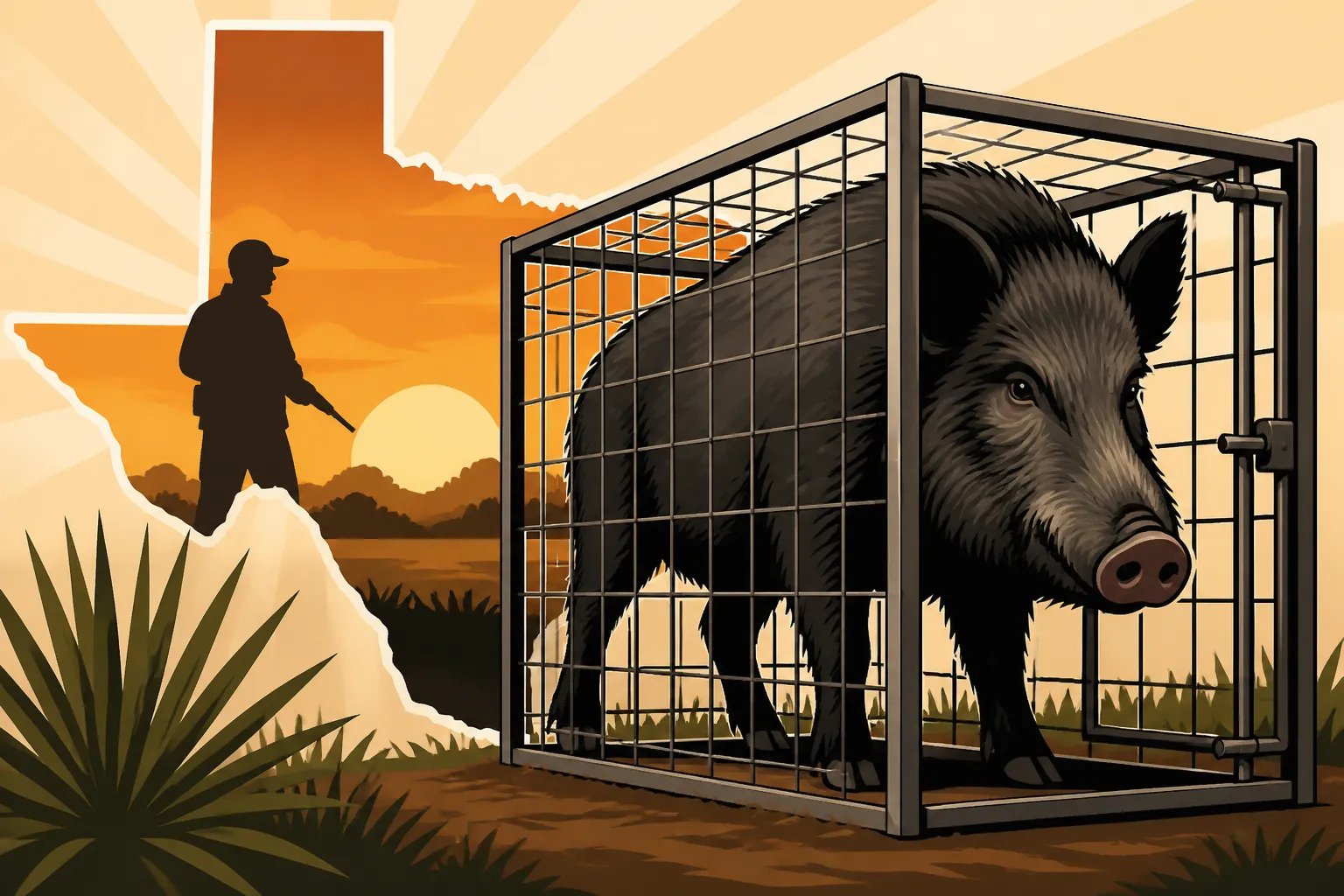
Box traps, as the name suggests, are smaller, self-contained units, typically measuring 4×8 feet or 5×10 feet. They are excellent for smaller properties, targeting individual problem hogs, or when you need a more portable option. Constructed from steel mesh or heavy gauge wire panels, these traps usually have a single entrance with a spring-loaded or swinging door. While they won't catch an entire sounder like a corral, they are effective for catching a few hogs at a time, especially younger, less wary ones.
One of the main advantages of a box trap is its portability. Many can be transported on the back of a UTV or truck and set up relatively quickly. They're also often more affordable than large corral systems. The trade-off is capacity; you'll likely need to reset them more frequently if you're dealing with a large population. They can be a good starting point for landowners new to trapping or those managing smaller areas.
Door Mechanisms: Rooter, Guillotine, and Drop Doors
The door mechanism is the heart of any hog trap, determining how effectively and reliably it catches animals.
-
Rooter Gates: Also known as "swing gates" or "push-through gates," these are common on corral traps. They allow hogs to push their way in but are designed to prevent them from pushing back out. The gate typically swings inward on a pivot and is weighted or shaped to resist outward pressure. Hogs learn quickly that they can push their way in, but once inside, they are caught. These work well when hogs are comfortable with the trap enclosure.
-
Guillotine Doors: These are heavy, vertical sliding doors that drop down to seal the entrance. They can be found on both box and corral traps. Guillotine doors are often triggered by a trip wire or a rooter plate inside the trap. They are very secure once dropped, but require careful calibration to ensure they don't spook the hogs when they fall. Remote trigger systems are often paired with guillotine doors for precise control.
-
Drop Doors (Snare Doors): Similar to guillotine doors but often spring-loaded or counterweighted to drop faster and with more force. These are highly effective for instant closure. The trip mechanism for a drop door needs to be sensitive enough to be activated by a hog but robust enough not to be accidentally triggered by wind or smaller animals.
-
Saloon/Figure-8 Doors: Less common but effective, these doors are designed with two narrow, inward-opening panels that form a "V" or "figure-8" shape. Hogs push through the narrow opening, but the design prevents them from pushing back out. These are often used in box traps.
Here's a quick comparison of common trap types:
| Trap Type | Capacity | Portability | Ideal Scenario | Pros | Cons |
|---|---|---|---|---|---|
| Corral Trap | High (Full Sounder) | Low | Large properties, major infestations | Catches entire sounders, highly effective | High initial cost, labor-intensive setup, not portable |
| Box Trap | Low (1-5 Hogs) | Medium-High | Smaller properties, individual hogs | More portable, lower cost, easier to set up | Limited capacity, wary hogs may avoid, frequent resetting |
Baiting Strategies That Lure Hogs In
The right bait is your secret weapon in the war against feral hogs. Hogs are opportunistic omnivores with an incredible sense of smell, making them highly receptive to certain aromas and flavors. The goal is to present something irresistible that keeps them coming back for more.
The Power of Sour Grain and Fermented Corn
Hands down, one of the most effective and widely used baits in Texas is fermented corn, often referred to as "sour corn." The fermentation process creates a strong, distinct odor that hogs can detect from a long distance, drawing them in like a magnet. To make it, simply soak corn (often whole kernel feed corn) in water, adding a packet of yeast or a cheap fruit juice like pineapple juice, and let it sit in a sealed container for several days in the sun. The hotter it is, the faster it ferments. The resulting pungent, yeasty aroma is irresistible to hogs. You can also mix in some other cheap grains or even some sugar to boost the fermentation.
This method is popular because it's cost-effective and highly attractive. Many trappers will continuously refresh their bait sites with fresh sour corn during the pre-baiting phase, ensuring a consistent and strong scent trail. This consistent offering is much like how hunters use feeders for deer, and understanding the nuances of how much corn a deer feeder uses can sometimes inform your baiting volumes for hogs.
Commercial Baits and Attractants
While sour corn is a classic, the market also offers a variety of commercial hog baits and attractants. These often come in liquid, granular, or block form and are designed to have intense, long-lasting scents. Popular options include those with apple, cherry, or vanilla scents, and some are specifically formulated to release a powerful aroma when wet or heated by the sun. Brands like Evolved Harvest or Wildgame Innovations offer hog-specific attractants that can be used alone or mixed with corn to enhance its appeal.
Some trappers use these commercial attractants to "spike" their regular bait, giving it an extra kick, especially in areas with high hunting pressure where hogs might be warier. Others will create a "scent wick" by pouring a liquid attractant on a rag or absorbent material and hanging it near the trap, allowing the wind to carry the irresistible scent. Experimentation is key; what works best in one area might not be as effective in another, depending on local hog preferences and food sources.
Consistency is Key
Regardless of the bait you choose, consistency is paramount. Once you start baiting a site, commit to refreshing it regularly, ideally every 1-2 days during the pre-baiting phase. Hogs are creatures of habit, and if they find a consistent food source, they will return. Sporadic baiting teaches them that the food isn't reliable, making them less likely to commit to the site. The goal is to make your bait site their favorite restaurant.
Additionally, consider placing your bait in a way that encourages them to root around and stay longer. Spreading it out or even lightly burying some of it can simulate natural foraging behavior, keeping them engaged at the site. Remember, you're not just feeding them; you're habituating them to the trap area.
Setting Up and Monitoring Your Traps
Once your pre-baiting efforts have conditioned hogs to a specific location, the next critical steps involve the actual setup of your trap and ensuring diligent monitoring. This phase is where all your hard work comes to fruition, but it also requires careful attention to detail to avoid spooking the animals or having a trap malfunction.
Smart Triggering Systems: Traditional vs. Remote
The type of triggering system you employ can greatly impact your success, particularly with wary sounders.
-
Traditional Trip Wires/Plates: Many traps rely on mechanical trip wires or plates located within the trap. Hogs step on a plate or trip a wire, which then releases the door mechanism. These are straightforward and reliable but require you to be physically present to reset the trap and are often activated by the first few hogs that enter, potentially missing the rest of the sounder. This is where the patience of pre-baiting truly shines, as you want the entire sounder to be feeding confidently before you arm the trip.
-
Remote Triggering Systems: For the ultimate control and efficiency, remote triggering systems are a game-changer. These systems typically involve a cellular camera (like those you might use for Best Cellular Trail Cameras for Texas (2027)) inside or near the trap, combined with a remote-activated trigger device attached to the trap door. You monitor the trap via your smartphone, watching as hogs enter and gather. Once you see the entire sounder inside the trap, you can remotely activate the trigger with a text message or app command, dropping the gate and securing the whole group. This minimizes false triggers from non-target animals (like deer or raccoons) and maximizes your catch rate by ensuring the entire sounder is present before closing the door.
Companies like Jager Pro and BoarBuster are well-known for their advanced remote trapping systems, offering durable equipment and sophisticated software to manage your trapping efforts. These systems represent a significant investment but can pay for themselves quickly in terms of efficiency and success, especially on large-scale operations or for particularly cunning hogs.
Regular Monitoring and Maintenance
Regardless of your triggering system, regular monitoring is crucial. If you're using a traditional trip wire, check your trap daily, or even twice a day if possible. Trapped hogs can become stressed and injured, and leaving them for extended periods is inhumane. For remote systems, you’ll be constantly checking your camera feed, but still need to visit the trap regularly to refresh bait, check battery levels, and ensure everything is in working order.
Maintenance is also key. Hogs are powerful animals, and they can damage traps, especially if they are not robustly constructed. Check for bent panels, loose welds, or any signs of wear and tear. Ensure all moving parts of the door mechanism are clear of debris and functioning smoothly. A malfunctioning trap is not only ineffective but can also lead to unintended harm to the animals. Keeping a trap well-maintained also minimizes human scent contamination over time.
Post-Capture: Handling and Disposal
Catching feral hogs is only half the battle; knowing how to safely and responsibly handle them after capture is just as important. This final stage requires careful planning, humane practices, and adherence to local regulations.
Humane Dispatch and Safety Protocols
Once hogs are secured in a trap, the primary method for dispatch is a quick, humane shot to the brain. This is typically done with a firearm, and it's essential to use appropriate calibers and shot placement to ensure an instantaneous and ethical kill. Always prioritize safety: ensure anyone involved is trained in firearm handling, that the area around the trap is clear, and that you have a safe backdrop for your shot. Hogs, even when trapped, can be dangerous and unpredictable. Approach the trap cautiously and maintain a safe distance.
If you are planning to process the hogs for meat, it's crucial to begin Field Dressing & Processing Game in Texas Heat as quickly as possible, especially in our hot Texas climate, to ensure meat quality. Consider whether the hogs are suitable for consumption; some older boars can have strong-tasting meat, and diseases like brucellosis can be a concern, although rare in many areas. For more details on meat quality, you might be interested in whether Are Feral Hogs Good to Eat?
Carcass Disposal Considerations
Disposing of hog carcasses properly is vital to prevent the spread of disease and minimize attracting other scavengers. The most common methods include burying the carcasses deeply, usually at least 3-4 feet to deter digging by other animals. If burying isn't feasible, especially for multiple hogs, contacting your local county extension office or a waste management company for advice on legal and sanitary disposal methods is recommended. In some rural areas, responsible incineration might be an option, but this must be done safely and in compliance with any burn bans or local ordinances.
Never leave carcasses exposed, as this can attract more hogs to the area, create an unsanitary environment, and be a vector for disease. Proper disposal is a critical part of responsible land stewardship and a crucial step in breaking the hog cycle on your property. Remember, the goal is not just to remove the immediate threat but to implement long-term management strategies.
Disclaimer
Please note that hunting and trapping regulations in Texas can change. Always consult the most current Texas Parks and Wildlife Department (TPWD) Outdoor Annual or their official website for the latest rules, seasons, and licensing requirements before engaging in any hunting or trapping activities. This information is for general guidance only and should not be considered legal advice.