Best Areas for Dove Hunting in Texas
Trying to figure out where the best dove hunting spots are in a state as immense as Texas can feel like trying to find a needle in a haystack. You hear stories about incredible shoots, but actually pinpointing those honey holes or even just reliable public access can be a real head-scratcher. This guide is going to walk you through the key regions, what makes them tick for doves, and how you can find your own fantastic dove hunting experience, whether you're looking for public land or trying to secure a private lease.
Understanding the Texas Dove Zones
Texas is practically a country unto itself, and its sheer size means that dove activity, migratory patterns, and even the types of doves you'll encounter can vary wildly from one part of the state to another. To manage this, Texas Parks and Wildlife Department (TPWD) divides the state into three primary dove hunting zones: North, Central, and South. Each zone has its own unique characteristics and, crucially, different opening and closing dates, so understanding them is your first step to a successful hunt. This is where you'll want to consult the official Texas Outdoor Annual every year for the specific dates under Texas Dove Season 2026: Zones & Dates.
North Zone Nuances
The North Zone covers the vast expanse of the Texas Panhandle and extends eastward across the Rolling Plains. Historically, this zone is where many of the earliest migratory birds arrive, sometimes even before September 1st. Hunters here often target mourning doves that are pushed down from states further north. The landscape typically consists of large agricultural fields, particularly wheat, sunflowers, and milo, interspersed with native pastureland and creek bottoms.
What makes the North Zone appealing is often the sheer volume of birds in certain years. If the crops are right and the weather patterns push birds south, you can have truly epic hunts. The challenge, however, can be finding public access or securing a private lease on actively managed fields. Many farmers are hesitant to allow hunting due to potential crop damage or liability concerns. However, if you can find a willing landowner, the action can be fast and furious. Fields that have just been harvested, especially those with scattered grain, are absolute magnets for doves.
Central Zone Characteristics
Often considered the sweet spot for many Texas dove hunters, the Central Zone encompasses a huge swath of the state, including the Hill Country, Post Oak Savannah, and parts of North Central Texas. This zone typically kicks off around September 1st, offering a fantastic blend of resident mourning doves and early migratory birds. The diversity of habitats here is a major draw. You'll find everything from juniper-covered hills and live oak thickets to sprawling agricultural fields and winding rivers like the Colorado and Brazos.
The Central Zone can be incredibly productive because it acts as a funnel for birds moving south. It's common to find good numbers of mourning doves throughout the season, and depending on the year, white-winged doves can also be plentiful, especially in the more urbanized fringes or areas with significant seed-bearing crops. Access can be a mix of private leases, day hunts, and some limited public lands. Cities like San Angelo, Abilene, and Waco often have excellent hunting opportunities in their surrounding counties, providing a blend of native forage and agricultural output. For many, this zone is the traditional starting point for the Texas Hunting Seasons: Complete Calendar by Species.
South Zone Specifics
The South Zone is unique, primarily due to its later opening dates and its reputation as the epicenter for white-winged dove hunting in Texas. This zone stretches from just south of San Antonio down to the Rio Grande Valley and along the Gulf Coast. White-winged doves are often found in higher concentrations here, especially in urban or semi-urban areas with abundant trees like mesquite, ebony, and hackberry, which provide excellent roosting and nesting habitat.
While mourning doves are also present, the allure of the South Zone often lies in the fast-flying white-wings, which can offer a different kind of shooting challenge. Agricultural fields, particularly corn and milo, are key draws, but so are the dense brushlands and river bottoms. Many hunters flock to counties like Cameron, Hidalgo, and Starr in the lower Rio Grande Valley, where white-winged dove populations can be astounding. The later start dates allow birds to concentrate and provide prime hunting well into September and October. If you're keen on targeting these distinct birds, understanding the differences between White-Winged vs Mourning Dove in Texas is crucial.
Key Factors for a Successful Dove Hunt
Just knowing the zones isn't enough; you need to understand what actually attracts doves to a particular area. Doves, like most wildlife, are creatures of habit and necessity. They need three fundamental things to thrive: food, water, and roosting/loafing cover. Finding a location where these elements are in close proximity will dramatically increase your chances of a successful hunt.
The Holy Trinity: Food, Water, and Roosting Cover
Doves are primarily seed-eaters. They aren't picky, but certain seeds are more attractive than others. Agricultural fields are often prime locations. Sunflowers, milo (grain sorghum), and wheat are absolute magnets when they're mature or have just been harvested, leaving scattered grain on the ground. These crops provide a concentrated, easy-to-access food source. Beyond cultivated fields, doves will also gorge on native seeds from plants like croton (doveweed), ragweed, pigweed, and various grasses. Look for areas with a good mix of these, especially where they've been disturbed, like along dirt roads, senderos, or recently disced fields. This is why some hunters go to great lengths to learn How to Make Your Own Dove Field.
Water is another non-negotiable. Doves need to drink, often twice a day, especially in the warm Texas climate. Look for ponds, stock tanks, creeks, or even drainage ditches with shallow, open edges where birds can land easily and quickly grab a drink without fear of predators. Water sources surrounded by bare earth or short grass are ideal. A well-used water hole can offer incredible pass shooting as birds come in to slake their thirst.
Finally, doves need safe places to rest, digest, and roost. These are typically trees or dense brush. Mesquite thickets, stands of live oaks, hackberry, or even dense utility lines can serve as excellent roosting and loafing areas. Often, doves will feed in open fields in the morning and late afternoon, then fly to a water source, and finally move to a nearby roosting area during the midday lull and at sunset. Understanding these daily flight paths is key to setting up your hunt.
Scouting Like a Pro
The best dove hunters are also the best scouts. You simply cannot show up on opening morning and expect to find birds without having done your homework. Scouting involves both "windshield time" and digital reconnaissance.
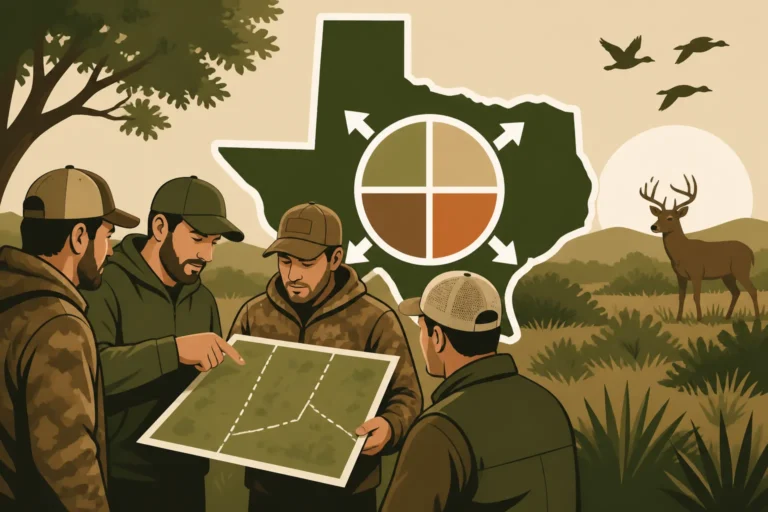
Start with the map. Online mapping tools like onX Hunt or even satellite views on Google Maps are invaluable. Look for the "holy trinity" – light-colored agricultural fields (wheat, milo, sunflowers), visible water sources (ponds, tanks), and nearby tree lines or brushy areas. Pay attention to how these features connect. Doves will fly along tree lines, creek beds, or power lines to get from one point to another. These flight corridors are prime spots for setting up.
Once you've identified potential areas on the map, it's time for some real-world scouting. Drive the roads in your chosen zone a week or two before the season opens. Look for concentrations of birds. Are they flying into a particular field? Are they watering at a specific tank? Are they roosting in a certain treeline? Observe their flight patterns – where are they coming from, and where are they going? Early morning and late afternoon are the best times to scout, as this is when doves are most active. Don't be afraid to knock on doors if you see birds on private land; a polite request can sometimes lead to an unexpected hunting opportunity. GoHunt, while more geared towards big game, also offers mapping features that can aid in identifying general habitat types.
Finding Public and Private Dove Hunting Opportunities
Now that you know what to look for and where to scout, the next hurdle is finding a place to actually hunt. Texas offers a mix of public and private land options, each with its own benefits and challenges.
Navigating Public Lands
Texas boasts a decent amount of public hunting land, primarily managed by TPWD through its Wildlife Management Areas (WMAs) and the Annual Public Hunting (APH) Permit system. To hunt on these lands, you'll generally need to purchase an APH Permit in addition to your regular hunting license. This permit grants you access to hundreds of thousands of acres across the state, including many WMA units that offer dove hunting. Make sure you also have your Texas Migratory Bird Endorsement & HIP Certification before heading out.
Finding specific dove-rich public land can be challenging because popular spots can get crowded, especially on opening weekend. TPWD's website is your best friend here. They have an interactive map and a detailed public hunting lands booklet that lists all the properties accessible with the APH Permit. Look for WMAs that have managed dove fields (often planted with sunflowers or milo) or those with extensive native seed-producing areas and water sources. Some WMAs, like the Chaparral WMA in South Texas or Gene Howe WMA in the Panhandle, are known to offer good dove hunting opportunities in certain years. However, conditions can change rapidly due to drought or land management practices, so always check the specific WMA regulations and recent reports before you go. Remember that some WMAs might require special permits obtained through the Texas Drawn Hunts: Public Hunt Draw System for prime hunting opportunities.
Cracking the Code on Private Land
For many Texas hunters, private land is the backbone of their dove hunting experience. Texas is over 95% private land, so building relationships with landowners or securing access to private properties is often the most reliable way to find consistent hunting.
- Knocking on Doors: This old-school method still works. Find fields that look promising during your scouting trips, especially if they're not obviously leased. A polite, respectful approach to the landowner, offering to share some birds or even help with a chore, can sometimes open doors. Be prepared for rejection, but remember, you only need one "yes."
- Day Leases: Many landowners or hunting outfitters offer day leases for dove hunting. These can range from simple access to a productive field for a fee to fully guided hunts with meals and lodging. Day leases are a great option if you don't have a long-term lease or are just visiting a specific area. Prices vary widely based on location, reputation, and amenities. Websites like Texas Hunting Online or Hunting Locator can be good resources for finding day lease opportunities.
- Seasonal Leases: For more consistent access, some groups form seasonal leases specifically for dove hunting. These typically involve paying a set fee for access to a property for the entire dove season. This offers more flexibility and less pressure than a single-day hunt.
- Word of Mouth and Social Media: Networking with other hunters can lead to opportunities. Facebook groups dedicated to Texas hunting or local online forums often have discussions about leases or day hunt availability.
When engaging with landowners, always be respectful, clear about your intentions, and ready to pay a fair price for access. Upholding strong landowner relations is key to preserving hunting opportunities for everyone.
Gear, Setup, and Etiquette for Texas Dove Hunting
Having the right gear and understanding proper field setup and etiquette are just as important as finding the perfect spot. These elements ensure your hunt is safe, enjoyable, and successful.
Essential Gear & Decoy Strategies
For dove hunting, you'll want a light, fast-swinging shotgun. Most hunters opt for a 12-gauge or 20-gauge, and either an over-under, side-by-side, or semi-automatic will do the trick. Shells typically consist of 7.5 or 8 shot in light field loads. You'll go through more shells than you think, so bring plenty! Beyond the gun, a comfortable chair or bucket to sit on is a must, as is a cooler packed with water and snacks to stay hydrated in the Texas heat. A dove vest or bag is essential for carrying shells, birds, and other small items. And don't forget good eye and ear protection—it's non-negotiable.
Decoys can significantly increase your success rate, especially when hunting over water or fields with limited natural cover. Motion decoys, like those made by Mojo, are particularly effective. The spinning wings mimic landing doves and can draw birds in from a distance. Set up a few of these on poles or stakes around your shooting position. You can also deploy static dove decoys on fences, prominent branches, or spread on the ground to give the illusion of a feeding flock. A typical decoy spread involves placing motion decoys at various heights, mimicking a feeding and landing flock, generally within 20-30 yards of your position. For more in-depth tips, check out How to Use Decoys for Dove Hunting.
| Zone | Typical Opening Date | Primary Dove Species | Key Characteristics |
|---|---|---|---|
| North Zone | Early September | Mourning Dove (migratory) | Agricultural fields (wheat, sunflower, milo), Panhandle/Rolling Plains, early influx of birds |
| Central Zone | Early September | Mourning Dove (resident & migratory), White-winged Dove | Diverse habitats (Hill Country, Post Oak Savannah), mix of resident and migratory, traditional opener |
| South Zone | Mid-September | White-winged Dove, Mourning Dove | Rio Grande Valley, Gulf Coast, later opening, high concentrations of white-wings, dense brush |
Field Setup & Hunter Etiquette
Setting up your position is crucial. Consider the sun's position – you want it at your back, if possible, to avoid glare and silhouette the birds against the sky. Pay attention to the wind direction; doves often land or approach into the wind. Choose a spot with some natural cover, like a fence line, a clump of brush, or the edge of a field, to break up your silhouette. Remember, doves have excellent eyesight. Blending in with your surroundings, even with simple camo, will help. If you're hunting during the early season, consider wearing Best Lightweight Camo for September Dove Hunting to stay comfortable in the heat.
When hunting with a group, spacing is paramount for safety. Each hunter should have a clear field of fire and be aware of where other hunters are positioned. A general rule of thumb is at least 50-75 yards between hunters, depending on the terrain and flight patterns. Never shoot at low-flying birds in the direction of other hunters, vehicles, or structures. Always assume there's a person or obstacle beyond your target.
Beyond safety, good etiquette ensures enjoyable hunts for everyone. Pick up all your spent shell casings—don't litter. Respect property boundaries, whether marked by fences or indicated on your mapping app. If hunting on private land, leave gates as you found them. If you're on a public WMA, adhere strictly to all posted rules and regulations. If you're struggling to find birds, or need advice on Dove Field Setup: Where to Stand, don't be afraid to politely ask other hunters if they've seen any patterns, but never interfere with their hunt. Being a good steward of the land and a respectful fellow hunter is what keeps our traditions alive.
Disclaimer
Hunting regulations and conditions can change. Always consult the official Texas Parks and Wildlife Department (TPWD) Outdoor Annual for the most current rules, seasons, and licensing requirements before planning any hunting trip. Stay safe and hunt responsibly.