Where to Place a Deer Feeder for Best Results
Putting a deer feeder in just any old spot on your Texas hunting lease can feel like a shot in the dark, leading to frustratingly empty game cameras and scarce deer sightings when you're in the blind. It's a common challenge for many hunters, trying to figure out that sweet spot where deer feel safe enough to visit regularly, but also where you stand a real chance at a shot. This guide is all about taking the guesswork out of feeder placement, helping you understand the factors that truly make a difference, so you can draw in those elusive bucks and does and make your hunting efforts far more fruitful.
Understanding Deer Movement and Habitat
Before you even think about setting up a feeder, you've got to become a bit of a deer detective. Understanding how deer move through their natural environment and what drives those movements is the absolute cornerstone of effective feeder placement. They're creatures of habit, driven by instinct and the constant search for survival essentials. If you can tap into that, you're halfway to success.
Natural Travel Corridors
Deer, especially whitetails in Texas, are incredibly efficient. They'll always take the path of least resistance when moving between bedding areas, feeding grounds, and water sources. These are their natural travel corridors, and they're often invisible to the untrained eye but easily discernible with a little scouting. Think about dense brush lines along a creek bed, the edges of a thick timber block, or even subtle changes in elevation that create a natural funnel. These are the deer highways, and placing a feeder too far off them means fewer casual visits. You're not trying to create a travel route with your feeder; you're trying to intercept an existing one. Deer might eventually find a feeder in an open field, but they'll be much warier approaching it. However, if that feeder is tucked into a brush line they already use, they'll feel much more secure. This is particularly true for mature bucks who are notoriously cautious. Scouting for these natural funnels before the season begins can dramatically increase your chances. Look for well-worn trails, rub lines, and scrapes that indicate consistent deer traffic. Knowing how to Pattern Bucks With Trail Cameras can be invaluable for identifying these routes.
Food, Water, and Cover Integration
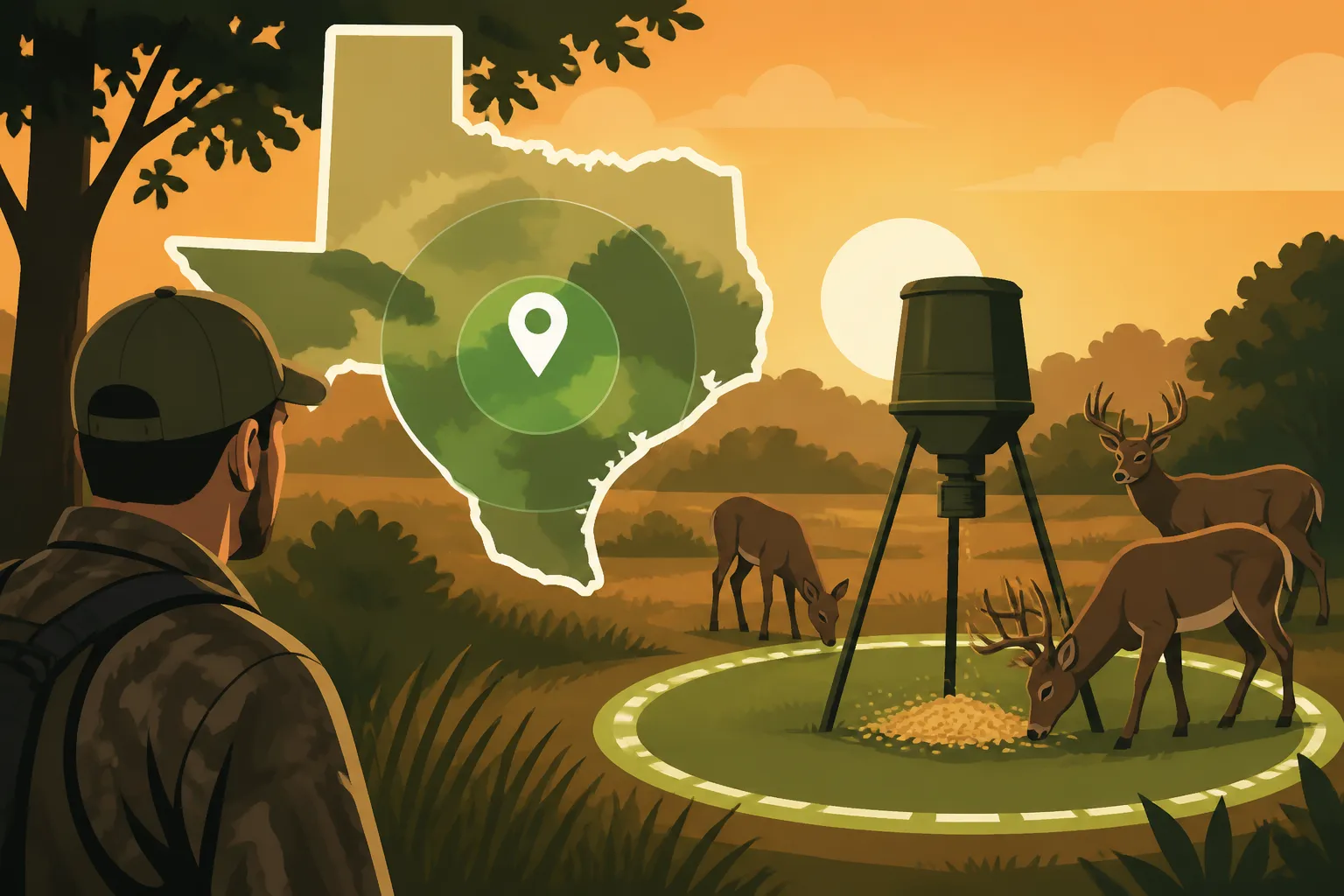
Deer need three things to survive: food, water, and cover. Their daily lives revolve around these necessities. They'll bed down in thick cover during the day, venture out to feed during twilight hours, and seek water somewhere in between. Your feeder, providing a supplemental food source like corn or protein, becomes part of this equation. The trick is to place it where it complements these existing needs, rather than feeling like an isolated attraction. A feeder placed directly in the middle of a wide-open pasture, far from any cover or water, forces deer to expose themselves for a long period, making them feel vulnerable. Instead, consider locations that offer a quick retreat to dense cover or are along a path to a known water source. For instance, if you have a dense mesquite flat that serves as a bedding area, and a stock tank providing water, placing your feeder between these two, perhaps 50-100 yards from the mesquite edge, is often ideal. This minimizes their travel time in the open and maximizes their comfort. Think about how deer are moving during the Best Time of Day to Hunt Whitetail in Texas and align your feeder placement with those peak movement times.
Strategic Feeder Placement Factors
Once you have a handle on the general habitat and deer movement, it's time to get down to the nitty-gritty of strategic placement. This involves considering factors like wind, line of sight, and how easily you can get to your feeder without disturbing the very animals you're trying to attract.
Wind Direction and Scent Control
This is a big one, perhaps one of the most overlooked aspects by new hunters. Deer have an incredible sense of smell, their primary defense mechanism. The wind carries your scent, and if it carries it to your feeder before you even get in your blind, you've likely blown your hunt before it began. Always consider the prevailing wind direction for your area. In Texas, winds often come from the south or southeast, but this can vary greatly by region and time of year. Your feeder should ideally be placed so that your approach to the blind and your position in the blind are consistently downwind of where deer will approach the feeder. This means if you expect deer to come from the north, and the wind is from the south, your blind should be south of the feeder.
Consider a typical scenario: you're hunting in the South Texas brush country. If you set up a feeder directly north of your blind, and the wind blows from the north, your scent will be carried directly to the feeder area. Instead, placing your feeder to the west of your blind, with the prevailing east wind carrying your scent away from the feeder, would be a much smarter play. Always have multiple feeder/blind setups if possible, allowing you to choose the best option based on the daily wind conditions. This commitment to scent control extends to your entry and exit routes.
Line of Sight and Shot Opportunity
What's the point of a feeder if you can't see the deer or get a clean shot? This factor balances the deer's need for cover with your need for visibility. You want enough clearing for a good shot, but not so much that deer feel completely exposed. For rifle hunting, a clearing of 50-100 yards around the feeder is often sufficient, allowing for comfortable shots while still being close enough to cover for the deer. For bowhunters, this distance is drastically reduced, often to 20-30 yards, requiring careful consideration of shooting lanes through the brush.
When you're setting up, put yourself in the deer's shoes (or hooves!). Where would they approach from? Are there any small dips or rises that might obscure your view of a deer’s vitals? Are there too many branches or small trees that could deflect an arrow or bullet? Clear shooting lanes before the season begins, without making the area look too unnatural. A good box blind offers excellent concealment and helps maintain a good line of sight to your feeder. You can learn more about choosing the right setup in Box Blind vs Tripod vs Ground Blind in Texas.
Accessibility and Maintenance
This might seem obvious, but it's often overlooked in the excitement of finding the "perfect" spot. You're going to need to get to your feeder regularly for refilling, battery checks, and maintenance. Hauling heavy bags of corn through dense brush for half a mile every week is going to get old fast, and it creates a lot of human disturbance. Try to pick a spot that's reasonably accessible by vehicle, ATV, or at least a relatively clear walking path.
However, a balance is needed. If it's too accessible and visible from a main road, you might attract unwanted human attention (poachers, theft). A discreet but manageable access point is key. Consider using a game cart to haul corn if vehicle access isn't possible. Also, think about how you approach and leave the feeder. Try to minimize noise and scent contamination. If you're constantly stomping through bedding areas to get to your feeder, you're effectively pushing deer away. This is especially important for properties where you might be supplementing feed regularly. Knowing How High Should a Deer Feeder Be? can also impact accessibility for filling.
Topographical Considerations
Texas landscapes are incredibly diverse, from the rolling hills of the Edwards Plateau to the dense brush of South Texas and the rugged Trans-Pecos. The terrain itself plays a huge role in how deer move and where they feel comfortable. Using topography to your advantage can be a game-changer.
Valleys, Ridges, and Natural Funnels
Deer, much like water, will follow the path of least resistance, especially when it comes to elevation changes. Valleys and draws often serve as natural travel corridors, shielding deer from the wind and offering concealed movement. Conversely, ridges can offer strategic vantage points for deer to survey their surroundings before dropping into a feeding area. Placing a feeder at the bottom of a draw or where a draw opens into a larger flat can be highly effective. The draw provides a natural, secure approach for deer, and the flat offers a feeding area.
Similarly, natural funnels created by the convergence of two treelines, a fence line meeting a creek, or a pinch point between two fields are prime locations. These are areas where deer must pass through, effectively concentrating their movement. Imagine a narrow strip of timber connecting two larger blocks of woods. Placing a feeder just inside that narrow strip, or at either end, would capitalize on that natural funnel effect. Deer don't like to expend unnecessary energy, so they'll use these features to their advantage, and so should you.
Edge Habitat and Transition Zones
The edges of different habitat types are biodiversity hotspots, and deer absolutely love them. This "edge habitat" is where a dense timber stand meets an open pasture, where a brushy thicket transitions into a more open oak savanna, or where agricultural fields meet natural woodlands. These transition zones offer the best of both worlds: nearby cover for security, and open areas for feeding. Deer often feel safest when they can feed near the edge of cover, allowing for a quick retreat if danger arises.
Placing your feeder 10-30 yards inside the edge of a thicket that borders an open field is a classic and highly effective strategy. This provides deer with immediate access to cover, reducing their perceived risk. It's the perfect balance of offering an enticing food source while still respecting their need for security. Think of it like a buffet right next to a safe room. Deer will typically move along these edges, and a feeder placed strategically within or just off these edges will intercept them during their natural movements. For a deeper dive into deer behavior, consider learning about How to Scout for Deer Before Season in Texas.
Avoiding Common Feeder Placement Mistakes
Even with the best intentions, it's easy to fall into common traps when placing deer feeders. These mistakes can reduce the effectiveness of your feeder and even push deer away from your hunting area. Knowing what not to do is just as important as knowing what to do.
Over-Reliance on Feeders Alone
A deer feeder is a tool, not a magic bullet. Many new hunters make the mistake of thinking that simply putting out a feeder will solve all their hunting woes. While feeders can be incredibly effective for attracting and holding deer, they are just one piece of a larger management puzzle. If your property lacks adequate natural forage, water, or bedding cover, a feeder alone won't compensate for those deficiencies. Deer will visit the feeder, but they won't live there if their other needs aren't met.
Consider a property that's largely open pasture with minimal cover. Deer might hit your feeder under the cover of darkness, but they'll likely bed down on a neighboring property with denser thickets. To truly maximize your feeder's potential, you should also be thinking about habitat improvements, such as planting food plots in Texas, creating brush piles for cover, or ensuring a consistent water source. A holistic approach to land management, where the feeder enhances an already suitable habitat, will always yield better results than relying on the feeder in isolation. This is especially true if you're trying to grow bigger antlers by Protein Feeding Deer for Bigger Antlers.
Ignoring Human Pressure and Disturbance
Deer are incredibly sensitive to human presence. The more pressure and disturbance they experience around a feeder, the less likely they are to visit it during daylight hours, or even at all. This means minimizing your presence in the feeder area outside of actual hunting times. Driving ATVs right up to the feeder, making loud noises, or leaving excessive human scent can make deer wary and nocturnal.
Think about your access routes and blind placement. Can you access your blind discreetly without spooking deer in the area? Are you checking your trail cameras too frequently? Every time you visit the feeder, you're leaving behind scent and creating disturbance. Try to consolidate tasks – fill the feeder, check the camera, and make any necessary adjustments all at once, and then stay away for a week or more if possible. Over-pressuring a feeder site will train deer to only visit it under the cloak of darkness, defeating the purpose of hunting over it during legal shooting hours. This is why Best Feeder Timer Settings for Daylight Deer are so crucial.
Technology and Scouting for Optimal Placement
In the modern hunting era, we have incredible tools at our disposal that can take the guesswork out of deer feeder placement. Combining traditional scouting methods with technology can give you a significant advantage.
Utilizing Trail Cameras for Patterning
Trail cameras are your best friends when it comes to understanding deer movement and habits. Don't just slap a camera on a tree and hope for the best; use them strategically to scout potential feeder locations before you even commit to putting one out. Place cameras on suspected travel corridors, rub lines, and near water sources to identify areas of high deer traffic. This information will be invaluable in determining where a feeder would be most effective.
Once a feeder is in place, trail cameras become essential for monitoring its success. They tell you when deer are visiting, what deer are visiting (bucks, does, hogs), and how they're approaching the feeder. If you're consistently seeing deer only at night, it might indicate too much human pressure or an exposed feeder location. If a particular trail is heavily used but deer aren't making it to your feeder, perhaps it's too far off that path. Cellular trail cameras are particularly useful for real-time monitoring, allowing you to make adjustments without frequent trips to the feeder, thus minimizing disturbance. Consider looking into the Best Cellular Trail Cameras for Texas to maximize your scouting efforts.
Mapping Tools and Aerial Imagery
Gone are the days of relying solely on paper maps and compasses. Modern mapping applications like onX Hunt or HuntStand offer incredible aerial imagery and topographic overlays that can reveal hidden gems and help you visualize your hunting property from a new perspective. These tools allow you to identify dense cover, natural funnels, water sources, and elevation changes from the comfort of your home.
Before ever stepping foot on a new property or even re-evaluating an old one, spend time studying the aerial maps. Look for patterns: where do the thickest woods meet the open fields? Are there any creek bottoms or drainages that could act as travel corridors? Can you identify pinch points or areas where deer movement would naturally be restricted? You can mark potential feeder locations, blind sites, and access routes, giving you a solid plan before you head out to the field for physical scouting. This combination of digital and boots-on-the-ground scouting is the most efficient way to pinpoint the absolute best spots for your deer feeders. For a deeper dive into these resources, check out Best Hunting Apps for Texas.
Feeder Setup and Maintenance Tips
Choosing the right location is paramount, but the job isn't done until your feeder is properly set up and maintained. The type of feeder you choose and how you manage it will directly impact its effectiveness and longevity.
Feeder Type and Capacity
Not all feeders are created equal, and the "best" one often depends on your specific needs, budget, and the type of hunting you're doing.
- Spin Feeders: These are perhaps the most common, dispensing corn (or other feed) at programmed intervals. They're great for attracting deer to a specific spot at specific times, which is ideal for hunting during legal daylight hours. They come in various capacities, from small 50-pound models to large 1,000-pound monsters. The size you need depends on how often you want to refill it and the number of animals you're feeding. For Best Deer Feeder Setup for Texas, a sturdy spin feeder is often the go-to.
- Gravity Feeders: These rely on gravity to dispense feed as deer consume it, providing a consistent, on-demand food source. They are excellent for year-round protein feeding, helping deer get necessary nutrients. However, they don't have timers, so they can't be used to pattern deer to specific times for hunting.
- Protein Feeders: Often gravity-fed, these are specifically designed for protein pellets and are crucial for antler development and herd health, especially in dry Texas summers. If your goal is to grow bigger bucks, you'll need a dedicated protein feeder. You can learn more about this in Corn vs Protein Feeder for Texas Deer.
Consider the durability of the feeder as well. Texas weather can be brutal, with intense sun, heavy rains, and strong winds. A well-built feeder will last longer and require less maintenance.
Keeping Unwanted Guests Away
One of the biggest frustrations with deer feeders is the constant battle against non-target animals, primarily feral hogs, raccoons, and even squirrels. These critters can decimate your feed supply, costing you money and leaving little for the deer.
- Hog Panels/Cages: The most effective way to keep hogs out of your deer feeder is to build a stout pen around it using cattle or hog panels. A 16-foot panel cut into sections and formed into a square or circle around the feeder, with gaps wide enough for deer to enter but too narrow for large hogs, works wonders.
- Feeder Height: Raising your feeder significantly off the ground (e.g., 6-7 feet) can deter hogs and raccoons from directly accessing the spinner plate. However, this primarily works for spin feeders. Gravity feeders need to be lower for deer to reach. You can learn more about specific tactics in How to Keep Hogs Out of Your Deer Feeder.
- Timers and Scatter Settings: For spin feeders, adjust your timer settings to dispense feed only a few times a day for short durations. This limits the "free-for-all" time for hogs. Dispensing only at dawn and dusk can also help, as hogs are often more nocturnal.
- Baffles and Guards: For raccoons and squirrels, feeder baffles (cone-shaped guards placed below the feeder) and squirrel cages around the spinner mechanism can be quite effective.
Managing these "unwanted guests" requires ongoing effort, but it's crucial for ensuring your deer feeder truly benefits the deer you're trying to attract.
Here's a table summarizing common feeder placement scenarios and their implications:
| Placement Scenario | Pros | Cons | Best Use Case |
|---|---|---|---|
| Near Dense Cover (10-30 yards inside) | High deer comfort, quick retreat, good for wary bucks, consistent visits. | Reduced visibility, potential for obscured shots, hard to access discreetly. | Bowhunting, mature buck targeting, high-pressure areas. |
| **Along Natural Travel Corridor (Brush Line) | Intercepts deer naturally, increases likelihood of discovery. | Might be too close to dense bedding, potentially increasing human disturbance. | General deer attraction, monitoring daily movement patterns. |
| Edge of Food Plot or Agricultural Field | Leverages existing food sources, deer accustomed to open areas. | Can be very open, increasing deer wariness, especially during daylight. | Rifle hunting, supplementing natural forage, monitoring field entry/exit. |
| Near Water Source | Draws deer seeking hydration, especially in dry periods. | Can be easily over-pressured, attracts other animals, potential for mud around feeder. | Drought conditions, properties with limited water. |
| Open Pasture (Far from cover) | Easy access, clear visibility. | Very low deer comfort, highly visible to all, primarily nocturnal visits. | Not recommended for hunting, only for supplemental feeding. |
| Bottom of a Draw/Valley | Concealed approach for deer, often good windbreaks. | Can create challenging shot angles, potential for water pooling. | Natural funnels, areas with varied topography. |
Disclaimer
Please note that hunting regulations, seasons, and licensing requirements in Texas can change. Always consult the most current Texas Parks and Wildlife Department (TPWD) Outdoor Annual before engaging in any hunting activities to ensure compliance with all state laws. This guide provides general information and best practices, but individual situations may vary.