Best Gear for Eastern Turkey on a Texas Lease
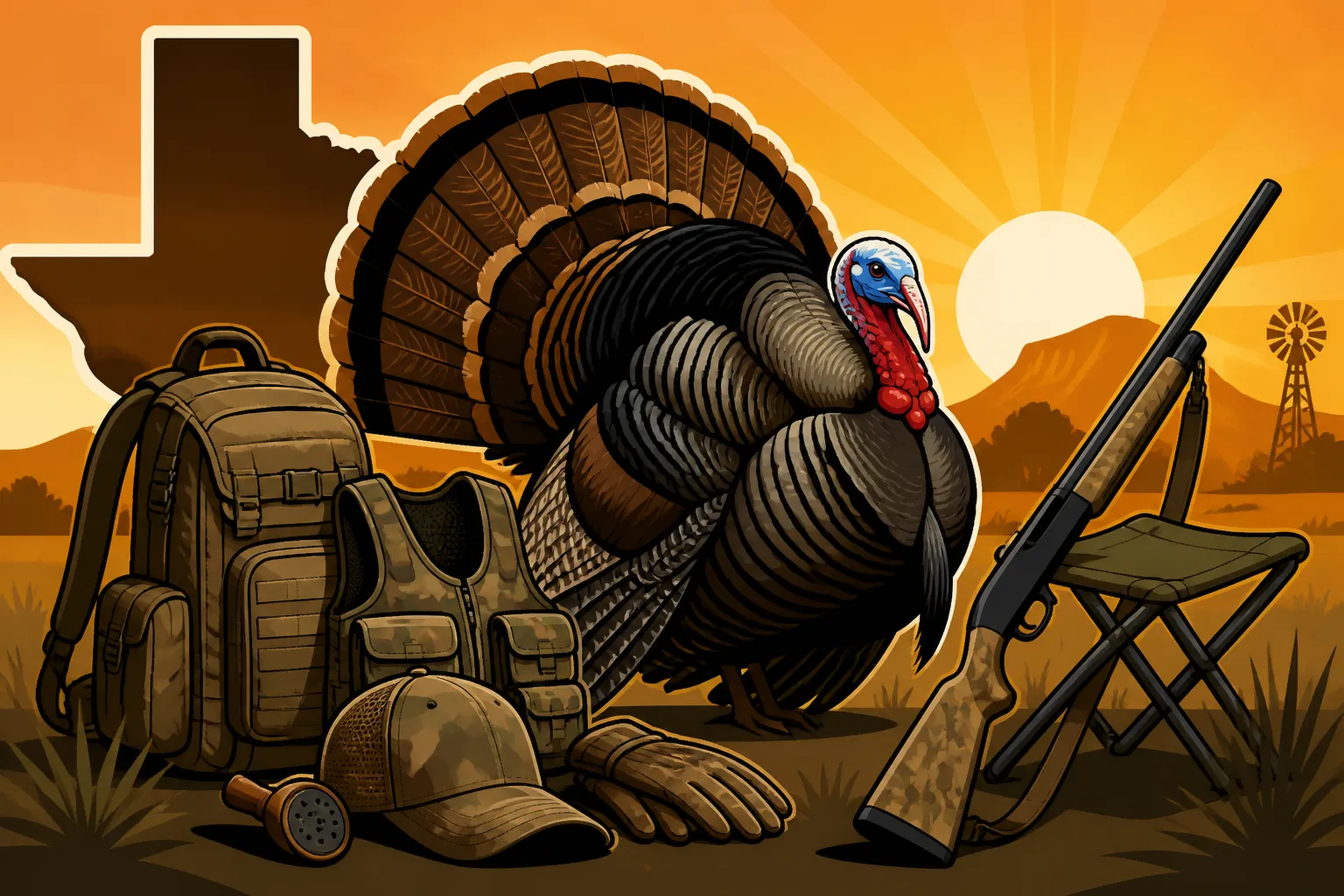
Eastern turkey hunting in Texas presents a unique set of challenges, from navigating the dense Pineywoods to understanding the distinct behaviors of this particular subspecies. If you've ever felt overwhelmed by what gear you truly need to succeed on an East Texas lease, know that you're not alone. This comprehensive guide will walk you through the essential equipment, from calls to camouflage, ensuring you're well-prepared for a rewarding hunt.
Understanding Eastern Turkey Hunting in Texas
Hunting Eastern turkeys in Texas isn't quite the same as chasing their Rio Grande cousins out west. The terrain, the vegetation, and even the gobblers themselves seem to operate on a different wavelength. It's easy to get frustrated if you approach it with the same mindset and gear you might use for other regions or subspecies.
The Unique Challenges of East Texas Terrain
The Pineywoods region of East Texas, primarily found in counties like Newton, Jasper, and Sabine, is a stark contrast to the open rangelands of South Texas or the Hill Country. Here, you're dealing with vast stretches of pine plantations, thick underbrush, hardwood bottoms, and often swampy areas, especially after a good rain. This dense environment means visibility is limited, sound doesn't travel as far, and turkeys can easily slip away unseen. It’s not uncommon to hear a gobbler sound off just a hundred yards away, only to find yourself slogging through briars and thickets that make closing that distance incredibly difficult without spooking the bird.
Unlike more open country where you might spot a turkey from a distance and stalk, the Pineywoods demand a more intimate, ambush-style approach. You need gear that facilitates stealth, allows you to set up quickly, and helps you blend seamlessly into a constantly changing backdrop of pine needles, hardwoods, and shadows. The terrain also influences your footwear and clothing choices; durability and protection from thorns, snakes, and moisture are paramount.
Key Differences from Rio Grande Turkey Hunting
If your primary turkey hunting experience is with Rio Grandes, you'll quickly notice that Easterns often play by different rules. Rio Grandes, particularly in areas like the Texas Hill Country, are known for being more vocal and somewhat more predictable in their movements, especially when it comes to strutting in open fields or coming to feeders. They often cover more ground in open terrain, making run-and-gun tactics highly effective. For some great tips on hunting these birds, check out our guide on how to Call Rio Grande Turkeys in Texas.
Eastern turkeys, on the other hand, tend to be more wary and less tolerant of pressure. They often prefer to stick to the timber, and while they will gobble, they might not come charging in across an open field. They can be incredibly cagey, often circling your setup to pinpoint the source of the calls. This means your setup needs to be airtight, your calling precise, and your ability to remain motionless absolutely critical. The dense cover means you often need to bring the turkey into very close quarters, often inside 40 yards, to get a clear shot. This demands different calling techniques, more aggressive decoying strategies in dense cover, and camouflage that truly disappears into the deep woods.
Essential Gear for Calling and Decoying Eastern Turkeys
Effective calling and realistic decoys are the cornerstones of successful Eastern turkey hunting. You're trying to convince a highly intelligent bird that you're a potential mate or a rival, and in the dense East Texas woods, that takes more than just a passing resemblance.
Reliable Turkey Calls for the Eastern Subspecies
When it comes to calls for Eastern turkeys, versatility is key. You'll want a selection that allows you to mimic various turkey sounds and adjust to the bird's mood and proximity.
- Box Calls: These are fantastic for loud, long-range yelps that can reach out across a pine block to get a distant gobbler to answer. They're also relatively easy to use, making them great for beginners. A good wooden box call, like those from Lynch or Primos, can produce a wide range of yelps, clucks, and purrs.
- Slate or Pot Calls: These calls offer a bit more finesse and can produce softer, more realistic sounds for when the bird is closer or you need to sweet-talk a wary tom. With different strikers and surfaces, you can create various pitches and tones. They're excellent for clucks, purrs, and soft yelps, which can be crucial when a gobbler is trying to pinpoint your location.
- Mouth Calls (Diaphragm Calls): These are perhaps the most versatile calls once mastered. They allow for hands-free calling, which is invaluable when a turkey is coming in and you need to keep your gun up and remain absolutely still. You can produce everything from aggressive cutting and gobbling to soft tree yelps and purrs. It takes practice, but a good diaphragm call, like those from Woodhaven or Zink, is indispensable. Many seasoned hunters carry a variety of mouth calls with different reed configurations to adapt to the turkey's response.
- Locator Calls: Owl hoots, crow calls, and even coyote howlers are fantastic for making gobblers sound off without giving away your exact position. They help you pinpoint roosted birds at dawn or locate them throughout the day.
Remember, practice makes perfect. Spend time perfecting your clucks, yelps, and purrs with each call type. The goal isn't just to make noise, but to sound like a real turkey.
Effective Decoy Strategies and Setups
Decoys can be a game-changer for Eastern turkeys, drawing them those last few crucial yards into shooting range. However, their placement and type are critical, especially in thick cover.
-
Types of Decoys:
- Hen Decoys: A single hen decoy or a pair can be highly effective. A submissive hen pose can entice a gobbler looking for a mate, while an upright, "alert" hen might be less effective. Look for realistic, lightweight decoys that pack down easily. Brands like Avian-X or Mojo Outdoors offer excellent options.
- Strutter or Jake Decoys: Adding a jake decoy can really tick off an aggressive gobbler, often making him come in ready for a fight. A full-strut tom decoy can work too, but sometimes a jake is less intimidating and more effective at drawing in dominant gobblers. Some hunters even combine a jake with a hen to create a compelling scene.
- Fan Decoys: These are popular for run-and-gun tactics or "fanning" (stalking behind the fan), but be extremely cautious with this method on a lease, especially if other hunters are around. Always be 100% certain of your target and surroundings.
-
Decoy Placement in the Pineywoods:
- Visibility is Key (but challenging): You need the turkey to see your decoy from where you expect it to approach, but in thick East Texas cover, that's easier said than done. Try to place your decoy in a small opening, at the edge of a field, or where there's a natural lane of travel.
- Orientation: Position your hen decoy facing away from you, as if she's walking off. A gobbler will often approach her from behind, putting him broadside or slightly facing away, giving you a good shot angle. If using a jake, place him a few yards in front of the hen.
- Distance: Set your decoys up within your effective shooting range, typically 20-30 yards from your position. Remember, Easterns are wary, and you want them to be close enough for a clean shot once they commit.
- Safety First: Always be mindful of your backdrop and what's beyond your target. Ensure your decoy isn't placed in a spot where it could be mistaken for a live bird by another hunter.
Using mapping tools like GoHunt can be invaluable here. You can pre-scout potential openings, old logging roads, or clearings on your lease where decoys might be visible and effective. Plotting these spots before the hunt can save you precious time and effort.
Firearms, Ammunition, and Optics for Eastern Turkey
Your firearm setup is crucial for dropping these tough birds. Unlike deer hunting, where precision at range is key, turkey hunting requires a dense, consistent pattern at moderate distances.
Shotguns and Chokes for Eastern Turkeys
For Eastern turkeys, a 12-gauge shotgun is the gold standard, though 20-gauge options have become increasingly popular and effective, especially with modern ammunition.
- 12-Gauge Shotguns: These offer the widest range of ammunition choices and excellent pattern density. Many hunters prefer a dedicated turkey gun, often with a shorter barrel (20-24 inches) for maneuverability in tight cover. Semi-automatics like the Remington V3 Turkey Pro or pump actions like the Mossberg 500/835 are popular.
- 20-Gauge Shotguns: Don't underestimate the 20-gauge. With advancements in tungsten-based shot, a 20-gauge can deliver patterns rivaling a 12-gauge, but with less recoil and lighter weight. This can be a huge advantage for carrying through dense woods or for younger hunters.
- Chokes: This is perhaps the most critical component. You'll want a very tight "extra full" or "turkey specific" choke. Brands like Carlson's, Indian Creek, or Primos offer chokes designed to maximize pellet count in the turkey's head and neck area at typical turkey shooting distances (20-40 yards). Patterning your specific gun and choke with various loads is absolutely non-negotiable.
| Choke Type | Typical Constriction | Recommended Use for Turkey Hunting |
|---|---|---|
| Full | 0.035" – 0.040" | Can work, but often not tight enough |
| Extra Full | 0.045" – 0.050" | Good general purpose turkey choke |
| Turkey Specific | 0.055" – 0.070"+ | Best for maximum pattern density |
Ammunition Selection and Patterning
Gone are the days of just grabbing any box of lead shot. Modern turkey loads are engineered for maximum lethality.
- Shot Material:
- Lead Shot: Still effective, but usually limited to smaller shot sizes (like #4, #5, #6) to get enough pellets in the pattern. Look for high-density lead loads.
- Hevi-Shot/Tungsten Super Shot (TSS): This is where modern turkey hunting shines. TSS is significantly denser than lead, meaning smaller pellets (like #7, #9) carry more energy and penetrate deeper. A #9 TSS load in a 20-gauge can outperform a #5 lead load in a 12-gauge. It's more expensive, but the knockdown power and extended range are undeniable. Popular options include Federal Heavyweight TSS or Apex Ammunition.
- Patterning: You absolutely must pattern your shotgun. Take your shotgun, choke, and several different ammunition types to the range. Set up turkey head targets at 20, 30, and 40 yards. Shoot each load multiple times to see which combination delivers the most consistent and dense pattern into the head and neck area. What works great in one gun might be terrible in another. This patterning will also help you determine your maximum ethical shooting distance.
Essential Optics for Scouting and Spotting
While shotgun hunting for turkeys doesn't typically involve long-range optics on the gun, other optics are invaluable.
- Binoculars: A good pair of 8×42 or 10×42 binoculars are essential for spotting turkeys in the distance, identifying movement in dense cover, and confirming what you're seeing before you commit to a setup. Look for lightweight, waterproof binoculars with good low-light performance. Brands like Vortex, Leupold, or Maven offer excellent choices. These are also great for scouting new areas of your lease for turkey sign.
- Red Dot or Low-Power Scope (Optional): While traditional bead sights are common, a red dot sight can significantly improve accuracy and speed, especially when a gobbler is moving quickly or pops up unexpectedly. A low-power scope (1-4x) can also work, but keep it simple; you're not shooting at long range. Just be sure to practice with whatever aiming system you choose.
Camouflage, Blinds, and Comfort Gear
Remaining unseen and comfortable are critical for success, especially when Eastern turkeys are notorious for their sharp eyesight and wariness.
Blending into the Pineywoods Environment
Your camouflage needs to match the environment you're hunting in. The Pineywoods of East Texas often mean dark, shaded areas mixed with brighter greens and browns.
- Camo Patterns: A good "woodland" or "tree bark" pattern that incorporates greens, browns, and dark shades will serve you well. Patterns like Mossy Oak Bottomland, Realtree APG, or even specific pine-oriented patterns like Mossy Oak Obsession are excellent choices. The key is breaking up your outline, not trying to precisely match every leaf.
- Head-to-Toe Coverage: Don't forget a face mask or face paint and gloves. A turkey's eyesight is legendary, and any exposed skin, especially your face and hands, will glow like a beacon. A full head net or balaclava is often preferred.
- Layering: East Texas weather can be unpredictable, especially in spring. Mornings can be cool, but mid-day can get warm and humid quickly. Dress in layers that you can shed or add as needed. Lightweight, breathable materials are essential. When considering gear, a resource like GoHunt can provide insights into specific brands and patterns that perform well in varying conditions, helping you make informed choices for your Texas hunts.
Portable Blinds and Seating Solutions
Static setups are often more effective for Eastern turkeys than constantly moving, given the dense cover.
- Pop-Up Ground Blinds: A portable pop-up ground blind offers maximum concealment, protection from the elements, and allows for slight movements without spooking birds. They're especially great for hunting with kids or if you need to be out of the wind or rain. Brands like Primos or Barronett Blinds are popular and offer various sizes and camouflage options. Make sure to brush in your blind for extra concealment.
- Backrest/Chair: Sitting still for hours on end without proper support is brutal. A small, lightweight turkey chair or a comfortable backrest cushion is a game-changer. Look for something that’s easy to carry and quick to set up, like the Primos Gobbler Lounger.
- Crazy Creek Chair or Pad: Even a simple foam pad or a foldable Crazy Creek-style chair can make a world of difference for comfort while sitting against a tree or in sparse cover. The goal is to be comfortable enough to stay still and focused.
Staying Comfortable in East Texas Weather
Comfort isn't just about sitting; it's about being prepared for the environment.
- Footwear: Waterproof boots are a must. East Texas can be damp, and you'll likely encounter mud, wet grass, and possibly even standing water, especially near creeks or low-lying areas. Snake boots are also highly recommended given the prevalence of venomous snakes like copperheads and cottonmouths. Look for comfortable, broken-in boots that offer good ankle support for navigating uneven terrain.
- Insect Repellent: Ticks and mosquitoes are abundant in East Texas. Permethrin-treated clothing and a good personal repellent (like DEET or picaridin) are non-negotiable. Don't let biting insects cut your hunt short.
- Water and Snacks: Pack plenty of water, even on cool days. Staying hydrated is important. Bring a few high-energy snacks that won't make a lot of noise to open.
- Rain Gear: Always have lightweight, packable rain gear with you. A sudden spring shower can soak you to the bone quickly, and being wet and cold makes for a miserable hunt.
By carefully considering and selecting your gear for Eastern turkey hunting on a Texas lease, you'll not only increase your chances of success but also significantly enhance your overall hunting experience. It's about being prepared for the unique challenges of the Pineywoods and respecting the incredible resilience of these wary birds. For comprehensive mapping and planning tools, remember that resources like GoHunt can help you analyze your lease and identify prime turkey habitat before you even step foot in the woods.
Essential Eastern Turkey Hunting Gear Checklist
Here’s a quick overview of the essential gear you’ll want to consider for your next Eastern turkey hunt on a Texas lease.
| Category | Item | Key Features/Considerations |
|---|---|---|
| Firearms | 12-gauge or 20-gauge Shotgun | Shorter barrel (20-24"), reliable action |
| Turkey Choke | Extra Full or Turkey Specific, patterned for your gun | |
| Ammunition | TSS (#7, #9) or high-density lead (#4, #5, #6) | |
| Optics | Binoculars | 8×42 or 10×42, lightweight, waterproof |
| Red Dot Sight (Optional) | Improves aiming speed and precision | |
| Calls | Box Call | Loud, long-range yelps |
| Slate/Pot Call | Finer, softer sounds for closer birds | |
| Mouth Calls (2-3 varieties) | Hands-free calling, versatile sounds | |
| Locator Call | Owl hooter, crow call | |
| Decoys | Hen Decoy (1-2) | Realistic, submissive pose, packs easily |
| Jake Decoy (Optional) | Aggressive posture to challenge gobblers | |
| Concealment | Full Camouflage Outfit | Woodland/pine patterns (e.g., Mossy Oak Bottomland) |
| Face Mask/Paint | Full coverage, breathable | |
| Gloves | Lightweight, camo | |
| Pop-Up Ground Blind (Optional) | Maximum concealment, weather protection | |
| Comfort/Safety | Waterproof Boots | Broken-in, good ankle support |
| Snake Boots (Highly Rec.) | Protection from venomous snakes | |
| Layered Clothing | Adaptable to changing weather, breathable | |
| Insect Repellent | Permethrin (clothing), DEET/Picaridin (skin) | |
| Turkey Vest/Pack | Organizes calls, shells, water; often has integrated seat | |
| Small Folding Chair/Pad | Essential for comfortable sitting | |
| Water & Snacks | Hydration and energy | |
| Rain Gear | Lightweight, packable jacket and pants | |
| Headlamp/Flashlight | For pre-dawn setups and post-hunt recovery | |
| TPWD Hunting License | Required for all hunting in Texas, including Eastern Turkey |
Remember, the right gear is an investment in your hunting success and enjoyment. Don't skimp on the essentials, and always prioritize safety and ethical hunting practices. When you're considering your next hunting adventure, whether it's for Eastern turkeys or other game, detailed guides like our overview on How to Hunt Rio Grande Turkey in Texas or Rio Grande Turkey Hunting Tactics for Texas can offer further insights. Planning ahead for your Texas Turkey Season 2026: Spring & Fall Zones is also crucial. For managing your land and understanding wildlife, articles on MLDP & Managed Lands in Texas Explained can be very helpful. Knowing the specific details of Eastern Turkey in East Texas One-Gobbler regulations is also paramount for a successful and legal hunt. And don't forget to review your Texas Hunting License: Cost, Types & How to Buy 2026 to ensure you're compliant. For scouting, tools like onX Hunt vs HuntStand: Best App for Texas can be invaluable. Even knowing the Best Hunting Lease Websites for Texas can help you find your ideal spot. Finally, understanding general Texas Hunting Seasons: Complete Calendar by Species provides a broader context for your adventures.
Disclaimer
Please be aware that hunting regulations, seasons, and licensing requirements can change. Always consult the most current Texas Parks and Wildlife Department (TPWD) Outdoor Annual or their official website before heading into the field to ensure compliance with all applicable laws. This guide is for informational purposes only and does not replace official regulations.