Best Gear for Hunting Hogs at Night in Texas
Trying to hunt feral hogs at night in Texas without the right gear can feel like stumbling around in a dark room, hoping to bump into something. It's frustrating, often unproductive, and can even be dangerous. This comprehensive guide will walk you through the essential equipment you need to confidently and effectively pursue these elusive nocturnal animals, transforming your nighttime hunts into successful endeavors.
The Game Changer: Thermal Optics for Night Hog Hunting
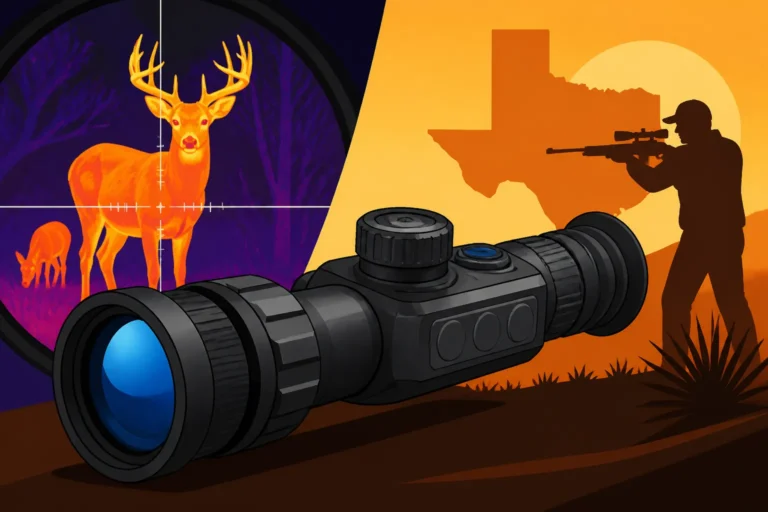
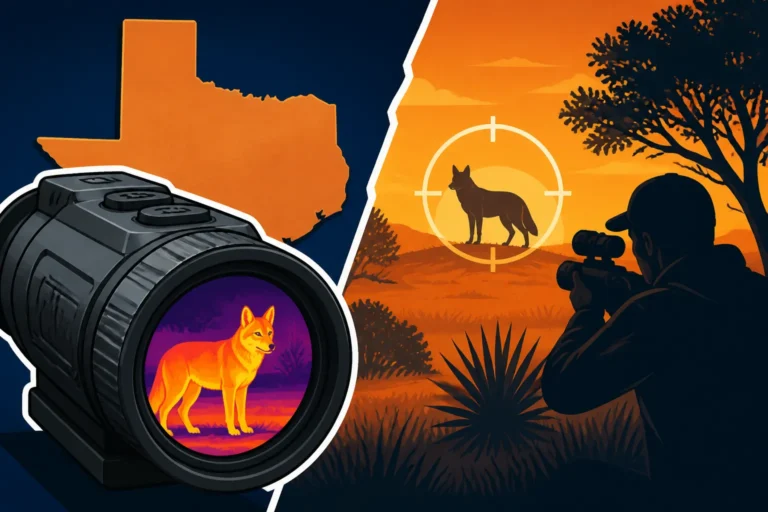
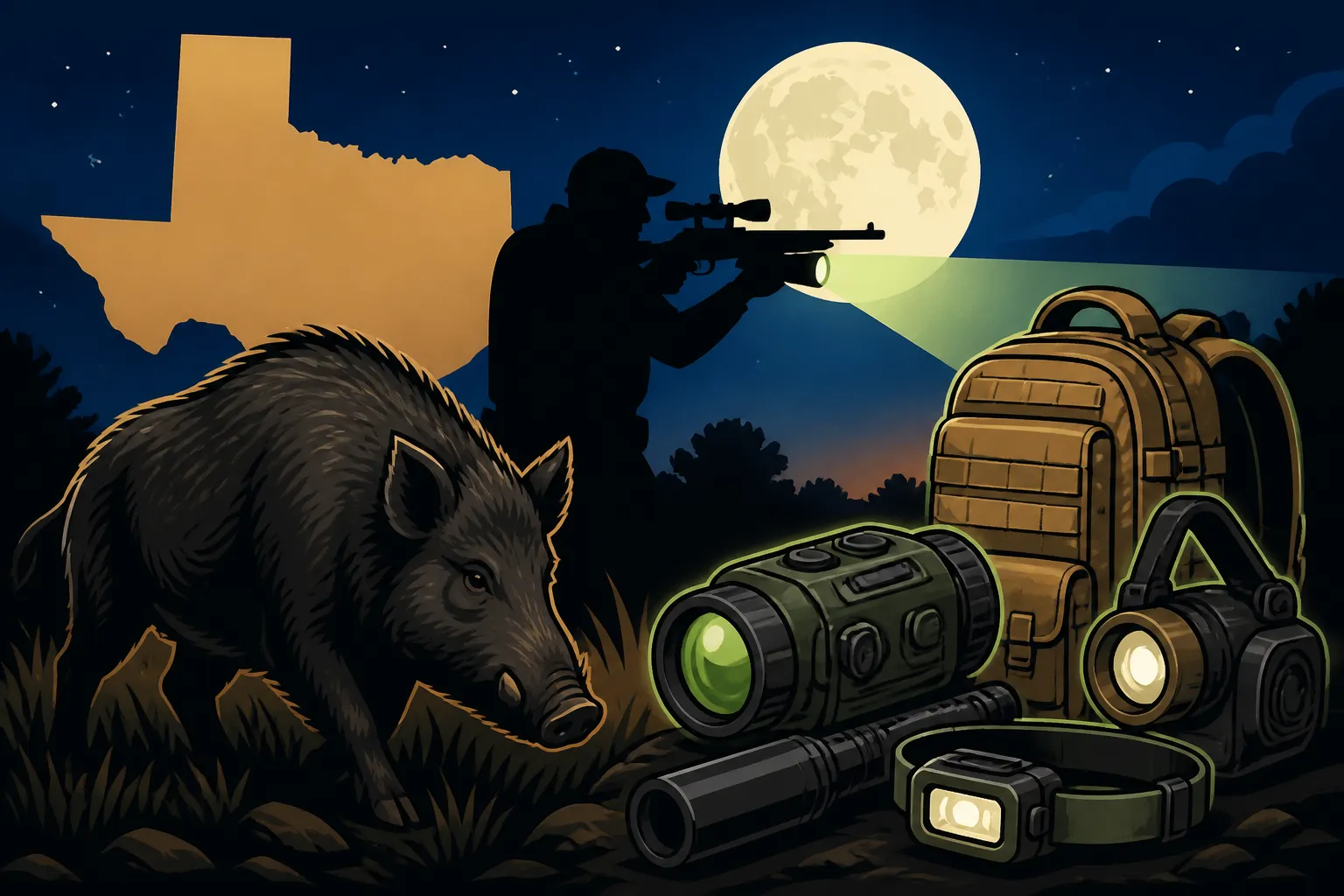
When the sun dips below the horizon in Texas, feral hogs come alive, making night hunting incredibly effective. But humans aren't naturally equipped for optimal vision in complete darkness. This is where thermal optics step in, completely revolutionizing how we approach hunting after dusk. Forget old-school spotlights that just spook game and limit your movement; thermal imaging allows you to see heat signatures, cutting through darkness, fog, and even light brush.
Thermal Scopes vs. Thermal Monoculars
Deciding between a thermal scope and a thermal monocular is often the first big question. Both are invaluable, but they serve different purposes in your night hunting arsenal. A thermal monocular is your scouting buddy; it’s lightweight, handheld, and perfect for scanning large areas to detect heat signatures. You can sweep across a field, peer into thick brush, or check distant treelines for any sign of hogs. It’s about detection and observation. Many hunters find that a good thermal monocular, like those offered by Pulsar or AGM, makes all the difference in locating hogs before they even know you're there.
Once you’ve spotted a heat signature with your monocular, that's when a thermal rifle scope comes into play. Mounted directly on your firearm, it allows for precise target acquisition and shot placement in the darkest conditions. The key is to choose a scope that offers clear resolution, a decent refresh rate (to avoid choppy images), and user-friendly controls. The experience of spotting a sounder of hogs a quarter-mile away with a monocular, then seamlessly transitioning to your rifle with a thermal scope to make an ethical shot, is truly unmatched. You can check out a detailed comparison of different options in our guide on the Best Thermal Scopes for Hog Hunting in Texas.
Key Features to Look for in Thermal Optics
Not all thermal optics are created equal, and understanding the specs can help you make an informed decision. The detector resolution, often expressed as pixels (e.g., 384×288 or 640×480), directly impacts the clarity and detail of the image. Higher resolution means better identification, especially at longer distances. The refresh rate, measured in Hertz (Hz), indicates how smoothly the image updates. A 30Hz or 60Hz refresh rate is crucial for tracking moving animals without lag.
The objective lens size also matters; a larger lens can gather more thermal radiation, potentially offering better image quality in challenging conditions. Features like digital zoom, different color palettes (black hot, white hot, red hot), and the ability to record video are also significant considerations. While top-tier units can be a significant investment, there are fantastic options available that balance performance and budget. Our article on Best Budget Thermal Scope Under $2000 dives into some excellent choices that won't break the bank but still deliver stellar performance for night hog hunting in Texas.
Night Vision: An Alternative Perspective
While thermal optics are often hailed as the king of night hunting, night vision technology still holds a valuable place, offering a different kind of visibility that can be advantageous in specific scenarios. Instead of detecting heat, night vision amplifies ambient light (like moonlight or starlight) to create a visible image.
Generations of Night Vision and Digital Options
Traditional night vision devices come in generations, with Gen 1 being the most basic and Gen 3+ offering incredible clarity and range, but also a hefty price tag. Gen 1 devices are typically entry-level, producing a grainy, green-tinted image and often having limited range. Gen 2 and Gen 3 use more advanced image intensifier tubes, offering significantly brighter, sharper images and better performance in very low light.
Then there's digital night vision, which is essentially a camera sensor designed for low light. Digital NV devices are often more affordable and can be used in daylight without damaging the unit (unlike traditional image intensifier tubes). They typically offer color images in very dim light and can record video easily. While they don't see heat like thermal, high-quality digital night vision combined with an infrared (IR) illuminator can provide surprisingly good detection and identification capabilities. Many hunters still use night vision for better target identification, especially for distinguishing between similar-sized animals or confirming gender, which can be harder with thermal. You can learn more about the differences in our Thermal Scope vs Night Vision for Hog Hunting guide.
Pros and Cons of Night Vision for Hogs
One of the biggest advantages of night vision, particularly higher-generation or good digital units, is the ability to positively identify your target. While thermal is fantastic for detection, discerning a hog from another animal like a deer (where legal to hunt at night) can sometimes be ambiguous with thermal alone, especially for new users. Night vision gives you that visual confirmation. However, night vision relies on some ambient light. On a completely overcast, moonless night in thick cover, even the best night vision can struggle without an external IR illuminator.
Another drawback is that night vision cannot see through obstacles like tall grass or dense brush the way thermal can. A hog might be hidden just out of sight of a night vision scope, but its heat signature would pop right out in thermal. For Texas hog hunting, where hogs often hide in dense brush or tall crops, this can be a significant limitation. For this reason, many experienced night hunters prefer to combine both technologies: a thermal monocular for initial scanning and detection, and either a thermal scope or a high-quality night vision scope on their rifle for positive identification and ethical shooting.
The Right Weapon and Accessories
Having the best optics won't do you much good if your weapon system isn't up to the task. Night hog hunting requires a reliable, accurate rifle and several key accessories to maximize effectiveness and safety.
Rifle Choice and Caliber Considerations
For night hog hunting, a semi-automatic rifle, particularly an AR-15 platform, is incredibly popular. These rifles offer excellent modularity, allowing you to easily mount optics, lights, and suppressors. Common calibers include .223/5.56, .300 Blackout, and 6.5 Grendel. The .223/5.56 is widely available and effective for hogs, especially with good bullet selection. The .300 Blackout really shines at night due to its excellent performance with subsonic ammunition and a suppressor, offering a quieter shot that doesn't disturb other hogs as much. For a bit more punch at range, the 6.5 Grendel is a fantastic choice, especially for larger boars.
Whatever caliber you choose, ensure your rifle is well-maintained and zeroed for your chosen ammunition. Remember, you'll be shooting in challenging conditions, so confidence in your firearm is paramount. For general tactics, our guide on Feral Hog Hunting Tactics for Texas can give you a great overview of how to approach these animals.
Suppressors: Essential for Night Hunting
I cannot emphasize this enough: a good suppressor (also known as a sound moderator) is arguably as crucial as your thermal optics for night hunting in Texas. First and foremost, it protects your hearing. Firing a centerfire rifle in the quiet stillness of the night can be incredibly damaging to your ears, even with hearing protection that can muffle the subtle sounds you need to hear.
Beyond hearing protection, suppressors reduce muzzle flash and recoil. Reducing muzzle flash means your night vision isn't temporarily blinded, allowing for quick follow-up shots if needed and maintaining your situational awareness. Less recoil makes shooting more comfortable and accurate, especially for younger hunters or those sensitive to recoil. But perhaps the biggest advantage is that a suppressed shot is much less likely to spook an entire sounder of hogs. Often, only a few will run, allowing you to take multiple animals if conditions are right. For example, brands like SilencerCo or SureFire offer robust suppressors that can handle the volume of night hunting.
Illuminators, Slings, and Tripods
Even with thermal or night vision, supplementary illumination can be incredibly useful. For night vision users, an infrared (IR) illuminator is a must-have. These invisible light sources, which only night vision devices can see, dramatically extend your range and clarity without alerting animals. Some thermal scopes also benefit from external IR light for menu navigation or specific identification.
A reliable sling is critical for hands-free carry, allowing you to navigate uneven terrain or climb into a blind safely. Look for a comfortable, adjustable sling that won't dig into your shoulder during long stalks. And for those taking longer shots or preferring to hunt from a stationary position, a sturdy shooting tripod can provide rock-solid stability. Brands like BOG-POD or Primos offer excellent shooting sticks and tripods that can be deployed quickly and quietly, giving you that extra edge when making a precise shot in the dark.
Other Essential Night Hunting Gear
Beyond the core optics and weapon system, there are several other pieces of gear that can significantly improve your safety, comfort, and success during nighttime hog hunts in the vast Texas landscape.
Navigation and Game Recovery Tools
Navigating unfamiliar territory in the dark is a recipe for disaster. A reliable GPS device or a hunting app on your smartphone, like those discussed in Best Hunting Apps for Texas (onX, HuntStand & More), is absolutely essential. Mark your vehicle, your starting point, and any known hazards. GoHunt, for example, offers detailed mapping features that can help you understand the terrain, mark feeder locations, and plot safe routes even before you step foot in the dark. In fact, many successful night hunters spend a significant amount of daylight hours scouting their hunting area, marking game trails and entry points using such apps to prepare for a successful night hunt.
Once you’ve made a shot, finding a downed hog in the darkness can be incredibly challenging. A powerful handheld flashlight with a red or green lens option can help with blood trailing, as these colors often make blood stand out more. Some hunters even use tracking dogs specifically trained for game recovery. A good game cart can also be a lifesaver, especially if you're hunting solo and need to haul a large hog out of rough terrain. Consider investing in something durable that can handle the unique challenges of Texas terrain, as detailed in our guide, Best Game Cart for Hauling Deer & Hogs.
Personal Comfort, Safety, and Processing
Hunting at night in Texas means dealing with various elements. Even if it's cool, you'll be out there for hours, so comfortable, layered clothing is key. More importantly, snake boots are non-negotiable. The Texas brush country is home to venomous snakes that are often more active at night during warmer months. Stepping on one in the dark is a nightmare scenario. Protect your lower legs with high-quality snake boots or gaiters; you can find recommendations in Best Snake Boots for Texas Hunting.
A first-aid kit, a whistle, and reliable communication (a fully charged cell phone or a satellite messenger if in remote areas) are also vital safety items. And once you've successfully harvested a hog, quick processing is crucial, especially in the Texas heat. Even at night, temperatures can remain warm, and you want to get that meat cooled down as fast as possible. Having a sharp, reliable hunting knife, gloves, and a plan for how to field dress the animal in low light is important. Our guide on Field Dressing & Processing Game in Texas Heat offers excellent advice that applies equally to hogs, ensuring your harvest doesn't go to waste.
Table: Thermal vs. Night Vision Comparison for Night Hog Hunting
| Feature | Thermal Optics | Night Vision |
|---|---|---|
| Detection | Excellent (sees heat signatures) | Good (amplifies ambient light) |
| Identification | Good (can be challenging for specific features) | Excellent (clearer visual details) |
| Ambient Light | Not required (works in total darkness) | Requires some ambient light or IR illuminator |
| Fog/Smoke | Excellent (can see through) | Poor (light scattering reduces visibility) |
| Brush Penetration | Good (sees heat through light cover) | Poor (blocked by physical objects) |
| Muzzle Flash | Unaffected | Can be temporarily blinded by flash |
| Cost | Generally higher for good performance | Varies, high-end NV can rival thermal |
| Primary Use | Detection, tracking, primary aiming | Identification, secondary aiming, close-range |
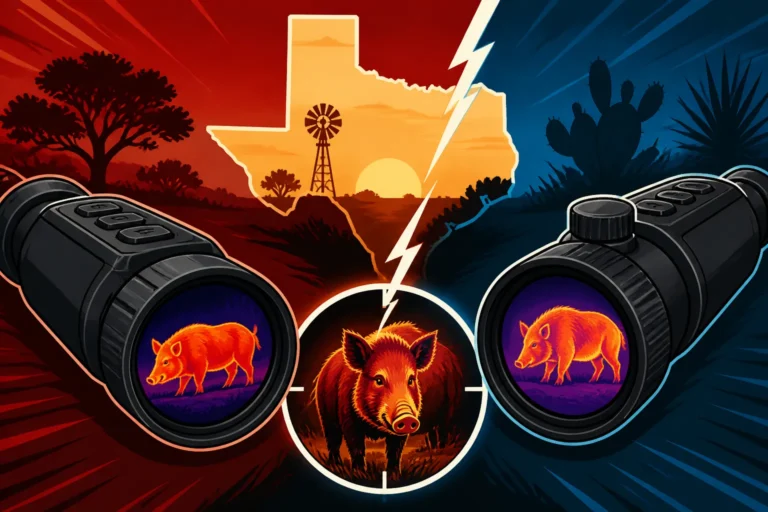
This table highlights why many serious night hog hunters opt for thermal for primary detection and may use night vision as a supplementary tool for positive identification or combine it with a dedicated weapon-mounted thermal optic.
Legalities and Preparation for Night Hunts
Before you head out, always double-check the latest regulations from the Texas Parks and Wildlife Department. Feral hogs can be hunted year-round, day or night, with no bag limit on private land with landowner permission. However, there are specific rules if you're hunting on public land or using certain methods. Knowing the rules regarding Is It Legal to Hunt Over Corn in Texas? or specific regulations around Is Thermal Hunting Legal in Texas? is critical.
Preparation isn't just about gear; it's about understanding your hunting area and the animals you're pursuing. Even something like understanding How to Pattern Hogs on Your Lease using trail cameras during the day can give you invaluable insights into their nocturnal movements, helping you position yourself for success. Utilizing these technologies and resources ensures you're not only effective but also hunting responsibly and legally.
Disclaimer
Hunting is an inherently dangerous activity. Always prioritize safety, understand all local and state regulations, and ensure you have proper training and permits. The information provided in this guide is for informational purposes only and should not replace professional instruction or official legal guidelines.