Eastern Turkey in East Texas (One-Gobbler)
Hunting Eastern turkeys in East Texas is a unique challenge, distinct from pursuing their Rio Grande cousins further west. The dense Pineywoods demand a different approach, and the strict "one-gobbler" limit in this zone adds a layer of precision and patience to every hunt. This comprehensive guide is designed to walk you through the specifics of identifying, locating, and successfully harvesting an Eastern gobbler, ensuring you understand the unique regulations and tactics required for a rewarding experience in East Texas.
Understanding Eastern Turkeys in Texas
Eastern wild turkeys (Meleagris gallopavo silvestris) are a magnificent subspecies, known for their wary nature and the deep woods they call home. Unlike the more numerous Rio Grande turkeys found across much of Texas, the Eastern population is restricted to a specific region, primarily in the eastern part of the state. Their coloration, habitat preferences, and behavior present a distinct set of challenges and rewards for the dedicated turkey hunter.
Identifying Eastern Turkeys
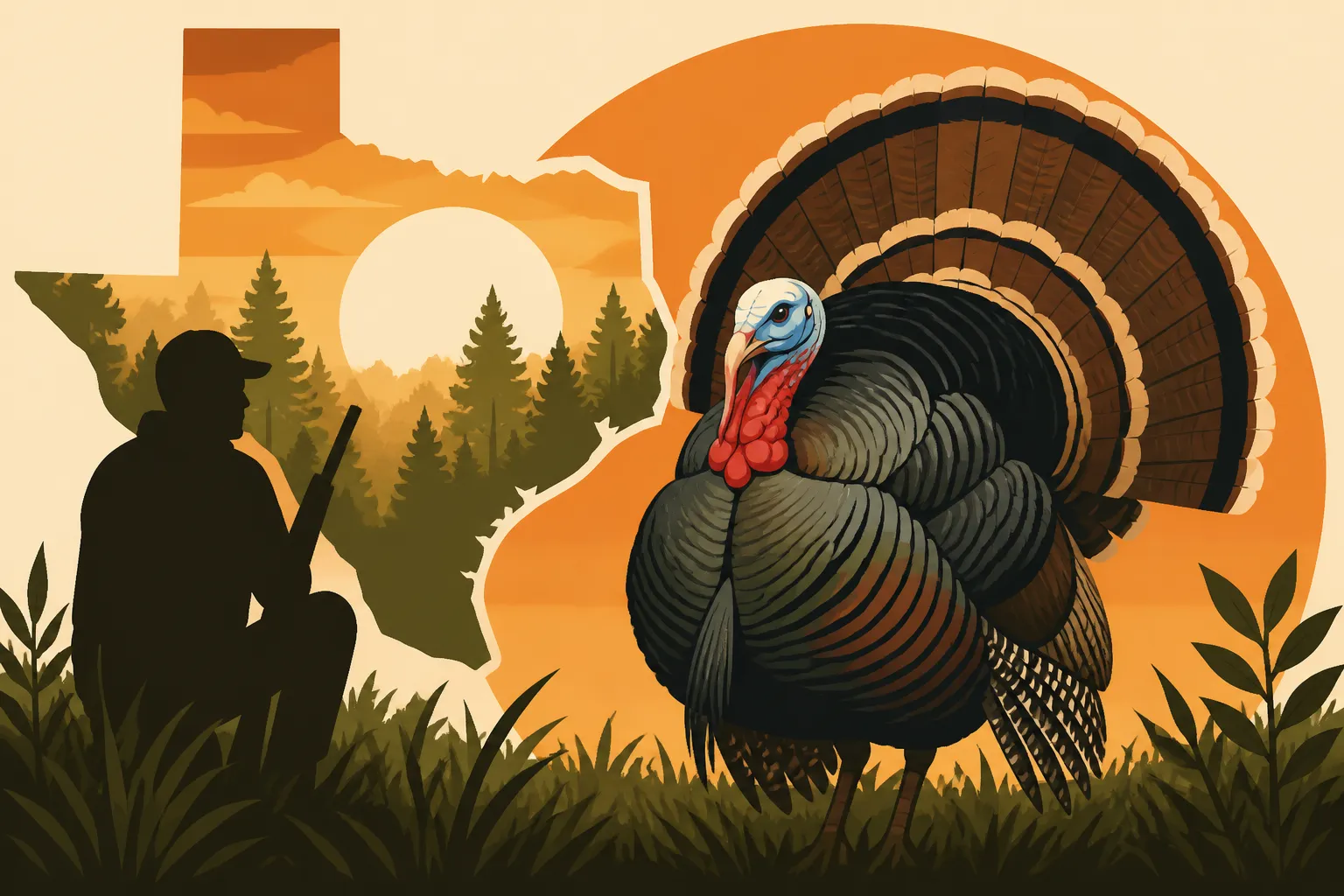
When you're out in the East Texas woods, correctly identifying an Eastern turkey is paramount, especially given the strict bag limits. Eastern gobblers typically appear darker than their Rio Grande counterparts, with a rich, iridescent copper and bronze sheen on their body feathers, especially on the back and wing coverts. Their tail feathers are often tipped with a dark, chocolate brown band, which distinguishes them from the buff or light tan tips found on Rio Grande turkeys. The white and black barring on their wings is also more pronounced, giving them a sharper, cleaner look. Leg color can vary, but generally, mature Eastern gobblers will have dark, spur-bearing legs.
The size difference is often negligible between the subspecies, but Easterns can sometimes appear stockier. The most reliable visual cues, apart from location, are those distinct feather patterns and colors. Always take the time to observe before you make a move, especially since misidentification can lead to legal issues. Their heads and necks also display a vibrant array of red, white, and blue, which intensifies during breeding season, signaling their readiness to strut.
Preferred Habitat in East Texas
Eastern turkeys thrive in the vast, dense timberlands of East Texas, particularly within the Pineywoods and areas with mature hardwood bottomlands. These areas provide the perfect blend of tall trees for roosting, thick understory for nesting and cover, and openings for feeding. You'll often find them along creek bottoms, river corridors, and mixed pine-hardwood forests. The rich soil supports a variety of mast crops like acorns, pecans, and various berries, which are crucial food sources. They need access to open fields or clearings for strutting and feeding on insects and seeds, but they rarely venture far from the security of thick cover.
Look for areas with diverse vegetation, including mature oaks, hickories, and pines, interspersed with brushy areas and some open glades. These birds prefer to travel through dense cover, making them notoriously challenging to spot and pattern. Their choice of habitat dictates much of the hunting strategy, emphasizing stealth, patience, and a deep understanding of their movements within these thick environments. Knowing their preferred roosting trees—often the tallest pines or hardwoods near water—is a critical piece of the puzzle.
Eastern vs. Rio Grande Turkeys
The distinction between Eastern and Rio Grande turkeys isn't just academic; it dictates hunting seasons, bag limits, and even tactics. Rio Grandes, prevalent throughout Central, South, and West Texas, are typically lighter in plumage, often with buff or yellowish-tan tail feather tips. They are generally found in more open country, such as mesquite flats, oak motts, and agricultural fields, making them somewhat easier to spot and call across longer distances. Their calls tend to be louder and carry further.
Easterns, conversely, are confined to the East Texas "Eastern Turkey Zone" and are characterized by their darker plumage with chestnut or chocolate-brown tail tips. They are forest dwellers, relying on dense cover for protection and foraging. Their calls often sound slightly lower in pitch and are delivered with more caution, reflecting their more secretive nature in thicker woods. The most critical difference from a hunting perspective is the regulation: you can often harvest multiple gobblers during the Rio Grande season, but the Eastern season is strictly a one-gobbler limit per hunter per season. This makes identifying your target and being certain of its subspecies and sex absolutely crucial. For more on hunting Rios, check out our guide on Rio Grande Turkey Hunting in Texas.
East Texas Turkey Zones and Regulations
Hunting Eastern turkeys in Texas comes with very specific rules that hunters must understand thoroughly. The regulations are designed to protect and manage this more fragile population, ensuring sustainable hunting opportunities for future generations. Ignoring these rules can lead to serious legal consequences, so always consult the latest Texas Outdoor Annual.
The Eastern Turkey Zone
The Eastern Turkey Zone encompasses a specific list of counties in East Texas, primarily within the Pineywoods ecoregion. These counties are generally situated east of Interstate 45 and north of Interstate 10, extending towards the Louisiana border. Counties like Bowie, Cass, Cherokee, Jasper, Nacogdoches, Newton, Orange, Polk, Rusk, Sabine, San Augustine, Shelby, Trinity, and Tyler are often included, though the precise list can change slightly year to year. It's imperative that you consult the official Texas Parks and Wildlife Department (TPWD) regulations to confirm the exact boundaries before you plan your hunt.
The habitat within this zone is characterized by its heavily forested nature—think towering pines, dense undergrowth, and a network of creeks and rivers. This isn't wide-open country; it's a place where stealth and patience are rewarded. Hunters planning to pursue Eastern turkeys must be acutely aware of whether their hunting location falls within this designated zone, as the rules are entirely different from the much larger Rio Grande zones. This geographical precision is the first step in a legal and successful Eastern turkey hunt.
Key Season Dates
The spring hunting season for Eastern turkeys in Texas is notably shorter than that for Rio Grandes. Typically, the season runs for a few weeks, starting in early to mid-April and concluding in early May. These dates are crucial to remember, as hunting outside this brief window is strictly prohibited. The specific start and end dates can vary slightly each year, so always check the most current Texas Outdoor Annual. The spring season is specifically for gobblers, meaning hens are off-limits, which helps ensure the population can reproduce successfully.
This limited timeframe means that preparation and timing are everything. You don't have the luxury of a long, drawn-out season, so scouting and having your gear ready well in advance are critical. Often, hunters will concentrate their efforts during the first week or two of the season when gobblers are most active and vocal. Understanding these dates is fundamental to planning any turkey hunt in this region. Our comprehensive guide to Texas Turkey Season 2026: Spring & Fall Zones will provide the most up-to-date information.
The Critical One-Gobbler Limit
Perhaps the most significant regulation for Eastern turkey hunters in Texas is the strict one-gobbler bag limit per season. This is a stark contrast to the Rio Grande zones, where hunters often have a two-gobbler limit. For Easterns, once you've harvested a gobbler, your season for that subspecies is over. This rule underscores the importance of positive identification, shot placement, and truly savoring the experience, as you only get one opportunity per year. This limit is in place due to the more localized and smaller population of Eastern turkeys compared to the widespread Rio Grandes.
This "one-gobbler" rule demands extra diligence. You must be absolutely certain that the bird you're aiming at is indeed a gobbler and, ideally, a mature one that meets your personal criteria. There's no room for "almost sure" when you only have one tag. It also means you should be fully prepared to handle your harvest efficiently, understanding the proper field dressing techniques, especially in warmer spring temperatures. Hunters must also be aware that an Eastern gobbler harvested counts towards their annual statewide bag limit for turkeys, which is four gobblers total, but only one of which can be an Eastern.
Essential Tactics for Eastern Gobblers
Hunting Eastern turkeys in the dense woods of East Texas requires a different tactical playbook than what might work in more open country. These birds are inherently more cautious and their environment provides ample concealment, making close encounters challenging to orchestrate. Success often hinges on a blend of patience, precise calling, and strategic positioning.
Mastering Eastern Turkey Calls
Calling Eastern turkeys is an art form that prioritizes subtlety and realism over sheer volume. While a loud box call might carry well in an open field for a Rio, it can easily spook a wary Eastern gobbler in the thick Pineywoods. Instead, focus on softer, more natural sounds that mimic a hen moving through the undergrowth. Slate calls and mouth calls (diaphragm calls) are excellent choices for producing varied clucks, purrs, and soft yelps. The key is to sound like a lonesome hen, not an aggressive one.
Patience is vital when calling. You might only get a soft tree yelp or a faint gobble in return, indicating the bird's location without it committing fully. Don't overcall; let the woods be quiet for a period after a sequence of calls, allowing the gobbler to ponder. Sometimes, a series of soft clucks and purrs, mimicking a contented hen, can be incredibly effective in luring in a gobbler that's already within hearing range but reluctant to expose itself. Understanding how to use various calls is covered in depth in our article on Turkey Calling & Tactics for Texas Rios, which can be adapted for Easterns by focusing on quieter, more nuanced sequences.
Scouting and Roosting Strategies
Effective scouting is the bedrock of a successful Eastern turkey hunt. Due to their preference for thick cover, randomly walking through the woods is unlikely to yield results. Instead, focus your scouting efforts on identifying key habitat features: potential roosting areas (tall pines or hardwoods near water), feeding areas (mast-producing trees, openings with fresh green growth), and travel corridors (creek beds, old logging roads, subtle ridges). Look for physical signs like droppings, tracks, strut marks, and shed feathers.
Roosting a bird the evening before your hunt is an invaluable strategy. As dusk approaches, position yourself quietly near suspected roosting areas and listen for fly-up cackles or evening gobblers. A locator call, such as an owl hooter or crow call, can sometimes elicit a shock gobble without alerting the bird to your presence as a hunter. Once a gobbler is located on the roost, you can plan your morning approach to set up within 100-150 yards, ideally before first light. This ensures you're in position when the bird flies down, often ready to strut and look for hens.
Decoy Setup and Blind Placement
Decoys can be a game-changer for Eastern turkey hunting, but their deployment requires careful thought in dense environments. In thick woods, visibility is limited, so placement is key. A single hen decoy or a jake/hen combination placed where it's visible from a gobbler's likely approach path, but not too far into thick brush, is usually effective. Ensure the decoy is set up to allow for a clear shot path for you, without obstructing your view or requiring excessive movement. Often, placing it at the edge of a small clearing or opening within the woods works best.
For blind placement, concealment is paramount. Natural cover, like thick bushes, fallen trees, or the base of a large tree, can provide excellent camouflage. Portable ground blinds are also highly effective, especially for hunters who need to minimize movement or wish to hunt with children. A good ground blind helps you remain unseen as you make those crucial last adjustments or take the shot. When setting up, always consider your background and avoid silhouetting yourself. Being completely still and concealed can often convince a cautious Eastern gobbler to take those final few steps into range. For more on hunting from blinds, consider our guide on Box Blind vs Tripod vs Ground Blind in Texas.
Gear and Equipment for East Texas Hunts
Having the right gear for an Eastern turkey hunt in East Texas isn't just about comfort; it's about maximizing your chances in a challenging environment. The dense woods and often humid spring weather dictate specific choices in firearms, clothing, and accessories.
Shotgun and Ammunition Choices
When it comes to Eastern turkeys, a shotgun remains the undisputed king. The dense patterning capabilities are crucial for dispatching these tough birds at varying ranges, especially when a clear head/neck shot is required. Most turkey hunters opt for 12-gauge or 20-gauge shotguns, with modern loads making both highly effective. A tight choke, such as an extra full or even a super full/turkey choke, is absolutely essential to achieve a dense pattern of shot pellets at 30-50 yards. This minimizes the risk of crippling a bird and ensures a clean kill.
Ammunition choice is equally important. Modern high-density loads, like Federal Premium's Heavyweight TSS or Winchester Long Beard XR, have revolutionized turkey hunting, significantly extending effective ranges and delivering devastating patterns. These specialized loads contain heavier-than-lead shot (tungsten super shot) or specially buffered lead shot, ensuring more pellets in the kill zone. Practice with your chosen shotgun and ammunition combination on a turkey target at various ranges to understand its capabilities and limitations. Knowing your effective range prevents risky shots and promotes ethical hunting.
Camouflage and Concealment
Given the thick undergrowth and natural caution of Eastern turkeys, effective camouflage is non-negotiable. Traditional woodland patterns, featuring greens, browns, and dark grays, are ideal for blending into the Pineywoods environment. Brands like Mossy Oak and Realtree offer patterns specifically designed for timbered areas, providing excellent breakup against foliage and tree trunks. Don't forget a full head net or face paint and gloves to eliminate any exposed skin, which can reflect light and alert a keen-eyed gobbler.
Layering your clothing is also a smart strategy for spring hunting in East Texas. Mornings can be cool, but as the day progresses, temperatures often rise, and humidity can build quickly. A moisture-wicking base layer, a slightly warmer mid-layer, and a quiet, durable outer layer will keep you comfortable and silent as you move through the brush. The key is quiet fabrics that won't rustle or snag on branches. Avoiding bright colors, even on gear like backpacks or calls, helps maintain your overall concealment. Consider durable snake boots or snake gaiters to protect against snake bites in the dense undergrowth, as East Texas is home to several venomous species. For advice on staying cool while concealed, check out our guide on Best Early-Season Camo for Texas Heat.
Essential Accessories
Beyond your shotgun and camo, several accessories can greatly enhance your Eastern turkey hunting experience. A comfortable, lightweight turkey vest or backpack is invaluable for carrying calls, water, snacks, extra ammo, and any harvested bird. Look for one with ample pockets and a comfortable seat cushion built-in, as you'll likely spend a lot of time sitting still. A good set of varied calls—a slate call, box call, and a few diaphragm calls—will give you the versatility needed to adapt to different scenarios.
Other useful items include a rangefinder for confirming shot distances, especially with new ammunition, and a small pair of binoculars (8x or 10x) for identifying birds from a distance without excessive movement. A sharp hunting knife is essential for field dressing, and a small game bag or sturdy bungee cords can help with carrying out your gobbler. Don't forget insect repellent, as mosquitoes and ticks can be prevalent in the East Texas woods during spring. Lastly, ensure you have a fully charged phone for navigation, communication, and, crucially, for harvest reporting.
Permits, Licenses, and Harvest Reporting
Navigating the administrative side of hunting can sometimes feel like a chore, but it's a critical component of responsible hunting in Texas. For Eastern turkeys, understanding the specific license requirements, endorsement needs, and mandatory harvest reporting procedures is just as important as knowing your calling techniques.
Required Licenses and Endorsements
To legally hunt Eastern turkeys in Texas, you'll first need a valid Texas hunting license. For residents, the Super Combo license is often the most cost-effective option, covering various game animals and required endorsements. Non-residents will need a non-resident hunting license. Beyond the general hunting license, you'll also need an Upland Game Bird Endorsement. This endorsement specifically covers wild turkey, quail, pheasant, and Chachalaca. It's automatically included with the Super Combo license, but if you opt for a basic hunting license, you'll need to purchase it separately.
Always carry your license and endorsements with you while hunting. Digital copies on your phone are generally accepted, but having a physical copy as a backup is always a good idea. Ensure your license is current and valid for the season you intend to hunt. Youth hunters typically have different license requirements or exemptions, so if you're hunting with a younger companion, double-check those specifics. Our article on Texas Hunting License: Cost, Types & How to Buy (2026) provides all the details you'll need.
Hunter Education Requirements
Texas mandates hunter education for most individuals born on or after September 2, 1971. If you fall into this category, you must complete an approved hunter education course to legally hunt in Texas. There are a few exemptions, such as for those hunting on their own land, or if you are under 17 and accompanied by a licensed hunter over 17 who has completed hunter education. However, it's always best practice for everyone to complete the course, as it covers critical safety information, ethical hunting practices, and wildlife conservation principles.
The course can be taken online or in a traditional classroom setting, offering flexibility for different schedules. Upon successful completion, you'll receive a certification card that serves as proof of your education. This certification is recognized in all other states and Canadian provinces. Even if you're exempt, consider taking a refresher course to keep your skills sharp and stay up-to-date on any regulatory changes. For more in-depth information, refer to our article on Do You Need Hunter Education in Texas?.
Reporting Your Eastern Turkey Harvest
Harvest reporting for Eastern turkeys is not just recommended, it's mandatory. Unlike Rio Grande turkeys, which may only require reporting in specific counties or through special programs, every Eastern turkey harvested must be reported to the TPWD within 24 hours of harvest. This data is absolutely vital for wildlife biologists to monitor the population and manage the species effectively. Without accurate harvest data, it's much harder to make informed decisions about future seasons and bag limits.
The easiest way to report your harvest is through the My Texas Hunt Harvest app on your smartphone or via the TPWD website. You'll need to provide information such as the date and time of harvest, the county, the type of land (public or private), and the sex of the bird. Once reported, you'll receive a confirmation number. While you don't physically tag an Eastern turkey like you would a deer, this reporting process serves the same purpose of accountability and data collection. Always ensure you have the means to report your harvest immediately, as delays can lead to non-compliance. Learn more about the process in our guide on Texas Hunting Tags & Harvest Reporting (My Texas Hunt Harvest).
Eastern Turkey Hunting Checklist
To help you prepare for your Eastern turkey hunt in East Texas, here's a handy checklist summarizing essential items and considerations.
| Category | Item | Description | Importance |
|---|---|---|---|
| Licensing & Docs | Texas Hunting License | Valid for current season | Critical |
| Upland Game Bird Endorsement | Required for turkey hunting | Critical | |
| Hunter Education Card | If born on or after Sept 2, 1971 | Critical | |
| Valid Photo ID | For identification | Essential | |
| Firearms & Ammo | 12- or 20-gauge Shotgun | Patterned for turkey hunting | Critical |
| Turkey Choke (Extra Full/Super Full) | For tight shot patterns | Critical | |
| High-Density Turkey Loads | Practice to confirm pattern | Critical | |
| Apparel | Full Camouflage Outfit | Woodland pattern (Mossy Oak/Realtree) | Critical |
| Face Mask/Paint & Gloves | No exposed skin | Critical | |
| Layered Clothing | For temperature changes | Essential | |
| Snake Boots/Gaiters | Protection in dense brush | Essential | |
| Calls & Decoys | Variety of Turkey Calls | Slate, box, diaphragm calls (soft, realistic tones) | Critical |
| Locator Calls (Owl Hooter/Crow Call) | To elicit shock gobblers | Essential | |
| Hen or Jake/Hen Decoy | For visual attraction | Essential | |
| Accessories | Turkey Vest/Backpack with Seat | Comfortable and quiet | Essential |
| Rangefinder | For accurate shot distance | Essential | |
| Binoculars (8x or 10x) | For spotting at distance | Essential | |
| Sharp Knife | For field dressing | Essential | |
| Water & Snacks | Stay hydrated and fueled | Essential | |
| Insect Repellent | Mosquito and tick protection | Essential | |
| First-Aid Kit | For emergencies | Important | |
| Navigation (GPS/App like onX Hunt) | For locating stands and finding your way | Essential | |
| Fully Charged Phone | For communication & harvest reporting | Critical |
Disclaimer
All hunting activities carry inherent risks. Always prioritize safety, adhere to all local, state, and federal regulations, and practice ethical hunting principles. This guide is for informational purposes only and should not replace official regulations published by the Texas Parks and Wildlife Department. Double-check all season dates, bag limits, and legal requirements before heading into the field.