Best Hunting Method for White-Winged Dove in Texas
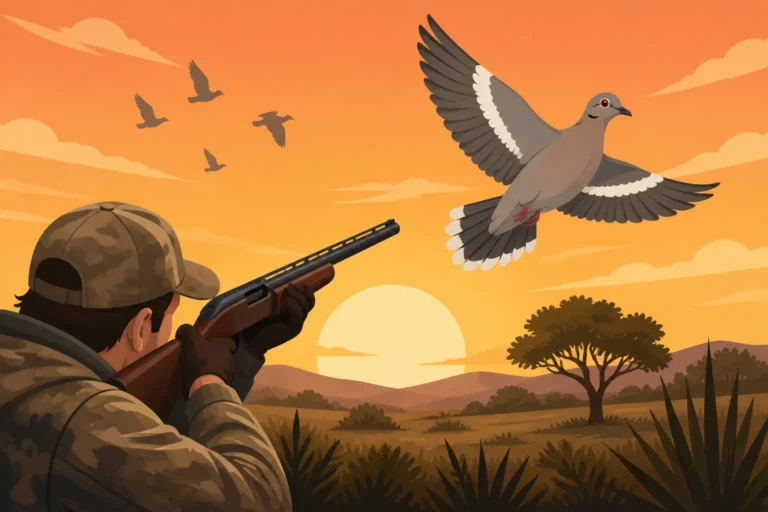
Standing in a parched Texas field in early September, sweat stinging your eyes while you watch white-winged doves fly 80 yards high and just out of reach, is a rite of passage that feels more like a punishment. Many hunters apply standard mourning dove tactics to these birds and come home with an empty bag and a bruised shoulder. This guide solves that frustration by detailing the specific interception methods and behavioral strategies needed to master the white-winged dove hunt.
Understanding the Behavioral Shift of Texas White-Wings
For decades, the white-winged dove was a creature of the deep South Texas brush and the citrus groves of the Rio Grande Valley. If you wanted to hunt them, you headed to places like McAllen or Brownsville. However, something shifted in the last twenty years. These birds have become incredibly urbanized, moving into cities like San Antonio, Austin, and even the Dallas-Fort Worth metroplex. This shift has completely changed how we have to hunt them. Unlike mourning doves, which are often found in scattered pairs or small groups across a wide variety of terrains, white-wings are highly social and tend to travel in massive "rivers" from their urban roosts to rural feeding grounds.
When you are preparing for the season, checking the Texas White-Winged Dove Hunting Regulations 2026 is your first step, but understanding their flight psychology is the second. These birds are larger and appear slower than mourning doves, but that is a visual deception caused by their deeper wing beats. They are actually moving at a clip that requires a deliberate, sustained lead. They also fly higher. Because they spend so much time navigating city skylines and power lines, they are comfortable at altitudes that would make a mourning dove nervous. This means your "best" hunting method has to account for verticality just as much as horizontal speed.
The Interception Method: Choosing the Right Spot
The most successful method for white-wings in Texas is the "Interception Setup." Because these birds roost in town and feed in the country, your goal isn't necessarily to be in the grain field, but rather along the flight path leading to it. Imagine a funnel. The birds leave their roosting trees in a concentrated mass and gradually spread out as they reach the feeding fields. If you sit in the middle of a 500-acre sunflower field, you might get shots, but if you find the tree line or the water gap two miles away that they all pass over to get there, you will have constant action.
To master this, you need to know Where to Hunt White-Winged Dove in Texas based on recent scouting. Look for "staging" areas. These are typically tall dead trees or power lines where the birds gather to survey a field before dropping in to feed. If you can position yourself 50 to 100 yards upwind of these staging areas, you catch the birds while they are lowering their landing gear but still maintaining a steady, predictable flight path. This is far more effective than trying to snap-shoot at them while they are zigzagging over a sunflower head.
The Importance of Morning vs. Evening Flights
White-wings are creatures of habit, but their morning and evening routines differ. In the morning, they are hungry and purposeful. They move early—often right at legal shooting light—and they move fast. The morning hunt is about being in place before the first hint of orange hits the horizon. By 10:00 AM, the heat is usually rising, and the birds are looking for shade.
The evening flight is often more relaxed but can be more localized around water. If you are looking for the Best Hunting Method for Mourning Dove in Texas, you might focus on a watering hole, and the same applies here, but with a twist. White-wings prefer larger, more open water sources where they can see predators from a distance. They will often "tank" up on water before heading back to their urban roosts. Finding a cattle tank with a clean, muddy bank (no tall grass) is gold for a late-afternoon white-wing session.
Tactical Decoy Placement for Social Birds
Because white-winged doves are so social, they respond to decoys much more aggressively than mourning doves do. While a mourning dove might glance at a spinning-wing decoy and keep flying, a group of white-wings will often bank hard and try to land right on top of it. This is why learning How to Use Decoys for Dove Hunting is a game-changer for this species.
I recommend a "cluster" approach. Instead of one or two decoys scattered about, place a spinning-wing decoy on a tall pole (10 feet is not too high for white-wings) to catch their eye from a distance. Then, place 6 to 12 static clip-on decoys in a nearby dead tree or on a fence line. This creates the illusion of a safe, established colony. When those high-flying birds see the flash of the spinner and the "resting" birds nearby, they will almost always drop altitude to investigate. This brings those 60-yard "sky-busters" down into the 20-to-30-yard "gimme" range.
| Feature | Mourning Dove | White-Winged Dove |
|---|---|---|
| Flight Pattern | Erratic, darting, low to ground | Steady, direct, often high altitude |
| Social Behavior | Pairs or small groups | Large flocks, highly colonial |
| Primary Habitat | Rural pastures, scrubland | Urban/Suburban edges, groves |
| Decoy Response | Moderate, often wary | Very high, will bank aggressively |
| Typical Shot Distance | 15–35 yards | 25–45 yards |
Shotgun and Load Selection for the Long Game
If you are hunting on a Texas Dove Field Setup: Where to Stand matters, but what you are swinging matters just as much. Because white-wings are larger and have thicker plumage than mourning doves, and because the shots are often further out, your equipment needs to be up to the task.
I see too many hunters out there with 20-gauges and skeet chokes wondering why the birds are "feathering" but not falling. For white-wings, a 12-gauge is the standard for a reason. You want a Modified or even an Improved Modified choke to keep your pattern dense at those longer ranges. As for shot size, while #8 is fine for mourning doves over a water hole, #7.5 or even #6 is better for white-wings. The larger pellets retain more kinetic energy, which is necessary to penetrate the bird's muscle and bone at 40 yards.
When considering your Best Gear for White-Winged Dove on a Texas Lease, don't forget your eye protection and a high-quality recoil pad. On a good white-wing day in a special South Zone area, you might go through three or four boxes of shells in a few hours. That repetitive thumping adds up, and if you start flinching because your shoulder is sore, your accuracy will plummet.
Navigating the Challenges of the Texas Heat
We cannot talk about Texas dove hunting without addressing the heat. September in Texas is often just a slightly more humid version of August. It is not uncommon to be sitting in 100-degree weather with zero wind. This isn't just uncomfortable; it’s a logistical challenge for your harvest and your hunting partner—your dog.
If you don't have a managed field, you might be wondering How to Hunt Dove Without a Field, which usually involves finding transition corridors. In these spots, you are often away from the shade of a barn or a truck. Carry more water than you think you need. I always bring a dedicated gallon of ice water just for my Labrador. I've seen dogs go into heat stroke in less than thirty minutes during a heavy flight because they don't want to stop retrieving. If your dog's tongue is hanging out sideways and they look wobbly, the hunt is over. Get them to the truck and get the AC running.
For the birds themselves, the heat is an enemy to meat quality. Doves are small and have a high body temperature. If you toss 15 birds into a pile in the bottom of a bucket and leave them in the sun, they will begin to sour before you even get home. Use a mesh game bag to allow for airflow, or better yet, keep a small cooler with a little ice in the field with you. If you need to know How to Cool a Deer Fast in Texas Heat, the principles are the same: surface area and airflow are your best friends.
Scouting and Land Management for White-Wings
If you are lucky enough to have your own property or a long-term lease, you can actually "build" a white-wing magnet. These birds are addicted to specific grains. While mourning doves love ragweed and croton, white-wings are suckers for black-oil sunflowers and sesame. Learning How to Make Your Own Dove Field specifically for white-wings involves planting large blocks of these crops near a water source.
Unlike mourning doves, which will feed in a "dirty" field with lots of weeds, white-wings prefer a "clean" floor. They have shorter legs and aren't as fond of walking through thick grass. Mowing strips in your sunflower field and then using a light disc to expose bare dirt will make your property significantly more attractive to them. They want to land on the dirt, walk to the seed, and have a clear view of any approaching coyotes or hawks.
The Role of Water in the Evening Hunt
In the dry regions of West and South Texas, water is the ultimate draw. However, a white-wing's idea of a good water hole is specific. They don't like steep banks. They want a very gradual slope where they can land several feet from the water's edge and walk in. If your lease has a tank that is overgrown with cattails, you can significantly improve the hunting by clearing a 20-yard section of the bank down to the mud.
Check the Texas Dove Season 2026: Zones & Dates before you plan your water hole hunt, as the timing of the flights can change based on the weather. On a really hot, dry day, the "water flick" can be the most productive thirty minutes of the entire trip. The birds will come in low and fast right at sunset, providing some of the most challenging and rewarding shooting you'll ever experience.
Final Tactics for a Successful Limit
To wrap up a successful hunt, you must stay mindful of the Texas Dove Bag Limit & Possession rules. White-winged doves are often part of an aggregate limit, and in some special areas, the number of white-wings you can take is higher than mourning doves. Always double-check the "Outdoor Annual" for the specific county you are in.
When you are in the field, remember that movement is the number one reason hunters get "busted." White-wings have incredible eyesight. Because they fly high, they can see you from a long way off. Wear lightweight, breathable camo that matches the parched Texas brush. Don't look up at the birds until you are ready to mount the gun—the "flash" of a human face is like a lighthouse to a dove. Keep your head down, wait for them to get within your effective range, and then make a smooth, deliberate move.
Mastering the white-wing hunt is about patience and adaptation. It’s about realizing that these aren't just "big mourning doves," but a unique challenge that requires its own set of rules. By focusing on interception points, using social decoys, and choosing the right heavy-hitting loads, you'll turn those frustrating afternoons of "sky-watching" into a cooler full of the best jalapeño-popper material Texas has to offer.
Disclaimer
Hunting regulations in Texas are subject to change annually by the Texas Parks and Wildlife Department. This guide is for informational purposes and should be used in conjunction with the current Texas Outdoor Annual. Always verify season dates, bag limits, and legal means and methods for your specific hunting zone before heading into the field. Ensure you have a valid Texas hunting license with the appropriate migratory bird endorsement.