How to Hunt Coyote on a Texas Lease
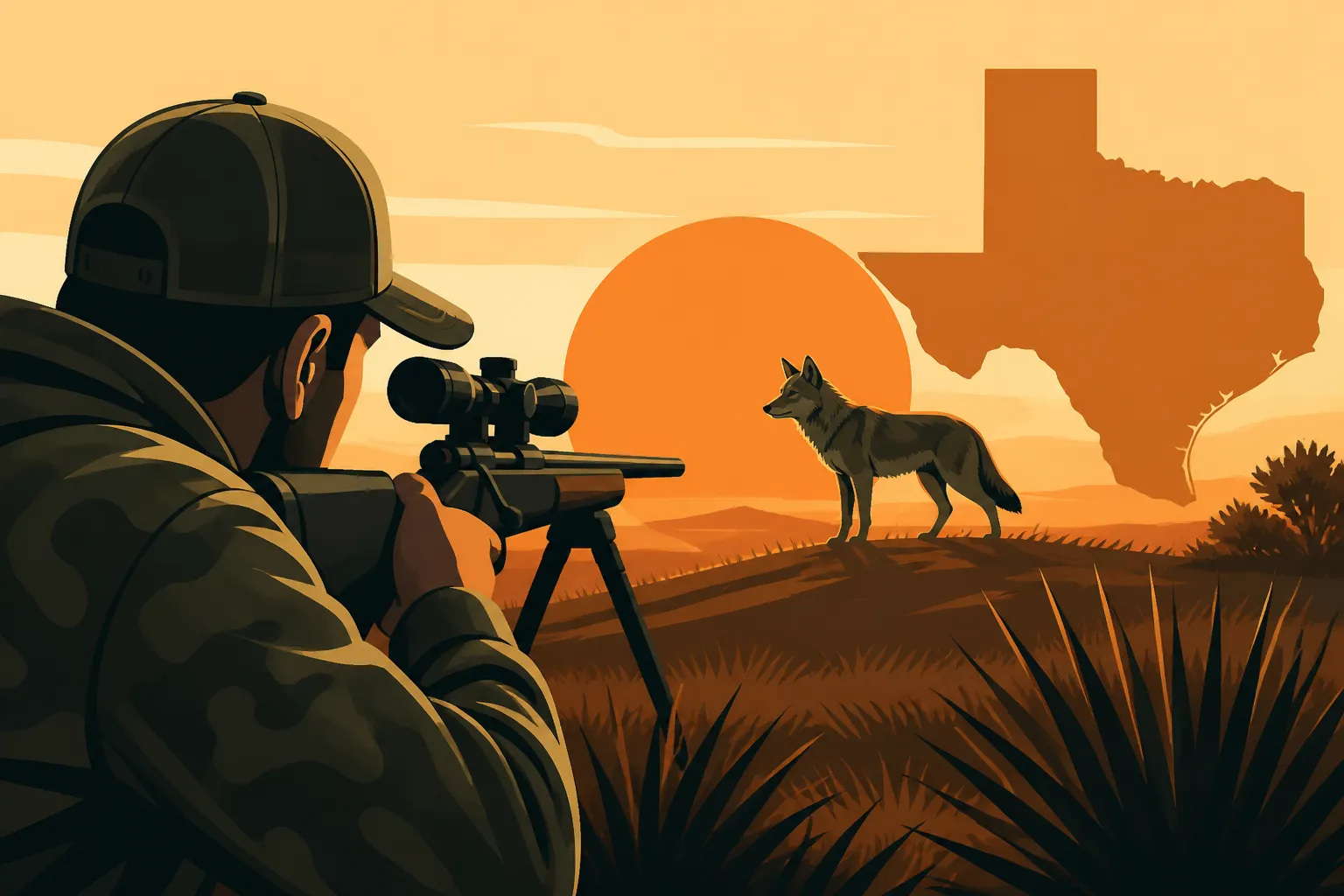
Coyotes can be a major headache for anyone managing a Texas hunting lease, often preying on fawns during the spring or disrupting your quiet deer stands in the fall. If you are tired of hearing those yips every evening and seeing your recruitment numbers drop, this guide will walk you through the professional strategies needed to outsmart these wary predators on your specific piece of Texas dirt.
Scouting and Identifying High-Traffic Areas on the Lease
The first mistake many hunters make when trying to manage coyotes on a lease is just "winging it." They sit in a random corner of a pasture and start calling, hoping for the best. To actually be successful, you have to approach coyote hunting with the same level of scouting intensity that you apply to big game. Coyotes are creatures of habit, and on a Texas lease, they are going to utilize the path of least resistance. Look for tracks along sandy ranch roads, especially near gate crossings or where two fence lines meet.
Droppings, or scat, are another huge indicator. Unlike a dog, coyote scat is often filled with hair and bone fragments. If you find a "scat station" on a high point or a road intersection, you’ve found a territorial marker. These are prime locations to set up downwind. You should also consider how they interact with your existing infrastructure. Many hunters find that coyotes will actually circle their feeders, not for the corn, but for the birds and small mammals that congregate there. Learning How to Pattern Bucks With Trail Cameras can actually teach you a lot about coyote movement too, as you’ll often see them on your SD cards about 30 minutes after the deer have cleared out.
When you are checking your cameras, pay attention to the time of day. If you see a consistent pair of coyotes moving through a draw at 2:00 AM, you know exactly where to be with your night gear. You can find plenty of affordable mounting brackets and SD card readers on Amazon to help manage this data without breaking the bank. Always remember that a coyote's territory on a Texas ranch can be massive, but they will have "core areas" where they feel safest. Those thick cedar breaks or mesquite motts are usually their bedding sanctuaries.
Essential Gear and Setup for Texas Predator Calling
You don’t need to spend ten thousand dollars to kill a coyote, but you do need gear that works. In the wide-open spaces of West Texas or the dense brush of the South Texas Plains, your equipment needs to be rugged. A good electronic caller is the gold standard for most lease hunters. It allows you to place the sound away from your body, which pulls the coyote’s eyes away from your silhouette. However, don't overlook the power of a simple mouth call. Hand-calls offer a level of emotion and "rasp" that digital files sometimes lack.
When it comes to optics, clarity is everything. Whether you are hunting at high noon or under a full moon, you need to be able to distinguish a coyote from a neighbor’s wandering calf. For those just getting started, researching the Best Gear for Coyote on a Texas Lease is a great way to build a kit that fits your specific environment. If you’re hunting in the Hill Country, you might want a shorter, more maneuverable rifle, whereas a Panhandle hunter might need a heavy-barreled long-range setup to reach out across a wheat field.
Safety is also a major factor. If you’re hunting at night, a quality bipod or tripod is non-negotiable. You can find several heavy-duty hunting tripods on Amazon that provide a rock-solid rest for those high-pressure shots. Having a stable platform ensures a clean, ethical kill, which is especially important if you are trying to stay on the good side of your lease manager or landowner.
| Feature | Electronic Callers | Mouth (Hand) Calls |
|---|---|---|
| Learning Curve | Very Low – Plug and play | Moderate – Requires practice |
| Versatility | High – Hundreds of sounds | Low – Usually 1-2 sounds per call |
| Movement | Low – Sound is away from you | High – Hunter must move to call |
| Reliability | Depends on battery life | Always works |
| Cost | $100 – $600+ | $15 – $40 |
Strategic Tactics for Calling and Wind Management
In Texas, the wind is either your best friend or your absolute worst enemy. A coyote’s nose is its primary defense mechanism. If they catch a whiff of your laundry detergent or that morning taco, the game is over before it starts. Always, always, always hunt with the wind in your face or at a crosswind. A "calling set" should be approached with the same stealth as a bowhunt. Park your truck well away from the calling site—at least 400 yards—and use the terrain to hide your approach.
Once you are set up, start quiet. A common mistake is blasting a rabbit distress at full volume immediately. If there is a coyote bedded 100 yards away in the brush, you just blew his eardrums out and spooked him. Start with low-volume bird chirps or soft squeaks. If nothing shows up after five minutes, then you can start ramping up the volume. Using Predator Calling for Coyotes in Texas techniques involves a specific cadence: call for 30 seconds, then stay silent and scan for three minutes. Coyotes often come in "on a string," but the old, wise ones will take their sweet time, circling downwind to verify the source of the sound.
If you are hunting during the winter months, vocalizations can be more effective than prey distress. During the breeding season (late January through February), coyote howls, challenges, and female whimpers can bring a dominant male running in to defend his turf. This is often the Best Hunting Method for Coyote in Texas because it appeals to their social instincts rather than just their stomachs. If you’re unsure of the legalities of using these calls at various times of the year, make sure you check the Texas Coyote Hunting Regulations 2026 to stay compliant with state laws.
Night Hunting: The Ultimate Lease Management Tool
If you really want to make a dent in the predator population, you have to own the night. Coyotes are naturally nocturnal, and while you can certainly catch them during the "golden hours" of dawn and dusk, the real volume of movement happens after the sun goes down. In Texas, we are fortunate to have very permissive laws regarding night hunting for non-game animals. Many hunters are now moving toward thermal optics because they allow you to see the heat signature of a predator through light brush or tall grass where a traditional spotlight would just reflect back at you.
For those who aren't ready to drop thousands on thermal gear, a high-quality red or green LED light can still be very effective. Coyotes don't see the red spectrum as well as we do, allowing you to "scan" the horizon with the edge of the beam. When you see those two glowing eyes, you know you've got a customer. Using Coyote Hunting in Texas: Night & Thermal gear changes the dynamic of the lease entirely. You’ll suddenly see just how many predators are actually roaming the property while you’re usually asleep in the bunkhouse.
Always check with your lease members before heading out for a night session. You don't want to be calling near a stand where someone is planning to hunt the next morning. Coordination is key. If you're looking for recommendations on night-vision-compatible gear or even just high-intensity scanning lights, Amazon carries a wide variety of options with user reviews that can help you decide which one can withstand the Texas heat and dust. Many successful hunters utilize How to Call Coyotes at Night in Texas strategies that involve lower-frequency sounds, as sound tends to travel further and clearer in the cold, still night air.
Landowner Relations and Lease Etiquette
Hunting coyotes isn't just about the sport; it's about being a good steward of the land. Most Texas landowners will be thrilled that you are taking an interest in predator control. Coyotes can be devastating to livestock, particularly during calving or lambing season. If you want to secure your spot on a lease for years to come, sending the landowner a photo of a couple of harvested coyotes is a great way to show you are adding value to the property.
However, always be mindful of the "lease rules." Some hunters believe that coyote hunting puts too much pressure on the deer. While there is some truth to the idea that slamming truck doors and shooting rifles at 2:00 AM can spook a big buck, a disciplined predator hunter is usually a ghost. Make sure you understand the answer to Is There a Season for Coyote in Texas? (which is no—they are year-round), but also respect the "quiet periods" your lease might have leading up to the opening day of deer season.
If you are a guest or a new member, the best way to start is to ask: "Where do you guys see the most coyotes?" This shows respect for the existing members' knowledge and usually gets you pointed toward the "problem areas" where you can hunt without stepping on anyone's toes. If you're looking to improve your skills, studying How to Hunt Coyote in Texas from a broad perspective will give you the confidence to handle any situation, from the coastal marshes to the high plains.
The Mental Game: Why Coyotes Win
At the end of the day, the coyote is one of the most adaptable animals on the planet. They have survived centuries of trapping, poisoning, and hunting because they learn fast. If you "miss" a coyote or let him wind you, he is now an "educated" coyote. He will likely never come to that specific sound again. This is why it is so important to vary your sounds and your locations. Don't sit in the same "coyote blind" every weekend.
Be patient. I’ve seen coyotes hang out at the edge of a brush line for 45 minutes, just watching the electronic caller. They are looking for the slightest movement or the smallest "unnatural" detail. Wear full camouflage, including a face mask and gloves. You can find lightweight, breathable camo suits on Amazon that are perfect for the Texas heat and will help you disappear into the mesquite. If you can stay still longer than they can stay curious, you’ll win.
When you do finally get that shot, make it count. Most coyote hunters prefer a flat-shooting, small-caliber rifle like a .22-250 or a .223. These rounds have enough punch to drop a coyote instantly but won't cause excessive damage if you're interested in keeping the fur. If you're looking for the best electronics to aid your hunt, remember that Best Thermal for Coyote Hunting in Texas lists can help you identify the right tools for identifying targets in the dark. Hunting coyotes is a chess match, and in Texas, the board is vast and the stakes are high for your deer herd's future.
Texas Predator Hunting Disclaimer
Coyote hunting in Texas is subject to state and local regulations. While coyotes are classified as non-game animals and can typically be hunted year-round with a valid hunting license, hunters must always verify specific county ordinances, especially regarding the use of lights or thermal gear on public versus private land. Always obtain explicit permission from the landowner or lease manager before discharging a firearm at night. Safe shooting practices are mandatory, and hunters must be certain of their target and what lies beyond it at all times. All information provided in this guide is for educational purposes and should be cross-referenced with the latest Texas Parks and Wildlife Department (TPWD) Outdoor Annual.