Texas Javelina Season by Zone
Trying to make sense of the javelina hunting regulations in Texas can feel like navigating a maze. It's not as straightforward as deer or even dove season, and often hunters get tripped up by the specific zones and differing dates. You've probably heard conflicting information or struggled to find a clear, concise guide that lays it all out without making you dig through pages of the Outdoor Annual. This comprehensive guide is here to clear up all that confusion, giving you the definitive breakdown of javelina season by zone in Texas, along with crucial regulations and tips to make your hunt a success.
Understanding the Collared Peccary: Not a Pig, But Close Enough
Before we dive into the nitty-gritty of seasons, it's vital to understand what exactly a javelina is. Many folks, especially those new to Texas hunting, mistakenly refer to them as "pigs" or "wild hogs." While they share a superficial resemblance to feral hogs with their bristly coats and snouts, javelinas are actually peccaries – a completely different family of animals. They're scientifically known as Pecari tajacu, or the collared peccary, named for the whitish band of hair around their necks.
This distinction isn't just biological trivia; it has real implications for hunting regulations. Feral hogs, for instance, have no closed season or bag limits on private land, and you don't even need a license to hunt them if you're a landowner or have permission on private property. Javelinas, however, are considered game animals in Texas, meaning they come with specific seasons, bag limits, and require a valid Texas hunting license. Understanding this fundamental difference will save you a lot of headache and potential legal trouble. They typically weigh between 30-60 pounds, much smaller than most feral hogs, and have a more compact, muscled build, and their tusks are short and straight, unlike a hog's curved cutters.
Biological Traits and Habitat Preferences
Javelinas are fascinating creatures with unique social structures and habitat needs. They live in herds ranging from a few individuals to more than 20, and these herds maintain specific territories. They're primarily herbivores, munching on prickly pear cacti, roots, tubers, and fruits, but they won't pass up insects or grubs if they stumble upon them. Their diet heavily influences where you'll find them, often in dense brush, thorny thickets, and areas with plenty of succulents.
In Texas, javelinas are mostly found in the southern and western parts of the state, particularly in the South Texas Brush Country, the Trans-Pecos region, and parts of the Edwards Plateau. These areas provide the arid or semi-arid conditions and dense cover they prefer. They're remarkably resilient animals, adapted to harsh environments, often active during cooler parts of the day and seeking shade during the scorching Texas heat. Their scent glands are quite prominent, used for marking territory and communicating within the herd, which is something a hunter can sometimes key into.
Why the Confusion with Feral Hogs?
The mix-up between javelinas and feral hogs is understandable at a glance. Both are medium-sized, four-legged, hairy, and have tusks. They also often share similar brushy habitats, though javelinas are far more restricted in their range. The key differences, as mentioned, are biological and behavioral. Feral hogs are descendants of domestic pigs and can breed prolifically, causing extensive agricultural damage. This is why the state imposes very few restrictions on their hunting. Javelinas, on the other hand, are native Texas wildlife, managed like other game species to ensure healthy populations.
One of the most immediate visual tells is their tail – javelinas have a tiny, almost non-existent tail, while feral hogs have a more pronounced, often curled tail. Their overall body shape is also different, with javelinas appearing more "compact" and hog-like animals having a more elongated body. Because of this common confusion, it's always best to be absolutely certain of your target before you pull the trigger. Knowing the difference is not just good practice, it's a legal requirement. For a deeper dive into distinguishing these animals, check out our guide on Javelina vs Feral Hog: What's the Difference?.
Texas Javelina Season Zones: Dates and Regulations
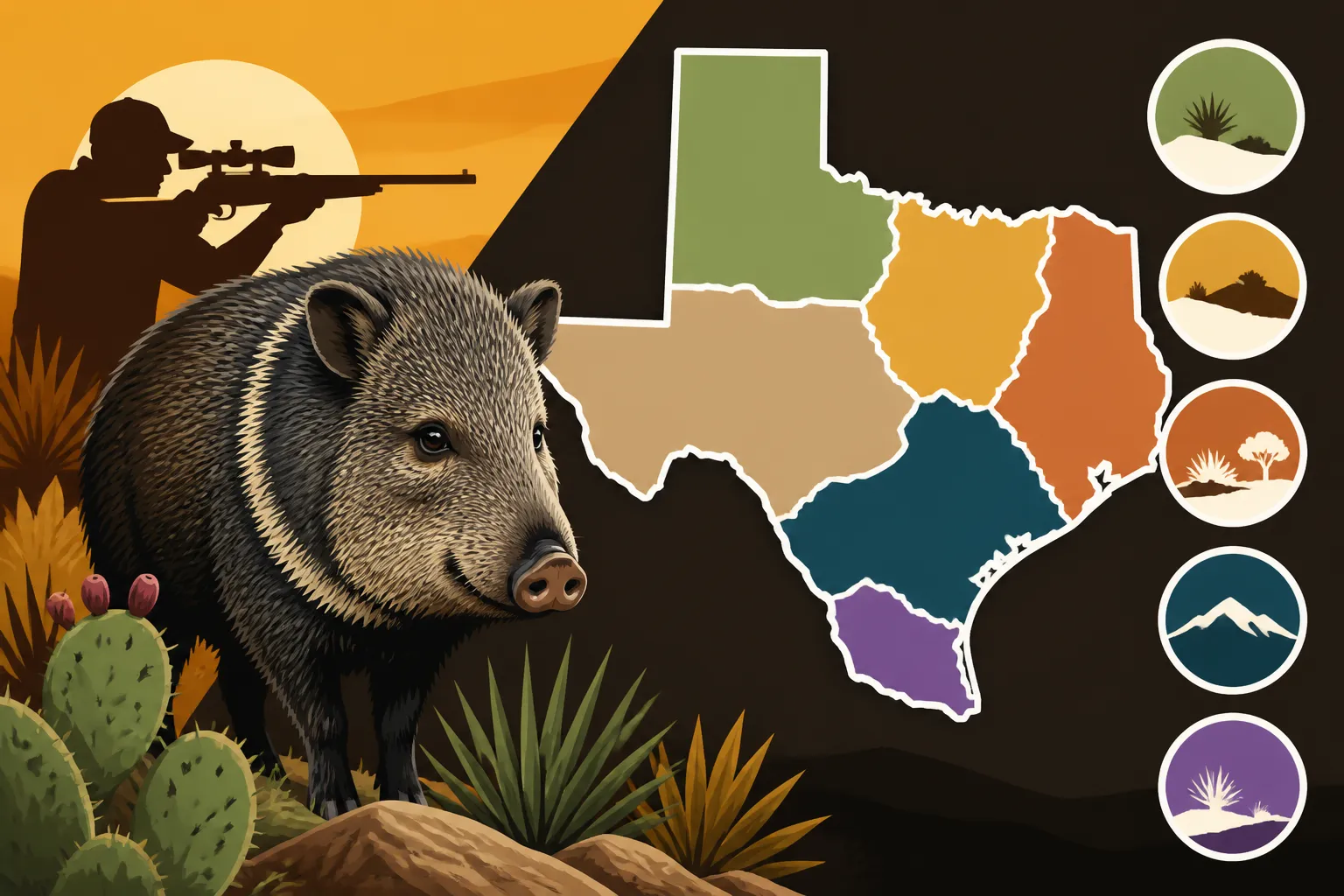
Unlike some game animals that have a statewide season, javelinas have specific seasons that vary by geographical zone. This is crucial for hunters to understand, as hunting out of season can lead to severe penalties. The good news is that for most hunters looking to pursue javelinas, you'll generally find yourself in either the South Texas or Trans-Pecos regions, where the populations are most robust. The season structure reflects the historical distribution and management needs of these unique animals.
The Texas Parks and Wildlife Department (TPWD) divides the state into different zones for javelina, primarily reflecting where huntable populations exist. There's also an archery-only season that precedes the general open season in some areas, offering a unique challenge for bowhunters. It's always a good idea to consult the most current Texas Outdoor Annual, available online or at license retailers, to confirm the exact dates for the upcoming year, as minor changes can occur.
South Texas Javelina Season
The vast and brushy expanse of South Texas is arguably the prime destination for javelina hunting. This region offers an ideal blend of dense cover, various cacti, and a relatively mild climate that these animals thrive in. The season here is typically quite generous, allowing for ample opportunity to pursue them. The South Texas season generally runs from September 1 to August 31 in counties without a general open season. However, for those counties with a general open season, the javelina season usually aligns with the general open season for deer, running from the first Saturday in November through the last Sunday in February.
It's absolutely essential to verify the specific regulations for the county you plan to hunt in. Some counties might have slightly different start and end dates or even different bag limits. For example, some years, counties like Dimmit, La Salle, and Webb, known for their abundant wildlife, might have slightly adjusted dates. The bag limit in most South Texas counties with an open season is usually two javelinas per license year. Remember, an archery-only season often precedes the general season, running from the first Saturday in October for a few weeks before the general firearms season opens. This gives bowhunters a fantastic chance to get into the field early, perhaps even during the early stages of the Texas Rut: When Do Bucks Rut by Region?.
Trans-Pecos and Panhandle Javelina Season
Moving west, the rugged and scenic Trans-Pecos region, with its mountains and desert landscapes, also hosts a healthy javelina population. This area offers a completely different hunting experience compared to the dense brush of South Texas. The javelina season in the Trans-Pecos region typically runs from September 1 through August 31, with a bag limit of two javelinas per license year. This extended season is largely due to the vast public lands available and the different ecological pressures compared to the more populated South Texas.
Counties such as Brewster, Jeff Davis, Presidio, Pecos, and Terrell are commonly associated with Trans-Pecos javelina hunting. While the Panhandle is primarily known for its mule deer and pronghorn, some southern Panhandle counties that blend into the Rolling Plains might occasionally have javelina populations and open seasons, but these are less common and usually covered under the general "other counties" category, often aligning with a late fall to early spring period. Always double-check the specific county you're targeting. The longer season in the Trans-Pecos offers a great opportunity for hunters who want to explore different parts of Texas and experience a more challenging, often spot-and-stalk style of hunting in open, rugged terrain.
Archery-Only and Special Seasons
Texas also offers an archery-only season for javelinas, which typically starts earlier than the general firearms season. For most counties with an open season, the archery-only dates usually mirror the statewide archery season for deer, which begins on the first Saturday in October and runs for about a month. This dedicated period provides an excellent chance for bowhunters to hone their skills and chase javelinas with a stick and string before the rifle hunters take to the field. Many seasoned hunters enjoy the added challenge and intimacy of bowhunting, finding it to be a truly rewarding experience.
Beyond the standard seasons, it’s worth noting that some counties in East Central Texas might have very short, specific seasons for javelinas, often much more restrictive due to lower populations or unique management goals. These are typically listed as "other counties" in the Outdoor Annual. It's crucial to remember that hunting javelinas over bait is generally permitted in Texas, much like hunting white-tailed deer over feeders, but always verify county-specific rules, especially if you plan to implement tactics similar to those discussed in our Hunting Over Feeders & Corn in Texas (Legal Guide).
Summary of Texas Javelina Seasons (General Guidance – Always Confirm Current Outdoor Annual)
| Region | General Open Season (Firearms) | Archery-Only Season | Bag Limit (Per License Year) | Common Counties | Notes |
|---|---|---|---|---|---|
| South Texas | First Sat in Nov – Last Sun in Feb | First Sat in Oct – First Fri in Nov | 2 | Dimmit, La Salle, Webb, Maverick, Frio, Zavala | Counties with a general open season. Verify specific county dates. |
| Trans-Pecos | Sep 1 – Aug 31 | (No dedicated archery-only dates) | 2 | Brewster, Jeff Davis, Presidio, Pecos, Terrell | Extended season reflects vast public lands. |
| Other Counties | Varies (often Sep 1 – Aug 31 or specific limited dates) | Varies | 2 | Scattered counties outside main ranges; verify. | Check individual county listings carefully. |
This table provides general information. Always consult the current Texas Parks and Wildlife Department Outdoor Annual for precise and up-to-date regulations.
General Regulations and Licensing Requirements
Now that we've covered the zonal seasons, let's talk about the universal rules that apply when you're out there chasing javelinas. As mentioned, javelinas are game animals, and this means you need to follow all standard hunting protocols, which are different from how you might approach feral hog hunting. Disregarding these foundational rules can lead to fines, confiscation of game, and even loss of hunting privileges.
Every hunter in Texas, unless specifically exempt, needs a valid Texas hunting license. For residents, this often means a Super Combo License, which covers most resident hunting and fishing needs. Non-residents will need a non-resident general hunting license. In addition to the base license, you'll need the proper endorsements for certain species, but for javelinas, the general hunting license typically suffices. Always ensure your license is current and easily accessible while in the field. To learn more about obtaining your license, you can refer to our guide on Texas Hunting License: Cost, Types & How to Buy (2026).
Required Licenses and Permits
For most resident hunters, the Super Combo License is the go-to option. This comprehensive package includes your hunting license, fishing license, and various endorsements like the Archery Endorsement (if you plan to bowhunt javelinas) and the Upland Game Bird Endorsement. If you prefer to buy individual licenses, you'll need a "Resident Hunting License" which covers most legal game. Non-residents will need the "Non-Resident General Hunting" license. Youth hunters (under 17) have specific license requirements, usually a "Youth Hunting License," which is often very affordable or even free for certain age groups, allowing them to participate in mentored hunts.
Remember that any time you're hunting on public land, such as a Wildlife Management Area (WMA) or through the Annual Public Hunting (APH) Permit program, you'll also need the APH permit. Many of the Trans-Pecos opportunities, for instance, are on public lands managed by TPWD. Always check the specific WMA regulations, as they can have unique rules, drawn hunts, or restricted entry periods.
Bag Limits and Tagging
The statewide bag limit for javelinas is generally two animals per license year. This means that regardless of how many different zones or properties you hunt, you can only harvest two javelinas within the September 1 to August 31 license year. This is a conservative limit designed to maintain healthy javelina populations, which can be sensitive to overharvesting in certain areas. Unlike deer, where specific tags are punched per animal, javelinas are usually recorded on your hunting license's harvest log.
Once you harvest a javelina, you must immediately complete the harvest log on the back of your hunting license. This typically involves recording the date, county, and species. While javelinas don't require physical tags like deer or turkey, accurate harvest reporting is essential for wildlife management. It helps TPWD biologists monitor populations and make informed decisions about future seasons and bag limits. It’s important to understand the details of Texas Hunting Tags & Harvest Reporting (My Texas Hunt Harvest) for all species.
Legal Hunting Methods and Restrictions
Javelina can be hunted using most legal hunting methods. This includes centerfire rifles, shotguns with slugs or buckshot, muzzleloaders, archery equipment, and even handguns. The key is to ensure your chosen method is legal for the specific county and property you are hunting on. For instance, in some urban areas or small properties, discharge of firearms might be restricted. If you're using a shotgun, make sure you're using appropriate loads; birdshot won't be effective on a javelina.
Hunting at night for javelinas with artificial lights is generally illegal for game animals, unlike feral hogs. The exception would be if you have a special permit or are participating in a TPWD-sanctioned depredation hunt (which is rare for javelinas). However, the use of a spotlight from a public road is illegal for any animal. Electronic calls are permissible for javelinas, and many hunters find them effective. Also, hunting from a vehicle is almost universally prohibited, except for hunters with disabilities who have the proper permit. These rules are in place to promote fair chase and ensure ethical hunting practices, much like the regulations covered in Texas White-Tailed Deer Hunting Regulations 2026.
Hunting Tactics for Javelina: Finding These Elusive Critters
Javelinas are not always the easiest animals to hunt. They're often elusive, can be skittish, and blend surprisingly well into their environment. However, with the right approach and a good understanding of their behavior, you can significantly increase your chances of success. It's not just about knowing when to hunt, but how and where.
The best time to hunt javelinas is often during the cooler parts of the day – early morning and late afternoon. They tend to bed down in dense cover during the midday heat, especially in South Texas. Look for areas with a good mix of thick brush, prickly pear cactus, and access to water. Tracks, scat, and fresh rubs on cacti (they love to rub their scent glands on them) are all tell-tale signs of recent javelina activity.
Scouting and Locating Javelina Herds
Effective scouting is paramount. Before you even set foot with your rifle or bow, spend time glassing likely habitats from a distance. Use good binoculars or a spotting scope to scan brush lines, dry creek beds, and openings within dense thickets. Javelinas are often found around their food sources, particularly prickly pear cactus patches, which provide both sustenance and moisture. In the Trans-Pecos, glassing large canyons and hillsides can be very productive. They often travel in herds, so if you spot one, there are likely more nearby.
Another excellent scouting tool, though less common for javelinas than deer or hogs, can be trail cameras. While not typically used to pattern javelinas over long periods, a cellular trail camera can confirm their presence and movement patterns in a specific area, especially near water sources or feeder locations. You might find a camera helpful in areas where you suspect activity but can't be present consistently. For those considering this, guides like Best Cellular Trail Cameras for Texas (2027) can offer valuable insights.
Stalking and Calling Strategies
Once you've located a herd or signs of recent activity, a careful stalk is often the most effective method. Javelinas have decent eyesight and an excellent sense of smell. Always approach into the wind to minimize the chance of them catching your scent. Their hearing is also quite good, so move slowly and deliberately, paying attention to your footing. Utilize the dense brush and terrain features to break up your silhouette.
Calling can be very effective for javelinas, particularly distress calls (like a fawn distress or an injured rabbit call). When a herd hears these sounds, they often come to investigate, sometimes quite aggressively, making them curious enough to step out into the open. Some hunters also use javelina "barks" or "grunts" to get a reaction, but distress calls are generally more reliable. If you call them in, be prepared for a quick shot, as they don't always hang around for long. This method shares similarities with Predator Calling for Coyotes in Texas, where the animal's natural curiosity and territorial instincts are leveraged.
Shot Placement and Ethical Harvest
Javelinas are tough animals for their size, and proper shot placement is crucial for a quick, ethical harvest. The most effective shot is typically a broadside shot to the vitals (heart/lungs), just behind the front shoulder. A head shot can also be effective but is a smaller target and carries a higher risk of wounding the animal. Always aim for the kill zone, not just "meat," and make sure you have a clear, unobstructed shot.
After the shot, give the animal some time, especially if it didn't drop immediately. They can run a short distance even with a lethal hit. Follow up slowly and carefully, looking for blood trails or disturbed vegetation. Because they often travel in herds, a shot animal might rejoin its group, making tracking a bit more challenging. Once recovered, remember to complete your harvest log immediately. For processing, much like deer, getting the animal cooled down quickly is important, especially in the warm Texas climate. You can find useful information on How to Cool a Deer Fast in Texas Heat, which applies to javelinas as well.
Common Misconceptions and Legalities
The world of Texas hunting regulations can be a bit of a labyrinth, and javelinas are often at the heart of many misunderstandings. Clarifying these legal nuances is just as important as knowing the season dates themselves. Many of the issues stem from their resemblance to feral hogs, leading hunters to apply hog hunting rules to javelinas, which is a big mistake.
One of the biggest misconceptions is that javelinas are non-game animals, like feral hogs, and can be hunted year-round without a license or bag limit. This is absolutely false. Javelinas are explicitly listed as game animals by the TPWD. This means all the rules we've discussed – licenses, seasons, bag limits, and legal methods – apply rigorously. Ignoring this distinction can lead to serious legal consequences, including substantial fines and suspension of hunting privileges.
Javelina vs. Feral Hog: A Crucial Distinction
We've touched on this already, but it bears repeating: javelinas are not feral hogs. They belong to a separate biological family. Feral hogs are an invasive species in Texas, causing immense ecological and agricultural damage, which is why the state encourages their removal without many restrictions. Javelinas, however, are a native species, an integral part of Texas's natural ecosystem, and are managed to ensure sustainable populations.
Visually, beyond the tail and overall body shape, javelinas also have a single, often sparse, coarse hair coat. Feral hogs typically have a more varied coat, sometimes with an undercoat, and can come in a much wider array of colors and patterns. Javelina tusks are short and straight, designed for cutting vegetation, while a hog's tusks are longer and curved, often used for rooting and defense. Never assume an animal is a feral hog unless you are 100% positive; otherwise, you risk illegally harvesting a javelina.
Public vs. Private Land Hunting Rules
The rules for hunting javelinas on public land are often more stringent than on private land. On private land, with landowner consent, you are generally free to hunt during the legal season using legal methods. However, public lands, such as Wildlife Management Areas (WMAs) or National Grasslands, often have specific permits, restricted access periods, or even drawn hunts for javelinas. Always check the individual WMA regulations before planning a public land hunt. The Annual Public Hunting Permit is usually required for general access to APH lands.
If you're hunting on private property, always ensure you have explicit permission from the landowner. Trespassing is a serious offense in Texas, and hunting without permission, even if you have a valid license, is illegal. Establishing clear communication and understanding the boundaries of the property are essential. Our resource on How to Get Permission to Hunt Private Land in Texas offers valuable advice in this regard, applicable to javelina hunting too.
What About Using Dogs?
Hunting javelinas with dogs is illegal in Texas. While some hunters use dogs for tracking wounded game (with specific rules and leashing requirements), the active pursuit and baying of javelinas with dogs is not a permitted method. This is another key difference from feral hog hunting, where using dogs is a common and legal practice. The law is clear on this: dogs may not be used to hunt game animals in Texas. Adhering to these specific regulations is vital for ethical and legal hunting.
Preparing for Your Javelina Hunt: Gear and Logistics
A successful javelina hunt isn't just about knowing the seasons and regulations; it's also about being adequately prepared. From the right gear to logistical considerations, a little planning goes a long way, especially when you're heading out into the often remote and rugged javelina country of Texas. Don't underestimate these small, tough animals or the environment they inhabit.
The type of gear you bring will largely depend on your chosen hunting method (rifle or bow), the specific terrain, and the time of year. However, some essentials are universal for any Texas hunt. Remember, javelina country can be harsh, so durability and functionality are key.
Essential Gear for Javelina Hunting
Your weapon of choice will dictate some of your gear. If you're using a rifle, a .223 Remington, .243 Winchester, or even a .30-30 Winchester are all excellent choices, offering enough power for an ethical kill without excessive recoil. For bowhunters, a compound or recurve bow with appropriate hunting arrows and broadheads will work well. Don't forget your optics! A good pair of binoculars is invaluable for spotting javelina herds in the brush or across open plains. Many hunters find 8x or 10x binoculars to be ideal for this kind of hunting. A rangefinder is also extremely useful, especially in variable terrain, to confirm your shot distances.
Beyond your weapon and optics, consider robust snake boots, especially if you're in South Texas or the Trans-Pecos where rattlesnakes are prevalent. The dense brush is often their home too. Comfortable, durable hunting clothes in appropriate camouflage, suitable for the prevailing temperatures, are also crucial. Hydration is non-negotiable; carry plenty of water, as javelina habitats are often arid. A reliable backpack for carrying your essentials, and a sharp knife for field dressing, complete the basic setup. Our guide on Best Hunting Gear for Beginners in Texas (By Budget) offers a great starting point for outfitting yourself.
Dressing and Processing Your Harvest
Once you've successfully harvested a javelina, the work isn't over. Field dressing is an essential step, especially in the warmer Texas climate, to ensure the meat remains palatable. Javelinas, like all wild game, benefit from prompt cooling. Start by gutting the animal as soon as possible to allow the body heat to escape. If you're in a remote area, having a game bag can protect the carcass from flies and dirt while you transport it.
Many hunters process javelina meat into sausage or stew meat, as they can have a stronger, more gamey flavor than deer, particularly if the boar is mature. The meat is lean and can be delicious when properly prepared. Some people claim the meat tastes like pork, while others find it distinctive. The key is to cool it quickly and process it carefully. If you're not planning to process it yourself, locate a local game processor in advance. For more detailed instructions, consider reviewing Field Dressing & Processing Game in Texas Heat.
Planning Your Trip and Staying Safe
Javelina hunting can take you to some remote parts of Texas. Always let someone know your hunting plans, including your location and expected return time. Carry a fully charged cell phone, but don't rely solely on it, as service can be spotty in many javelina habitats. A GPS device or a mapping app like onX Hunt can be incredibly useful for navigation, especially for understanding property lines and finding your way back to camp.
Be mindful of the weather. Texas can experience extreme temperature swings, even in the fall and winter. Dress in layers, and be prepared for both heat and cold. Critters like rattlesnakes, scorpions, and various thorny plants are common, so be aware of your surroundings. Having a basic first-aid kit is always a smart idea. Respect the land, other hunters, and the wildlife, and you're set for a memorable javelina hunting experience in the Lone Star State.
Disclaimer
Please note that hunting regulations, seasons, and licensing requirements can change. While this guide provides comprehensive and accurate information based on typical Texas Parks and Wildlife Department (TPWD) regulations, it is your responsibility to always consult the most current official TPWD Outdoor Annual or website before engaging in any hunting activities. This content is for informational purposes only and should not be considered legal advice.