Texas Pronghorn Season & Permits
Hunting pronghorn in Texas isn't like heading out for deer season. For many hunters, the frustration isn't about finding the animal itself, but navigating the highly specific and often limited permit system that governs these incredible speedsters of the prairie. This guide will walk you through everything you need to know about the Texas pronghorn season and how to secure one of those coveted permits.
Understanding Texas Pronghorn Hunting
Texas is a land of diverse landscapes, but when it comes to pronghorn, we're talking about a very specific habitat and a hunting experience that stands apart from the typical whitetail pursuits. The sheer speed and wary nature of pronghorn make them a true challenge, but it's the management of their population that really sets their hunting season apart.
The Unique Challenge of Hunting Pronghorn in Texas
Unlike the abundant white-tailed deer found across most of the state, or even the growing numbers of axis deer, pronghorn populations are much more localized and require careful management. You won't find pronghorn in the Pineywoods or the Hill Country; they are creatures of the open plains, primarily found in the Trans-Pecos region and the Panhandle. This geographical limitation, combined with their sharp eyesight and incredible ability to cover ground, means that hunting them isn't just about showing up with a rifle. It's about precision, patience, and understanding their unique behaviors in a vast, arid environment. The vast, open country they inhabit means a long-range shot is often necessary, adding another layer of challenge for hunters accustomed to brush country engagements.
The sparse distribution and specific habitat needs mean that Texas Parks and Wildlife Department (TPWD) keeps a very close eye on pronghorn numbers. This oversight is crucial for ensuring healthy populations for future generations, but it also means that hunting opportunities are deliberately restricted. You can't just buy an over-the-counter tag and head out; there's a lottery system involved for public land and strict permit allocation for private landowners. This scarcity is what makes a Texas pronghorn hunt such a prized experience, elevating it beyond a simple hunting trip to a dedicated pursuit requiring significant planning.
Why Pronghorn Season is So Different
The reason pronghorn season operates under such a different set of rules compared to other game animals stems directly from their conservation status and distribution. For many years, pronghorn populations faced significant declines due to habitat loss, fencing, and other factors. Texas has implemented a very successful recovery program, and the permit system is a direct result of those efforts. Rather than a statewide or regional general season, pronghorn hunting is managed through a permit-only system, where a limited number of permits are issued annually based on population surveys and management goals in specific areas.
This approach ensures that hunting pressure remains sustainable, allowing the populations to continue to thrive. It also means that even if you have access to private land where pronghorn roam, the landowner still needs to apply for and receive permits from TPWD for their property. For public land hunters, the system relies on the highly competitive Texas Drawn Hunts program. This method guarantees that every pronghorn harvested contributes to a well-researched management plan, making each hunt not just a personal achievement but also a part of a larger conservation success story. It's a testament to how dedicated management can bring a species back, and why we, as hunters, play such a vital role in that process.
Texas Pronghorn Season Dates and Zones
Alright, let's get down to the brass tacks: when and where can you actually hunt these prairie rockets in Texas? Unlike deer, which have clearly defined zones and dates that often stretch for months, the pronghorn season is a much tighter window, primarily focused on the species' specific habitats.
When the Season Typically Runs
The pronghorn hunting season in Texas is generally very short, often lasting only about nine days, typically occurring in late September or early October. This brief window is strategically chosen to align with post-rut recovery and before the full onset of colder weather, ensuring the animals are in good condition and breeding has concluded. The exact dates can shift slightly year to year based on TPWD biological data and management considerations, so it's absolutely crucial to consult the official Texas Outdoor Annual each year. You won't find a long, drawn-out season like you do for white-tailed deer; this is a focused, almost surgical approach to hunting.
Imagine spending months planning, scouting, and applying, only to have a little over a week to execute your hunt. That's the reality of pronghorn season. It emphasizes efficient scouting, quick decision-making, and often requires taking time off work specifically for this short period. The limited timeframe also means that if you're lucky enough to draw a permit or secure a landowner tag, you need to be prepared to make the most of every single day you have in the field, as there aren't any "next weekends" for pronghorn hunting.
Designated Pronghorn Hunting Zones
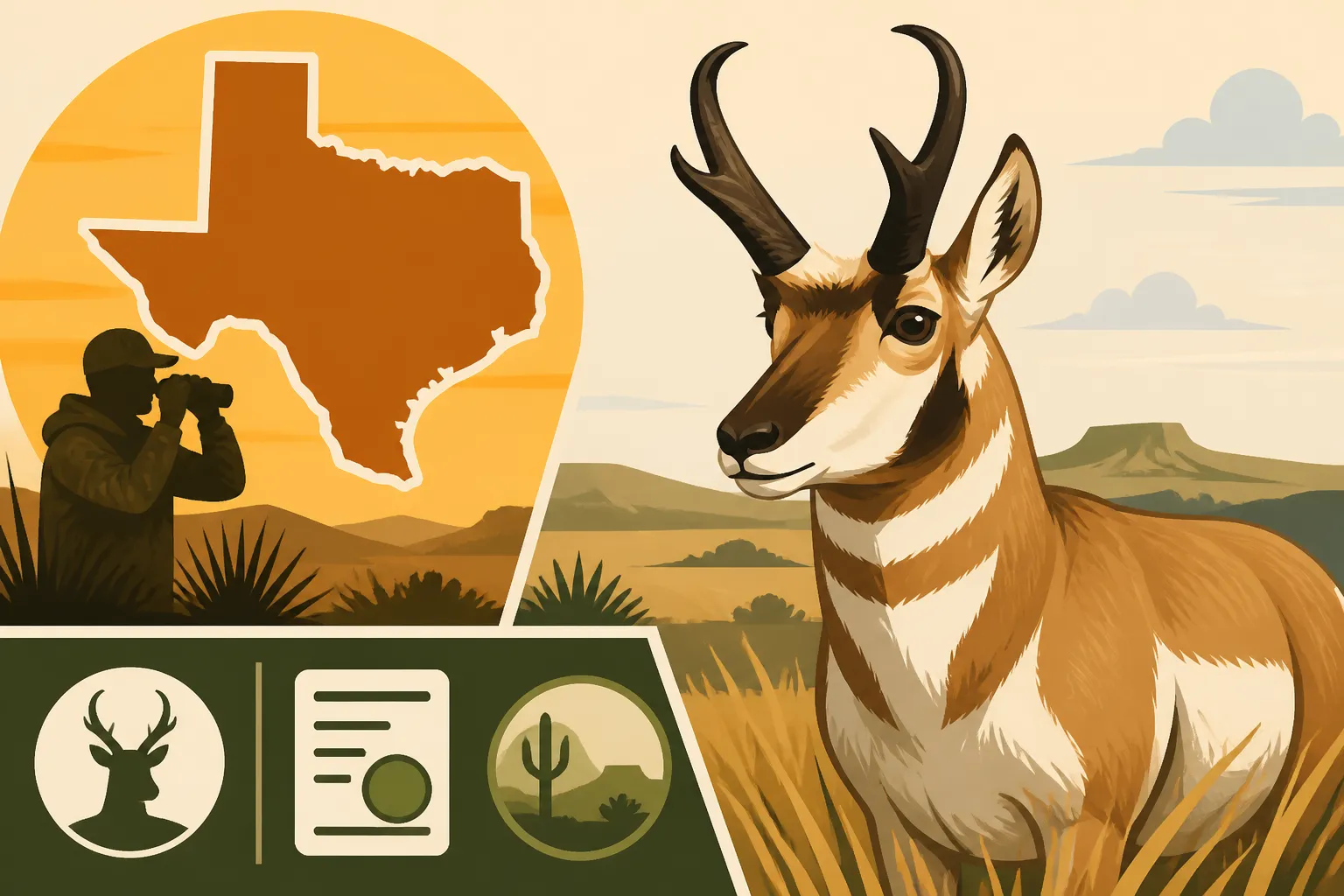
Pronghorn in Texas are not widespread; their populations are concentrated almost exclusively in the vast, open country of the Trans-Pecos and Panhandle regions. These areas provide the expansive grasslands and desert scrub that pronghorn prefer, allowing them to utilize their incredible speed as their primary defense. Because of this, hunting opportunities are limited to specific counties within these larger regions.
The Trans-Pecos region includes counties like Presidio, Jeff Davis, Brewster, and Culberson, known for their rugged mountains and wide-open desert flats. In the Panhandle, counties such as Oldham, Hartley, Potter, and Moore offer a more classic prairie landscape. TPWD divides these areas into specific management units, and permits are allocated based on survey data from these individual units. So, when you're looking at applying for a drawn hunt or securing a landowner permit, you'll often be looking at opportunities tied directly to these distinct geographical zones. Understanding these zones is critical because a permit for the Trans-Pecos won't do you any good if you're hoping to hunt in the Panhandle, and vice-versa. You really need to hone in on where you want to hunt and ensure your permit matches that location.
Special Considerations for Public Land Hunts
For those without access to private land, public hunting opportunities for pronghorn exist primarily through the Texas Drawn Hunts & Public Hunt Draw 2026. These hunts are incredibly competitive due to the limited number of permits available and the high demand. Applications typically open in mid-summer, with drawings held later in the year, well in advance of the fall season. If you're hoping to experience public land pronghorn hunting, applying through this system is your only viable option.
These drawn hunts often take place on Wildlife Management Areas (WMAs) or other public lands managed by TPWD. The specific units available, and the number of permits, will vary each year. Winning a public hunt drawing means you'll be assigned to a specific tract of land for a set period, and often, there are additional rules and regulations unique to that WMA, such as specific check-in/check-out procedures or weapon restrictions. It's not just about getting the permit; it's about adhering to the very detailed guidelines that come with it. You can find more information about the application process and How to Apply for Texas Drawn Hunts Online on the TPWD website, but be prepared for some stiff competition, as the Texas Drawn Hunt Odds: What Are Your Chances? are usually quite low for highly sought-after species like pronghorn.
The Pronghorn Permit System
This is where Texas pronghorn hunting truly distinguishes itself from most other big game pursuits. Forget over-the-counter tags; getting a pronghorn in your sights means navigating a carefully controlled permit system designed for conservation.
How Pronghorn Permits Work Draw vs Landowner
In Texas, there are essentially two main avenues for obtaining a pronghorn permit: through the public hunt draw system or via a landowner permit. The public hunt draw, as we touched on, is for specific public lands and is a lottery-based system. You apply, cross your fingers, and hope your name is selected from thousands of other hopeful hunters. This system democratizes access but also means the odds are long.
The other, and arguably more common, method involves landowner permits. For hunting pronghorn on private land, the landowner themselves must apply to TPWD for permits. Biologists conduct surveys on the property to assess the pronghorn population, and based on these surveys, a specific number of buck and/or doe permits are allocated to that landowner. This ensures that hunting pressure on private land is also carefully managed and sustainable. As a hunter, this means if you're not going the public draw route, you'll need to either own land with pronghorn permits, know a landowner who has them and is willing to let you hunt, or book a hunt with an outfitter who operates on properties with valid permits. It's a system built on robust biological data rather than a free-for-all approach, and it’s why Texas has been so successful in managing its pronghorn populations.
Applying for the Public Hunt Draw for Pronghorn
If you're aiming for a public land pronghorn hunt, the public hunt draw is your golden ticket. The application period typically opens around mid-July and runs through early to mid-August, though exact dates can vary annually. You'll need to visit the TPWD Drawn Hunts webpage, select the pronghorn category, and choose which specific hunt areas you'd like to apply for. There's usually a non-refundable application fee for each category you enter.
When applying, you can often apply as an individual or as a group. If applying as a group, everyone in the group must meet the eligibility requirements, and if your group is drawn, everyone in the group receives a permit. This can be a great way to experience a hunt with friends or family. However, it's a numbers game. You're competing with a vast pool of eager hunters for a very limited number of spots. Many experienced hunters apply year after year for decades before finally drawing a coveted pronghorn tag. It’s a true test of patience and persistence, but the reward of a public land pronghorn hunt in the Texas Panhandle or Trans-Pecos is often considered well worth the wait. Make sure you have your Texas Hunting License: Cost, Types & How to Buy (2026) squared away before you even think about applying for a drawn hunt.
Landowner Permits and Their Role
For many, hunting pronghorn in Texas will be through a landowner permit. These permits are fundamental to the conservation and management of private land pronghorn populations. A landowner, or their designated agent, submits an application to TPWD, providing details about their property and the pronghorn observed. TPWD biologists then conduct aerial or ground surveys, often in late spring or early summer, to estimate the population size, buck-to-doe ratios, and fawn production on that specific property.
Based on this biological data, TPWD determines the appropriate number of buck and/or doe permits that can be issued for that property for the upcoming season. These permits are specifically tied to that land and are not transferable to other properties. This localized management ensures that hunting pressure aligns directly with the carrying capacity and health of the pronghorn herd on individual ranches. If you book a guided pronghorn hunt with an outfitter in, say, the Trans-Pecos, they will be operating on land where the landowner has successfully secured these permits. This system is crucial because the vast majority of pronghorn habitat in Texas is on private land, making landowner participation vital for effective statewide management. It's a win-win, as landowners are incentivized to manage their land for healthy pronghorn populations, contributing to the overall health of the species in Texas.
Eligibility, Licenses, and Requirements
Before you even dream of spotting a pronghorn across the wide-open plains, you need to ensure all your legal ducks are in a row. Texas hunting regulations can be detailed, and pronghorn hunting, with its permit system, adds a few more layers.
What Licenses You Need Beyond the Permit
First and foremost, to hunt any legal game animal in Texas, you absolutely need a valid Texas hunting license. The general hunting license (Type 101) is the base requirement for residents. Non-residents will need a non-resident general hunting license. Keep in mind that your drawn hunt permit or landowner permit for pronghorn is in addition to your base hunting license, not a replacement for it.
Beyond the general hunting license, there aren't typically any specific endorsements required for pronghorn like there are for migratory birds (e.g., the Migratory Game Bird Endorsement). However, it's always wise to double-check the current year's Outdoor Annual for any updates. If you're a youth hunter (under 17), you'll also need a youth hunting license, but you'll still need to follow the permit rules. The cost of these licenses can vary depending on your residency and age, but they are a fundamental prerequisite for any hunting activity in the Lone Star State. Without that valid general hunting license in your pocket, even if you have a coveted pronghorn permit, you're not legally able to hunt.
Hunter Education and Other Essentials
Texas law mandates hunter education for most hunters. If you were born on or after September 2, 1971, you must successfully complete a hunter education course or be accompanied by a person who is at least 17 years old, is licensed to hunt in Texas, and has successfully completed a hunter education course or is exempt from the course. This applies to pronghorn hunting just as it does to deer, turkey, or any other game. This course covers vital topics like firearm safety, ethical hunting practices, wildlife conservation, and game laws, all of which are critical for a responsible hunt. You can find more information about the requirements and options for completing this course in our guide, Do You Need Hunter Education in Texas?
Beyond hunter education, other essentials include having proper identification, especially if you're applying for or redeeming a drawn hunt permit. When you're out in the field, it's also crucial to have your physical license and permit on you. While technology has advanced, a physical copy is still often preferred and universally accepted. Additionally, familiarity with the specific rules of the land you'll be hunting, especially if it's a WMA, is paramount. This might include rules on vehicle use, camping, or specific entry/exit points. Being prepared with all your documentation and understanding the rules ensures a smooth and legal hunt, allowing you to focus on the thrill of the chase.
Understanding Bag Limits and Regulations
The bag limit for pronghorn in Texas is exceptionally strict, reflecting their protected status and careful management. Typically, the bag limit is one pronghorn buck per permit. This means if you're drawn for a buck permit or secure one through a landowner, you are allowed to harvest one buck. Doe permits are sometimes issued to landowners for herd management purposes, but these are less common for public drawn hunts.
It's absolutely critical to understand that these limits are firm and are monitored closely. Violating bag limits or hunting outside of your designated season or area can lead to severe penalties, including hefty fines, loss of hunting privileges, and even jail time. The antler restrictions that apply to white-tailed deer, such as the 13-inch rule, do not apply to pronghorn. Instead, the focus is on the permit itself – if you have a permit for a buck, you hunt a buck. Period. Always consult the most current Texas Outdoor Annual for the definitive rules for the specific season you are hunting. This document is your bible for all Texas hunting regulations and should be reviewed thoroughly before you head afield.
Key Tactics for a Successful Pronghorn Hunt
Hunting pronghorn is an experience unlike any other in Texas. These animals are often called the "ghosts of the plains" for a reason – their incredible eyesight, speed, and open-country habitat demand a completely different approach than stalking whitetail in dense brush.
Spot-and-Stalk Strategies on the Plains
When you're out hunting pronghorn, be prepared for some serious glassing and walking. The vast, open landscapes of the Trans-Pecos and Panhandle mean you'll often be spotting animals from a great distance. High-quality optics are not just recommended, they're absolutely essential. Think 10x or 12x binoculars for long-range scanning, and a powerful spotting scope mounted on a tripod for evaluating animals and making the decision to commit to a stalk. We've got a fantastic guide on Best Hunting Optics for Texas: Scopes, Binos & Rangefinders that can help you choose the right gear.
Once you spot a buck you want to pursue, the true challenge of the Spot-and-Stalk Hunting in Texas (Exotics & Mule Deer) begins. Pronghorn have incredible vision, often equated to an 8x binocular, and they can spot movement from miles away. You'll need to use every piece of natural terrain—small folds in the land, dry creek beds, sparse bushes—to stay out of sight. The stalk can take hours, involve crawling on your hands and knees for hundreds of yards, and often ends in frustration as the pronghorn simply moves away or spots you. Patience and calculated movements are key. Many hunters choose a good bipod or shooting sticks to ensure a stable shot once they finally get within range, as shots can still be long even after a successful stalk.
Essential Gear for Pronghorn Hunting
Beyond your rifle and ammunition, and those crucial high-quality optics, several other pieces of gear can make or break a pronghorn hunt. Good sturdy boots are a must for covering miles over rough, often rocky, or thorny terrain. Lightweight, breathable clothing in natural, earthy tones or camouflage is also important, as September and October days in West Texas and the Panhandle can still be quite warm. Given the open nature of the terrain, a comfortable daypack is essential to carry water, snacks, extra layers, a rangefinder, and any other necessities for a long day afield.
A reliable rangefinder is non-negotiable. Judging distance in wide-open country with no familiar landmarks is incredibly difficult, and misjudging by even 50 yards can mean a missed shot on a small-bodied animal like a pronghorn. Don't forget sun protection – a wide-brimmed hat, sunglasses, and sunscreen are your friends out there. Lastly, always carry enough water. The arid conditions and physical exertion of stalking can quickly lead to dehydration, so plan on carrying more than you think you'll need.
Field Dressing and Care in Arid Conditions
Successfully harvesting a pronghorn is a fantastic accomplishment, but the work isn't over. Proper field dressing and meat care are paramount, especially in the often-hot, dry conditions of the Trans-Pecos and Panhandle during pronghorn season. The goal is to cool the animal down as quickly as possible to preserve the meat quality.
As soon as your pronghorn is down, get to it immediately. Field dress the animal thoroughly, removing all internal organs. This allows the carcass to begin cooling from the inside out. If possible, elevate the carcass to allow for air circulation. In our guide, Field Dressing & Processing Game in Texas Heat, we go into detail about methods for rapid cooling. If you're far from your vehicle, consider having a game cart to help you transport the animal without dragging it across abrasive terrain. Once back at camp or your vehicle, get the animal into a cooler with plenty of ice, or to a processor as soon as humanly possible. Pronghorn meat is lean and delicious, but it can spoil quickly if not handled properly in the warm Texas climate. Taking these steps seriously ensures that your hard-earned trophy provides excellent table fare.
Pronghorn Hunting Considerations and Tips
Hunting pronghorn in Texas is a fantastic challenge, blending elements of precision shooting, meticulous stalking, and deep understanding of the animal's behavior and environment. It's a truly unique experience that offers a glimpse into the wild heart of the Texas plains.
Best Time of Day to Hunt Pronghorn
Like many animals, pronghorn are often most active during the cooler parts of the day – early morning and late evening. As the sun rises and temperatures climb, they tend to bed down, often in an open area where they can still scan for threats. This doesn't mean they're impossible to find mid-day, but they might be less active, making them harder to spot moving, and a bedded pronghorn in a vast landscape can be surprisingly difficult to pick out.
For this reason, plan your hunting days around first light and last light. Be in your glassing position well before sunrise, ready to scan the horizon as the light improves. Likewise, stay out until the very last legal shooting light, as pronghorn will often become more active again as temperatures drop. Mid-day can be a good time for long, slow stalks on animals you've spotted bedding, but it requires extreme patience and careful planning to stay concealed as the sun beats down.
Scouting for Pronghorn Success
Scouting for pronghorn is less about finding rubs or scrapes and more about understanding movement patterns and glassing vast expanses. Before the season, if possible, spend time driving the perimeter roads of the hunting area, using your binoculars and spotting scope to locate herds and observe their typical routines. Where do they feed? Where do they water? What are their preferred bedding areas? These are the questions you're trying to answer.
Utilizing mapping apps like onX Hunt or HuntStand can be incredibly useful for marking locations where you see pronghorn, noting potential stalking routes, and understanding terrain features. Look for high points that offer expansive views for glassing. Also, pay attention to fences and natural barriers, as these can sometimes dictate how pronghorn move through the landscape. While they are incredibly agile, major fences can funnel them into predictable areas, which can be an advantage for hunters. Good scouting often involves more time behind the glass than behind the trigger, especially for pronghorn. You can learn more in our detailed article, How to Scout for Deer Before Season in Texas, and apply some of those principles to pronghorn.
Respecting the Animal and the Land
Just like with any hunting pursuit, respect for the animal and the land is paramount when hunting pronghorn. These magnificent creatures are a symbol of the American West, and their continued presence in Texas is a testament to dedicated conservation efforts. Hunting them ethically means understanding their habits, making clean shots, and ensuring proper meat care.
Furthermore, if you're hunting on private land, respecting the landowner's property and rules is non-negotiable. This includes driving only on designated roads, closing gates, packing out all your trash, and treating their land as if it were your own. For public lands, adherence to all WMA-specific rules and leaving no trace are essential. Hunting pronghorn is a privilege, not a right, and upholding the highest standards of sportsmanship and ethics ensures that future generations can also experience the thrill of chasing these incredible animals across the Texas plains. For a broader overview of hunting seasons, check out our guide, Texas Hunting Seasons: Complete Calendar by Species.
Texas Pronghorn Permit System Comparison
To help visualize the two primary avenues for pronghorn hunting in Texas, here's a quick comparison of the permit systems:
| Feature | Public Hunt Drawn Permit | Landowner Permit |
|---|---|---|
| Availability | Very limited, highly competitive. | Limited, based on landowner application & TPWD surveys. |
| Application Process | Online application through TPWD Drawn Hunts website. | Landowner applies to TPWD; biologists conduct surveys. |
| Cost | Application fee (non-refundable) + base license cost. | Varies (often included in hunt package or private arrangement). |
| Location | Specific WMAs or public hunt lands. | Designated private property with approved permits. |
| Odds of Drawing | Low, requires persistence over years. | Direct arrangement with landowner or outfitter. |
| Season Dates | Fixed dates, typically 9 days in late Sept/early Oct. | Fixed dates, typically 9 days in late Sept/early Oct. |
| Primary Advantage | Access to public land, relatively low direct cost. | Direct access via private land, often guaranteed permit if booked. |
| Primary Challenge | Extremely low draw odds, no guarantee of a hunt. | Often involves higher financial cost through outfitters/leases. |
Remember, regardless of how you acquire your permit, the general Pronghorn Antelope Hunting in Texas regulations and seasons remain consistent across the state. Understanding both systems will help you plan your pursuit of one of Texas' most iconic prairie dwellers. If you're specifically targeting the Texas Panhandle, our guide on How to Hunt Pronghorn Antelope on the Texas Plains can offer even more tailored advice.
Disclaimer
Please note that hunting regulations, season dates, and permit requirements are subject to change by the Texas Parks and Wildlife Department. While every effort has been made to provide accurate and up-to-date information, it is the hunter's responsibility to verify all current rules and regulations by consulting the official Texas Outdoor Annual or the TPWD website before engaging in any hunting activities. This guide is for informational purposes only and should not be considered a substitute for official legal documents.