How to Hunt Rio Grande Turkey in Texas
The gobble of a Rio Grande turkey echoing through the Texas woods is a sound that sets many a hunter's heart thumping, yet actually getting one to commit can feel like trying to catch smoke. These wily birds present a unique challenge, often leaving even seasoned hunters scratching their heads. This comprehensive guide will walk you through everything you need to know to successfully hunt Rio Grande turkeys in Texas, from understanding their behavior to mastering the calls and tactics that bring them into range.
Understanding Rio Grande Turkeys in Texas
Hunting Rio Grande turkeys in Texas is a fantastic experience, but it’s crucial to first understand the birds themselves. They're not like the Easterns back east; their behaviors and habitats are distinct, shaped by the vast and diverse Texas landscape. Knowing what makes them tick is your first step towards filling a tag.
Identifying Key Characteristics and Habits
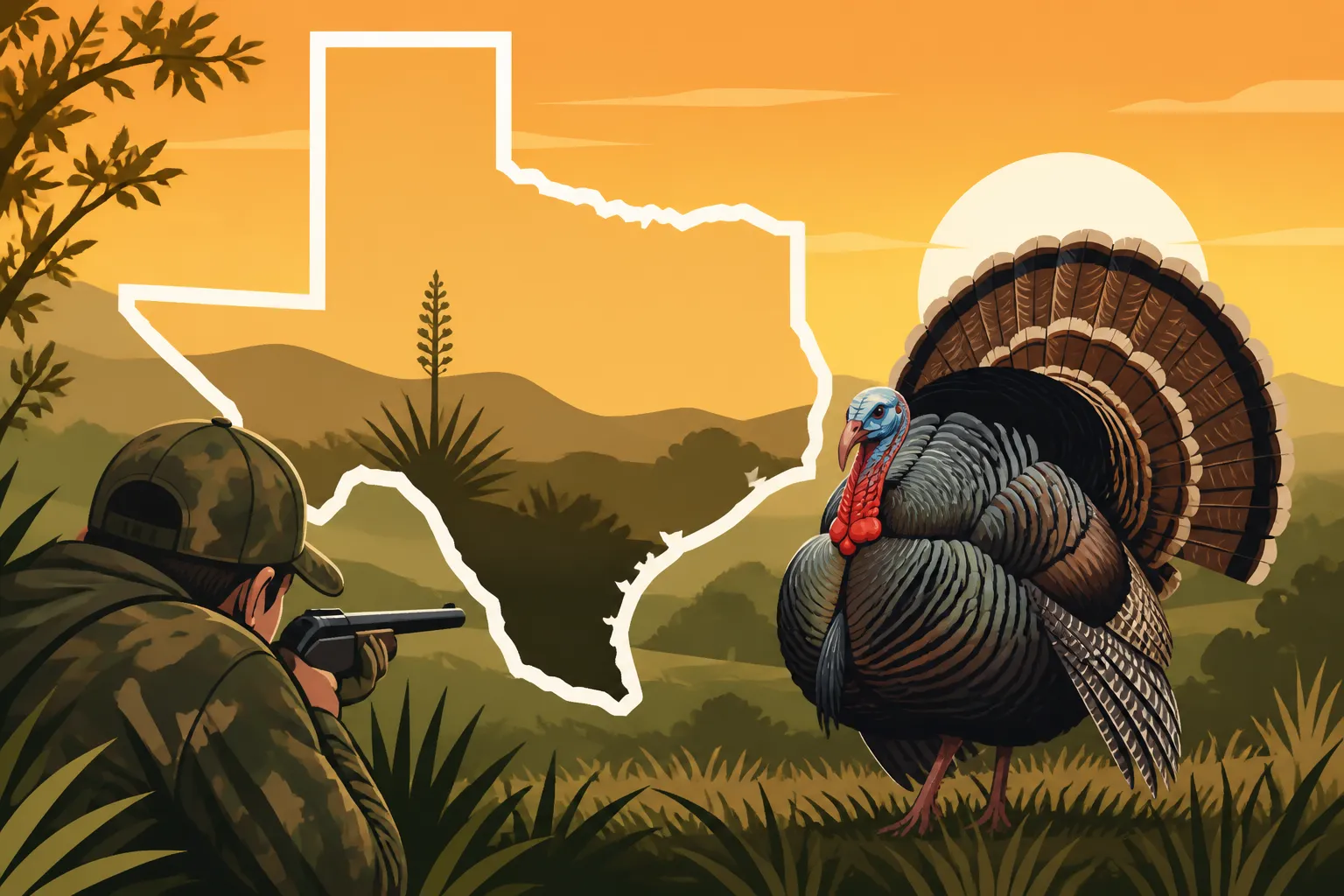
Rio Grande turkeys, often just called "Rio Grandes," are easily distinguished by their bronze and copper iridescent body feathers, buff-colored tail feathers, and the distinctive tan tips on their tail feathers, which differentiate them from the white-tipped Easterns or the dark-tipped Merriam's. Their heads are typically featherless, displaying vibrant shades of red, white, and blue, especially during breeding season when the gobblers are strutting.
These birds are highly social, often found in larger flocks outside of the breeding season. You'll frequently see hens and jakes (young males) moving together, with mature gobblers sometimes forming their own smaller bachelor groups. They are exceptionally keen-sighted, with an almost 360-degree field of vision, and their hearing is remarkably acute. This means any sudden movement or unnatural sound in the woods will send them scattering. Unlike deer, which might pause to assess a threat, a spooked turkey is usually gone for good, sometimes running or flying a significant distance before settling down again. They are also known for their strong legs, covering vast amounts of ground daily, foraging for insects, seeds, and nuts. Watching how they interact within their flock, how they feed, and how they react to perceived threats can give you invaluable insights when you’re out in the field.
Prime Texas Habitats for Rio Grandes
Texas is home to the largest population of Rio Grande turkeys, thriving across a vast expanse of the state. You'll find them predominantly in the central and western parts, with strongholds in the Edwards Plateau, the South Texas Brush Country, and parts of the Rolling Plains. The Edwards Plateau, often referred to as the Hill Country, is particularly renowned for its abundant turkey populations. This region, with its mix of oak-juniper woodlands, open grasslands, and riparian areas along creeks and rivers, provides ideal foraging grounds and roosting sites. The rugged terrain offers plenty of cover, and the availability of water is a major draw.
Further south, in the classic brush country counties like Webb, La Salle, and Dimmit, Rio Grandes adapt to a different landscape. Here, they utilize the dense thorny brush for cover and nesting, relying on mesquite beans, prickly pear fruit, and a variety of forbs and insects for sustenance. The large ranches in these areas often manage their lands for wildlife, providing excellent habitat. Even in the more agricultural areas of the Rolling Plains, where mesquite and hackberry motts dot fields of wheat and milo, turkeys can thrive, especially around creek bottoms that offer mature trees for roosting and a reliable water source. Understanding these varied habitats will help you identify potential turkey hotspots, whether you're scouting new public land or exploring a private lease. The key is finding areas with a good combination of mature roost trees, open foraging areas, and water.
Seasonal Movements and Patterns
Rio Grande turkeys exhibit distinct seasonal movements that are heavily influenced by food availability, weather, and their breeding cycle. During the fall and winter, after the nesting season concludes, turkeys often congregate in larger flocks. These larger groups, sometimes numbering in the dozens, will roam widely, seeking out reliable food sources like acorn crops, agricultural fields, and natural clearings where they can forage for insects. Their movements during these months are largely dictated by where the food is, and they'll often return to the same roosting areas night after night if conditions remain favorable.
As spring approaches and the breeding season (the "rut" for turkeys) begins, these large flocks start to break up. Gobblers become more vocal and begin to establish their dominance, vying for the attention of hens. This is when gobblers are most responsive to calls, as they are actively seeking out hens. Hens, in turn, will be looking for suitable nesting sites, often in dense cover that offers protection from predators. After nesting, hens typically lead their poults (young turkeys) to areas rich in insects, which are crucial for the rapid growth of the young. Understanding these patterns is critical for successful hunting. During spring, you'll want to focus on areas where gobblers are actively strutting and calling, while in the fall, you might target areas with abundant food sources. The Texas Turkey Season 2026: Spring & Fall Zones guide has detailed dates for these periods across the state.
Essential Gear and Setup for Texas Turkey Hunting
Getting a Rio Grande gobbler to commit requires more than just knowing where they live; it demands the right tools and knowing how to use them. From the sounds you make to the way you conceal yourself, every piece of gear plays a vital role.
Calling Equipment and Techniques
Turkey calling is arguably the most critical skill for a spring Rio Grande hunter. You're essentially trying to mimic the sounds of a hen to draw in a lovesick gobbler. There's a wide array of calls available, each with its own learning curve and unique sound profile.
- Friction Calls: These include slate calls, glass calls, and box calls.
- Slate/Glass Calls: These consist of a circular pot made of slate, glass, or aluminum, and a striker. By dragging or tapping the striker across the surface, you can produce realistic yelps, clucks, purrs, and cutts. They are versatile and relatively easy to learn, making them a favorite for many hunters. The key is varied pressure and motion to replicate the nuance of a real bird.
- Box Calls: A simple but effective call, a box call produces sound when you scrape the lid across the lip of the box. They're excellent for loud, far-reaching yelps to get a gobbler's attention from a distance, and with practice, can also produce softer purrs and clucks. They're very user-friendly, even for beginners.
- Mouth Calls (Diaphragm Calls): These are small, horseshoe-shaped calls that fit in the roof of your mouth. They require significant practice to master but offer hands-free operation, which is invaluable when a gobbler is in sight and you need to keep your hands on your gun. With a mouth call, you can create a full range of turkey vocalizations, from soft tree yelps to aggressive cutting.
Learning Turkey Calling & Tactics for Texas Rios involves more than just making sounds; it's about understanding when to make them. Early in the morning, a few soft tree yelps might be enough to get a roosted gobbler to sound off. Once he's on the ground, more aggressive yelps and cuts can draw him in. Don't be afraid to experiment with different calls and volumes. Sometimes, less is more; other times, a string of excited cutting is exactly what's needed. The goal is to paint a picture of an eager hen ready to breed.
Decoys and Blind Strategies
Decoys and blinds go hand-in-hand with calling, creating a visual lure that can seal the deal with a wary gobbler. Using them effectively can make all the difference, especially on open Texas terrain.
-
Decoy Selection:
- Hen Decoys: These are your bread and butter. A single hen decoy or a pair (one standing, one feeding) can be incredibly effective. The goal is to look natural and inviting.
- J-ake Decoys: A jake decoy, often paired with a hen, can really rile up a dominant gobbler. The sight of a younger male with a hen can be an irresistible challenge, often bringing the gobbler in strutting and puffed up, ready for a fight. Be cautious with full-strut gobbler decoys, as they can sometimes intimidate less dominant birds or appear too aggressive, potentially pushing away birds rather than attracting them.
- Positioning: Place your decoys about 15-20 yards from your blind, within shotgun range. Position them so that an approaching gobbler will naturally present a broadside shot as he comes into view, focusing on the decoys rather than you. Consider the sun's position too, to prevent glare off the decoys.
-
Blind Strategies:
- Pop-up Blinds: Portable pop-up blinds offer excellent concealment and are great for setting up in open areas or near food plots. They break up your silhouette, hide movement, and provide a comfortable wait. They also offer some protection from the elements, which can be a blessing during a Texas spring storm.
- Natural Blinds: For hunters who prefer to be more mobile, a natural blind can be quickly constructed using existing cover like mesquite thickets, cedar trees, or dense brush. The key is to break up your outline and ensure you have a clear shooting lane. Always set up with a natural backdrop (a tree, large bush) to further conceal your silhouette.
Regardless of your chosen blind, always ensure you have a clear view of your decoys and the anticipated approach path of the turkey. Remember, the bird's eyes are sharp, so even slight movements can spook them. The combination of realistic decoys and solid concealment can often overcome a gobbler's natural wariness.
Shotgun and Ammunition Choices
When it comes to putting a Rio Grande turkey on the ground, your shotgun and ammunition are critical components. Unlike deer, where you're aiming for the vitals, with turkeys, the target is the head and neck. This requires dense shot patterns and accurate shooting.
- Shotgun Gauge: The most popular gauges for turkey hunting are 12-gauge and 20-gauge.
- 12-gauge: Offers the widest variety of specialized turkey loads and the densest patterns at longer ranges. It’s a reliable choice for maximizing your reach and knockdown power.
- 20-gauge: Lighter and with less recoil, a 20-gauge is an excellent option for youth hunters or those sensitive to recoil, especially with modern tungsten super shot (TSS) loads that dramatically increase effective range.
- Ammunition:
- Shot Size: Traditional turkey loads typically use 4, 5, or 6 shot. However, the game-changer in recent years has been TSS (Tungsten Super Shot). TSS is much denser than lead, allowing for smaller shot sizes (like 7 or 9) to carry more energy and penetrate deeper than larger lead shot, creating incredibly dense patterns even at extended distances. If you're serious about turkey hunting, investing in TSS is highly recommended.
- Choke Tube: A good extra-full or turkey-specific choke tube is essential to achieve the tight patterns needed for head and neck shots. These chokes constrict the shot column more than a standard full choke, keeping the pellets together for maximum density at range. Always pattern your shotgun with your chosen ammunition and choke before heading to the field. Shoot at paper targets at various distances (20, 30, 40 yards) to understand your gun's effective range and pattern density. This knowledge is invaluable for making clean, ethical shots when a gobbler finally steps into range.
Effective Hunting Tactics for Rio Grande Turkeys
Turkey hunting isn't just about calling; it's a chess match that requires scouting, strategic setup, and a healthy dose of patience. Rio Grandes are smart, and you need to be smarter.
Scouting and Locating Birds
You can't hunt a bird that isn't there, and you certainly can't call one in if you don't know roughly where it might be. Effective scouting is the backbone of successful turkey hunting in Texas.
-
Pre-Season Reconnaissance: Before the season even begins, spend time in the field. Look for signs of turkey activity:
- Tracks: Turkeys have distinctive three-toed tracks. Look for them in sandy creek beds, dirt roads, and trails.
- Droppings: Gobbler droppings are J-shaped, while hen droppings are more coiled. Fresh droppings indicate recent activity.
- Feathers: Finding feathers, especially large primary wing feathers, can signal a strutting zone or roosting area.
- Scratchings: Turkeys scratch through leaf litter and dirt to find food. Look for V-shaped clearings in the undergrowth.
- Roosting Areas: Identify large, mature trees (often cottonwoods, pecans, or large oaks) along creek beds or in elevated areas where turkeys might roost. Look for droppings, feathers, and disturbed bark at the base of these trees.
-
Locating Roosted Birds: The evening before your hunt, or in the very early morning, use locator calls to pinpoint roosted gobblers. A hoot owl call, crow call, or even a sharp coyote howl can often provoke a "shock gobble" from a roosted bird, revealing his location. Be subtle, especially at dusk or dawn, as you don't want to spook him off the roost. Once you hear a gobble, use that information to plan your morning setup. The key is to get as close as possible without being detected, allowing you to set up your decoys and blind before he pitches down from the roost. Knowing Where to Place a Deer Feeder for Best Results for other game can sometimes give clues to areas with good tree cover for turkey roosts, as both often prefer similar types of landscapes.
-
In-Season Scouting: Even during the hunt, keep scouting. If a spot isn't producing, don't be afraid to move. Use your binoculars to scan open fields and tree lines for strutting gobblers. Listen for distant gobbles. Turkeys cover a lot of ground, and their patterns can change daily, so staying flexible and observant is crucial.
Setting Up for the Shot
Once you've located a gobbler, your setup is paramount. A good setup can turn a distant gobble into a bird in your lap, while a poor one can send him running.
-
Approach and Position:
- Stealth is Key: Approach the area where you've located a gobbler with extreme caution, moving slowly and quietly. Use terrain and vegetation to conceal your approach. Avoid skylining yourself on ridges.
- Backdrop and Lanes: Always set up with a substantial backdrop, like a thick tree or brush, to break up your silhouette and prevent a turkey from seeing you from behind. Identify clear shooting lanes in front of you. You want enough concealment to hide, but enough openness to get a clean shot.
- Decoy Placement: As mentioned earlier, position your decoys within optimal shotgun range (15-20 yards for most setups) and facing your general direction of approach. This way, the gobbler will focus on the decoys and present a good shot angle as he comes in.
-
Calling Strategy and Patience:
- Start Soft: Often, a few soft tree yelps as the sun begins to rise are enough to get a roosted gobbler talking. Once he's on the ground, mimic soft clucks and purrs, gradually increasing the intensity to draw him closer.
- Listen More Than You Call: Don't overcall. Listen to the gobbler's responses. If he's gobbling consistently and getting closer, keep your calling minimal, just enough to reassure him that a hen is waiting. If he hangs up or stops gobbling, try a sequence of excited cuts and yelps, then go silent. The "silent treatment" can sometimes make a wary gobbler impatient enough to come in looking for the hen.
- Read the Bird: Pay close attention to the turkey's body language. Is he strutting? Is he fanned out? Is he looking directly at your setup? This will tell you if he’s committing or if he’s wary. Be ready to take the shot when he steps into your desired range and offers a clear head and neck shot.
Remember, a gobbler might approach from an unexpected direction, so be ready to subtly adjust. Sometimes, especially in the thick South Texas brush, they can appear out of nowhere. The most important thing is to remain still and patient.
Patience and Persistence
Turkey hunting, especially for Rio Grandes in Texas, is a test of patience. These birds can be incredibly frustrating, often "hanging up" just out of range, gobbling their heads off but refusing to commit the last few yards.
-
The "Hang-Up": It's a common scenario. A gobbler might come in strong, gobbling with every call, but then stop 50-70 yards out, strutting and waiting for the hen to come to him. This is where patience is crucial. Resist the urge to move or make too much noise. Sometimes, a subtle, soft purr or cluck, followed by complete silence, can be enough to pique his curiosity and draw him the rest of the way. Other times, you might need to adjust your position slightly, trying to get his attention from a different angle, or simply wait him out. He might eventually get impatient and come looking, or he might wander off. Learning The Texas Rut: When Do Bucks Rut by Region? teaches that patience is key in deer hunting, and it applies even more so to turkeys.
-
Dealing with "Hen-Up" Gobblers: Sometimes a gobbler will be with real hens. He's gobbling, but he's already got company. In this situation, your best bet is often to try and imitate an aggressive hen. Sometimes, a jake yelp can make him nervous enough to break away, but more often, you might need to try to call the real hens closer, hoping the gobbler follows. This is a tough scenario, as live hens are often more convincing than your best calling. If he's completely "henned up," you might need to back out and try him another day or find a different bird.
-
Staying Mobile vs. Sticking It Out: Knowing when to stay put and when to move is a judgment call. If a gobbler is actively responding and seems to be moving your way, staying still and working him with calls is usually the right move. If, however, he goes silent for an extended period, moves away, or seems completely uninterested, it might be time to pick up and move to a new location. Don't be afraid to cover ground, especially if you're on a large lease. Often, a fresh setup in a new area can yield a quick response. A great resource for further tactics is Rio Grande Turkey Hunting Tactics for Texas.
Post-Hunt Considerations and Regulations
Congratulations, you've tagged a Rio Grande gobbler! But the hunt isn't over yet. Proper field care and adherence to regulations are essential.
Field Care for Your Turkey
Once you've made a successful shot, proper field care is crucial to preserve the meat and, if desired, the trophy qualities of your bird. Texas heat can quickly spoil game, so acting promptly is important.
- Cooling Down the Bird: Turkeys, like deer, need to be cooled down quickly. If you plan to eat the meat, the first thing to do is to gut the bird. While not as messy as field dressing a deer, removing the internal organs helps the carcass cool faster. You can also pluck the feathers (or at least breast out the meat) while still in the field, which allows for maximum air circulation. If you're several hours from a cooler, consider carrying large freezer bags and ice to immediately chill the breast meat.
- Preserving the Tail Fan and Beard: For trophy purposes, you'll want to preserve the tail fan and beard.
- Tail Fan: Carefully cut the tail fan off at the base, ensuring you get all the tail quills. Spread the fan open and pin it to a piece of cardboard or wood. Liberally apply borax to the fleshy base to dry it out and prevent decay.
- Beard: The beard is attached to the breast. Carefully cut a small section of skin around the base of the beard and peel it away. Apply borax to this skin to preserve it.
- Transport and Storage: Once field dressed and cooled, transport your turkey in a cooler filled with ice. At home, you can either completely pluck and butcher the bird, removing all meat from the bones, or simply breast it out. The breast meat is the most prized portion. Remember, proper sanitation is key to preventing spoilage. If you plan on taking the whole bird to a taxidermist, ensure it's cooled immediately and protected from damage during transport.
Texas Regulations and Reporting
Understanding and adhering to Texas hunting regulations is not just about staying legal; it's about ethical hunting and contributing to wildlife conservation. The rules for Rio Grande turkeys can vary slightly, so always consult the most current Texas Parks and Wildlife Department (TPWD) Outdoor Annual.
- Hunting License and Tags: You'll need a valid Texas hunting license with an Upland Game Bird endorsement. While specific tags for turkeys aren't typically issued like deer tags, you do need to understand the bag limits. The Texas Hunting License: Cost, Types & How to Buy (2026) guide provides full details.
- Season Dates and Bag Limits: Rio Grande turkey seasons in Texas have distinct spring and fall periods, and rules can vary by county and zone. Generally, for spring, the bag limit is four gobblers (male turkeys) across all counties, with no more than one Eastern turkey. Always double-check the specific regulations for your hunting location in the Texas Turkey Season 2026: Spring & Fall Zones or the Texas Hunting Seasons: Complete Calendar by Species. Some counties may have specific regulations regarding legal shooting hours or other limitations. The Texas Turkey Bag Limit by Zone breaks down these variations in detail.
- Harvest Reporting: While not all game species require mandatory harvest reporting, it’s good practice to understand if it applies to turkeys in your area. Always refer to the official TPWD guidelines. Most importantly, ensure you clearly tag your bird as required if moving it from the county of harvest, adhering to any specific regulations regarding proof of harvest or transport. For any questions, the TPWD website or a local game warden is your best resource. Compliance ensures the future of this fantastic hunting opportunity for everyone.
Following these guidelines for both the hunt and post-hunt care will help ensure a rewarding and responsible experience while pursuing Rio Grande turkeys in the Lone Star State.
Disclaimer
Please note: Hunting regulations and seasons can change. Always consult the most current Texas Parks and Wildlife Department Outdoor Annual or website for the official and up-to-date regulations before heading afield.