How to Hunt Pronghorn in Texas
Hunting pronghorn in Texas can feel like chasing a desert mirage. Unlike the vast, open expanses of states further west where pronghorn numbers are plentiful, finding and successfully pursuing these speedy creatures in the Lone Star State presents its own unique set of challenges. This guide is here to demystify the process, offering practical, in-depth advice on everything from where they live to the precise tactics you'll need to bag a Texas "speed goat."
Understanding Texas Pronghorn
Let's be clear from the start: pronghorn are not true antelope, despite their common moniker, "antelope." They're a unique species, the last surviving member of a family that once roamed North America, and they are built for speed and survival in wide-open spaces.
Pronghorn Biology and Behavior in the Lone Star State
Pronghorn are an evolutionary marvel, designed to outrun predators like the now-extinct American cheetah. They can hit speeds of up to 60 miles per hour and maintain a blistering pace for extended distances, making them the fastest land animal in North America. Their incredible eyesight, often compared to that of an 8x binocular, allows them to detect threats from miles away across flat terrain. This makes approaching them a monumental challenge, especially in the clear, unobstructed vistas of West Texas.
In Texas, these animals thrive on shortgrass prairies and vast, open rangelands. They are primarily grazers, preferring forbs and shrubs, but they'll readily consume grasses when available. They're typically found in herds, which can range from small family groups to larger aggregations, especially outside the breeding season. During the rut, which usually occurs in September and October, bucks will establish territories and gather harems of does. This intense focus on breeding can sometimes make them slightly less wary, offering a brief window of opportunity for hunters. Their keen sense of smell, while not as often discussed as their eyesight, is also incredibly sharp and must be respected on any stalk.
Prime Pronghorn Habitat Regions in Texas
When you think of prime pronghorn country in Texas, two regions immediately come to mind: the Panhandle and the Trans-Pecos. These are the last strongholds for healthy, huntable populations of these magnificent animals in the state.
The Panhandle, with its sweeping shortgrass prairies and agricultural fields, offers ideal habitat. Counties like Hartley, Dallam, Moore, and Oldham often hold good numbers. This area is characterized by vast, flat to gently rolling terrain, perfect for their preferred open-country living. However, much of this land is privately owned and often tied up in agricultural operations, making access a significant hurdle for many hunters.
Further west, the Trans-Pecos region, particularly counties such as Brewster, Presidio, Jeff Davis, and Hudspeth, also supports pronghorn populations. Here, the landscape transitions to high desert plains, vast Chihuahuan Desert grasslands, and scattered mountains. While beautiful, this terrain can be even more rugged and remote than the Panhandle, adding another layer of difficulty to the hunt. The sheer scale of these ranches means that even on a large lease, finding and patterning pronghorn can take days of dedicated glassing and searching. For more information on the unique challenges and opportunities in these areas, you can check out our guide on Panhandle & Trans-Pecos Hunting in Texas.
Access, as mentioned, is the biggest challenge for pronghorn hunting in Texas. Unlike states like Wyoming or Montana with vast tracts of public land teeming with pronghorn, Texas has very little public ground that consistently holds huntable populations of these animals. Most hunting opportunities are found on private ranches, either through an outfitter or by securing a private lease.
Navigating Texas Pronghorn Regulations and Permits
Hunting pronghorn in Texas isn't as straightforward as picking up a deer license and heading out. Their limited population and specific habitat mean that the Texas Parks and Wildlife Department (TPWD) manages them closely through a permit system.
Essential Licenses and Tags for Pronghorn
First and foremost, just like any other game animal in Texas, you'll need a valid Texas hunting license. Many residents opt for the Texas Hunting License: Cost, Types & How to Buy (2026), also known as the Super Combo, which covers a wide array of game species and endorsements. Non-residents will need to purchase the appropriate non-resident hunting license.
Beyond the general hunting license, securing a pronghorn permit is the critical step. Pronghorn are a "permit-only" species. This means landowners in designated pronghorn management units receive a limited number of permits from TPWD, which they then typically offer to hunters. For most individuals, the primary way to get a permit is through the Texas Public Hunt Draw System. This is where hopeful hunters apply for a chance to win a coveted permit for a guided hunt on public land or a private ranch that has partnered with TPWD. The odds can be steep, so many hunters apply year after year. For a deep dive into this process, check out our guide on Texas Drawn Hunts & Public Hunt Draw 2027. Some private landowners or outfitters who receive these permits may also offer them directly as part of their hunting packages.
Season Dates and Bag Limits
The pronghorn hunting season in Texas is generally very short, typically lasting just a few days in early October. The exact dates can vary slightly each year based on TPWD’s annual regulations, so always consult the most current Texas Outdoor Annual before planning your hunt. The season is strategically set to coincide with a period that minimizes disturbance during key breeding and fawning periods while still allowing a window for harvest.
The bag limit for pronghorn in Texas is extremely restrictive, reflecting their lower population numbers compared to other game species. Typically, the limit is one pronghorn per valid permit. This means if you are fortunate enough to draw a permit or secure one from a landowner, you are authorized to harvest a single animal. There are no "doe days" or extended seasons for pronghorn as there might be for deer. Every pronghorn harvest in Texas, like other big game, must be immediately tagged with the appropriate permit and reported to TPWD via the My Texas Hunt Harvest app or website. You can find more specific details on Pronghorn Season & Bag Limit in Texas by checking the annual regulations.
Here's a quick overview of the key regulatory differences for pronghorn compared to common Texas game:
| Feature | White-Tailed Deer | Feral Hog | Pronghorn (Texas) |
|---|---|---|---|
| License | General Hunting License | General Hunting License | General Hunting License |
| Tags/Permits | Included with license (bucks, some does) | Not required | Special permit required |
| Season Length | Varies by zone, often months | Year-round | Very short (days) |
| Bag Limit | Multiple (e.g., 3 bucks, 2 does) | Unlimited | One per permit |
| Public Land Access | More options (WMAs, National Forests) | Varies, often year-round on public | Extremely limited, draw-based |
This table clearly illustrates why pronghorn hunting in Texas requires careful planning and a deep understanding of the regulations. It's a highly controlled hunt, emphasizing conservation.
Proven Tactics for a Successful Pronghorn Hunt in Texas
Successfully hunting pronghorn in Texas is less about luck and more about patience, strategy, and precision. Their incredible eyesight and speed mean that you're going to earn every step of the stalk.
The Art of Spot-and-Stalk Hunting
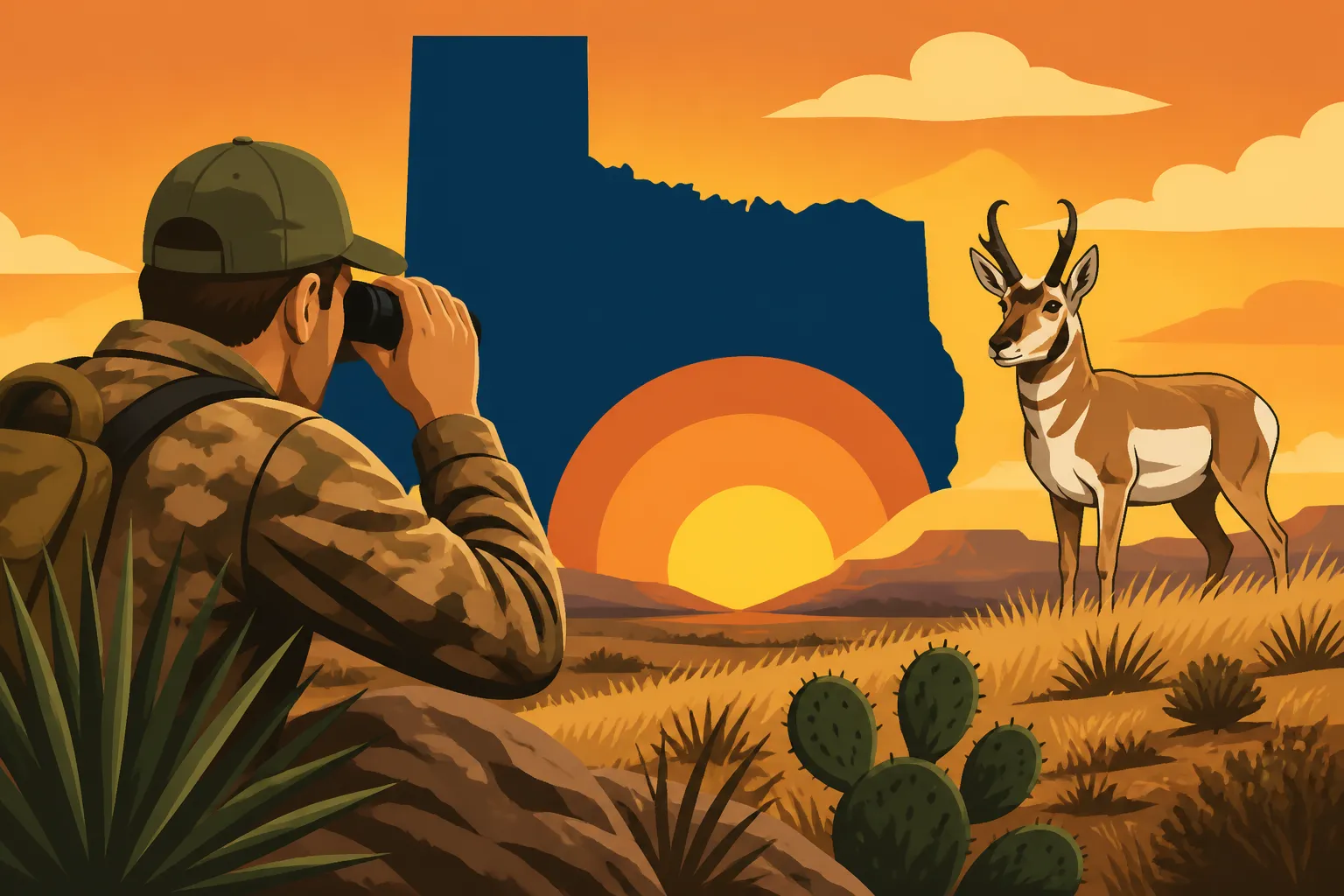
For pronghorn, spot-and-stalk is not just a tactic; it's the method. There's really no other way to consistently harvest these animals in their wide-open domain. You won't find them hanging around feeders or using dense cover like a whitetail. This style of hunting demands top-tier optics and an understanding of the terrain.
Your primary tool will be high-quality binoculars and a spotting scope. Forget 8x or 10x binos for pronghorn; you'll want 12x or 15x, and a spotting scope with at least 20-60x magnification is crucial. Brands like Vortex, Leupold, and Swarovski offer excellent choices that can make a real difference. Set up on a high point and systematically glass the landscape. Don't just scan; pick apart every square yard. Look for movement, a flash of white, or the distinct shape of an animal. Pronghorn often blend surprisingly well into the dry grasses and sparse brush.
When glassing, start close and work your way out, section by section. Pay attention to changes in elevation, even subtle ones, as these can hide animals. Look for herds, but also isolated bucks, particularly during the rut when a dominant male might be guarding his does. Once you spot an animal, confirm it's a shooter (if you have specific criteria) and then evaluate the surrounding terrain for a potential approach. Remember, their eyesight is phenomenal; they'll often see you long before you see them if you're not careful. This is where our guide on Spot-and-Stalk Hunting in Texas (Exotics & Mule Deer) can provide even more foundational knowledge.
Stalking Strategies and Wind Considerations
So you've spotted your pronghorn, now comes the hard part: getting within shooting range without being detected. This is where patience truly becomes a virtue.
- Use Natural Cover: This is paramount. Look for anything that breaks up your outline: low hills, dry washes, sparse mesquite or creosote bushes, even tall clumps of grass. You'll be using these features to move from one point to the next, often covering significant distances in a low crouch or even a crawl. A good map application like onX Hunt or HuntStand can be incredibly helpful for identifying terrain features and planning your route before you even start moving. Find out more about these tools in our guide on Best Hunting Apps for Texas (onX, HuntStand & More).
- Play the Wind: Pronghorn have an excellent sense of smell. Always approach from downwind. If the wind shifts, you may need to abandon your stalk and find a new route, or even wait until the wind is favorable again. A small wind checker is an invaluable tool to confirm wind direction frequently throughout your stalk.
- Go Slow and Low: Every movement must be deliberate and measured. Fast, jerky movements will catch their eye. When you're in the open, move only when their heads are down, or they are looking away. When they look up, freeze. If you're exposed, literally crawling on your hands and knees or even on your belly might be necessary to close the distance. This is physically demanding, especially under the Texas sun.
- Know Your Shooting Lanes: As you stalk, constantly assess potential shooting positions. It does no good to get within 300 yards only to realize you have no clear shot due to a rise in the ground or a clump of brush. Anticipate where the animal might move and plan your final approach accordingly.
Many stalks will end in failure. The pronghorn will see you, blow, and be gone in a cloud of dust. Don't get discouraged. Learn from each attempt, adjust your strategy, and try again.
Recommended Gear and Calibers
Given the open country and the distances involved, your gear needs to be up to the task.
Rifles and Calibers: Pronghorn hunts often involve long shots, sometimes stretching beyond 300 yards. A flat-shooting caliber is essential. Popular choices among Texas hunters include:
- .243 Winchester
- .25-06 Remington
- 6.5 Creedmoor
- .270 Winchester
- .30-06 Springfield
- 7mm Remington Magnum
These calibers offer good ballistic performance for pronghorn, which are not particularly large or heavily boned animals, but require precise shot placement due to their speed and the open environment. Make sure you practice extensively at longer ranges (300-500 yards) from various field positions, including prone, as you might not always have a perfect bench rest available.
Optics: We've already touched on this, but it bears repeating: invest in the best optics you can afford.
- Binoculars: 12x or 15x power. Look for good light transmission and edge-to-edge clarity.
- Spotting Scope: 20-60x or even 20-70x with a sturdy tripod. This is vital for confirming animals at extreme distances and judging their quality.
- Rangefinder: A reliable rangefinder that can accurately measure distances out to 800-1000 yards is non-negotiable. Knowing the exact distance is crucial for making ethical long-range shots. For more detailed advice on choosing optics, read our guide on Best Hunting Optics for Texas: Scopes, Binos & Rangefinders.
- Rifle Scope: A high-quality rifle scope with a clear reticle and reliable turrets for dialing in elevation adjustments is paramount. Magnification typically ranges from 3-9x up to 4-16x or even higher for dedicated long-range setups.
Other Essential Gear:
- Clothing: Lightweight, breathable, and quiet clothing in an appropriate camouflage pattern for open country (tans, browns, light greens). Sun protection (wide-brimmed hat, long sleeves, sunscreen) is critical for the often-intense Texas sun.
- Water: Carry plenty of water. You'll be covering a lot of ground in potentially hot conditions.
- Backpack: A comfortable daypack to carry your water, snacks, spotting scope, extra ammo, and field dressing kit.
- Shooting Sticks/Bipod: While prone is ideal, often shooting sticks or a bipod will be your best option for a stable shot in the field.
- Knife and Game Bags: For efficient field dressing. Consider how to cool the meat quickly in the Texas heat, which is detailed in our Field Dressing & Processing Game in Texas Heat article.
Here's a handy checklist for your Texas pronghorn hunt:
| Category | Essential Items | Notes |
|---|---|---|
| Firearm | Flat-shooting rifle (.243, 6.5 CM, .270, etc.) | Zeroed and practiced at long ranges (300+ yards) |
| Ammunition | High-quality hunting rounds | Enough for practice and the hunt |
| Optics | 12x-15x Binoculars, Spotting Scope (20-60x+) | With tripod; clear glass is crucial for long-range spotting |
| Laser Rangefinder (800+ yard capability) | Essential for accurate ballistic calculations | |
| Quality Rifle Scope (variable power) | With reliable turrets for dialing distance | |
| Navigation | GPS device or Smartphone with hunting app | onX Hunt or HuntStand with landowner and topo layers |
| Physical map of hunting area | Backup in case of tech failure | |
| Clothing | Lightweight, breathable camo (tans/browns) | Layering is key for morning/evening temperature swings |
| Wide-brimmed hat, sunglasses | Sun protection is critical in open country | |
| Sturdy, comfortable hiking boots | Expect to walk many miles | |
| Field Gear | Backpack (20-40L) | To carry water, food, optics, essentials |
| Plenty of water & electrolytes | Hydration is non-negotiable in Texas | |
| High-energy snacks | For long days afield | |
| Shooting sticks or bipod | For stable shooting positions | |
| Field dressing kit (knife, gloves) | With game bags for meat preservation | |
| Small first-aid kit | For minor cuts, blisters, etc. | |
| Wind checker (powder or small ribbon) | To confirm wind direction | |
| Documentation | Texas Hunting License, Pronghorn Permit | Keep them accessible and protected |
| Hunter Education certification | If required |
Pre-Season Preparation for Texas Pronghorn Hunting
A successful pronghorn hunt begins long before you set foot in the field with a rifle. The unique challenges of these animals and their habitat demand thorough pre-season preparation.
Scouting and Location Intelligence
Given the extremely limited access and specific habitats, pre-season scouting for pronghorn is crucial, whether you've drawn a public hunt permit or secured a spot on a private ranch. For public land hunters, this might mean studying maps, aerial imagery, and topographic features extensively to identify potential travel corridors, water sources, and vantage points from which to glass.
Start with detailed mapping tools. Satellite imagery can show you subtle changes in terrain that might offer cover for a stalk or areas where pronghorn might congregate. Look for areas with a mix of shortgrass prairie, some scattered brush, and crucially, water. Even if it's a cattle tank, pronghorn need to drink, and these can be magnets, especially in dry conditions. If you have secured a private lease, spending a few days before the season, perhaps a week or two out, driving or walking the property with binoculars can give you invaluable insight into herd movements, preferred feeding grounds, and bedding areas. Remember to always respect private property boundaries and obtain permission before entering any land. This is particularly important in Texas, where most land is privately owned. If you're hunting on a private lease, our guide on How to Hunt Pronghorn on a Texas Lease might offer additional insights.
Physical Conditioning and Mental Toughness
Spot-and-stalk hunting for pronghorn is arguably one of the most physically demanding forms of big game hunting in Texas. It's not a sit-in-a-blind-over-a-feeder type of hunt. You will walk, and you will walk a lot, often covering many miles in a day across uneven terrain under a relentless sun. You'll also likely spend significant time in a low crouch or crawling on your belly.
Start a comprehensive exercise regimen months before your hunt. Focus on cardiovascular endurance – walking, jogging, or hiking with a weighted pack. Strengthen your core and legs. Practicing crawling and low-profile movements can also be beneficial, helping you build specific muscle groups and mental resilience.
Equally important is mental toughness. Pronghorn hunts are often characterized by long periods of glassing, many failed stalks, and hours of sun exposure. It can be frustrating to watch a pronghorn vanish over the horizon just as you're about to get into range. You need to be patient, persistent, and not easily discouraged. Be prepared for early mornings, late evenings, and the often intense Texas heat. Staying hydrated, taking care of your feet, and maintaining a positive attitude will be just as critical as your shooting skills.
Disclaimer
Hunting is an inherently dangerous activity. Always prioritize safety, follow all local, state, and federal regulations, and practice ethical hunting principles. The information provided in this guide is for informational purposes only and should not be considered legal advice. Always consult the most current Texas Parks and Wildlife Department Outdoor Annual and any applicable county regulations before participating in any hunting activities.