Texas Turkey Bag Limit by Zone
Trying to figure out the exact turkey bag limit in Texas can feel like a wild goose chase, or in this case, a wild turkey chase! With different zones, varying seasons, and specific regulations for each turkey subspecies, it's easy to get confused and potentially make a mistake that could cost you more than just a missed gobbler. This guide is designed to cut through the noise, providing a clear, detailed breakdown of Texas turkey bag limits by zone, so you can hunt confidently and legally.
Understanding Texas Turkey Hunting Zones
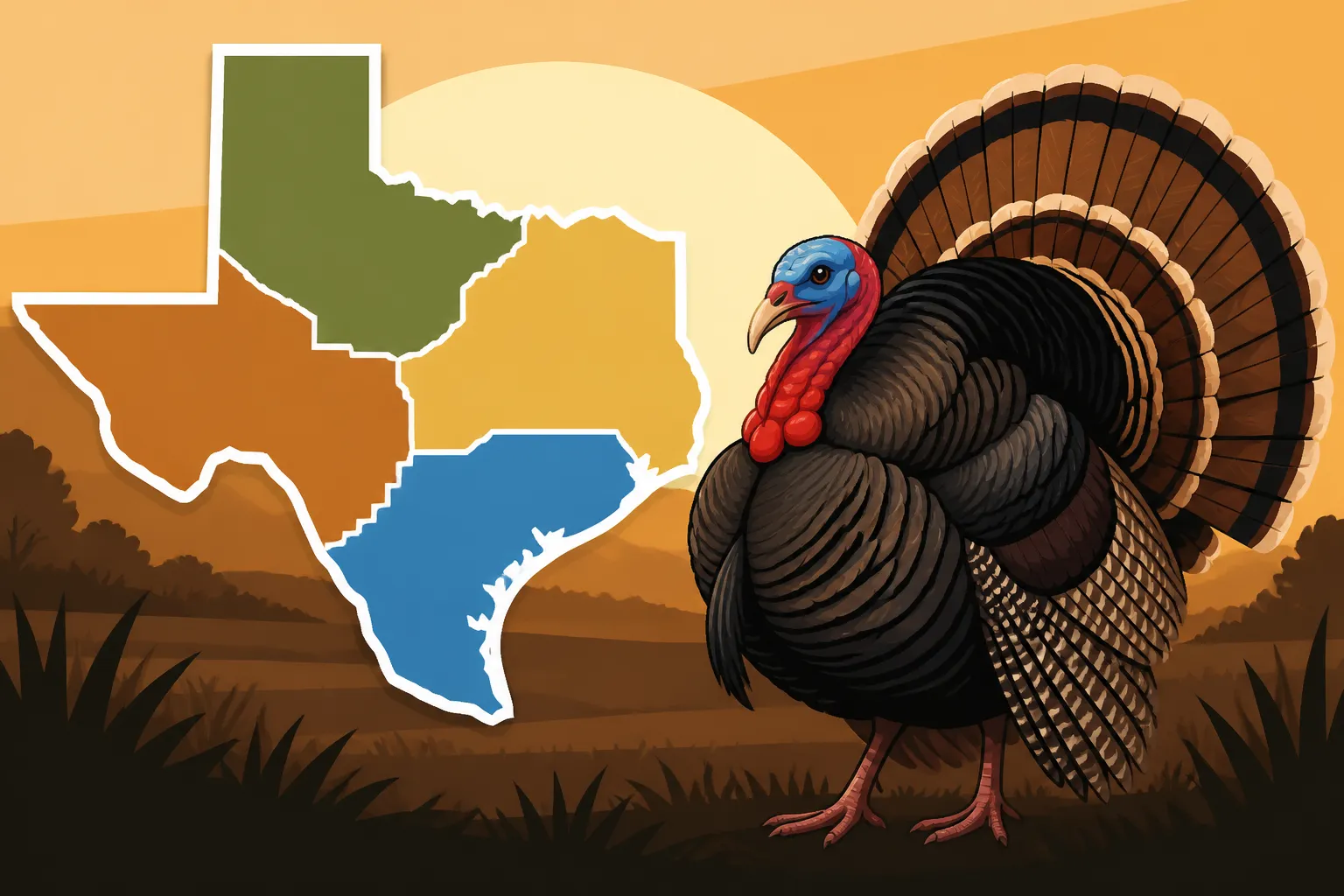
Texas is a massive state, and its turkey populations reflect that diversity. We have two primary turkey subspecies that hunters pursue: the Rio Grande turkey and the Eastern turkey. The regulations, including bag limits, are distinctly different for each, primarily dictated by the specific geographic zones where these birds thrive. Knowing which zone you're in and which turkey you're after is the absolute first step to a successful and compliant hunt.
The Rio Grande Zone: Your Primary Texas Turkey Ground
When most people think of turkey hunting in Texas, they're thinking of the Rio Grande turkey. These birds are abundant across a vast expanse of the state, from the brush country of South Texas, through the Hill Country, and up into the Rolling Plains. Their habitat is diverse, ranging from mesquite flats to pecan bottoms along rivers. This wide distribution means that the Rio Grande zone covers the majority of Texas, and consequently, most turkey hunting opportunities will be for this species. The seasons are generally longer, and the bag limits are more generous, reflecting a robust and healthy population. Whether you're chasing them in the Edwards Plateau or the Cross Timbers, understanding the general regulations for Rio Grandes is crucial.
The Eastern Turkey Zone: A Special Opportunity
The Eastern turkey, on the other hand, is a much more localized species in Texas. You'll primarily find these magnificent birds in the timbered regions of East Texas, specifically in certain counties within the Pineywoods. Unlike the vastness of the Rio Grande range, the Eastern turkey population in Texas is smaller and requires more careful management. This translates directly to much more restrictive hunting seasons and bag limits. Hunting an Eastern turkey in Texas is often considered a unique and challenging experience, given their elusive nature and the specific rules governing their harvest. If you're planning a hunt in counties like Angelina or Polk, you'll need to pay very close attention to these distinct Eastern zone regulations.
Why Zone Matters: Preventing Legal Headaches
The distinction between these two zones isn't just a biological curiosity; it's a legal cornerstone of Texas turkey hunting. Accidentally taking an Eastern turkey with a Rio Grande tag, or exceeding the Eastern bag limit while thinking you're in a Rio Grande area, can lead to significant fines and penalties. Imagine the frustration of successfully calling in a beautiful gobbler, only to realize you've crossed an invisible line and violated a regulation. The Texas Parks and Wildlife Department (TPWD) is very clear about these zone divisions, and it's your responsibility as a hunter to know precisely where you are and what regulations apply. Before you even pack your calls, pull up the current Texas Outdoor Annual or an app like GoHunt to confirm the zone boundaries for your intended hunting location. This simple step can save you a world of trouble and ensure your hunt is enjoyable and legal.
Unpacking the Texas Turkey Bag Limit: Rio Grande Season
The Rio Grande turkey season is arguably the most popular turkey hunting period in Texas, primarily because of the sheer number of birds and the longer, more accessible seasons. However, "accessible" doesn't mean "unregulated." There are specific bag limits and rules you need to adhere to, even for these abundant birds.
General Season Bag Limits for Rio Grandes
For the vast majority of the state's Rio Grande turkey hunting zone, the annual bag limit is four gobblers. This means that during all combined turkey seasons – spring and fall – you can legally harvest up to four male turkeys. This is a pretty generous limit, allowing hunters ample opportunity to pursue these birds. It's important to note that this limit is annual, not per season. So, if you take two gobblers in the fall, you only have two remaining for the spring season. This general limit applies to almost all counties open for Rio Grande turkey hunting, providing a consistent framework for most hunters. For a detailed breakdown of specific dates, check out the article on Texas Turkey Season 2026: Spring & Fall Zones.
Special Archery and Youth Seasons
Texas offers special opportunities for certain hunters, which can sometimes come with slightly different bag limits or extended timeframes, though the overall annual limit usually remains the same. The statewide archery-only season for turkeys, for instance, typically runs before the general firearms season. During this time, the bag limit is still four gobblers, but of course, you're restricted to archery equipment. This offers an excellent chance for bowhunters to get into the woods early and chase wary longbeards before gun season opens.
Youth seasons are another fantastic opportunity, designed to introduce younger hunters to the sport in a less pressured environment. These typically occur on specific weekends, often before the general season or during holidays. For the youth-only seasons for Rio Grande turkeys, the bag limit generally aligns with the four-gobbler annual limit. It's a great way for kids to experience the thrill of the hunt, and often, they can take one gobbler during these specific weekends, which counts toward their annual total. Always refer to the most current Outdoor Annual for the exact dates and rules for Texas Youth Hunting Weekend Dates.
Considerations for Public vs. Private Land Hunts
While the statewide bag limit of four gobblers remains consistent for Rio Grandes, where you hunt can introduce additional layers of regulation. On private lands, which make up the vast majority of Texas, landowners often dictate harvest within the TPWD guidelines. You might be on a lease where the landowner sets a personal limit of two gobblers for herd management, even if the state allows four. Always clarify these specific lease rules before you hunt.
For public lands, especially Wildlife Management Areas (WMAs) managed by TPWD, the rules can be much stricter. Many WMAs participate in the Texas Drawn Hunts: Public Hunt Draw System, which often means a specific drawn hunt permit that might have a much lower bag limit, sometimes just one gobbler per hunt, regardless of the statewide limit. These permits are highly sought after and come with their own set of rules, which you must follow precisely. If you're utilizing the Annual Public Hunting Permit (APH) on an open WMA, double-check the specific unit's regulations, as they can sometimes modify general statewide rules. A reliable hunting app like GoHunt can be invaluable for quickly cross-referencing these regulations against your current location.
Eastern Turkey Bag Limit and Unique Regulations
Hunting Eastern turkeys in Texas is a completely different ballgame compared to pursuing Rio Grandes. Due to their more limited population and distribution, the regulations are significantly more stringent and focused on conservation. Missing these critical distinctions can lead to serious legal issues.
The "One Gobbler" Rule for Eastern Turkeys
The most crucial difference for Eastern turkeys in Texas is the bag limit: one gobbler per season. This is a stark contrast to the four-gobbler limit for Rio Grandes. This "one gobbler" rule is enforced strictly to protect the Eastern turkey population, which is much more fragile in Texas. This means if you successfully harvest an Eastern gobbler, your Eastern turkey hunting season is effectively over. There are no additional tags or allowances for multiple birds. It's a trophy hunt in the truest sense, and you need to be absolutely sure of your target and the regulations before you pull the trigger. For more specific details on this, refer to Eastern Turkey in East Texas (One-Gobbler).
Season Length and Specific Counties
Not only is the bag limit more restrictive, but the Eastern turkey season itself is considerably shorter and limited to a very specific set of East Texas counties. Typically, the season runs for just a few weeks in the spring, and only in about 28 designated counties. These counties are generally found within the Pineywoods ecoregion, known for its dense timber and bottomland hardwoods, which provide the ideal habitat for Easterns. You won't find an Eastern turkey season open statewide or even across broad regions; it's a very pinpointed opportunity.
For example, counties like Red River, Bowie, Cass, Marion, Upshur, Cherokee, Nacogdoches, and Polk are often included, but this list can change slightly year to year. Always consult the most current Texas Outdoor Annual to confirm the precise counties and dates for the Eastern turkey season. Hunting Easterns outside of these designated counties or season dates is strictly prohibited and would be a serious violation.
Mandatory Harvest Reporting for Eastern Turkeys
Another critical regulation unique to Eastern turkeys in Texas is the mandatory harvest reporting. This is not optional. Every Eastern turkey harvested must be reported to TPWD within 24 hours of leaving the county where it was harvested, or prior to final processing, whichever comes first. This information is vital for TPWD biologists to monitor the population and make informed management decisions.
You'll need to report your harvest online via the My Texas Hunt Harvest system or through the corresponding mobile app. This process requires details about where and when the bird was taken, and information from your hunting license. Failing to report an Eastern turkey harvest is a violation, so make sure you're familiar with the process before you head out. This regulation highlights the conservation-focused approach to managing this particular subspecies. You can learn more about this system in Texas Hunting Tags & Harvest Reporting (My Texas Hunt Harvest).
Essential Licensing and Tags for Texas Turkey Hunting
Before you even start thinking about gobbler calls or camouflage patterns, you need to ensure you have the proper Texas hunting license and endorsements. This is non-negotiable for legal turkey hunting in the Lone Star State.
General Hunting License Requirements
Any resident or non-resident hunter, unless exempt, must possess a valid Texas hunting license to hunt turkeys. For most adult residents, this means a Resident Hunting License or a Super Combo License, which bundles various hunting and fishing privileges. Non-residents will need a Non-Resident General Hunting License.
It's crucial to understand that even if you're hunting on private land where you might not need specific tags for certain exotics, regulated game animals like turkeys always require a valid hunting license. Always carry your physical license or a digital copy on your phone when in the field, as game wardens can and will check. To understand all the options, you can check out the comprehensive guide on Texas Hunting License: Cost, Types & How to Buy (2026).
Upland Game Bird Endorsement
Beyond the general hunting license, turkey hunting in Texas specifically requires an Upland Game Bird Endorsement. This endorsement is an additional purchase that covers all legal upland game birds in the state, including turkeys, pheasant, quail, and chachalaca. Without this endorsement, your general hunting license is not valid for turkey hunting. It's a small additional cost, but absolutely necessary. You can purchase this endorsement when you buy your primary hunting license, or add it on later. Think of it as your passport to pursuing those strutting gobblers.
The Role of the Annual Public Hunting Permit
For those who wish to hunt turkeys on public lands, such as Texas Parks and Wildlife Department's Wildlife Management Areas (WMAs), an Annual Public Hunting Permit (APH) is usually required, in addition to your general hunting license and upland game bird endorsement. The APH Permit grants access to designated public hunting lands across the state, and many of these areas offer turkey hunting opportunities.
However, as mentioned earlier, WMA regulations can be more restrictive than statewide rules. Always consult the specific WMA's regulations within the Public Hunting Lands section of the Outdoor Annual or on the TPWD website. Some WMA hunts may be drawn hunts, requiring a successful application through the Texas Drawn Hunts & Public Hunt Draw 2027 system, which then provides a specific permit outlining the rules and bag limits for that particular hunt. It's never a "one size fits all" scenario when it comes to public land hunting in Texas. GoHunt can also be a useful tool to identify public hunting opportunities and their associated regulations.
Common Misconceptions and Troubleshooting Turkey Limits
Even experienced hunters can sometimes get tripped up by the nuances of Texas turkey regulations. It's a big state with diverse rules, and it's easy to fall prey to common misunderstandings. Let's clear up some of those potential pitfalls.
Confusing Rio Grande and Eastern Zones
This is perhaps the biggest and most dangerous misconception for turkey hunters in Texas. Many hunters, especially those new to East Texas, might assume all turkeys are "Rio Grandes" or that the "four gobbler" rule applies statewide. This is simply not true, and as we've discussed, it's a critical legal distinction.
Imagine you're hunting in a county like Bowie or Red River, which are in the Eastern turkey zone. You call in a beautiful gobbler and harvest it, thinking you still have three more tags to fill for the year. This could be a costly mistake. You've just filled your annual Eastern turkey limit of one gobbler. Any subsequent turkey harvested in the Eastern zone would be an illegal take. Always, always confirm the specific turkey zone you are hunting in before you step foot in the woods. Utilize the official TPWD Outdoor Annual, or a digital resource like the GoHunt app's land mapping features, to verify your location against the published zone maps.
Navigating County-Specific Rules
While the Rio Grande zone generally has a consistent four-gobbler limit, there are sometimes very minor county-specific nuances or special provisions, particularly concerning season dates rather than bag limits themselves. For example, some counties might have slightly different opening or closing dates, or certain restrictions related to specific types of hunting, such as crossbows, in certain areas. While not usually affecting the core bag limit, these can impact your ability to hunt.
A classic example might be a county that straddles a zone boundary, or a WMA within a larger county that has its own unique set of rules. It's not enough to know the general zone; you must verify the regulations for the specific county and specific property you intend to hunt. This due diligence ensures you're not caught off guard by a local ordinance or a special management plan. For detailed rules by county, referring to the Texas Rio Grande Turkey Hunting Regulations 2026 is a good start, but always cross-reference with the official annual.
What to Do if You Exceed Your Bag Limit Accidentally
No one wants to break the law, but accidents can happen. Perhaps you miscounted birds, or mistakenly thought you were in a different zone. If you realize you have accidentally exceeded your bag limit, the best course of action is to immediately contact a Texas Game Warden. Honesty and swift action are paramount.
Trying to conceal an illegal harvest will only compound the problem and lead to more severe penalties. Game wardens are law enforcement officers, but they are also often reasonable people who understand that mistakes can occur. Presenting yourself honestly and explaining the situation can go a long way. They will advise you on the proper procedure, which might involve confiscation of the bird and a citation, but it will likely be less severe than if the violation were discovered later under suspicious circumstances. Education and prevention are key, but knowing what to do in an unfortunate situation is also part of being a responsible hunter.
Here's a quick reference table to summarize the core differences in Texas turkey regulations:
| Feature | Rio Grande Turkey Zone | Eastern Turkey Zone |
|---|---|---|
| Primary Location | Central, South, and North Texas (vast majority) | East Texas (Pineywoods counties) |
| Annual Bag Limit | Four (4) gobblers | One (1) gobbler |
| Season Length | Longer (often 6-8 weeks in spring, plus fall season) | Shorter (typically 2-3 weeks in spring only) |
| Harvest Reporting | Not mandatory for general season | Mandatory within 24 hours (My Texas Hunt Harvest system) |
| Counties | Most Texas counties | Limited to approx. 28 specific East Texas counties |
| Conservation Status | Abundant, healthy population | Managed carefully, smaller, more fragile population |
| Key Regulation Focus | Managing harvest across a large, widespread population | Strict conservation, limited harvest to protect population |
Disclaimer
Please note that hunting regulations, seasons, and bag limits are subject to change. While this guide aims to provide accurate and up-to-date information, it is your responsibility to consult the official Texas Parks and Wildlife Department (TPWD) Outdoor Annual or their website for the most current and complete regulations before engaging in any hunting activities. Always prioritize safety and legal compliance in the field.