Where to Hunt Pronghorn in Texas
Finding pronghorn in Texas can feel like searching for a needle in a vast, windswept haystack, especially if you're not familiar with their specific habitat needs and where the populations are concentrated. Many hunters dream of pursuing these fast, keen-eyed animals, but often get bogged down trying to pinpoint the best areas with real opportunities. This guide is dedicated to breaking down exactly where you can go to hunt pronghorn in Texas, whether you're eyeing public drawn hunts or exploring private land options.
Understanding Pronghorn Habitat in Texas
Pronghorn, often mistakenly called "antelope," are truly unique to North America, known for their incredible speed and eyesight. Unlike deer, they prefer wide-open spaces where their phenomenal vision can be put to full use, spotting predators—or hunters—from miles away. Their habitat in Texas is quite specific, dictated by these natural tendencies.
The Panhandle and Trans-Pecos Regions
When you think of pronghorn in Texas, you really need to be thinking about two primary geographical areas: the Panhandle and the Trans-Pecos. These regions offer the expansive, relatively flat, and often arid landscapes that pronghorn thrive in. They are not found in the dense brush of South Texas or the rolling hills of the Edwards Plateau. The terrain itself provides a natural advantage for pronghorn, allowing them to spot movement and escape quickly across vast distances.
The Panhandle, in particular, boasts significant populations. Counties like Armstrong, Briscoe, Childress, Cottle, Floyd, Hall, Lynn, Motley, and Swisher are historically strongholds. Here, you'll find vast ranchlands, often stretching for miles, with short-grass prairies and agricultural fields that provide both cover and sustenance. The Trans-Pecos region, though more rugged in some areas, also holds good numbers, especially in counties such as Presidio, Brewster, and Jeff Davis, where high desert plateaus and broad valleys offer similar open environments. You can learn more about specific hunting prospects in these areas by checking out our guide on Panhandle & Trans-Pecos Hunting in Texas.
Ideal Landscape Features
Pronghorn aren't just looking for open spaces; they're looking for specific features within those spaces. They prefer areas with a mix of short- and mid-grass prairies, interspersed with low-growing forbs and shrubs. These plants are crucial for their diet, providing essential nutrients. You won't find them in dense timber or thickets like whitetail deer. Instead, imagine vast stretches of grassland, dotted with mesquite or sparse cedars, offering just enough cover for fawns or to break up their silhouette, but not so much that it obstructs their view.
Water sources are also critical, especially in the arid regions of West Texas. While pronghorn are adapted to dry conditions and can derive a good deal of moisture from their forage, they still need access to water, particularly during hotter months. This often means they’ll be found closer to stock tanks, windmills, or natural springs. When scouting, paying attention to these water points can be incredibly productive. The elevation in some Trans-Pecos areas, like the Marfa Plateau or near the Davis Mountains, offers cooler temperatures and specific vegetation that also attracts them, creating unique microhabitats within the broader region.
Public Land Opportunities for Pronghorn Hunting
For many hunters, public land is the only avenue to pursue big game, and pronghorn are no exception. However, unlike species with more widespread populations, public land pronghorn hunting in Texas is a highly competitive and often frustrating endeavor due to limited access and permits.
Drawn Hunts and Public Hunt Lottery
The primary way to hunt pronghorn on public land in Texas is through the Texas Parks and Wildlife Department's (TPWD) Annual Public Hunting (APH) Permit system, specifically their Drawn Hunts program. These hunts are highly coveted and incredibly difficult to draw, but they represent the best, and often only, chance for public land pronghorn. The TPWD manages a few Wildlife Management Areas (WMAs) and leased private lands that offer pronghorn hunts. Examples might include properties in the Trans-Pecos or Panhandle regions, though specific locations can change year to year. You'll need to apply well in advance, and the application period typically opens in the summer. For detailed information on this process, refer to our comprehensive guide on Texas Drawn Hunts & Public Hunt Draw 2027.
Drawing a pronghorn permit is like winning the lottery. The odds are notoriously low, sometimes in the hundreds or even thousands to one, depending on the specific hunt. Hunters often apply for years before finally getting lucky. There are various categories you can apply for, including youth-only hunts, general hunts, and often specific hunts designated for archers or specific weapon types. It's crucial to understand how to maximize your application strategy. Tools like GoHunt's Insider service can provide invaluable data on drawn hunt odds, success rates, and application strategies, which can make a significant difference in how you approach the public draw system. Learning how to apply efficiently is covered in our article How to Apply for Texas Drawn Hunts Online.
Accessing Other Public Lands
Beyond the official drawn hunts, opportunities for public land pronghorn hunting are exceedingly rare in Texas. Most of the prime pronghorn habitat is on private land. While Texas has some National Grasslands and a few other state-managed public lands, these typically do not hold huntable populations of pronghorn or are not open to pronghorn hunting. The limited public land access is a major reason why pursuing pronghorn in Texas is often seen as a significant challenge for the average hunter without private land connections.
For this reason, if your heart is set on a public land pronghorn hunt, committing to the drawn hunt system is your best bet, even with the long odds. It requires patience and persistence. Occasionally, a WMA might open for limited pronghorn opportunity outside the primary draw, but these are exceptions rather than the norm and require constant vigilance of TPWD announcements. You can also explore options for Public Hunting in Texas: WMAs & Annual Public Hunting Permit to see if any new opportunities arise, but don't hold your breath for readily available OTC pronghorn tags on public land.
Private Land and Lease Options
Given the scarcity of public land opportunities, private land is where the vast majority of pronghorn hunting in Texas actually happens. This often means booking a guided hunt with an outfitter or securing a lease.
Navigating Private Ranch Hunts
Many of the large ranches in the Panhandle and Trans-Pecos regions offer guided pronghorn hunts. These hunts typically come with a higher price tag but offer a much greater chance of success, often with experienced guides who know the land and the animals intimately. Outfitters will usually have established relationships with landowners and access to large tracts of land where pronghorn populations are managed. A typical private ranch hunt might involve two to three days of hunting, often starting early in the morning, glassing vast distances with high-quality optics, and then making a strategic stalk.
These hunts are generally all-inclusive, covering lodging, meals, guiding services, and sometimes even field dressing. Popular outfitters like West Texas Hunt Organization or reputable guides found through services like GoHunt offer a range of packages. When considering a private ranch hunt, it's essential to research the outfitter thoroughly, check references, and understand exactly what's included in the price. The quality of the guide, the acreage of the hunting area, and the success rates are all important factors to consider. Always clarify the tag situation; some outfitters might acquire landowner permits (LOPS) for their clients, while others expect you to have drawn your own permit.
Finding a Pronghorn Lease
While less common than booking a guided hunt, some hunters are able to secure a pronghorn lease, either exclusively or as part of a larger deer or exotic hunting lease. This is often an option for established hunting groups with long-term relationships with landowners in the Panhandle or Trans-Pecos. A pronghorn lease would typically grant access to a specific acreage for the duration of the season, allowing hunters to manage their own hunting efforts. However, finding such a lease specifically for pronghorn can be challenging, as landowners often prefer to manage these animals carefully or utilize outfitters due to their limited populations.
If you're looking for a lease, especially one with pronghorn opportunities, you'll need to focus your search on the key counties mentioned earlier. Websites specializing in Hunting Leases in Texas: Complete Guide (Cost & How to Find) can be a starting point, though specific pronghorn leases are less frequently advertised than deer or hog leases. Networking within the hunting community and directly contacting landowners in prime areas can sometimes yield results. Be prepared for potentially higher costs compared to a general deer lease, given the relative rarity and specific management needs of pronghorn. Sometimes, a general lease might include the possibility of a pronghorn if a permit is drawn or a landowner tag is available, so it's worth asking when exploring lease options.
Key Counties for Pronghorn in Texas
Understanding which counties are prime for pronghorn hunting is critical for focusing your efforts, whether you're applying for drawn hunts or seeking private land access.
Panhandle Hotspots
The Texas Panhandle is arguably the best region for pronghorn in the state. The counties here offer vast, relatively flat to gently rolling terrain, perfect for these open-country speedsters.
- Armstrong County: Known for its large ranches and good habitat, offering consistent opportunities.
- Briscoe County: Similar to Armstrong, with substantial private land holdings conducive to pronghorn. Check out Briscoe County Antler Restriction & Bag Limit for more specific regulations.
- Childress County: This county in the eastern Panhandle can also hold good numbers, often associated with cattle ranches and mixed grasslands.
- Cottle County: Another eastern Panhandle county with suitable habitat for pronghorn.
- Floyd County: Located slightly south of the central Panhandle, it offers similar wide-open spaces.
- Hall County: East of Briscoe, also a solid bet for pronghorn.
- Lynn County: Further south in the Panhandle, sometimes overlooked but can hold populations.
- Motley County: Similar to Cottle and Childress, offering expansive, low-density ranchland.
- Swisher County: Often cited as one of the top counties, with excellent habitat and strong populations.
These counties represent the core of the Panhandle's pronghorn range and are where most of the state's pronghorn permits, both drawn and private, are issued.
Trans-Pecos Gems
While the Panhandle often gets more attention for pronghorn, the Trans-Pecos region in West Texas also holds significant populations, particularly on expansive private ranches.
- Presidio County: Home to some of the most iconic landscapes in Texas, including the Marfa Plateau, which is excellent pronghorn country. The vastness here means challenging but rewarding hunting.
- Brewster County: The largest county in Texas, it encompasses Big Bend National Park and surrounding private lands. While much of it is rugged, the higher plateaus and flatter areas hold pronghorn.
- Jeff Davis County: Nestled in the mountains, but with numerous high desert grasslands and plains that are prime pronghorn habitat, especially at lower elevations.
Hunting in the Trans-Pecos often involves even larger tracts of land and a more remote experience. The topography can be more varied, with significant elevation changes in some areas, which can influence how you scout and hunt.
Texas Pronghorn Hotspots by Region and Access Type
Below is a quick overview of some of the best counties and typical access types for pronghorn in Texas.
| Region | Key Counties | Typical Access Method | Notes |
|---|---|---|---|
| Panhandle | Armstrong, Briscoe, Childress, Cottle, Floyd, Hall, Lynn, Motley, Swisher | Private Ranch Hunts, Drawn Hunts | Most consistent populations, extensive grassland habitat |
| Trans-Pecos | Presidio, Brewster, Jeff Davis | Private Ranch Hunts, Drawn Hunts | Larger, more remote ranches, high desert plateaus |
When planning your hunt, always double-check the latest Texas Pronghorn Season Dates 2026 and specific county regulations in the Texas Parks and Wildlife Outdoor Annual, as zones and rules can be subject to change.
Essential Pronghorn Hunting Considerations
Hunting pronghorn is a different beast than chasing whitetails in the woods. Their habitat, speed, and incredible eyesight demand a unique approach.
Permit Requirements and Regulations
Before you even start dreaming of a pronghorn hunt, you absolutely need to understand the permit requirements. Unlike feral hogs or exotics, pronghorn are regulated game animals in Texas. You must have a valid Texas hunting license, and crucially, you'll need a specific pronghorn permit. These permits are extremely limited. They are typically allocated through the drawn hunt system on public lands or as Landowner Permit (LOP) tags for private landowners who have enrolled in a specific management program with TPWD.
This means you can't just buy an over-the-counter tag and head out. If you're hunting on private land, ensure the landowner or outfitter can legally provide a tag or that you have successfully drawn one yourself. The regulations around Texas Pronghorn Season & Permits are very strict, and penalties for violations are severe. Make sure to review the Texas Hunting License: Cost, Types & How to Buy (2026) to ensure you have all your base requirements covered before pursuing this unique game animal. Also, be aware of the Texas Hunting Seasons: Complete Calendar by Species to confirm the specific dates for pronghorn.
Scouting and Strategy
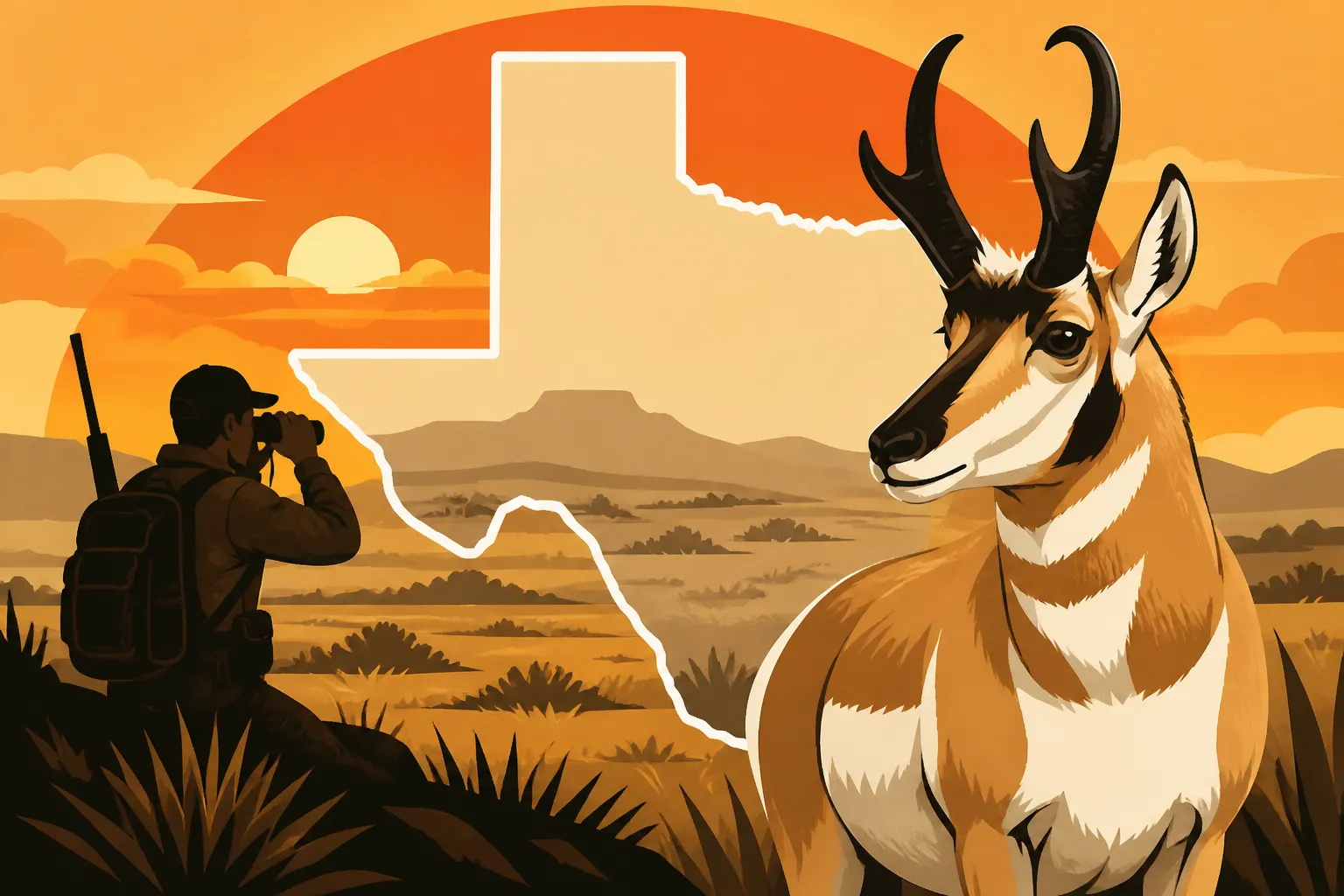
Effective scouting is paramount for pronghorn hunting. Given their open habitat, you'll spend a lot of time glassing. High-quality binoculars (10x or 12x) and a spotting scope are indispensable. You'll be looking for small, distant specks that might be pronghorn, often from the highest vantage point you can find. Roadsides, hilltops, or even dedicated glassing points on private ranches become your initial scouting grounds. Early mornings and late evenings are often the best times to spot them as they move to feed or water. Using a mapping app like onX Hunt or GoHunt can help you identify property boundaries, topographical features, and potential travel corridors.
Once you spot a buck you'd like to pursue, the real challenge begins: the stalk. Pronghorns have exceptional eyesight, making it incredibly difficult to approach them unnoticed in wide-open country. You'll need to utilize every bit of available cover—small rises, drainages, isolated mesquite bushes, or even tall grasses—to get within shooting range. This often involves long crawls, careful use of wind direction, and immense patience. Understanding their typical Pronghorn Hunting Tactics for Texas is crucial for success. Shot distances can be considerable, so practicing with your rifle at extended ranges (200-400 yards or more) is highly recommended. Many successful pronghorn hunters will tell you that the mental game of spotting and stalking is what makes this hunt so thrilling and demanding.
Disclaimer
Please remember that hunting regulations and seasons can change. Always consult the official Texas Parks and Wildlife Department Outdoor Annual for the most current and accurate information before planning any hunt. Responsible and ethical hunting practices are paramount.