Best Hunting Method for Bobwhite Quail in Texas
Finding a covey of Bobwhites in the vast Texas landscape can often feel like searching for a needle in a haystack made of prickly pear and mesquite. Between the fluctuating populations due to "boom and bust" rain cycles and the sheer density of the brush, many hunters leave the field with nothing but sore legs and empty shells. This guide breaks down the most effective hunting methods to help you locate birds, work your dogs, and master the art of the Texas quail flush.
The Undisputed King: Hunting Behind Pointing Dogs
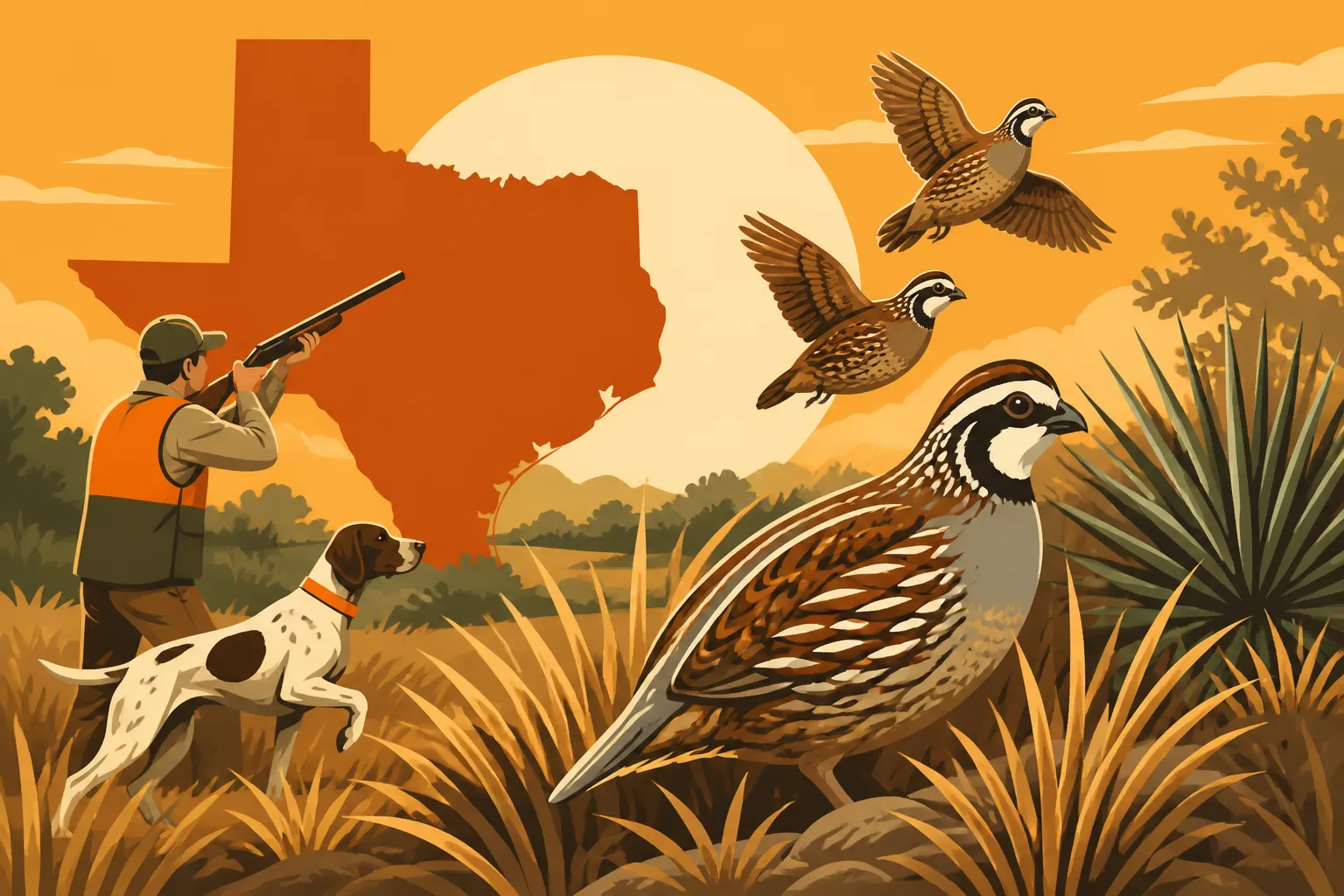
In the world of Texas upland hunting, there is no method more effective or more iconic than working behind a seasoned pointing dog. Because Bobwhite quail are notorious for holding tight in dense cover, a human walking alone will likely pass within ten feet of a dozen birds without ever knowing they were there. A dog’s nose is the only tool that can effectively bridge the gap between the hunter and the hidden covey.
Why the Pointing Dog is Essential in the Brush
Bobwhite quail rely on their camouflage and the thick "blackbrush" or "guajillo" of South Texas to stay hidden from predators. When a hunter approaches, the birds' first instinct is to huddle and stay still. Without a dog to scent them out and "lock up" on point, you are essentially gambling on a lucky step. Pointing breeds like the English Pointer, German Shorthaired Pointer, and Brittany Spaniel are the preferred choices for the Texas heat. These dogs are bred to cover vast amounts of ground—often several miles for every mile the hunter walks—allowing you to search large pastures in a fraction of the time.
When a dog finds a covey, they freeze, providing a visual cue to the hunter that it is time to prepare. This is where Bobwhite Quail Hunting Tactics for Texas become vital. You aren't just walking aimlessly; you are watching the dog's body language. A "flash point" might mean the birds are moving, while a rigid, intense point usually means the birds are pinned right under the dog's nose. Mastering this communication between dog and hunter is the hallmark of a successful outing.
Managing Heat and Hydration for Working Dogs
Texas is brutal on hunting dogs. Whether you are in the Rolling Plains or the brush country, the combination of sandy soil, thorns, and high temperatures can sideline a dog in less than an hour if you aren't careful. The best hunting method involves a rotation. Veteran hunters often run dogs in "braces" (pairs) for 30 to 45 minutes before swapping them out for fresh dogs kept in the shade of a truck or a specialized quail rig.
Hydration is not optional. You should be carrying water specifically for your dogs, often using a "squirt" bottle to deliver water directly into their mouths without stopping the hunt for too long. If you notice a dog’s tongue becoming dark purple or they start seeking shade rather than hunting, the hunt is over for that dog. In regions like the Rolling Plains Hunting: Quail & Deer areas, the lack of standing water makes this even more critical. Always prioritize the dog's health over the bag limit.
Working the Wind to Your Advantage
A dog is only as good as the wind allows them to be. The most effective way to hunt a pasture is to walk into the wind or across the wind. This allows the scent of the Bobwhites to drift directly into the dog’s nose. If you hunt with the wind at your back, the dog will likely "overrun" the birds, bumping the covey before they can point. This leads to frustrated hunters and wild flushes that are out of range. Plan your route through the pasture based on the morning breeze to ensure your four-legged partners have the best possible chance to catch a scent.
Reading the Texas Landscape and Identifying Habitat
You cannot find Bobwhites if you aren't looking in the right "rooms" of their house. Texas Bobwhites have very specific habitat requirements, often referred to as the "Quail Triangle": nesting cover, brooding cover, and escape cover. If a piece of land is missing one of these, the birds simply won't be there. Successful hunters spend as much time "scouting with their eyes" as they do walking.
Identifying the Quail Triangle of Habitat
Bobwhites need bunchgrasses, like Little Bluestem, for nesting. However, they also need bare ground beneath a canopy of "overhead cover" so they can run from predators without being seen from above. This is why a perfectly manicured, mowed field is usually a desert for quail. You want to look for "clumpy" areas. In the South Texas Deer Hunting: Brush Country Guide regions, this often looks like a mix of prickly pear, mesquite motts, and native grasses.
The birds also need a food source nearby. Look for "croton" (also known as dove weed) or ragweed. If you find an area where a thicket of mesquite meets a patch of ragweed with some bunchgrass nearby, you have found a honey hole. This edge habitat is where coveys spend 90% of their day. When you are planning How to Hunt Bobwhite Quail in Texas, always focus on these transition zones rather than the middle of wide-open spaces.
Regional Nuances: Rolling Plains vs South Texas
The method changes slightly depending on where you are. In the Rolling Plains, near places like Matador WMA Hunting & Draw Info, the terrain is vast and rolling. Here, birds might be found in the draws or along the edges of shinnery oak. The birds here tend to be "runners," meaning they will lead a dog on a chase for hundreds of yards before finally taking flight.
In South Texas, the brush is much more "vertical" and aggressive. You will encounter thorns that can pierce standard denim, making heavy-duty brush pants or chaps a requirement. The hunting style here is often more focused on "motts"—small islands of trees and brush in the middle of sandy grasslands. You move from mott to mott, letting the dogs check the perimeter of each one. If you're also interested in other species, you might notice how this differs from the Best Hunting Method for Blue Quail in Texas, as Blue Quail (Scaled Quail) are even more prone to running and often inhabit more arid, open desert scrub.
The Impact of Rainfall on Your Strategy
In Texas, quail numbers are tied directly to the "May-June" rains. If it didn't rain in the late spring, the insects that chicks eat won't be available, and the "hatch" will be poor. A veteran hunter checks the rainfall totals for the county they plan to hunt months before the season starts. If the rain was spotty, your method should focus on areas near permanent water sources or low-lying areas that held moisture longer. Checking the Texas Quail Season Dates 2026 early allows you to plan your scouting trips around these weather patterns.
| Feature | Rolling Plains | South Texas (Brush Country) |
|---|---|---|
| Primary Cover | Shinnery Oak, Sand Sage, Bunchgrass | Mesquite, Prickly Pear, Granjeno |
| Bird Behavior | Long-distance runners, large coveys | Hold tighter in motts, explosive flushes |
| Terrain | Rolling hills, red clay, sandy loam | Flat to gently rolling, deep sand |
| Dog Strategy | Big-running pointers (long distance) | Close-working dogs or specialized rigs |
| Common Challenges | High winds, freezing "blue northers" | Heat, rattlesnakes, extreme thorns |
The Walk-Up: Strategy and Safety in the Field
Once the dog is on point, the real "hunt" begins. This is the moment where most mistakes happen—either through poor positioning or, worse, safety lapses. Approaching a pointed covey is a tactical maneuver that requires coordination between everyone in the hunting party.
Maintaining the Line and Shooting Lanes
Safety is the absolute priority when a covey is about to flush. A standard "quail walk" involves two or three hunters walking in a perfectly straight line toward the dog. You must never get ahead of the person next to you. If someone lags behind or pushes forward, they create a dangerous situation where a bird flushing back toward the hunters could lead to a shot being fired in the direction of a partner.
As you approach the dog, you should have your "lanes" pre-determined. Typically, the hunter on the left takes any birds that fly to the left, and the hunter on the right takes anything flying to the right. The center hunter (if there is one) takes the "straight-aways." It sounds simple, but when twenty birds explode out of the grass with the sound of a small jet engine, adrenaline takes over. Staying disciplined and sticking to your lane is what separates a pro from a novice.
Dealing with Running Coveys
Sometimes, a covey refuses to hold. You’ll see the dog "creep" forward, stop, and then creep again. This means the birds are running on the ground ahead of the dog. In this scenario, the best method is to have the hunters split slightly and try to "pinch" the birds toward a piece of thick cover or a fence line that forces them to take flight.
However, you must be careful not to over-pressure the dog. If the dog gets frustrated and breaks point to chase the runners, the birds will flush wild and you won't get a shot. If the birds are running, pick up the pace of your walk. You want to get into a shooting position as quickly as possible before the birds put too much distance between you and the dog.
The Shot and the Retrieve
Bobwhites are small and fast, but they aren't "tough" birds in terms of taking a hit. A standard 20-gauge or 28-gauge shotgun with an improved cylinder or skeet choke is usually the perfect tool. You aren't looking for a long-distance shot; most birds are taken within 20 to 30 yards. Focus on a single bird—never "flock shoot" at the whole covey, as this usually results in hitting nothing but air.
After the shot, the work isn't done. Marking where the birds fell is notoriously difficult in thick Texas grass. This is where a good "retriever" or a pointer with a steady "dead bird" command is worth their weight in gold. If you don't have a dog to help retrieve, keep your eyes locked on the exact spot the bird fell and don't take your eyes off it until you are standing on top of it.
Essential Gear for the Texas Quail Hunter
The environment in Texas is designed to poke, prod, and overheat you. Your gear needs to be a balance of protection and breathability. If you aren't dressed correctly, you’ll be heading back to the truck before lunch.
Protection from the Elements and Pests
Snake protection is a non-negotiable in much of Texas, especially in the South and West. Rattlesnakes are active well into the hunting season if the temperatures stay above 60 degrees. Investing in the Best Snake Boots for Texas Hunting is the smartest move you can make. Additionally, you need high-quality brush pants. The "wait-a-minute" vines and catclaw briars will shred standard khakis in minutes.
For your upper body, stick to lightweight, moisture-wicking fabrics. Even in December, a sunny day in the brush country can reach the 80s. A vest with plenty of pocket space for shells and a large "game bag" in the back for your harvest is the standard uniform. If you are hunting on a managed property, you might also want to check out the Best Gear for Bobwhite Quail on a Texas Lease to see what specific items like GPS collars or specialized quail rigs are being used by the pros.
Shotgun and Ammo Selection
While the 12-gauge is the "do-it-all" shotgun, many veteran quail hunters find it to be overkill. The constant walking—sometimes 5 to 10 miles a day—makes a heavy 12-gauge feel like a lead pipe by 2:00 PM. A lightweight 20-gauge over-under or semi-auto is the sweet spot.
For ammunition, #7.5 or #8 lead shot (where legal) is the standard. You want a high pellet count to ensure a good spread for these fast-moving targets. If you are hunting on public land that requires non-toxic shot, move to a #6 or #7 steel or a specialized bismuth load. Always ensure you are familiar with the local regulations and have your license ready by checking How Much Is a Texas Hunting License? before you head out.
Disclaimer
This guide is intended for informational and educational purposes only. Hunting regulations, including bag limits, season dates, and legal methods, are subject to change by the Texas Parks and Wildlife Department (TPWD). Always consult the current Texas Outdoor Annual and local laws before heading into the field. Ensure you have the proper licenses, endorsements, and land-owner permission before attempting to hunt any game species in Texas. Safety should always be your primary concern when handling firearms and working with hunting dogs.