Texas Deer Zones: North vs South Explained
Every year, thousands of hunters across the Lone Star State find themselves scrolling through the Outdoor Annual, scratching their heads over where exactly the "North" ends and the "South" begins. Miscalculating these boundaries doesn't just mean missing the opening morning of your dreams; it can lead to serious legal headaches with a game warden. This guide provides a definitive breakdown of the Texas deer zones to ensure you are hunting legally and strategically.
The Geography of the Texas Deer Zones
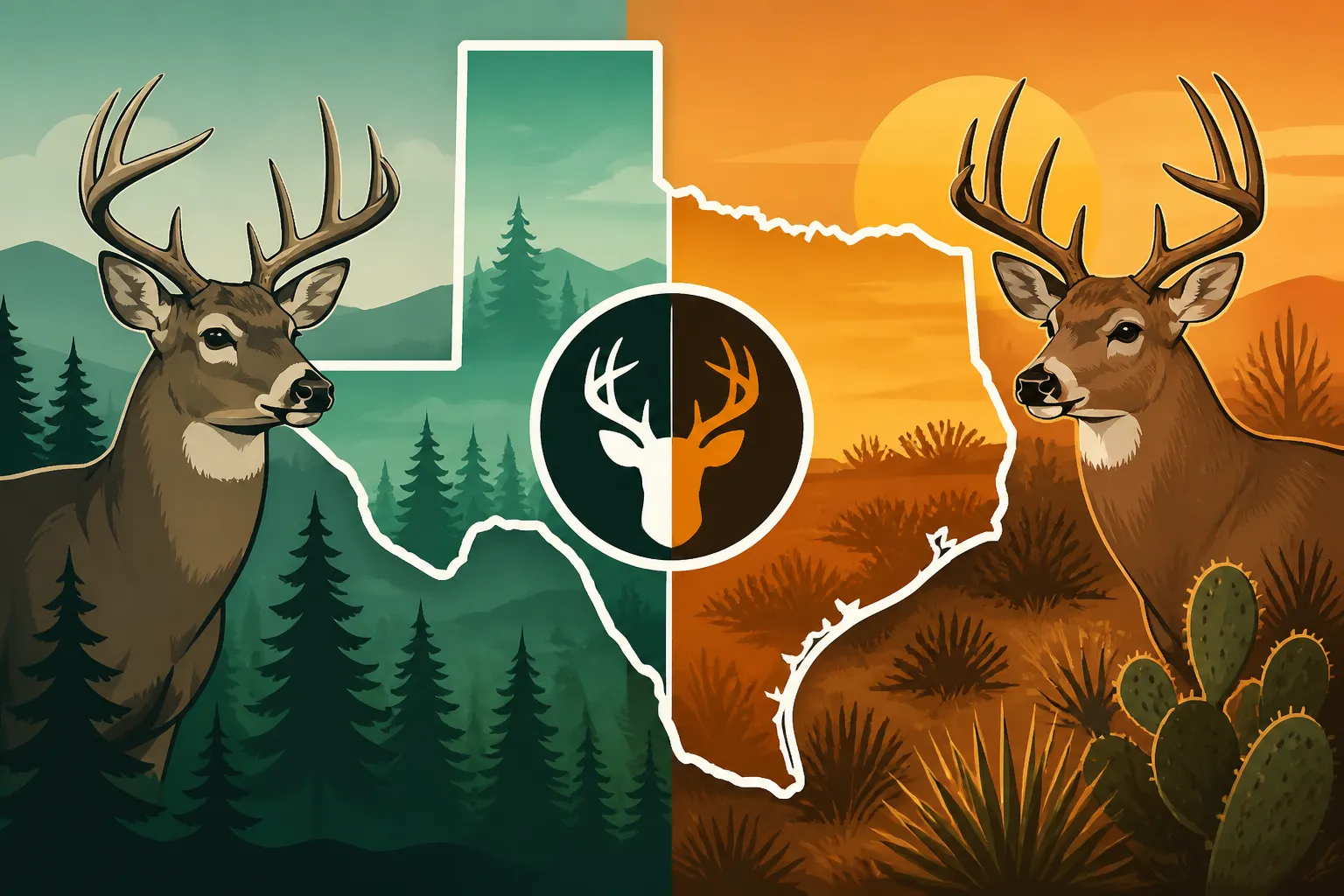
The division between the North and South zones isn't just an arbitrary line drawn across the middle of the state; it is a boundary rooted in decades of wildlife management and biological observation. While most of the state falls under the North Zone umbrella, the South Zone encompasses the legendary "Brush Country" that many trophy hunters call home. Understanding where your specific lease or public land falls is the first step in planning a successful season.
Defining the North Zone Boundary
The North Zone is massive, covering the vast majority of Texas counties. It stretches from the tip of the Panhandle down through the Rolling Plains, across the piney woods of East Texas, and deep into the Edwards Plateau. For most hunters, the North Zone is the default. It includes the high-density areas of the Hill Country where deer numbers are often at their peak. Because this zone is so geographically diverse, the habitat can range from the semi-arid canyons of the West to the thick, humid forests bordering Louisiana.
In this zone, the landscape dictates the deer's behavior. In the northernmost reaches, you might find yourself glassing wide-open wheat fields, while in the central parts of the zone, you are likely tucked into a cedar thicket. Because the North Zone is so large, the Texas Hunting Seasons: Complete Calendar by Species is an essential tool to keep track of how various game seasons overlap with the whitetail schedule in these diverse counties.
Mapping the South Zone Terrain
The South Zone is more compact but world-renowned for its quality. Generally speaking, the South Zone begins at the southern county lines of Edwards, Real, Kerr, Gillespie, Blanco, Travis, Hays, Comal, Guadalupe, Gonzales, Lavaca, Colorado, Waller, Harris, Liberty, Hardin, and Jefferson. Everything south of that line—stretching down to the Rio Grande and the Gulf Coast—is considered the South Zone. This area is characterized by mesquite flats, prickly pear cactus, and the dense "monte" that provides incredible cover for big bucks.
Hunting in the South Zone feels like a different world compared to the rest of the state. The temperatures stay warmer longer, the vegetation is thornier, and the deer have evolved to thrive in a much harsher, more arid environment. If you are headed to this region, you’ll want to consult our South Texas Deer Hunting: Brush Country Guide to understand the specific environmental challenges, like heat management and rattlesnake safety, that come with the territory.
The Importance of Knowing Your County
It is a common mistake for hunters to assume that because they are "near" a major city like San Antonio, they are automatically in the South Zone. In reality, some counties around the San Antonio area are split or fall entirely into the North Zone depending on where the boundary line is drawn for that specific regulatory year. Always check the specific county regulations in the Outdoor Annual before you head out. A mistake of just a few miles can mean you are hunting out of season, which carries heavy fines and the potential loss of your license.
The county-by-county breakdown also influences bag limits. While the zones dictate the dates, the individual county often dictates how many bucks or does you can take. For a clearer picture of what you can harvest once you arrive, check the Texas Deer Bag Limit by County for your specific hunting grounds. Being a responsible hunter means doing the homework before the truck is even loaded.
Season Dates and Timing Discrepancies
The primary reason for the zone split is the biological timing of the deer themselves. Texas is so large that deer in the Panhandle are on a completely different biological clock than deer in the Rio Grande Valley. To accommodate this, the Texas Parks and Wildlife Department (TPWD) staggers the opening and closing dates of the general season.
The General Season Split
Typically, the North Zone general season opens on the first Saturday in November. This is the traditional "Opening Day" that most Texas hunters have circled on their calendars. The South Zone, however, usually opens one week later. This delay in the South Zone is intentional, designed to better align the hunting pressure with the later breeding cycles common in the brush country. If you are hunting both zones, this staggered start actually gives you two "Opening Days" to enjoy, provided you have the tags and the travel time.
The closing dates differ as well. The North Zone typically wraps up its general season in early January, whereas the South Zone often stays open until the middle or even the end of January. This extended late season in the South is a goldmine for hunters who didn't fill their tags early on, as it allows for hunting during the "post-rut" when big bucks are hitting feeders hard to regain lost body weight. You can find the exact calendar for the upcoming year in our Texas Deer Season 2026-2027: Dates by Zone breakdown.
Muzzleloader and Late Season Variance
Beyond the general season, the two zones handle late-season opportunities differently. The North Zone frequently has a "Special Late Season" that is restricted to antlerless deer and unbranched antlered bucks (spikes). This is a management tool used to help control high populations in areas like the Edwards Plateau. If you find yourself hunting this period, the Hill Country Hunting in Texas guide offers great tips on how to identify management deer during those cold January mornings.
The South Zone also features a late season, but because the deer densities and management goals differ, the rules can vary slightly. Often, these late seasons are a great time to introduce new hunters to the sport because the pressure is lower and the deer are more predictable. However, you must be extremely careful to identify your target, as the "13-inch rule" or other antler restrictions still apply during these periods unless otherwise noted for that specific county.
Youth Only Weekends
Texas is fantastic about providing dedicated weekends for youth hunters, but these also follow the zone-based timing. There is typically a youth-only weekend prior to the general season opener in both zones. For the North Zone, this usually happens in late October, while the South Zone youth weekend might occur just before their November opener. There is also a youth-only season in January.
These weekends are a precious opportunity to get kids in the blind without the distractions of a full camp. Because the North Zone youth season happens during a time when the weather is finally starting to turn crisp, it’s often the highlight of the year for many families. Just remember that the youth must be under the age of 17 at the start of the season and must be accompanied by a licensed adult.
Biological Rut Cycles by Zone
Perhaps the most significant difference between the North and South zones is when the "rut" or breeding season occurs. For those who aren't familiar, the rut is the period when bucks lose their caution and focus entirely on finding does. If you time your hunt to the rut, your chances of seeing a trophy buck increase exponentially.
Early Action in the North
In the North Zone, especially in the northernmost counties and parts of East Texas, the rut often peaks in early to mid-November. This often aligns perfectly with the opening of the general season. Hunters in the North Zone can expect to see bucks chasing does, frequenting scrapes, and responding to grunts or rattling shortly after the season kicks off. It is an exciting time to be in the woods, as the activity can happen at any hour of the day.
However, the North Zone is so large that even within its borders, the rut can shift. In the Hill Country, the peak might be mid-November, while in the Panhandle, it could be a week earlier. For a more granular look at these timings, you should read When Is the Texas Whitetail Rut? to see a regional map of peak activity. Knowing these dates helps you decide when to take your vacation days.
The Late South Texas Rut
The South Zone is famous for its "late" rut. In many South Texas counties, the peak of the breeding season doesn't happen until mid-December or even early January. This is often referred to as the "Christmas Rut." While hunters in the North are packing up their gear and heading home for the year, South Texas hunters are just getting into the best action of the season. This late timing is a survival mechanism; it ensures that fawns are born later in the spring when the harsh South Texas heat has subsided and late-spring rains have provided fresh forage.
Hunting the South Texas rut requires a different mindset. Because the brush is so thick, you aren't always looking for deer in the open. You are listening for the sound of crashing brush and watching the edges of senderos. It’s also the prime time to utilize rattling horns. If you want to master this specific skill, our guide on When to Rattle for Bucks in South Texas is a must-read for anyone heading to the brush country.
Environmental Factors Affecting Deer Movement
While the biological clock sets the stage, the weather in each zone dictates how the deer move on a day-to-day basis. In the North Zone, a strong cold front from the north can trigger a massive amount of daylight activity. Deer in these regions are accustomed to colder winters and will feed heavily before and after a front. In contrast, the South Zone can remain stubbornly warm well into December. On a 80-degree day in Dimmit County, deer are likely to be nocturnal, moving only in the very first and last moments of light.
Understanding these patterns is key to not burning out. If the weather is hot and the wind is wrong, sometimes it’s better to stay in camp rather than educate the deer to your presence. To optimize your time in the stand, check out our advice on the Best Time of Day to Hunt Whitetail in Texas to learn how to balance your hunting pressure with the prevailing weather conditions of your zone.
Management Differences and Antler Restrictions
Texas utilizes "Antler Restrictions" in many counties to help improve the age structure of the buck population. These rules are common in the North Zone but also appear in several South Zone counties. The goal is simple: let the young bucks grow so they can reach their full potential.
The 13-Inch Rule in the North
In over 110 counties, many of which are in the North Zone, the "13-inch rule" is in effect. This regulation states that a legal buck must have either at least one unbranched antler (a spike) or an inside spread of at least 13 inches. The 13-inch measurement is generally the distance between the tips of a deer's ears when they are in the "alert" position. This rule has been incredibly successful in the North Zone, resulting in a much higher percentage of mature, large-antlered bucks being available for harvest.
If you are new to field judging, it can be nerve-wracking to decide if a buck is 12.5 inches or 13.5 inches. To help you avoid a ticket, we have a detailed guide on Texas Antler Restrictions: 13-Inch Rule & Counties that provides visual aids and tips for judging a buck's spread before you pull the trigger. Remember, if you aren't 100% sure, it’s always better to let the deer walk and grow another year.
South Texas Trophy Management
While many South Texas counties also follow antler restrictions, the region is also home to a high concentration of private ranches that operate under the Managed Lands Deer Program (MLDP). These properties have their own specific sets of rules and tags provided by TPWD biologists. On an MLDP ranch, the standard zone dates and antler restrictions may not apply in the same way, as the harvest is dictated by a specific biological management plan for that property.
This is part of why South Texas is such a powerhouse for trophy hunting. Ranches in this zone often have stricter self-imposed rules than the state requirements, choosing to let bucks reach 5 or 6 years of age before they are considered "shooters." If you are lucky enough to hunt one of these properties, you’ll find that the "South Zone" experience is as much about conservation as it is about the hunt itself.
Tagging and Harvest Reporting
Regardless of which zone you are in, the law requires immediate tagging of a harvested deer. You must cut out the month and day on the tag from your license and securely attach it to the animal. In recent years, TPWD has also implemented mandatory harvest reporting in certain counties, primarily to track the spread of Chronic Wasting Disease (CWD) and to better manage populations.
Failure to report a harvest in a mandatory county is a violation of the law. The process is usually done through the "My Texas Hunt Harvest" app, which is very user-friendly. To make sure you’re up to speed on the latest digital requirements, review our tutorial on How to Report Your Harvest in Texas. It only takes a few minutes, and it provides vital data that keeps the Texas deer population healthy for the next generation.
| Feature | North Zone | South Zone |
|---|---|---|
| Typical Opening Day | 1st Saturday in November | 2nd Saturday in November |
| General Season End | Early January | Late January |
| Peak Rut Timing | Early to Mid-November | Mid-December to Early January |
| Dominant Habitat | Oak Motts, Pine Forests, Cedar Breaks | Mesquite Brush, Prickly Pear, Acacias |
| Common Regulations | 13-Inch Rule (110+ Counties) | Variable (Mix of MLDP and 13-Inch Rule) |
| Late Season Focus | Antlerless & Spikes (Management) | Extended Trophy & Post-Rut Opportunity |
Tactical Adjustments for Each Zone
Hunting the North vs. the South requires a shift in your tactical approach. You cannot hunt a South Texas sendero the same way you hunt an East Texas creek bottom. Each zone presents unique challenges for concealment, wind management, and deer attraction.
Hunting the Brush of the South
In the South Zone, visibility is often your biggest hurdle. The brush is so dense that you might only see a deer when it crosses a road or a "sendero" (a cleared path). Because of this, many South Zone hunters rely heavily on tripods or tower blinds to gain an elevated vantage point. This allows you to look down into the brush rather than trying to look through it.
Corn is the king of attractants in the South Zone. Baiting senderos is a standard practice that helps draw deer out of the thickets where they can be properly aged and judged. If you are setting up a new spot, knowing Where to Place a Deer Feeder for Best Results is critical in this terrain. You want to place the feeder where the prevailing wind won't carry your scent directly into the bedding area, which is often only a few yards away in the thick brush.
Open Country and Timber Tactics for the North
In the North Zone, particularly in the Rolling Plains or the Panhandle, you are often dealing with much more open country. Here, glassing becomes your most important skill. You might spend hours behind a pair of high-quality binoculars, scanning canyon rims or wheat field edges from a mile away. In these areas, spot-and-stalk hunting is a viable and exciting method, whereas, in the South Zone, stalking is nearly impossible due to the noisy, crunchy ground and thorny cover.
In the timbered areas of the North Zone, such as East Texas, the tactics shift toward hunting travel corridors and natural funnels. Deer here are often more pressured and may shy away from open feeders during daylight hours. Finding a "pinch point" between a bedding thicket and a hardwood bottom full of acorns is often more effective than sitting over a corn pile.
Weather Considerations
Finally, never underestimate the power of the Texas sun. In the South Zone, even in November, afternoon temperatures can easily climb into the 80s or 90s. This means you need a plan for your meat the moment the deer hits the ground. In the North Zone, you might have the luxury of a cold front keeping the carcass chilled, but in the South, an ice chest and a quick trip to the processor are mandatory. Understanding the logistics of the zone you choose is just as important as the hunt itself.
Disclaimer
The information provided in this guide is for educational and informational purposes only. Hunting regulations in Texas, including zone boundaries, season dates, and bag limits, are subject to change annually by the Texas Parks and Wildlife Department. Always consult the official Texas Parks and Wildlife Outdoor Annual or the TPWD website for the most current and legally binding regulations before heading into the field. Failure to comply with state hunting laws can result in fines, imprisonment, and the permanent loss of hunting privileges.