Predator Calling for Coyotes in Texas
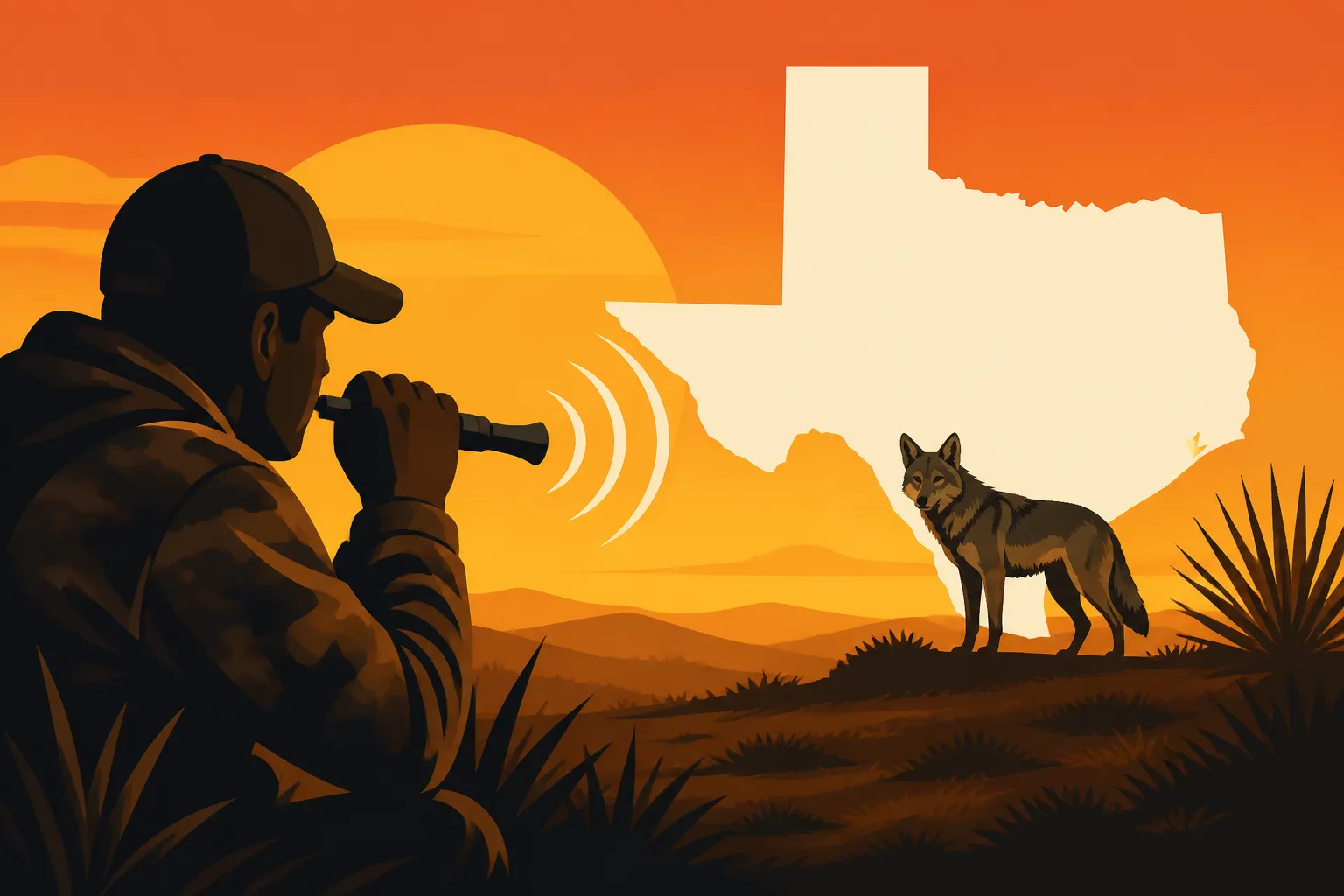
Texas is a place of wild beauty, but it's also a place where landowners and wildlife managers often face an uphill battle against surging predator populations, especially coyotes. These cunning canids can decimate deer fawn crops, impact turkey poults, and even pose a threat to livestock, leaving many feeling frustrated and at a loss for how to gain an edge. This comprehensive guide is here to walk you through the ins and outs of predator calling for coyotes in the Lone Star State, providing you with the knowledge and tactics to effectively manage these wily animals.
Understanding Coyote Behavior in Texas
Before you can effectively call in a coyote, you've got to understand what makes them tick. These aren't just random critters; they're intelligent, adaptable animals whose behavior is deeply rooted in their environment and survival instincts. Knowing their patterns and habits is the bedrock of successful predator calling.
Coyote Ecology and Habits
Coyotes in Texas are opportunistic predators, meaning they'll eat just about anything they can get their paws on. Their diet often includes small mammals like rabbits and rodents, birds, insects, and even fruits and berries when available. However, they're also known to prey on deer fawns, especially during the spring birthing season, and can be a significant factor in localized wildlife populations. They are highly territorial, and their home ranges can vary widely depending on the availability of food and water, which is particularly important to consider when you're scouting for a stand location. They communicate through a complex series of howls, yips, and barks, which are not only for territorial defense but also for locating pack members and alerting others to danger or a food source. Understanding these vocalizations can give you a real advantage when choosing which calls to use.
Seasonal Influences on Coyote Activity
Coyote behavior isn't static; it shifts with the seasons. During the breeding season, typically from late December through March, coyotes are often more vocal and responsive to challenge howls as males look for mates and defend their territory. Pups are usually born in April and May, and during this denning period, adult coyotes are intensely focused on providing food for their young, making them highly susceptible to distress calls mimicking a vulnerable animal. As the pups grow and begin to disperse in late summer and fall, young coyotes, often less wary than their elders, might be more easily called in, driven by curiosity or hunger. Knowing these seasonal nuances helps you tailor your calling strategy, picking the right time and the right sound for maximum impact. For instance, a fawn distress call will be far more effective in late spring or early summer when fawns are plentiful and vulnerable than it would be in the dead of winter.
Essential Gear for Coyote Calling
You wouldn't head out on a deer hunt without your rifle and binoculars, right? The same goes for coyote calling. Having the right tools for the job can make all the difference between a successful hunt and a frustrating, empty stand.
Electronic Callers vs. Hand Calls
This is often where hunters get stuck: do I go high-tech or stick with tradition? Both electronic callers and hand calls have their place in a Texas coyote hunter's arsenal.
Electronic Callers: These are a fantastic tool, especially for beginners or those wanting a wide range of sounds. Brands like Foxpro and Lucky Duck offer robust electronic callers pre-loaded with dozens, sometimes hundreds, of different coyote vocalizations and prey distress calls. They allow you to place the sound source away from your position, drawing the coyote's attention away from you and making them feel safer as they approach. This separation can be crucial for getting a clean shot. The ability to switch calls with a remote control also means you can adapt quickly if a coyote hangs up or shows disinterest. For targeting wary coyotes, particularly those that have been called before, an electronic caller gives you consistency and volume that's hard to beat.
Hand Calls: Ah, the classic! Hand calls require more skill and practice, but they offer an intimacy and realism that can be incredibly effective. From open-reed to closed-reed models, they produce a variety of rabbit, bird, and rodent distress sounds. The beauty of a hand call is its simplicity and reliability – no batteries to die, no remote to lose. They allow for subtle variations in tone and volume that a skilled caller can manipulate to sound incredibly lifelike. Many experienced callers swear by hand calls for their ability to add emotion and nuance to the sound, which can be irresistible to a curious or hungry coyote. Whether you're trying to replicate a squealing cottontail or a whimper, a practiced hand caller can really sell the illusion. You might even find yourself reaching for a hand call when you're out on a regular hunting trip for, say, Feral Hog Hunting in Texas: Year-Round Guide, and you spot a coyote looking for an easy meal.
| Feature | Electronic Callers | Hand Calls |
|---|---|---|
| Sound Variety | Vast, pre-loaded library; remote control changes | Limited to one or few sounds per call; requires skill for variety |
| Placement | Can be placed away from hunter, drawing attention | Sound originates from hunter's position |
| Volume/Control | Consistent, easily adjustable with remote | Variable, depends on caller's breath and technique |
| Realism | High-quality digital recordings, but can sound repetitive | Highly realistic with practice; natural variations |
| Durability | Battery-dependent, can be affected by weather | Mechanically simple, less prone to failure |
| Learning Curve | Low for basic use, higher for advanced sequencing | High, requires significant practice for proficiency |
| Cost | Generally higher (initial investment) | Lower (initial investment) |
Optics and Firearm Considerations
Coyotes can be tough to spot, especially in the thick Texas brush or at longer ranges. Good optics are non-negotiable. A quality pair of binoculars, say 8×42 or 10×42, is essential for scanning the landscape and spotting incoming coyotes, particularly when they "hang up" at a distance. When it comes to your rifle scope, clarity and a good magnification range are key. Many hunters opt for variable power scopes, like a 3-9x or 4-12x, which offer versatility for both close-in shots and those longer engagements across open fields.
As for firearms, coyotes aren't huge, but they are tough, and you want to ensure a clean, ethical harvest. Common calibers include .223 Remington, .22-250 Remington, .243 Winchester, and even .308 Winchester. These rounds offer a good balance of flat trajectory and sufficient energy. For those interested in Thermal Hog Hunting in Texas, many of the same thermal scopes and rifles used for hogs can be perfectly adapted for night coyote hunting, offering an incredible advantage after dark. Don't forget a reliable rangefinder; knowing your exact distance to a target is critical for accurate shot placement, especially with smaller targets like coyotes.
Camouflage and Scent Control
Coyotes have incredible senses of sight and smell, making camouflage and scent control just as vital, if not more so, than for deer hunting. Choose camouflage patterns that break up your silhouette and blend with the local Texas foliage—whether that's mesquite, oak, or prairie grass. Early season hunting might call for lighter, breathable camo to deal with the heat, while later in the year, you might need something heavier.
Scent control is paramount. A coyote's nose is legendary, and even the faintest human odor can send them packing. Shower with scent-free soaps, wash your hunting clothes in scent-eliminating detergents, and store them in airtight containers. Using scent-eliminating sprays on your clothes and gear before heading out is also a good practice. Wind direction is your ultimate scent control; always try to set up so the wind is blowing your scent away from where you expect coyotes to approach. They'll almost always try to circle downwind to get a whiff of whatever is making the noise, so anticipate this.
Mastering Coyote Calling Techniques
Okay, you've got your gear, you understand coyotes a bit better. Now, let's talk about the art of making sounds that actually work to bring them in. It's not just about blowing a call; it's about telling a story.
Distress Calls: Rabbit, Fawn, and Bird
Distress calls are arguably the most effective and widely used calls for coyotes. The idea is simple: mimic an animal in trouble, and a coyote's instinct to investigate an easy meal kicks in.
- Rabbit Distress: This is the bread and butter of coyote calling. Sounds like a cottontail or jackrabbit squealing in pain are universal coyote magnets. Start with softer, intermittent calls, then increase intensity and duration as if the animal is truly in distress. Vary the pitch and rhythm to make it sound more realistic. Many hunters find that a blend of short, sharp cries followed by longer, more drawn-out wails works best.
- Fawn Distress: Especially potent during late spring and early summer when deer fawns are being born and are most vulnerable. A bleating fawn distress call can be incredibly effective, as coyotes are actively seeking out young deer during this period. Remember, Texas is prime White-Tailed Deer Hunting in Texas: Complete Guide country, and coyotes definitely factor into fawn survival rates.
- Bird Distress: While not as universally used as rabbit calls, certain bird distress calls, particularly those mimicking a wounded crow or a struggling woodpecker, can pique a coyote's interest. These can be great secondary calls or for areas where coyotes might be accustomed to rabbit calls.
When using distress calls, start softly to avoid startling close-by coyotes, then gradually increase volume. Mimic a dying animal, not a continuously screaming one. Pauses are critical; coyotes will often approach cautiously, listening intently.
Interrogation and Challenge Howls
While distress calls bring in the hungry, howls can often bring in the curious or territorial. These are more advanced calls and require a good understanding of coyote vocalizations.
- Interrogation Howl: This is a series of short, sharp howls, often ending with a longer, drawn-out howl. It's meant to sound like a lone coyote seeking company or trying to locate other coyotes in the area. A dominant coyote might respond aggressively, while a less dominant one might respond out of curiosity. This call is particularly useful during the breeding season.
- Challenge Howl: This is an aggressive, dominant howl, often used to challenge another coyote that has entered their territory. If you hear a distant coyote howling, responding with a challenge howl can sometimes provoke them into approaching to investigate the perceived intruder. Use these sparingly, as an overly aggressive approach can sometimes intimidate rather than attract. Combining an interrogation howl with some subtle distress calls after a pause can sometimes simulate a coyote finding a meal, which can be irresistible to other coyotes in the vicinity.
Stand Setup and Strategy
Your stand location is just as important as your calling technique. You need to maximize your visibility while remaining concealed.
- Wind Direction: As mentioned with scent control, wind is paramount. Always set up with the wind in your face or quartering. Coyotes almost always circle downwind to scent-check the source of the sound.
- Concealment: Use natural cover—bushes, trees, terrain—to break up your outline. A good Box Blind vs Tripod vs Ground Blind in Texas can offer excellent concealment, though many coyote hunters prefer to be on the ground, hunkered down into natural cover for maximum mobility and a lower profile.
- Visibility: You want a clear field of view, ideally 100-200 yards in all directions, to spot approaching coyotes. Avoid dense cover right in front of you where a coyote could sneak in unnoticed. Consider elevated positions for better visibility, but ensure you maintain good concealment.
- Approach Lanes: Think about where a coyote is likely to come from. Are there natural draws, fence lines, or trails they might follow? Set up to intercept them before they reach your downwind side. A good rule of thumb is to allow a coyote to approach to within 50-100 yards before taking a shot, depending on your comfort level and the terrain.
Optimal Times and Locations for Success
Coyotes are always out there, but certain times and places offer a higher probability of success. Hunting them efficiently means capitalizing on these windows of opportunity.
Best Times of Day and Year
Just like deer, coyotes are often most active during dawn and dusk. These crepuscular hours offer reduced visibility for humans, but coyotes, with their superior night vision, use it to their advantage. Early morning, right as the sun is coming up, and late afternoon, leading into twilight, are prime times to be on a stand. Midday can also be productive, especially on overcast days or in areas with thick cover where coyotes might feel secure moving about.
Seasonally, as discussed, the breeding season (winter) and denning season (spring) offer excellent opportunities. Winter often means hungry coyotes more willing to respond to calls, and their coats are thicker and more desirable if you're interested in pelts. Spring and early summer are fantastic for distress calling, as the adults are feeding pups. However, don't rule out calling coyotes throughout the year. They're opportunistic, and a well-placed call can bring one in at almost any time. If you're wondering about How to Call Coyotes at Night in Texas, that's another highly effective strategy, especially with the use of artificial lights or thermal imaging equipment.
Scouting and Reading the Landscape
You wouldn't just pick a random spot to hunt deer, would you? The same goes for coyotes. Effective coyote calling starts with thorough scouting.
- Tracks and Scat: Look for coyote tracks along sandy roads, dry creek beds, and trails. Fresh tracks indicate recent activity. Scat (feces) can also reveal their diet and presence.
- Hear Them Howl: Before you even set up, listen. If you hear coyotes howling in the distance, you know they're in the area. A "howl survey" where you emit a few howls yourself (sometimes called a "locator howl") can often provoke a response, helping you pinpoint their general location before you commit to a stand.
- Water Sources: In arid Texas, water is a magnet for all wildlife, including coyotes. Look for ponds, tanks, and creeks, especially during dry periods.
- Game Trails and Funnels: Coyotes use game trails just like other animals. Look for natural funnels like breaks in tree lines, saddles between hills, or narrow stretches of cover that coyotes might use to travel between feeding and bedding areas. Setting up near these can increase your chances of intercepting an approaching coyote. Remember, the goal is often to control predator populations to protect other game, like those beautiful South Texas Trophy Whitetail: Brush Country Bucks.
Common Challenges and Troubleshooting
Even the most seasoned coyote callers run into issues. These animals are smart, and they learn quickly. Understanding why a call might not be working and how to adapt can be the difference between heading home empty-handed and filling a tag.
Dealing with Call-Shy Coyotes
Ah, the call-shy coyote. These are the ones who have heard every rabbit distress call in the book, probably had a close call or two, and now hang up at a distance, unwilling to commit. They're a real challenge, but not impossible to fool.
- Vary Your Calls: If you've been using the same old cottontail call, switch it up. Try a fawn distress, a bird distress, or even a puppy distress if you're feeling adventurous. The key is to offer something they haven't heard or something that triggers a different instinct.
- Subtlety is Key: For call-shy coyotes, less can sometimes be more. Start with very soft, intermittent calls, making them sound timid or distant. Sometimes, a series of soft whimpers or mouse squeaks is all it takes to pique their curiosity without raising their suspicion.
- Change Your Location: If a specific area is known for call-shy coyotes, move to a new spot. Sometimes, simply changing the scenery and the approach angles can make a difference.
- Long Pauses: Let the calls breathe. With call-shy coyotes, longer pauses (5-10 minutes) between calling sequences can be effective. They might be approaching very slowly and cautiously, needing time to process the sound.
- Visuals: Adding a visual element can sometimes be the trick. A flapping rabbit decoy or a rotating bird can draw attention away from your position and give the coyote something to focus on, making them commit to the final yards. Many coyote hunters use these, similar to how Dove Hunting Tactics: Field Setup & Shooting uses decoys to draw birds closer.
Wind and Weather Considerations
Texas weather is notoriously unpredictable, and it plays a huge role in coyote calling success.
- Wind: Wind is both your friend (for scent control) and your enemy (for sound dispersion). A stiff breeze can carry your scent far downwind, but it also makes it harder for coyotes to pinpoint the sound of your call, and it can carry your call away from their location. On windy days, try to call into the wind or use very aggressive, loud calls that can cut through the noise. Positioning yourself in a natural windbreak can also help. Always be mindful of the wind direction; it dictates almost everything about your stand.
- Rain and Wet Conditions: Coyotes generally don't like moving much during heavy rain. Light drizzles or after a rain shower can be productive, as the ground is softer, making silent movement easier for them, and the air is often clearer. However, electronics can be a pain in the rain, so hand calls might be a better option in wet conditions.
- Temperature: Extreme heat in Texas can make coyotes less active during the day. Focus on early morning or late evening stands during the scorching summer months. In cooler weather, they might be more active throughout the day, looking for food to fuel their metabolism. Knowing the current Texas Hunting Seasons: Complete Calendar by Species helps you anticipate general weather patterns.
By understanding these nuances and adapting your approach, you'll be well on your way to becoming a more effective and successful coyote caller in Texas. Happy hunting!
Disclaimer
Hunting carries inherent risks, including but not limited to injuries from firearms, falls, and wildlife encounters. Always prioritize safety, follow all local, state, and federal hunting regulations, and obtain proper licenses and permits. This guide is for informational purposes only and does not endorse illegal activities. Always hunt ethically and responsibly.