Best Gear for Blue Quail on a Texas Lease
Hunting blue quail on a Texas lease presents a unique set of challenges and thrills. Unlike their bobwhite cousins who often hold tight, blue quail, or "scaled quail" as we often call them, are notorious for their running habits, flushing far out, and disappearing into the sparse, arid landscape of West Texas or the Panhandle. It can be incredibly frustrating to spend hours covering ground, only to have a covey erupt 50 yards ahead and vanish over a rise, leaving you breathless and empty-handed. This guide is all about equipping you with the right gear and knowledge to turn those frustrating chases into successful hunts, ensuring you're prepared for the specific demands of pursuing these elusive birds on your Texas lease.
Understanding Blue Quail Habitat and Behavior
Before we even talk about shotguns, it's crucial to grasp what makes blue quail tick. They're not like the bobwhites you might find in the dense cover of East Texas. Blue quail thrive in more open, arid, and semi-arid environments, often characterized by short grasses, mesquite, prickly pear, and rocky terrain. This specific habitat dictates much of their behavior and, subsequently, the gear you'll need to be effective.
The Running and Flushing Dynamic
One of the biggest differences you'll encounter with blue quail compared to other upland birds is their tendency to run. They prefer to use their legs to escape danger, often sprinting considerable distances through sparse cover before taking flight. This means you’ll be doing a lot of walking, and often, a lot of hustling to keep up. When they do finally flush, it’s usually in a dazzling, scattered explosion, and they often fly further than bobwhites, making follow-up shots and re-locating coveys a real challenge. Their preference for running also means you need to be prepared for longer shots than you might typically take on a bobwhite hunt, or be quick enough to get on them as they get up.
Ideal Terrain and Cover Types
On a Texas lease, blue quail will seek out areas with low-growing, thorny brush, sparse grasses, and rocky outcrops that provide both cover from predators and relief from the intense Texas sun. You'll often find them along arroyos, creek beds (even dry ones), and the edges of agricultural fields, especially where there's a good mix of open ground for feeding and dense enough cover to hide. Navigating this kind of terrain requires footwear that can handle sharp thorns, loose rocks, and long distances. Understanding these preferred areas can significantly improve your scouting efforts, helping you pinpoint likely covey locations more efficiently. For more specific information on what to expect, check out our guide on Quail Hunting in Texas: Bobwhite & Blue.
Essential Firearms and Ammunition for Blue Quail
Choosing the right firearm and ammunition for blue quail hunting is paramount. Given their penchant for running and flushing at longer distances, you'll want something that offers a good balance of range, pattern density, and maneuverability.
Shotgun Gauge and Choke Selection
For blue quail, a 12-gauge or 20-gauge shotgun is typically your best bet. A 12-gauge offers a larger shot payload, which can be advantageous for those longer shots, ensuring a denser pattern. However, a 20-gauge, being lighter and often quicker to shoulder, is a fantastic choice, especially when you're covering many miles on foot in the heat. It provides plenty of knockdown power for these relatively small birds.
When it comes to choke, many hunters start with an Improved Cylinder or Modified choke. An Improved Cylinder gives you a wider pattern for closer, fast-flushing birds, while a Modified choke tightens that pattern slightly, extending your effective range for those birds that get up a little further out. Given that blue quail often flush far, starting with a Modified choke might be a smart move, or even a Light Modified if your shotgun has that option. Experiment on a patterning board before the season to see what works best with your chosen ammunition.
Ammunition Considerations for Upland Birds
Selecting the right ammunition is just as important as your shotgun. For blue quail, you're generally looking for smaller shot sizes to maximize pellet count, increasing your chances of hitting these quick, darting targets.
Here's a breakdown:
- Shot Size: #7.5 or #8 shot are the most common and effective choices for blue quail. These smaller pellets provide a dense pattern that is ideal for bagging these birds without excessive damage. Some hunters might opt for #6 shot later in the season if birds are flushing consistently further, but it’s generally overkill and reduces pellet count.
- Load: A 1 oz or 1 1/8 oz load in a 12-gauge, or a 7/8 oz or 1 oz load in a 20-gauge, will provide sufficient power. You don’t need heavy magnum loads; standard field loads are perfectly adequate.
- Shell Speed: Faster loads can give you a slight edge in hitting fast-moving targets, but consistency and pattern density are often more critical than raw speed. Choose a reliable brand that patterns well with your shotgun. Many hunters find success with popular upland loads from brands like Federal, Winchester, or Rio.
A quick comparison of common shotgun gauges for quail:
| Gauge | Typical Shot Weight | Advantages | Disadvantages | Best Use Case |
|---|---|---|---|---|
| 12 Gauge | 1 oz – 1 1/8 oz | Denser patterns, more reach for distant birds | Heavier, more recoil, can be tiring over long walks | Open country, longer shots, heavier cover |
| 20 Gauge | 7/8 oz – 1 oz | Lighter, less recoil, quicker to shoulder | Slightly less pellet count for very distant shots | Mobile hunters, long walks, fast-flushing birds |
| 28 Gauge | 3/4 oz | Very light, minimal recoil, elegant | Limited range, requires precise shooting | Experienced hunters, close-working dogs, lighter cover |
| .410 Bore | 1/2 oz | Extremely light, almost no recoil, great for youth | Very limited range and pattern density, challenging | Beginners, very close shots, controlled environments |
Ultimately, the best shotgun and ammunition combination is one that you are comfortable and proficient with. Spend time at the range to get a feel for your gun and how different loads pattern.
Optics, Clothing, and Footwear: Staying Comfortable and Effective
Blue quail hunting in Texas means long walks in potentially rugged, thorny terrain, often under a relentless sun. Your personal gear choices are critical not just for comfort, but for success and safety.
Binoculars and Eye Protection
While quail hunting might not seem like a typical "optics" hunt, a good pair of binoculars can be incredibly helpful, especially when you're trying to relocate a scattered covey. After a covey flushes and pitches down across a vast flat, those birds can seem to disappear. A lightweight 8x or 10x binocular can help you spot them running, or even identify where they've landed in sparse cover. It saves you from wasted steps and helps you cover ground more efficiently. Investing in quality optics, as discussed in our guide on Best Hunting Optics for Texas: Scopes, Binos & Rangefinders, will always pay dividends.
Beyond spotting birds, eye protection is non-negotiable. You'll be walking through brush, potentially kicking up dust, and of course, there's the shotgun blast. Polycarbonate shooting glasses will protect your eyes from twigs, errant pellets (rare, but possible), and glare. Look for glasses with interchangeable lenses so you can adapt to different light conditions – clear for overcast days, amber for low light, and darker shades for bright, sunny Texas skies.
Clothing for Texas Heat and Thorns
The climate where blue quail are found often means warm-to-hot temperatures, even during late fall and winter seasons. Layering is always smart, but your base layers and outer shell need to be tough and breathable.
- Briar-Proof Pants: This is perhaps the most important clothing item. The thorns on mesquite, prickly pear, and other desert vegetation are no joke. Investing in high-quality briar-proof or brush pants will save your legs from countless punctures and scrapes. Look for materials like heavy-duty nylon or waxed cotton. Many hunters swear by pants with full-length facings on the front and back of the legs.
- Breathable Shirts: Long-sleeved, breathable shirts made from moisture-wicking synthetics or light cotton will protect your arms from the sun and thorns while keeping you cool. Avoid heavy, thick fabrics that will quickly become unbearable.
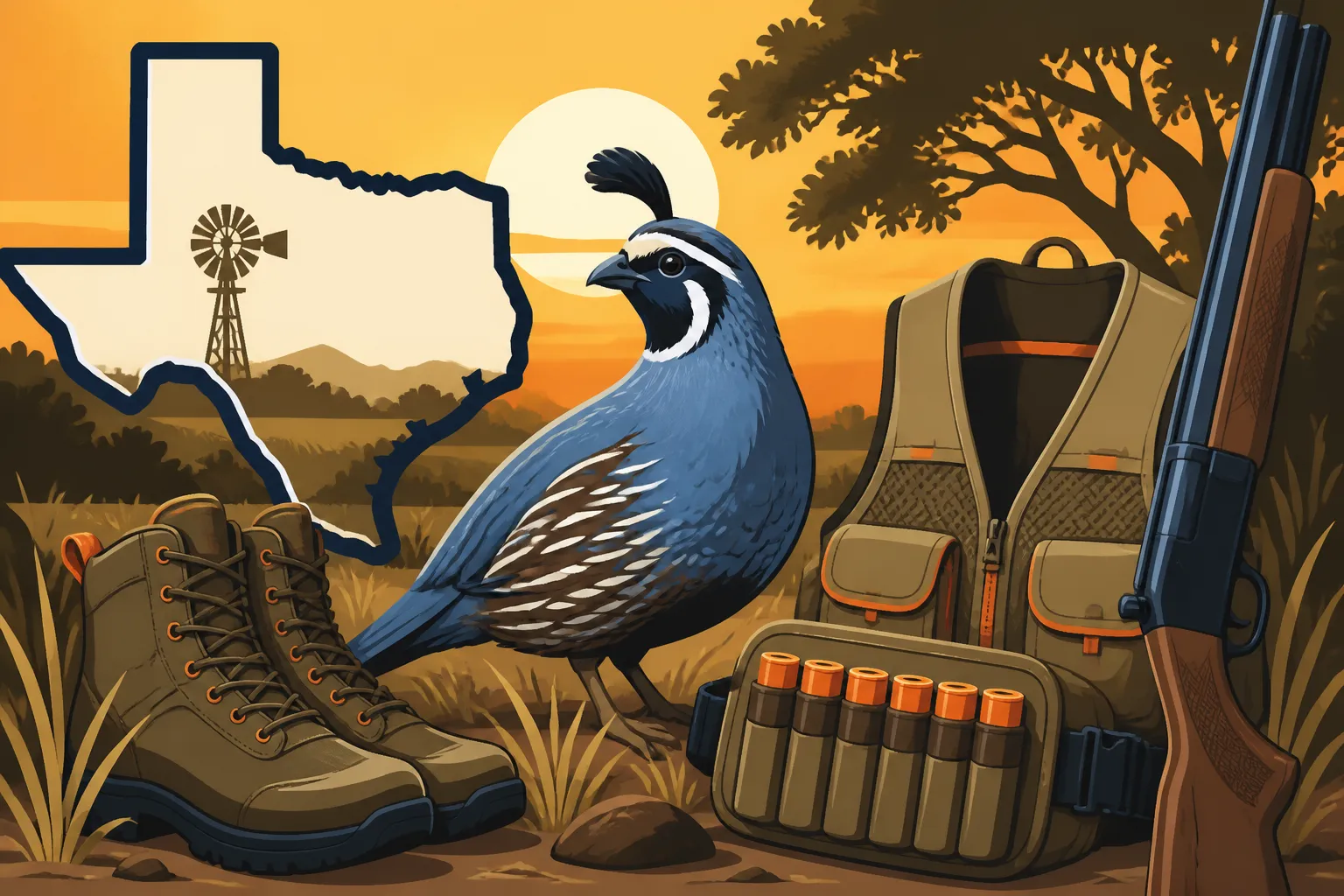
- Vests: A good hunting vest or bird belt is essential for carrying shells, water, and, hopefully, your birds. Look for one with ample shell loops, large game pockets (preferably blood-proof or easily washable), and perhaps some extra pockets for a dog whistle, GPS, or snacks. For more on this, check out our guide on Best Hunting Vests for Texas.
- Camo vs. Blaze Orange: While camo might be your go-to for deer, for upland bird hunting, safety is paramount. Blaze orange is highly recommended, if not required in some situations, to ensure you're visible to other hunters, especially when moving through brush. A blaze orange cap and vest are common choices.
Remember, the goal is to protect yourself from the environment while staying comfortable enough to cover serious mileage.
Durable and Protective Footwear
Your feet are your most important asset on a blue quail hunt. You will be covering miles over uneven, thorny, and sometimes rocky terrain.
- Snake Boots or Gaiters: Texas is rattlesnake country. Period. Investing in good quality snake boots that cover your calves or snake gaiters worn over sturdy hiking boots is a non-negotiable safety measure. Brands like LaCrosse, Thorogood, and Chippewa offer excellent options. Ensure they are comfortable for long walks and offer good ankle support. Our guide on Best Snake Boots for Texas Hunting offers specific recommendations.
- Comfortable, Supportive Hiking Boots: Even if you choose gaiters, your underlying boots must be robust. Look for waterproof or water-resistant boots with good ankle support and a stiff sole to protect your feet from sharp rocks and uneven ground. Break them in well before your hunt to avoid blisters.
- Moisture-Wicking Socks: Cotton socks are a recipe for blisters. Invest in good quality wool or synthetic moisture-wicking socks to keep your feet dry and reduce friction. Carry an extra pair or two in your vest.
Comfortable, protective footwear will allow you to focus on the hunt, not on sore feet or potential hazards.
Beyond the Basics: Dogs, Vests, and Communication
While a shotgun and sturdy boots are the foundation, other gear can significantly enhance your blue quail hunting experience and increase your chances of success on a Texas lease.
The Indispensable Role of a Good Bird Dog
Let's be clear: hunting blue quail without a good bird dog is like trying to find a needle in a haystack blindfolded. These birds are legendary runners and masters of disappearing acts. A well-trained pointing or flushing dog is not just an asset; it's practically a necessity. A dog that can scent a running covey, push them into a flush, and then diligently retrieve downed birds from thick brush is invaluable. Breeds like German Shorthaired Pointers, English Setters, Brittanys, and even versatile Labs can excel at blue quail.
A dog will save you countless hours of frustrated walking and significantly improve your recovery rate of birds. On a big Texas lease, having a dog that can quarter effectively and respond to commands over long distances will make your hunt infinitely more productive and enjoyable. Don't forget their own gear, like a protective vest, plenty of water, and a GPS collar to keep track of them in expansive terrain.
Navigation and Communication Tools
Texas leases can be vast, and it’s easy to get disoriented, especially when chasing running birds. Reliable navigation and communication are crucial for safety and efficiency.
- GPS or Mapping App: A handheld GPS device or a robust hunting app on your smartphone (like onX Hunt or GoHunt) is essential. These tools allow you to mark covey locations, track your route, define lease boundaries, and navigate back to your vehicle. The ability to see property lines and topographic features instantly is a game-changer. For more details, explore our comparison of Best Hunting Apps for Texas (onX, HuntStand & More). GoHunt is a particularly useful tool for scouting and understanding terrain features before you even step foot on the lease, helping you anticipate where blue quail might be holding.
- Two-Way Radios: If you're hunting with a partner or a group, two-way radios provide clear communication, especially when spread out over long distances. Cell service can be spotty in remote areas of Texas, so relying solely on phones isn't wise.
- Whistle and Dog Collar: If you're hunting with a dog, a good dog whistle is vital for commands, and a GPS-enabled E-collar (training collar) allows you to deliver corrections and track your dog's location, which is incredibly important when your dog might be out of sight.
Hydration and Field Care Essentials
The Texas heat and strenuous walking demand constant hydration. Carry more water than you think you'll need. A hydration pack in your vest is an excellent way to stay topped up. Additionally, a small first-aid kit for both yourself and your dog is a smart inclusion. Minor cuts, scrapes, or snake bites (for your dog, hopefully not you!) can happen, and being prepared means you can address them quickly.
Don't forget to consider how you'll keep your birds cool once you've harvested them. A good game vest will have breathable mesh or a game bag designed for this, but for longer hunts or warmer days, a small backpack cooler with ice packs can be a lifesaver, ensuring your hard-earned birds make it home in prime condition. Our guide on Best Coolers for Texas Hunting (Yeti & Alternatives) might give you some ideas. Remember to review the Texas Quail Season Dates & Limit to ensure you are always hunting legally.
Making the Most of Your Texas Lease
Having the right gear is a fantastic start, but maximizing your success on a Texas lease for blue quail also involves smart hunting strategies and lease management. Your lease represents an opportunity to truly understand and manage the habitat for these unique birds.
Scouting and Habitat Improvement
Even on a leased property, spending time before the season scouting specific areas can make a huge difference. Use your GoHunt app or other mapping tools to identify promising terrain features, water sources (even seasonal ones), and areas with suitable cover. Look for fresh tracks, droppings, or even dusting bowls. Understanding the lay of the land will allow you to plan your hunting routes more effectively, minimizing wasted effort and maximizing encounters. You can also explore options for creating small food plots or enhancing existing cover, though blue quail are less dependent on cultivated food sources than bobwhites. Consider reading How to Scout for Deer Before Season in Texas for general scouting tips, many of which can apply to birds too.
Respecting the Lease and Your Fellow Hunters
A hunting lease is a shared resource, and respecting the property and other hunters is paramount. Always know your boundaries, clean up after yourself, and communicate with other lease members about your hunting plans. This ensures a harmonious experience for everyone and preserves the quality of your hunting grounds for years to come. Familiarize yourself with all Texas Hunting Seasons: Complete Calendar by Species to ensure you are compliant with all regulations.
When you're out there, remember the key is persistence. Blue quail hunting is a marathon, not a sprint. With the right gear, a good dog, and a bit of grit, you'll find immense satisfaction in pursuing these challenging and rewarding game birds across the diverse landscapes of Texas.
Disclaimer
Please remember that hunting regulations can change, and it is always your responsibility to consult the most current Texas Parks and Wildlife Department (TPWD) Outdoor Annual or official TPWD resources for up-to-date information on seasons, bag limits, licensing, and any other relevant regulations before heading out on your hunt. This guide is for informational purposes only and should not be considered a substitute for official legal guidance.