Best Hunting Method for Blue Quail in Texas
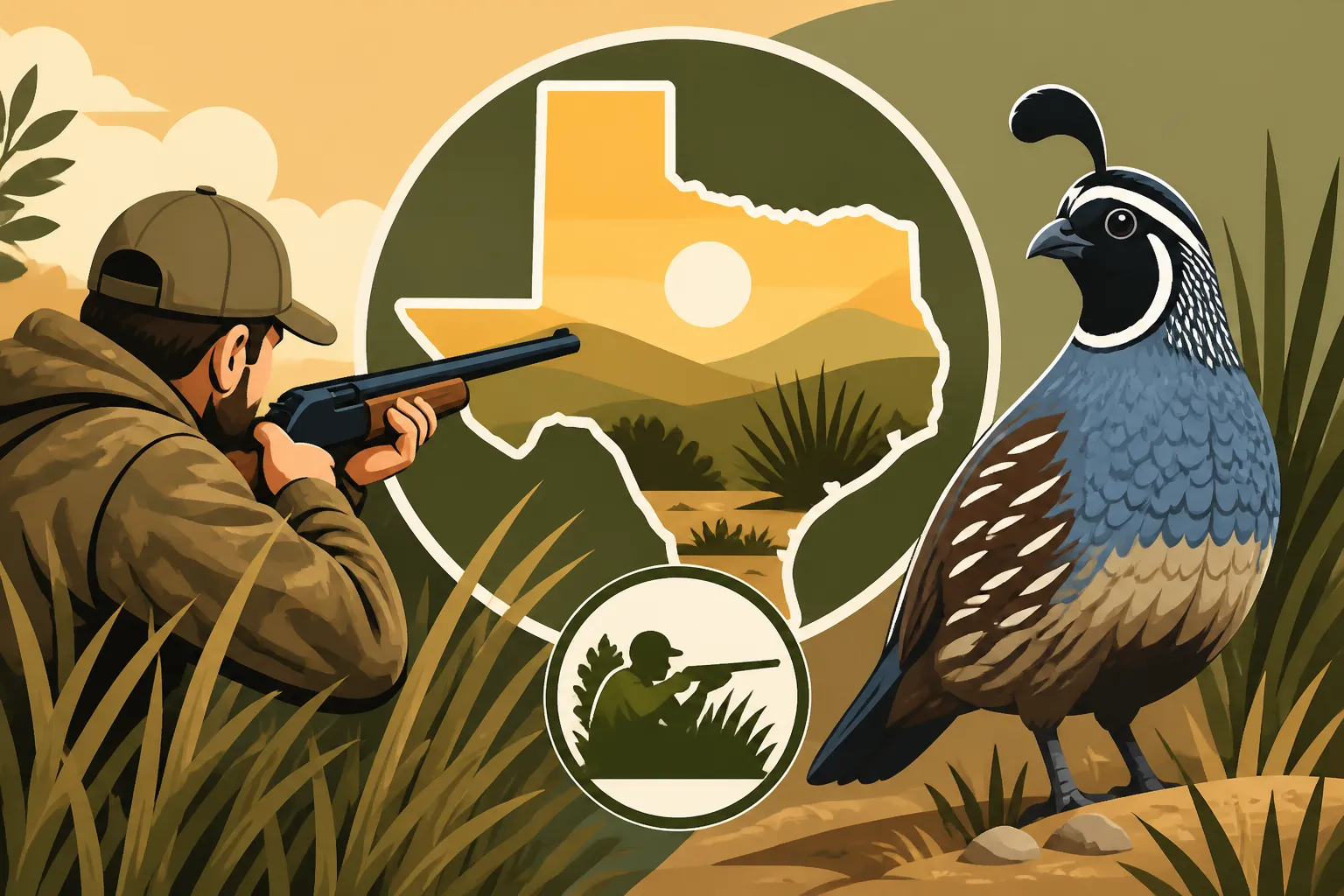
Chasing scaled quail, or "blue quail" as we affectionately call them here in the Lone Star State, is often a lesson in humility. If you have ever spent a grueling afternoon watching a covey of "cotton-tops" outpace your most expensive bird dog while they sprint through a maze of prickly pear, you know the frustration. This guide breaks down the best hunting method for blue quail in Texas to help you finally turn those desert runners into a successful harvest.
Understanding the Scaled Quail Why They Do Not Play Fair
The primary frustration with blue quail is their refusal to behave like their cousin, the bobwhite. While a bobwhite will generally hold tight under a dog’s point until you are practically stepping on them, a blue quail sees a hunter and a dog as a cue to start a track meet. They are notorious runners. If you approach a hunt expecting a gentlemanly walk through the grass with frequent, steady points, you are in for a very long and exhausting day in the desert.
To hunt these birds effectively, you have to understand their psychology. They live in the Panhandle & Trans-Pecos Hunting in Texas regions, where cover is sparse and predators are many. Their survival strategy is built on distance and speed. They have evolved to use the vast, open terrain to their advantage, often spotting a hunter from hundreds of yards away. By the time you reach the spot where you saw them, the covey has often put another two hundred yards of greasewood and cactus between you and them.
Furthermore, the terrain itself is a hostile participant in the hunt. Every plant in blue quail country either pokes, pricks, or scratches. This means that Blue Quail Hunting Tactics for Texas must prioritize mobility and physical endurance. You aren't just hunting a bird; you are competing against an athlete that lives in a natural obstacle course. Recognizing that they will not "hold" like traditional game birds is the first step toward changing your strategy from frustration to success.
The Running Habit and How to Break It
When a covey of blues starts running, they often move in a single-file line or a loose wedge, weaving through the base of mesquite bushes. They can easily maintain a pace of 15 to 20 miles per hour on the ground. If you try to walk at a standard pace behind them, you will never catch up. The trick is to "bust" the covey. You need to move fast—sometimes even a light jog—to pressure the birds into taking flight.
Once they fly, they tend to scatter rather than stay in a tight group. This is actually what you want. A scattered blue quail that has been pressured is far more likely to hold still in a clump of grass or behind a rock than a covey that is moving together. Pushing them until they fly, then marking where the individual birds land, is the most effective way to transition from a footrace into a shooting opportunity. It feels counter-intuitive to "run" at your game, but with blues, it is often a necessity.
Habitat and Typical Blue Quail Behavior
Blues love "edge" habitat, but their version of an edge is a bit different than what you might find in East Texas. They look for the transition between bare ground and low-growing shrubs. They are particularly fond of "skunkbush" sumac, catclaw acacia, and various types of cholla cactus. These plants provide overhead protection from hawks while allowing the birds to see clearly at ground level so they can spot approaching coyotes or hunters.
You will also find them frequently near man-made structures. In the arid West Texas climate, a leaky stock tank or a windmill is a magnet for every bird in the county. If you are scouting, start with the water sources. Check the soft dirt around tanks for their distinct three-toed tracks. If the tracks are fresh and numerous, you know a covey is nearby. This is a core part of knowing How to Hunt Blue Quail on a Texas Lease because identifying these watering hubs can save you miles of unnecessary walking.
The Ground Pounding Strategy The Best Hunting Method
The most successful method for blue quail is what veteran desert hunters call "ground-pounding" or "walking them up." This method relies on the hunter’s ability to cover massive amounts of ground quickly and use noise and movement to force the birds into the air. Unlike bobwhite hunting, where silence is often your friend, being a bit "loud" with your footsteps can actually help flush blue quail that are trying to hide in thick prickly pear.
When you are walking them up, you should focus on the draws and the leeward sides of the hills. Blue quail will often feed on the flats in the early morning and then move into the shade of the draws as the Texas sun gets high. If you can pinch a covey between two hunters in a narrowing draw, you can force them to flush. This requires coordination and a constant awareness of where your hunting partner is, especially in the uneven terrain of the Rolling Plains Hunting: Quail & Deer regions.
It is also vital to keep your eyes on the ground about 30 to 50 yards ahead of you. You will often see the "blue" or "gray" flicker of a bird’s head as it scurries between bushes before you see the whole bird. Once you spot that movement, do not stop. If you stop to "aim" or "glass" them, they will use that hesitation to disappear. Keep moving toward them at a steady, aggressive pace to keep the pressure on.
Utilizing the Power of the Flush
As mentioned, the goal is the flush. When the birds finally take wing, they will usually stay low to the ground and fly in a straight line away from you. This presents a challenging shot because they are often at the limit of your effective range by the time they get air under their wings. A fast-swinging shotgun with an improved cylinder or even a modified choke is usually the best choice here.
After the initial flush, stay focused on where the "singles" land. Blue quail are masters of the "vanishing act." They will land and immediately duck into a rodent hole or the thickest part of a cactus clump. If you don't get to the landing zone within a minute or two, they may have already run another fifty yards. The "follow-up" is where most blue quail are actually harvested, not the initial covey rise.
Group Hunting Tactics
Hunting blues is much more effective with a group of three or four hunters. By walking in a skirmish line—spaced about 20 to 30 yards apart—you cover a wider swath of the desert. This prevents the birds from simply side-stepping one lone hunter. If a bird tries to run out the side, the wingman on the end of the line has a chance to turn them back toward the center or take the shot.
Communication is key in a skirmish line. When someone sees birds running, they should call it out immediately. This allows the rest of the group to speed up or pivot to cut off the covey's escape route. This coordinated effort is the hallmark of Texas Game Animals: What You Can Hunt strategies in the wide-open spaces of the west, where the birds have all the room in the world to escape.
| Feature | Blue Quail (Scaled) | Bobwhite Quail |
|---|---|---|
| Primary Habitat | Arid Desert / Scrubland | Grasslands / Brushy Edges |
| Defense Tactic | Sprints away immediately | Holds tight/freezes |
| Covey Size | Large (often 20-50+ birds) | Small to Medium (10-15 birds) |
| Flight Pattern | Low, fast, and straight | Explosive, erratic |
| Dog Interaction | Will outrun a slow point | Respects a steady point |
| Terrain Difficulty | High (thorns, rock, heat) | Moderate (tall grass, woods) |
The Role of Dogs in Blue Quail Hunting
There is a long-standing debate among Texas quail hunters about whether dogs are even useful for blue quail. Some purists refuse to hunt without them, while others find that a high-energy pointer just ends up "bumping" birds or getting frustrated. The truth is that a dog can be an incredible asset, but only if they have the right temperament and if you manage them correctly for the conditions.
For blue quail, you need a dog that is "big-running." A dog that stays within 20 yards of you is largely useless for blues because the birds are already 50 yards away. You need a dog that can range out, find the scent, and then have the "smarts" to stay with a moving covey without crowding them so much that they flush out of range. It takes a very experienced bird dog to learn the "trailing" technique required for these desert runners.
Furthermore, you have to be extremely protective of your four-legged partners. The desert is not kind to dogs. Between the Best Snake Boots for Texas Hunting that you are wearing for your own safety and the rattlesnakes hiding under the brush, your dog is at constant risk. Most veteran blue quail hunters will not take their dogs out until the first hard freeze has "put the snakes to bed," or they ensure their dogs have undergone rigorous rattlesnake avoidance training.
Handling the Heat and the Thorns
The heat in West Texas can be lethal for a dog, even in November. If you are hunting blues, you must carry at least a gallon of water specifically for your dog. You also need to check their paws frequently. "Sandburs" and cactus spines will quickly disable a dog, and in the rocky terrain of the Trans-Pecos, their pads can wear thin very quickly. Many hunters use specialized dog boots, though some dogs find them difficult to wear in the sand.
If your dog does go on point, get there as fast as you can. Do not amble. The odds are high that the birds are already moving away from the dog’s nose. If the dog begins to "creep" or trail, follow them closely. This is one of the most exciting parts of the hunt—watching a dog work a moving target through the greasewood. Just be prepared for the birds to flush unexpectedly.
Training for "Runners"
If you are training a dog specifically for the Texas Quail Season Dates & Limit opener, you should practice in environments that allow the dog to learn how to relocate. A dog that is too "staunch" (refuses to move once it smells a bird) will often be left pointing at "old scent" while the blue quail are three counties away. You want a dog that can hold a point but is willing to break and relocate as soon as it realizes the birds have moved.
Using Best Hunting Apps for Texas (onX, HuntStand & More) can help you track your dog’s movement and ensure you aren't overlapping areas. In the vastness of the desert, it is easy to lose track of where your dog has been and where the birds might have moved. The GPS collars that sync with these apps are almost mandatory for blue quail hunting to ensure you don't lose a dog in a deep canyon.
Essential Gear for the Blue Quail Hunter
Because this hunt is essentially an endurance sport, your gear can make or break your trip. You are going to be walking anywhere from five to ten miles a day over uneven, rocky, and thorny ground. If your boots aren't broken in, or if your vest is too heavy, you will be miserable by noon. Light, breathable clothing is a must, even in the winter, as the Texas sun remains intense.
Your footwear is the most important piece of gear. You need a boot with excellent ankle support and a sole that can handle sharp volcanic rock. Many hunters also opt for snake protection. While boots are great, some prefer snake gaiters over lightweight hiking boots for better mobility. Regardless of your choice, ensure your legs are protected from the constant lashing of catclaw and mesquite.
Shotgun and Load Selection
For blue quail, a 20-gauge or even a 28-gauge shotgun is often preferred because of the weight. Carrying a heavy 12-gauge over eight miles is a chore. However, because shots are often long, you want a load that carries some punch. A high-velocity #6 or #7.5 shot is standard. You want enough pellets to create a dense cloud, but enough weight in the individual pellets to knock down a hardy bird at 35 or 40 yards.
Consider your choke carefully. While bobwhite hunters love an "open" choke like Skeet or Improved Cylinder, a blue quail hunter might lean toward Modified. These birds don't always give you a close-up look. Having that extra bit of "reach" can be the difference between a bird in the bag and a handful of feathers in the wind.
Water and Field Supplies
Do not underestimate the dehydration factor in blue quail country. Even if it feels cool, the dry air will pull moisture out of you rapidly. A hydration bladder in your hunting vest is much more efficient than carrying loose water bottles. Additionally, carry a small first-aid kit that includes tweezers or a "hemostat" for pulling cactus spines out of yourself and your dog. You will use them more than you think.
Finally, make sure your Texas Hunting License: Cost, Types & How to Buy (2026) is updated and that you have your upland game bird endorsement. Texas wardens are common in the public hunting lands of the West, and they will check for your credentials. Being prepared legally is just as important as being prepared physically.
Disclaimer
Hunting regulations in Texas are subject to change by the Texas Parks and Wildlife Department. Always verify current season dates, bag limits, and land-use requirements before heading into the field. This guide is for informational purposes and does not guarantee hunting success or safety in the wilderness.