Texas Deer Season 2026-2027: Dates by Zone
Trying to keep track of every specific opening day and county-specific regulation in Texas can feel like a full-time job. Between the North and South Zone splits and those tricky antler restrictions, it is easy to get overwhelmed before you even pull your boots on. This guide breaks down the 2026-2027 dates and rules so you can focus on your hunt.
Understanding the Texas Deer Zones
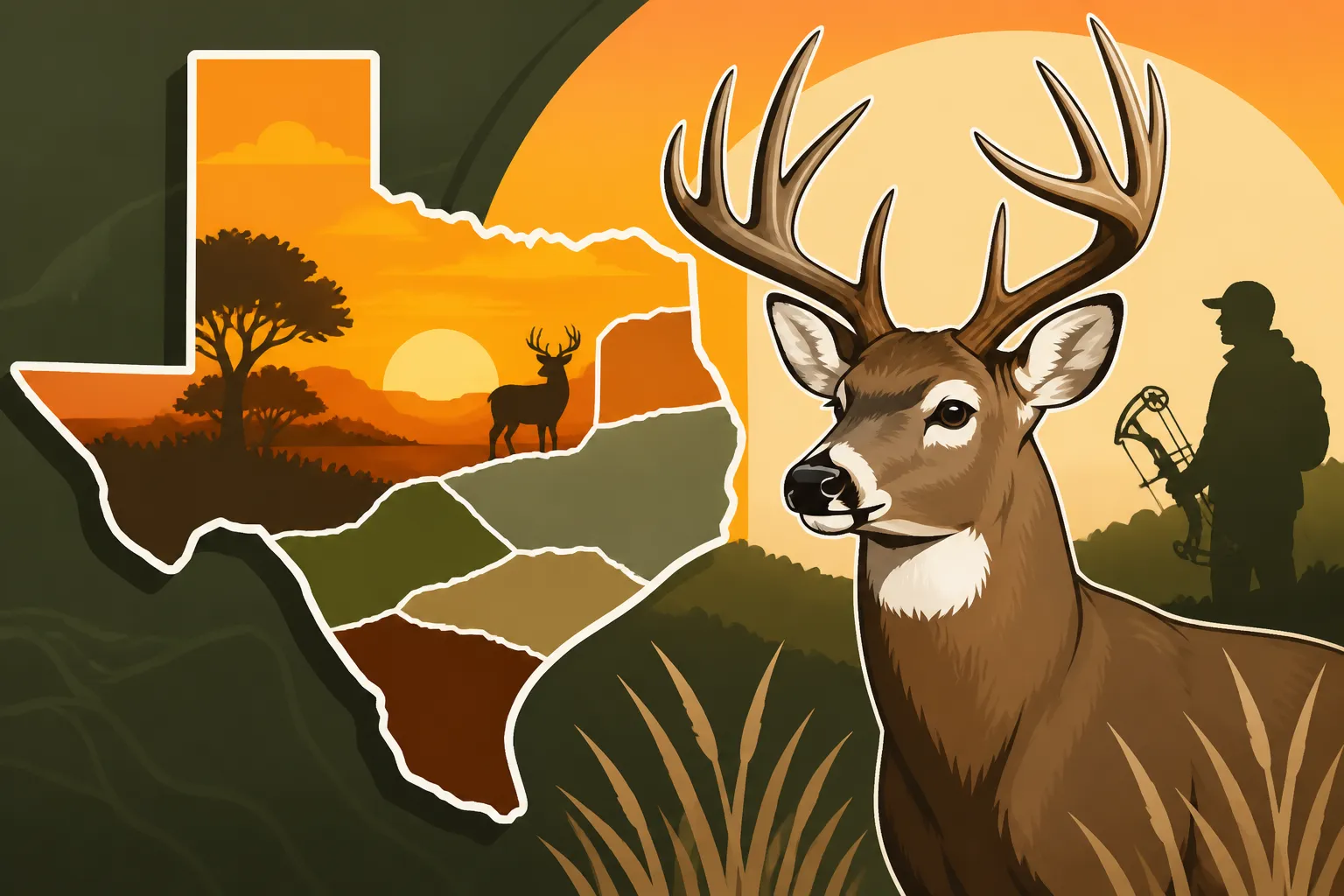
When you first start looking at the Texas Outdoor Annual, the map can look like a patchwork quilt of confusion. The state is primarily divided into the North Zone and the South Zone for whitetail deer, and the dividing line is more than just a geographic marker; it dictates how your entire season will flow. Most hunters spend their summer months staring at maps trying to figure out exactly where their lease falls. If you are sitting on the line in a place like Guadalupe or Gonzales County, a few miles in either direction can change your closing date by two weeks.
The North Zone encompasses the vast majority of the state, including the Hill Country, the Panhandle, and East Texas. Because the climate and rut cycles in these regions tend to align earlier than the coastal plains or the deep brush country, the season wraps up sooner. I’ve talked to dozens of hunters who forgot this distinction and showed up to their lease in early January only to realize their season had ended while the guys a few hours south were still in the thick of it. Understanding your zone is the absolute baseline for a successful, legal season.
Regional differences in the rut are the real reason these zones exist. In the Pineywoods of East Texas, you might see the peak of the rut in late October or early November. Meanwhile, if you are How to Hunt the Rut in South Texas, you know that the "big dance" often doesn't even start until mid-December or early January. This biological reality is why the South Zone season is extended; it gives hunters a fair shake at seeing mature bucks when they are actually on their feet and moving. If the seasons were identical, South Texas hunters would miss the most active window of the year.
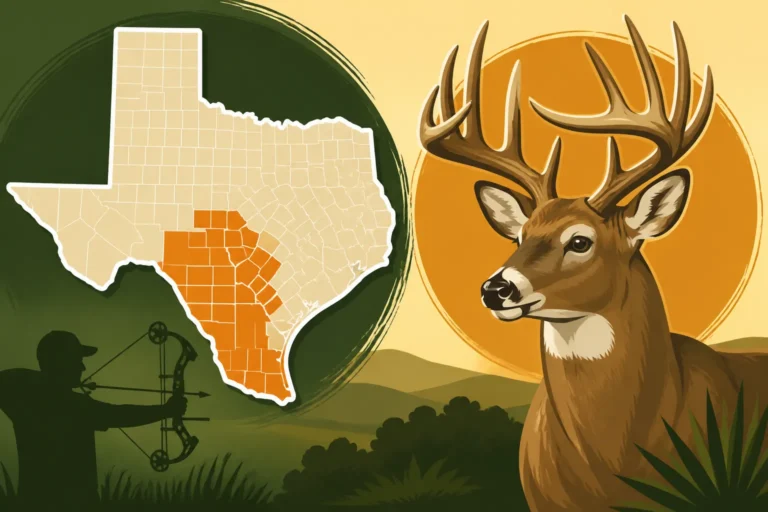
Navigating county-specific rules is the final layer of this puzzle. Even within a zone, some counties might have "doe days" where you can only take antlerless deer during a specific window, while others allow them all season long. Then you have the special antler restrictions that apply to over 100 counties. It is frustrating to have to check your phone every time a deer walks out, but knowing the nuances of your specific county is what keeps you on the right side of the game warden.
Whitetail Deer General Season Dates 2026-2027
For most of us, the General Season is the "real" start of the year. In 2026, the General Season for both the North and South Zones is expected to kick off on Saturday, November 7. There is something electric about that first Saturday in November. You can almost hear the simultaneous clicking of truck doors and the rattling of corn bags across the entire state. It is a tradition that binds Texas hunters together, regardless of whether you are hunting a tiny 50-acre plot or a sprawling 10,000-acre ranch.
In the North Zone, the General Season will run through January 3, 2027. This gives hunters roughly two months to get their tags filled. For those in the Hill Country, this window covers the primary rut and the post-rut recovery period. I always tell people that the early part of this window is about patience, while the late part is about food sources. If you haven't filled your tags by Christmas, you’ll want to look into Best Tactics for Late-Season Deer in Texas to adjust your strategy to the colder weather and depleted natural browse.
The South Zone General Season is the marathon of the Texas hunting world, running from November 7, 2026, all the way through January 17, 2027. This extra two weeks in January is where the magic happens in places like Webb, Dimmit, and La Salle counties. This is when the legendary South Texas "Muy Grandes" come out of the brush in search of the last receptive does. It is often cold, windy, and miserable, but if you can tough it out, those final days of the South Zone season are often the most productive of the entire year.
Beyond the general windows, we have the Special Late Season and the Muzzleloader-only season. The Special Late Season in both zones usually follows immediately after the general season closes, often running for another 14 days. However, it is restricted to antlerless deer and unbranched antlered bucks (spikes). This is the time for herd management. If you still have doe tags left and your freezer is looking a bit empty, this mid-to-late January window is your last chance. Just make sure you are in a valid county, as not every county participates in the Special Late Season.
| Season Type | Zone | Start Date | End Date |
|---|---|---|---|
| Archery Only | Statewide | Oct 3, 2026 | Nov 6, 2026 |
| General Season | North Zone | Nov 7, 2026 | Jan 3, 2027 |
| General Season | South Zone | Nov 7, 2026 | Jan 17, 2027 |
| Youth-Only (Early) | Statewide | Oct 31, 2026 | Nov 1, 2026 |
| Youth-Only (Late) | Statewide | Jan 4, 2027 | Jan 17, 2027 |
| Muzzleloader | Select Counties | Jan 4, 2027 | Jan 17, 2027 |
| Special Late | Select Counties | Jan 4, 2027 | Jan 17, 2027 |
Archery and Youth Only Seasons
The Archery Only season is a favorite for those who want to get into the woods before the pressure of the general season heats up. For 2026, the statewide archery season opens on October 3 and runs through November 6. Hunting in October in Texas is an exercise in sweat management. It is not uncommon to be sitting in a blind with the thermometer hitting 90 degrees. But for the dedicated bowhunter, this is the best time to catch a buck on a predictable late-summer feeding pattern before the rut tosses all logic out the window.
If you are planning to head out during this window, you really need to be prepared for the heat. Many hunters find that Bowhunting in Texas: Archery Season Guide provides the necessary tips for dealing with the mosquitoes and the high-noon sun. The early season is all about water and high-protein food. Bucks are still in their bachelor groups for the first week or two of October, and if you can find where they are watering, you have a great chance at a relaxed, early-season trophy.
The Youth-Only weekends are some of the most important dates on the calendar. The early youth weekend is scheduled for October 31 through November 1, 2026. This is a brilliant move by the Texas Parks and Wildlife Department because it lets kids get the first crack at the deer before the "orange army" arrives the following weekend. There is nothing quite like seeing a young hunter harvest their first deer without the competition and noise of a crowded lease. It builds confidence and a lifelong love for the sport.
The late youth season runs concurrently with the special late seasons in January. This is a great time to take the kids out when the weather is actually "hunting weather." By January, the deer are skittish, but the cooler temps make sitting in a blind much more enjoyable for a ten-year-old. It is also a prime time to teach them about conservation and why we harvest specific animals. If you're wondering how to maximize these weekends, checking out Texas Youth Hunting Weekend Dates can help you plan the logistics for the whole family.
Mule Deer Season in the Panhandle and West Texas
Mule deer are a completely different beast, both in terms of behavior and regulation. Unlike whitetail, which you can find in almost every corner of the state, mule deer are concentrated in the Panhandle and the Trans-Pecos regions. The seasons are significantly shorter, reflecting the more fragile nature of their populations. For 2026, the Panhandle season typically runs from late November through early December. It’s a short, intense window that requires a lot of pre-season scouting and a lot of driving.
The Trans-Pecos region, which covers the rugged mountains and high deserts of West Texas, usually has its general season from late November through mid-December. Hunting out here is a physical challenge. You aren't sitting in a comfortable box blind over a feeder. You are Spot-and-Stalk Hunting in Texas (Exotics & Mule Deer), glassing across massive canyons and trying to find a gray ghost in a sea of greasewood and ocotillo. The dates are tight, and if the weather turns sour, you might only get a couple of huntable days.
One of the biggest points of confusion for newcomers is the overlap between mule deer and whitetail. In many western counties, you can find both species on the same ranch. The regulations are very specific: you cannot use your whitetail tags on a mule deer, and vice-versa. Furthermore, some counties have a "mule deer buck" tag but are "archery only" for mule deer while allowing rifles for whitetail. It is a legal minefield. Always double-check your Texas Mule Deer Season Dates by Region before you head out to the high desert.
Mule deer also have their own set of antler restrictions in certain counties, often involving a minimum spread of 20 inches. This is meant to protect younger bucks and allow them to reach maturity in an environment where resources are scarce. Field judging a mule deer at 300 yards in the West Texas wind is a lot harder than judging a whitetail at 100 yards over a corn pile. Most hunters spend more time behind their binoculars than they do with their rifles, searching for that one mature buck that meets the legal requirements.
Bag Limits and Antler Restrictions
Texas is famous—or perhaps infamous—for its antler restrictions. In over 100 counties, a legal buck must have either at least one unbranched antler (a spike) or an inside spread of 13 inches or greater. This rule was implemented to move the age structure of the herd toward older, more mature bucks. It has been wildly successful, but it causes a lot of anxiety for hunters. The "13-inch rule" is generally understood to be the distance from ear-tip to ear-tip on a buck with its ears in the alert position.
If you are hunting in one of these counties, you need to become an expert at field judging. If a buck’s ears are out and his antlers don't clearly extend past them, he’s probably a "wait until next year" deer. Shooting an 11-inch eight-pointer can result in a heavy fine and the loss of your trophy. I always recommend that people read up on Texas Antler Restrictions: 13-Inch Rule & Counties to see photos and comparisons. It is better to let a borderline deer walk than to deal with the consequences of an illegal harvest.
Bag limits are another area where you have to pay attention to the fine print. Most hunters in Texas are used to a five-deer limit, with no more than two being bucks. However, this is not a statewide rule. Some counties only allow three deer, or have a one-buck limit. Your Texas Deer Bag Limit by County can change the moment you cross a fence line if you are hunting a large property that spans multiple jurisdictions. You have to keep a log and make sure you aren't over-harvesting for the specific area you are standing in.
Then there is the Managed Lands Deer Program (MLDP). If you are lucky enough to hunt on a ranch that is part of the MLDP, the standard county seasons and bag limits often don't apply to you. MLDP properties get their own specific tags and usually have a much longer season, sometimes starting in late September and running through February. This is done to give landowners the flexibility they need to hit specific harvest goals for herd health. If your lease is MLDP, make sure you are using the property-specific tags and not the ones off your standard hunting license.
CWD Zones and Carcass Transport Regulations
Chronic Wasting Disease (CWD) is a major concern for the future of Texas hunting, and the regulations surrounding it are getting stricter every year. CWD is a fatal neurological disease found in deer, elk, and other cervids. To prevent its spread, the state has established CWD Zones. If you are hunting in one of these zones—which now include parts of the Panhandle, West Texas, South Texas, and even some spots in Central Texas—you are subject to mandatory testing and carcass movement restrictions.
The most important rule to remember is that you cannot transport a whole deer carcass out of a CWD zone. You must "quarter" the deer, leaving the brain and spinal cord behind at the site of harvest. You can take the quarters, the backstraps, and a cleaned skull plate with antlers, but that’s it. It is a major inconvenience, especially if you are used to taking your deer to a processor in the city. You need to be prepared to do your own Field Dressing & Processing Game in Texas Heat right there at the camp.
Mandatory sampling is also a requirement in these zones. This means you must bring the head of your harvested deer to a designated TPWD check station within a certain timeframe (usually 48 hours). The biologists will take a tissue sample from the lymph nodes to test for the disease. It doesn't cost you anything, and it provides vital data for the state’s conservation efforts. However, failing to do it is a violation of the law. You should always check the CWD Zones in Texas: Map & Restrictions before you leave home so you know where the nearest check station is located.
There are also rules about Hunting Over Feeders & Corn in Texas (Legal Guide) within CWD zones. While baiting is still legal in most places, there is ongoing discussion about how congregating deer around a single point might accelerate the spread of the disease. Some states have banned baiting in CWD areas entirely. While Texas hasn't gone that far yet, being mindful of your feeder placement and hygiene can help. Always keep your feeders clean and rotate their positions if you notice the ground becoming excessively fouled.
Essential Gear and Prep for the Season
Preparing for the 2026-2027 season starts months before the October opener. For most Texas hunters, this means a summer of filling feeders and checking trail cameras. Given the heat, you want gear that is reliable and low-maintenance. Cellular cameras have changed the game, allowing us to scout without spooking deer every weekend. If you are looking to upgrade, I've found that the Best Cellular Trail Cameras for Texas (2027) can save you a fortune in gas money by eliminating unnecessary trips to the lease.
Scouting isn't just about looking for big bucks; it’s about understanding the health of the herd. Are the does healthy? Are there plenty of fawns? Are the water holes holding up? During a dry Texas summer, your feeding program might be the only thing keeping the deer in good condition. Choosing between Corn vs Protein Feeder for Texas Deer is a big decision. Corn is great for attracting deer to a specific spot, but protein is what builds the massive antlers everyone is looking for during the General Season.
Don't forget the paperwork. Every year, people wait until the night before the season starts to buy their license, and then they get frustrated when the system is slow or the local sporting goods store has a line out the door. The "Super Combo" license is almost always the best value for a Texas resident, as it covers all your tags and endorsements for the entire year. If you are a non-resident coming in for a hunt, be sure to check How Much Is a Texas Hunting License? to budget accordingly, as those out-of-state fees can be a bit of a shock.
Finally, make sure your equipment is up to the task of a Texas hunt. This means more than just sighting in your rifle. It means checking your blinds for wasps and snakes, ensuring your Deer Feeder Timer Settings in Texas are dialed in to conserve corn, and making sure your cooling gear is ready. In this state, a good cooler is just as important as a good rifle. If you drop a deer on a 75-degree November morning, you have a very short window to get that meat on ice before it spoils.
Texas Hunting Regulations Disclaimer
Hunting regulations in Texas are subject to change by the Texas Parks and Wildlife Department (TPWD) at any time. While this guide provides information based on projected 2026-2027 dates and existing rules, it is the responsibility of every hunter to consult the official Texas Outdoor Annual and local county laws before heading into the field. Failure to follow the most current regulations can result in fines, loss of equipment, and the revocation of hunting privileges. Always verify your specific location's bag limits, antler restrictions, and CWD requirements through official TPWD channels.