Texas Muzzleloader Season & Counties
The late-season slump is a real phenomenon that leaves many Texas hunters feeling discouraged after the general season concludes in early January. By the time the calendar turns, the woods often feel empty, the deer are skittish, and the usual high-traffic spots have gone cold. This guide solves that frustration by detailing the Texas Muzzleloader-Only Season, revealing the specific counties where you can extend your time in the field and the tactics necessary to harvest a late-season trophy with primitive arms.
Understanding the Texas Muzzleloader Only Season
The Texas muzzleloader season is often overlooked by the casual hunter, yet it represents one of the most rewarding windows for those willing to embrace the challenge of a single-shot firearm. This season is specifically designed to provide additional hunting opportunities while managing deer populations after the heavy pressure of the general season has subsided. It typically takes place in mid-January, acting as a "late-call" for those who still have tags burning a hole in their pocket.
Timing and Duration of the Special Season
In the grand scheme of the Texas Hunting Seasons: Complete Calendar by Species, the muzzleloader window is relatively short but strategically placed. For the 2026-2027 cycle, this season generally runs for 14 consecutive days following the close of the general season in the designated counties. While the specific dates can fluctuate slightly based on the calendar year, you can almost always count on it occupying the middle to late weeks of January.
This timing is crucial. By mid-January, the primary rut has long since ended in most parts of the state. The deer have shifted their focus entirely toward survival and calorie replacement. If you are tracking the Texas Whitetail Deer Season Dates 2026, you’ll notice that this season bridges the gap between the chaotic general season and the quiet of the spring. It is a time of freezing mornings in the Panhandle and damp, chilly fogs in the Post Oak Savannah, requiring a different level of dedication than the balmy openers of October or November.
Target Species and Harvest Rules
It is a common misconception that the muzzleloader season is a "free-for-all" for any game animal. In Texas, this specific season is dedicated to white-tailed deer. While you might see feral hogs or predators while in the stand, the regulatory framework for the muzzleloader-only period is strictly focused on whitetails. You must use the appropriate tags from your license, and all usual Texas Deer Bag Limit by County rules apply.
One of the most important things to remember is that you cannot use your muzzleloader during this specific period to hunt mule deer unless there is a concurrent season in that specific region. The "Muzzleloader-Only Season" as defined by the Texas Parks and Wildlife Department (TPWD) is a whitetail-centric event. If you have already filled your buck tags during the general season, you may still be able to hunt antlerless deer, provided the county regulations allow for it during this late window.
The Rationale Behind the Primitive Arms Window
Why does Texas carve out two weeks for primitive weapons? It’s a balance of hunter opportunity and conservation. Muzzleloaders, by their very nature, have a shorter effective range and a much slower rate of fire compared to modern centerfire rifles. This "handicap" allows the state to offer more days in the woods without significantly impacting the total harvest numbers in a way that would deplete the herd.
For the hunter, it offers a sense of solitude. The orange-clad crowds of November are gone. The woods are silent. Success during this time isn't just about marksmanship; it's about outlasting the elements and outsmarting deer that have spent the last two months being chased. To participate, you must ensure you have the correct credentials, so checking your Texas Hunting License: Cost, Types & How to Buy (2026) status is the first step before hitting the woods in January.
Designated Counties and Zones for Muzzleloader Hunting
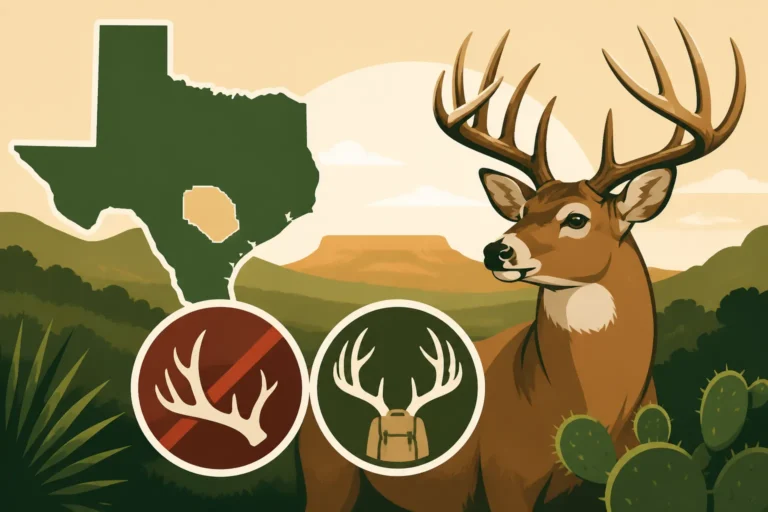
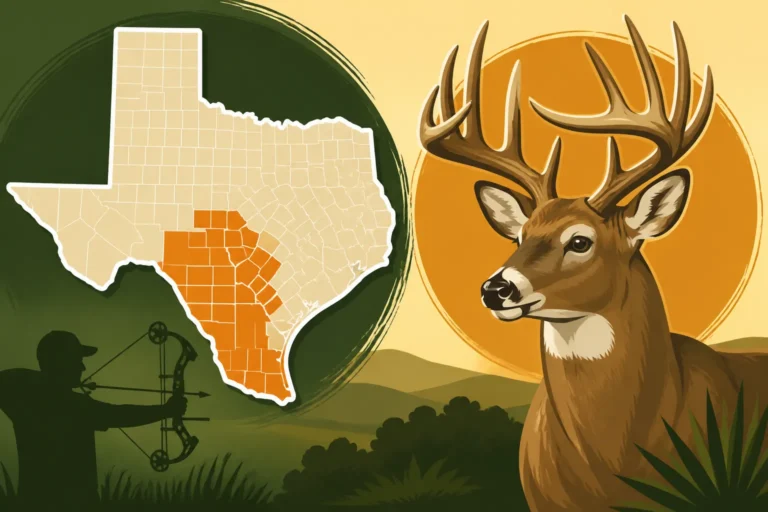
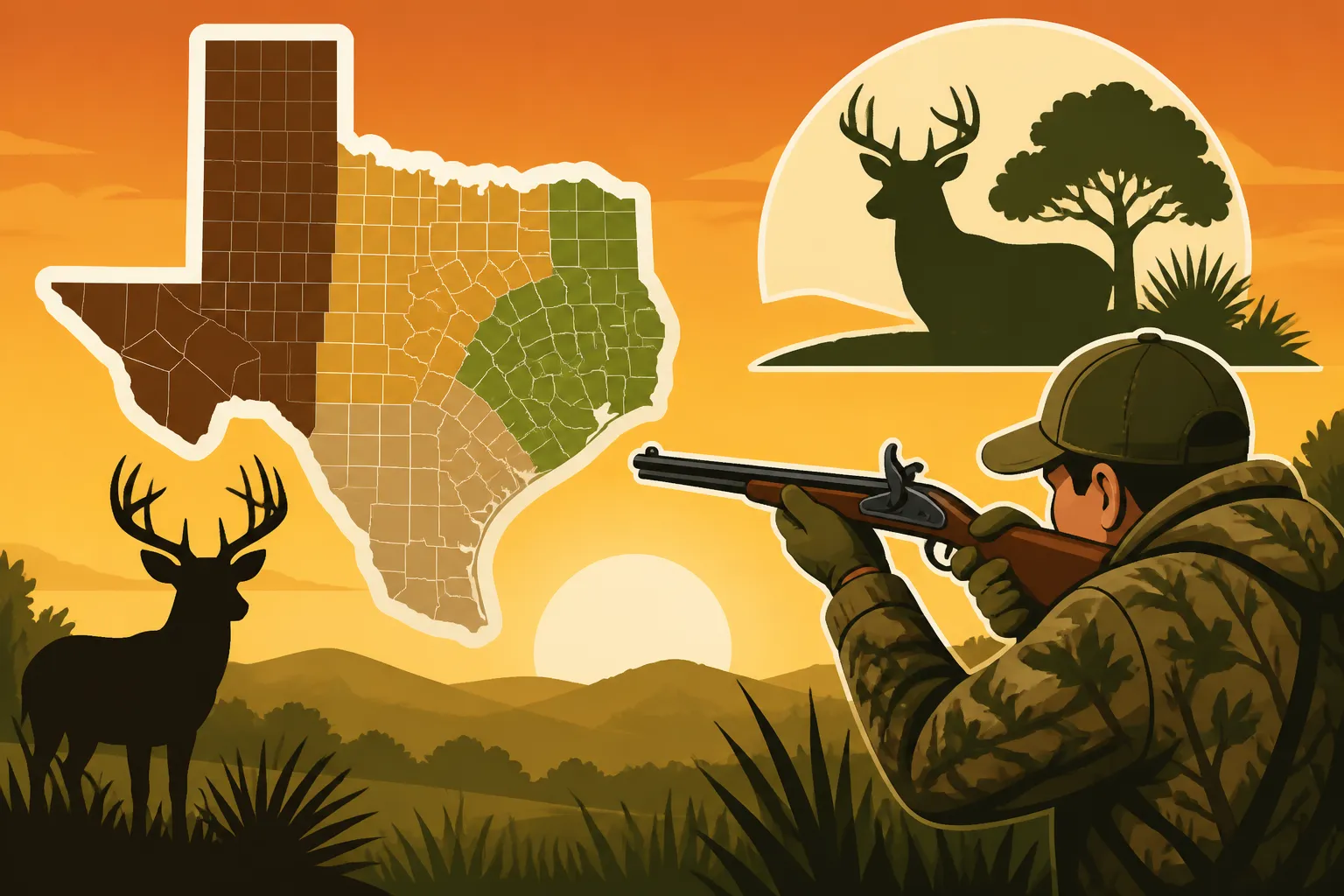
Not every acre of Texas is open for the muzzleloader-only season. This is perhaps the most confusing aspect for hunters who assume that if a county has a deer season, it has a muzzleloader season. In reality, the special muzzleloader-only season is restricted to a specific list of approximately 90 counties, primarily located in the eastern and central portions of the state.
The 90 County List Breakdown
The counties authorized for the muzzleloader-only season are generally those found in the Post Oak Savannah and Pineywoods regions, along with a significant portion of North-Central Texas. For example, counties like Anderson, Angelina, Bowie, and Cass are staples of this season. Further west, you’ll find it active in places like Parker, Palo Pinto, and Jack counties.
If you are hunting in the deep South Texas brush country or the Trans-Pecos, you will notice a lack of a dedicated muzzleloader-only season. In those regions, the management strategies differ. Hunters there often rely on the Texas Special Late Deer Season Dates or MLDP (Managed Lands Deer Program) permits to extend their season. If you are unsure if your lease falls within the boundary, it is vital to consult the Texas Deer Zones: North vs South Explained maps to verify your specific county's participation.
Differences Between North and South Zones
While the muzzleloader-only season is a unified concept, the behavior of the deer across these 90 counties varies wildly. In the northern counties, you might be dealing with the tail-end of a secondary rut, where yearling does come into heat for the first time. In the more southern counties of the allowed zone, the deer are firmly in "winter mode," bedding in thick cover and moving only for high-quality protein.
Understanding the geography is key. A hunter in the Pineywoods will be dealing with tight shooting lanes and heavy timber, making the limited range of a muzzleloader less of an issue. Conversely, someone hunting a creek bottom in the Rolling Plains might find themselves wishing for an extra fifty yards of reach. No matter where you are, you must ensure your harvest remains legal, specifically keeping an eye on whether Is My Buck Legal Under Texas Antler Restrictions apply in your specific county, as the 13-inch rule is still in full effect during the muzzleloader season.
Public vs Private Land Opportunities
For those who don't have a private lease, the muzzleloader season offers a fantastic opportunity on public land. Many Wildlife Management Areas (WMAs) participate in the muzzleloader window. However, public land hunters must be extra diligent. Some WMAs require a specific permit or have "drawn hunt" requirements that override the general season dates.
If you are using the Annual Public Hunting Permit: What It Covers to hunt on Type II lands, check the map booklet carefully for the "M" designation next to the deer icons. Often, public lands that were overrun in November become ghost towns in January. This is the perfect time to scout for the following year while carrying your smokepole. The lack of pressure can actually cause deer to return to more "natural" patterns, making them slightly easier to pattern on public tracts than they were during the peak of the general rifle season.
| Feature | Muzzleloader Season Details |
|---|---|
| Season Duration | 14 Consecutive Days |
| Typical Dates | Mid-to-Late January |
| Eligible Species | White-tailed Deer Only |
| County Participation | Approx. 90 Counties (East/Central TX) |
| Legal Weapon | Muzzle-loaded firearms (No smokeless powder) |
| Hunter Orange | Required on Public Lands |
Legal Muzzleloader Requirements and Gear
Texas has very specific definitions of what constitutes a legal muzzleloader. You can't just take any old gun and call it primitive. The regulations are designed to ensure that the spirit of the season—using a firearm that is loaded from the business end—is maintained. Understanding these nuances will keep you on the right side of the game warden and ensure your gear is up to the task of a humid Texas winter.
TPWD Definitions of a Legal Muzzleloader
According to the state, a muzzleloader is any firearm that is loaded only through the muzzle. This means that if your rifle can be loaded from the breech (the back of the barrel), it is not legal for this specific season, even if it uses black powder. Furthermore, a "muzzleloader" in this context refers to a firearm that cannot be readily converted to fire cased ammunition.
One of the most critical rules in Texas is the prohibition of smokeless powder in muzzleloaders during the special season. You must use black powder or a black powder substitute like Pyrodex or Triple Seven. While modern in-line muzzleloaders are perfectly legal, they must still be loaded from the muzzle and use the appropriate propellant. If you are just starting out, you might want to look into Muzzleloader Hunting Tactics in Texas to understand how these ballistics differ from your standard .270 or .30-06.
Primitive vs Modern In Line Setups
Hunters generally fall into two camps: the "traditionalists" and the "modernists." Traditionalists use side-lock percussion caps or flintlocks, often firing round balls with patches. While this is the ultimate primitive experience, it requires a high level of skill and knowledge of your rifle's quirks. In the damp environment of East Texas, keeping your powder dry in a flintlock can be a nightmare.
Modern in-line muzzleloaders are the choice for 90% of Texas hunters today. These rifles use a 209 shotshell primer positioned directly behind the powder charge, providing much more reliable ignition. They are often equipped with scopes, which are fully legal in Texas during the muzzleloader season. When choosing between the two, consider your comfort level. A modern in-line can easily reach out to 150 or even 200 yards with the right sabot and powder load, whereas a traditional round-ball setup is usually a 50-to-75-yard tool.
Essential Accessories for the Field
Muzzleloading requires a lot more "stuff" than rifle hunting. You aren't just carrying a box of shells; you’re carrying a mobile laboratory. You need a "possibles bag" or a dedicated pouch that holds your primers, pre-measured powder charges (or pellets), and your projectiles. Speed loaders are an absolute must in the field; they allow you to have a second shot ready to go without fumbling with powder flasks and loose bullets in the cold.
Another overlooked tool is the rangefinder. Because muzzleloaders have a much more dramatic "rainbow" trajectory than centerfire rifles, being off by just 20 yards can result in a clean miss or, worse, a wounded animal. You should also carry a dedicated cleaning kit or "bore swabs" to use between shots. In the Texas humidity, the salts in black powder substitutes can foul a barrel quickly, making it difficult to seat your second or third shot if the first one doesn't get the job done.
Tactics for Late Season Success
Hunting in January is a completely different game than hunting the rut. The deer are tired, hungry, and extremely wary. To be successful with a muzzleloader, you have to adapt your strategy to account for both the deer's behavior and the limitations of your firearm. You are no longer looking for aggressive bucks chasing does; you are looking for cautious animals focused on the most efficient calorie sources available.
Hunting the Post Rut Feed
By the time the muzzleloader season opens, the "big show" of the rut is over. Bucks have lost up to 25% of their body weight and are in a desperate race to recover before the harshest part of winter hits. This makes food the absolute number one priority. If you have been maintaining Food Plots in Texas: What Works in the Heat, these areas might finally start seeing daylight activity as native browse disappears.
If you don't have food plots, look for late-dropping acorns in protected bottoms or transition zones between bedding cover and agriculture. Because the weather can be volatile in January, deer will often move heavily just before a cold front hits or immediately after the temperature begins to rise. Pay close attention to Best Time of Day to Hunt Whitetail in Texas data, but in the late season, mid-day movement can be surprisingly common as deer seek the warmth of the sun to supplement their internal thermoregulation.
Stealth and Scent Control in Cold Weather
Late-season deer have a "PhD in Survival." Every time they hear a truck door slam or catch a whiff of human scent, they retreat into the thickest cover imaginable. Because you are using a muzzleloader, you often need to get closer than you would with a high-powered rifle. This makes scent control and wind management paramount.
The cold, dry air of a Texas "Blue Norther" can carry scent for miles. Always hunt the wind, even if it means skipping your favorite stand for the day. Many hunters find success by switching from permanent structures to more mobile options. Using a Box Blind vs Tripod vs Ground Blind in Texas strategy, you might find that a well-hidden ground blind tucked into a cedar thicket provides the concealment you need to let a buck get within that 80-yard "sweet spot" for your muzzleloader.
Managing the Single Shot Limitation
The most daunting aspect of muzzleloader hunting is the knowledge that you likely only have one shot. There are no quick follow-up shots like you have with a bolt-action or semi-auto. This reality should fundamentally change how you approach the shot. You must be disciplined enough to wait for the perfect broadside or slightly quartering-away angle.
If you do take a shot and the deer doesn't go down immediately, the "smoke screen" created by the black powder can be disorienting. Stay in your stand and listen. In the quiet January woods, you can often hear a deer crash or struggle, giving you a better idea of which direction it headed. Resist the urge to jump down and track immediately. Give the animal at least 30 to 45 minutes—more if the shot wasn't perfect. If the weather is warm, which happens often in Texas, you'll need to know How to Cool a Deer Fast in Texas Heat once you finally recover your prize, as even January afternoons can reach the 70s.
Safety and Ethics in Muzzleloading
Primitive firearms require a higher level of safety awareness than modern rifles. Because you are dealing with loose powder and a weapon that stays "loaded" differently than a centerfire gun, you must establish a strict routine. Ethical hunting with a muzzleloader also means knowing your personal effective range and sticking to it, regardless of how big the buck is.
Loading and Unloading Procedures
Safety starts at the truck. Never travel with a primed muzzleloader. In Texas, a muzzleloader is generally considered "unloaded" for transport purposes if the primer or cap is removed from the nipple or breech plug. However, the powder and ball are still in the barrel. Always use a ramrod to verify that the load is seated firmly against the powder charge; a gap between the bullet and the powder can turn your rifle into a pipe bomb when ignited.
At the end of the hunt, unloading can be a chore. You have two choices: fire the rifle into a safe backstop or use a CO2 discharger to blow the load out of the muzzle. Leaving a charge in the barrel overnight in the humid Texas air can lead to a "hang-fire" the next morning, where the trigger is pulled, but the gun takes a second or two to actually fire. This is incredibly dangerous and a leading cause of missed shots and accidents.
Cleaning and Maintenance in the Texas Humidity
Black powder and its substitutes are highly corrosive. If you fire your rifle and don't clean it that same day, you are inviting rust to eat your rifling. In the humid regions of East Texas, this process happens even faster. A "dirty" muzzleloader will also lose accuracy significantly with every subsequent shot as "crud" builds up in the grooves.
Developing a cleaning ritual is part of the muzzleloading experience. Use hot, soapy water or specialized solvent to scrub the bore until patches come out white. Dry the barrel thoroughly and apply a light coat of bore butter or oil. This ensures that when you head out for the final days of the Best Tactics for Late-Season Deer in Texas, your rifle will perform exactly as it did on the range.
Disclaimer
The information provided in this guide is for educational purposes only. Texas hunting regulations, county lists, and season dates are subject to change annually by the Texas Parks and Wildlife Department. Always consult the official Texas Outdoor Annual and local authorities to ensure you are in compliance with the most current laws and safety requirements before heading into the field.