Texas Hog Hunting Season (There Isn’t One)
If you have ever walked out to your favorite food plot only to find it looking like a rototiller went on a destructive rampage, you have experienced the specific brand of frustration that feral hogs bring to the Lone Star State. This guide solves the confusion around timing your hunt by explaining why there is no official hog season and how you can capitalize on year-round opportunities.
The Reality of the No Season Rule in Texas
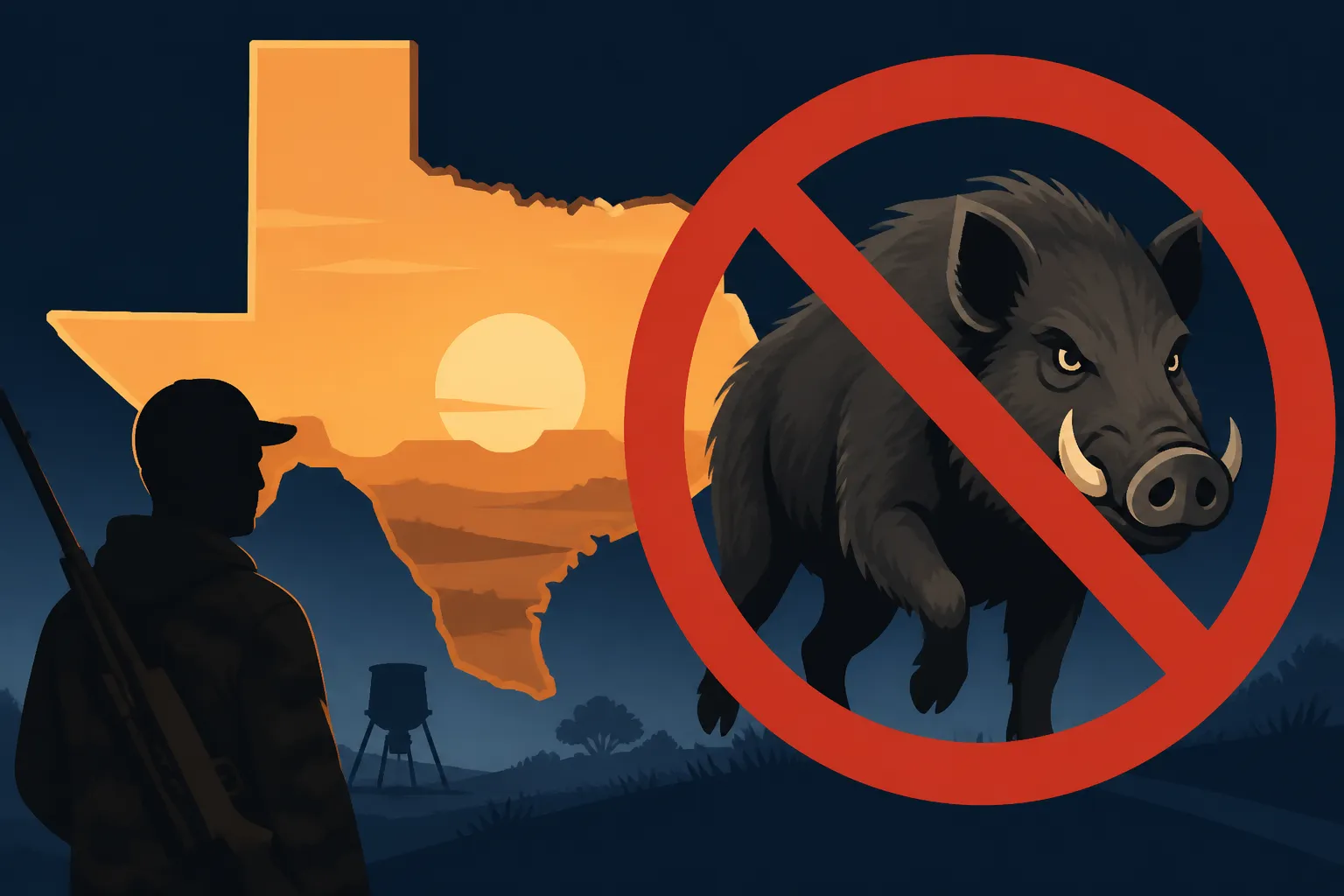
It sounds like a hunter’s fever dream: a high-octane, challenging quarry that you can hunt 365 days a year, 24 hours a day, with no bag limits. In Texas, this isn't just a dream; it is the legal reality. Because feral hogs are classified as an invasive, non-game species, the Texas Parks and Wildlife Department (TPWD) does not set a specific season for them. They are essentially "open season" all the time. But why did the state take such an aggressive stance on these animals?
The Classification of Feral Hogs as Invasive
To understand why there isn't a Texas Hog Hunting Season (There Isn't One), you have to understand the damage these animals do. Feral hogs are not native to North America. They were brought over by early explorers and later by settlers as livestock. Over centuries, they escaped, interbred with Eurasian wild boars, and created the "super pig" we deal with today. Because they aren't native, they don't have a natural place in our ecosystem’s checks and balances. They compete with whitetail deer for forage, destroy turkey nests, and cause over $50 million in agricultural damage in Texas every single year.
If you have spent any time Hog Hunting Methods in Texas: Thermal, Night & Trapping, you know that these animals are biological tanks. A sow can start breeding at six months old and can have two litters of six to ten piglets a year. The math is staggering. State biologists estimate that we would need to remove nearly 70% of the population every year just to keep the numbers from growing. This is the primary reason the state has removed almost all barriers to hunting them.
Ecological Impact and the War on Hogs
The lack of a season is a management tool. If the state imposed a "season," it would imply that the hogs have a value that needs to be conserved. Instead, the goal is total eradication—though most experts admit that is likely impossible at this point. When you are How to Hunt Feral Hogs in Texas (Step by Step), you are performing a service to the land. I’ve talked to ranchers in the Rolling Plains who have lost entire stands of corn in a single night to a sounder of forty hogs.
This ecological warfare means that whether it is the middle of the scorching July heat or a freezing January morning, you are legally clear to pull the trigger. However, just because you can hunt them anytime doesn't mean the tactics remain the same. The behavior of a hog in the spring is worlds apart from how they act in the dead of winter.
The Legal Framework of TPWD Regulations
While there is no "season," there are still rules you must follow. For a long time, every person hunting hogs needed a valid hunting license. However, a major legislative shift in 2019 changed the game for private landowners and their guests. Currently, if you are hunting on private land with the landowner’s consent, you do not need a hunting license to kill feral hogs.
This was a massive win for those trying to solve the overpopulation crisis. However, if you are looking into Public Hog Hunting in Texas, the rules are different. On public lands, such as Wildlife Management Areas (WMAs) or National Forests, you generally still need a license and often a permit. Always check the specific regulations for the piece of dirt you are standing on, as "no season" does not mean "no rules."
When is the Best Time to Hunt Hogs
Since you aren't restricted by a calendar, the "best" time to hunt is really a question of biology and weather. Texas is a massive state with wildly varying climates. Hunting a creek bottom in the Pineywoods in October is a different experience than stalking a senderos in South Texas in February. To be successful, you have to align your efforts with the hog's stomach and their need for water.
Winter Hunting and Food Scarcity
The winter months—December, January, and February—are arguably the most productive times for hog hunters. During this window, the natural forage like acorns and lush grasses has died back or been consumed. This makes them extremely vulnerable to bait. If you are running a Best Deer Feeder Setup for Texas, you will notice that hog activity spikes during the winter because the corn you’re putting out is the only reliable high-calorie meal in the area.
In the winter, hogs also tend to be more active during daylight hours. Because the temperatures are mild, they don't have to worry about overheating, which is their primary physical weakness. You can often find them "sun-lining" along the edges of brush piles or in open fields during the mid-afternoon. If you are wondering Is There a Season for Feral Hogs in Texas?, the answer is no, but the winter "unoffical season" is when the biggest boars often show their faces during the day.
Spring Tactics and Cover
Once the spring rains hit and the Texas landscape greens up, hog behavior shifts. They no longer have to travel miles to find a meal; the food is everywhere. This can make hunting over feeders frustrating. You might see your corn sitting on the ground untouched while the hogs are off in the brush eating tender shoots and roots.
During the spring, I find that Spot-and-Stalk Hunting in Texas (Exotics & Mule Deer) tactics work surprisingly well for hogs. They are often found in the "wallows"—muddy depressions near water sources where they go to cool off and protect their skin from insects. If you can find a fresh wallow near a creek or a tank, you have found the hog's version of a local pub. The challenge in spring is the cover; the brush gets thick fast, and tracking a wounded hog into a wall of green briar is an experience I don't recommend to anyone.
Summer Night Hunting and Heat Management
Summer in Texas is brutal, and the hogs know it. They are not like deer; they don't have sweat glands. This means they are highly susceptible to heatstroke. During the summer, daytime hog sightings drop to almost zero. They will spend the entire day buried deep in the thickest, coolest cedar breaks or creek bottoms they can find.
This is when you need to pivot to How to Hunt Hogs at Night With Thermal. Once the sun goes down and the temperature drops even five or ten degrees, the sounders emerge. Summer is peak season for thermal enthusiasts. The heat of the hog's body stands out in stark contrast against the cooling earth, making them easy to spot from hundreds of yards away. Just remember that in the summer, the "work" starts after the shot. You have to move fast to get that meat on ice, or it will spoil before you even get it to the truck.
| Season | Activity Level | Best Time of Day | Success Rate | Primary Food Source |
|---|---|---|---|---|
| Winter | Very High | Early Morning / Late Afternoon | High | Feeders / Corn / Acorn remnants |
| Spring | Moderate | Mid-Morning near water | Medium | New Growth / Roots / Wallows |
| Summer | Low (Day) / High (Night) | 10 PM – 4 AM | High (with Thermal) | Agriculture / Water sources |
| Fall | High | Late Afternoon | Medium | Mast crops / Deer feeder spillover |
Legal Requirements and License Nuances
Even though there is no season, the legalities of hog hunting in Texas can be a bit of a maze for the uninitiated. You don't want a "pest control" mission to turn into a "Game Warden interaction" because you missed a fine-print detail. The laws have loosened significantly, but they are not non-existent.
Resident vs Non-Resident Rules
As mentioned, the 2019 law (Senate Bill 317) was a game-changer. It explicitly stated that "a person may take a feral hog without a hunting license" on private land with the landowner's permission. This applies to both residents and non-residents. If you're coming in from out of state to help a buddy on his ranch, you can leave the license fees behind.
However, if you plan to hunt anything else—a coyote that happens to trot by, or a rabbit—you must have a license. Many hunters choose to buy a Texas Hunting License: Cost, Types & How to Buy (2026) anyway, just to be safe and to support conservation efforts in the state. If you are a non-resident and you want to hunt on public land, you absolutely must purchase the appropriate non-resident license and the Annual Public Hunting (APH) permit.
Private Land vs Public Land Regulations
The "no license" rule is strictly a private land luxury. Texas is 95% private land, which is why this rule is so impactful. But if you are hunting on a WMA like the Chaparral or the Caddo National Grasslands, the rules of the "season" are actually dictated by the primary game in the area. For example, some public lands only allow hog hunting during specific deer or squirrel seasons.
When hunting public land, you are also often restricted to the weapon of that specific season. If it is archery season for deer, you may be required to use a bow for hogs as well, even if you are only there for the pigs. Always read the "Public Hunting Map and Digest" provided by TPWD. It is the final word on what you can and cannot do on state-managed dirt.
Night Hunting and Thermal Legality
One of the most common questions is: Is It Legal to Hunt Hogs at Night in Texas? (Yes). Not only is it legal, but it is also often the most effective method. Unlike many other states, Texas allows the use of artificial lights, night vision, and thermal imaging for non-game animals like hogs and coyotes.
There is no "permit" required for night hunting on private land. You can mount a high-powered spotlight to the roof of your buggy or spend several thousand dollars on the Best Thermal Scopes for Hog Hunting in Texas. The only caveat is that you cannot hunt from a public roadway, and you cannot "shine" a light into a neighbor's house or livestock area. Common sense and hunter etiquette go a long way when the sun goes down.
Popular Methods for Year-Round Success
Because there is no season, you have the luxury of choosing the method that fits your style. Some people enjoy the stationary patience of a blind, while others want the tactical movement of a midnight stalk.
Baiting and Feeders
The most common way to hunt hogs in Texas is over a corn feeder. Hogs have an incredible sense of smell—some say it is better than a bloodhound’s. They can smell corn from miles away if the wind is right. Most hunters set their timers to go off shortly before dusk and again at daybreak.
If you are dealing with "educated" hogs that have been shot at before, they will often wait until they hear the feeder spin and then wait another two hours for total darkness before they step into the clearing. This is where Best Feeder Timer Settings for Daylight Deer might not work for hogs. You might need to set your feeder to go off in the middle of the night to keep them coming back during times when you can actually hunt them with night gear.
Spot and Stalk / Thermal Night Hunts
If sitting in a box blind isn't your speed, spot and stalk is the ultimate adrenaline rush. In the winter, you can glass the edges of wheat fields or oat patches. Hogs stand out as black dots against the green grain. In the summer, you do the same thing but with a thermal monocular.
Stalking hogs at night is a masterclass in wind management. You can get away with some noise, as hogs are naturally noisy eaters—they grunt, squeal, and fight over food. But if the wind shifts and they get a whiff of you, the sounder will vanish in an instant. This method is the best way to see the true scale of the infestation, as you might find sounders of 50 to 100 pigs in a large agricultural field.
Trapping and Aerial Hunting
For those who view hog hunting as a necessity rather than a sport, trapping is the most effective way to remove large numbers. A well-designed trap can catch an entire sounder at once. If you leave one or two "smart" sows behind, they will quickly repopulate the area. Many ranchers use Hog Trapping in Texas: Methods That Work to protect their crops during the planting season.
Then there is the most "Texas" way to hunt: from a helicopter. Aerial hunting was legalized for the general public (under specific permits) as a way to clear massive tracts of land quickly. It is expensive, but for sheer volume of removal, nothing beats a bird's-eye view and a semi-automatic rifle.
Geographic Hotspots for Texas Hogs
You can find hogs in nearly all of Texas's 254 counties, but some regions are more "piggy" than others. Depending on the terrain, your "no season" hunt will look very different.
East Texas Pineywoods
In East Texas, the woods are thick, and the ground is often damp. This is hog heaven. The abundance of water and thick cover means the hogs don't have to travel far. Hunting here is often done over small openings or along old logging roads. The Pineywoods are great for year-round hunting because the canopy provides shade even in the summer, allowing for slightly more daytime activity than the open plains.
South Texas Brush Country
This is the land of the giants. While South Texas is famous for its trophy whitetails, the hogs here are equally impressive. The landscape is dominated by mesquite and prickly pear cactus. If you are Where to Hunt Feral Hog in Texas, the brush country offers high-visibility hunting along "senderos"—long, cleared strips of land used for oil access or fence lines. The hogs here are tough, often scarred from fighting, and can reach massive weights due to the high-protein diet of mesquite beans and supplemental deer feed.
The Rolling Plains and Hill Country
The Texas Hill Country has the highest density of both deer and hogs in the state. The rocky terrain and cedar breaks provide perfect hiding spots. In the Rolling Plains, hogs follow the river corridors—like the Brazos or the Pease. They use these "highways" to move between foraging grounds. If you find a property with river access in this region, you will never run out of hogs to hunt.
Gear Essentials for Texas Hog Hunting
Because you are hunting a tough animal in a tough environment, your gear needs to be up to the task. You don't need a custom-built rig to kill a pig, but a few specific items will make your "no season" hunt much more enjoyable.
Optics and Thermal Scopes
If you plan on hunting at night—which you should—optics are your biggest investment. A standard day scope is fine for morning and evening hunts over a feeder, but for the true hog experience, thermal is king. Modern thermal scopes allow you to see through light brush and identify a hog's heat signature from a quarter-mile away. It completely changes the game. If you're on a budget, a high-quality green or red LED light mounted to your scope is a great entry point for night hunting.
Calibers and Ammo Selection
Hogs have a thick "shield" of cartilage over their shoulders, especially the big boars. A poorly placed shot with a small caliber often results in a lost animal. While the .223/5.56 is popular for high-volume shooting, many veteran hog hunters prefer something with a bit more punch, like the .308, 6.5 Grendel, or the .300 Blackout. The goal is to drop them where they stand, especially at night when tracking a blood trail through a cactus patch is less than ideal.
Cooling and Meat Processing
Texas heat is the biggest enemy of wild game meat. If you are hunting in the summer, you have a very short window to get the animal skinned and cooled. I always carry a large cooler with several bags of ice. If you are successful, the first thing you should do is field dress the animal and get the carcass off the ground. Many people ask, "Are feral hogs good to eat?" The answer is yes—if you handle the meat correctly. Smaller sows and "meat pigs" under 100 pounds are delicious, often tasting like a leaner, more flavorful version of domestic pork.
Summary of Year-Round Opportunities
The beauty of Texas hog hunting is the freedom it provides. Whether you are a casual hunter looking for a weekend getaway or a dedicated land manager trying to protect your property, the lack of a formal season is your greatest advantage. You can hunt according to your schedule, use the latest technology, and contribute to the management of an invasive species that is threatening the Texas wilderness. Just remember to respect private property, stay safe in the heat, and keep your freezer empty—because in Texas, the hogs are always waiting.
Disclaimer
Feral hog hunting involves inherent risks, including potential injury from wildlife, firearms, and environmental hazards. Always verify current Texas Parks and Wildlife Department (TPWD) regulations and local ordinances before hunting, as laws can change. This guide is for informational purposes only and does not constitute legal advice. Ensure you have the necessary permissions when hunting on private land and follow all safety protocols for night hunting and firearm use.