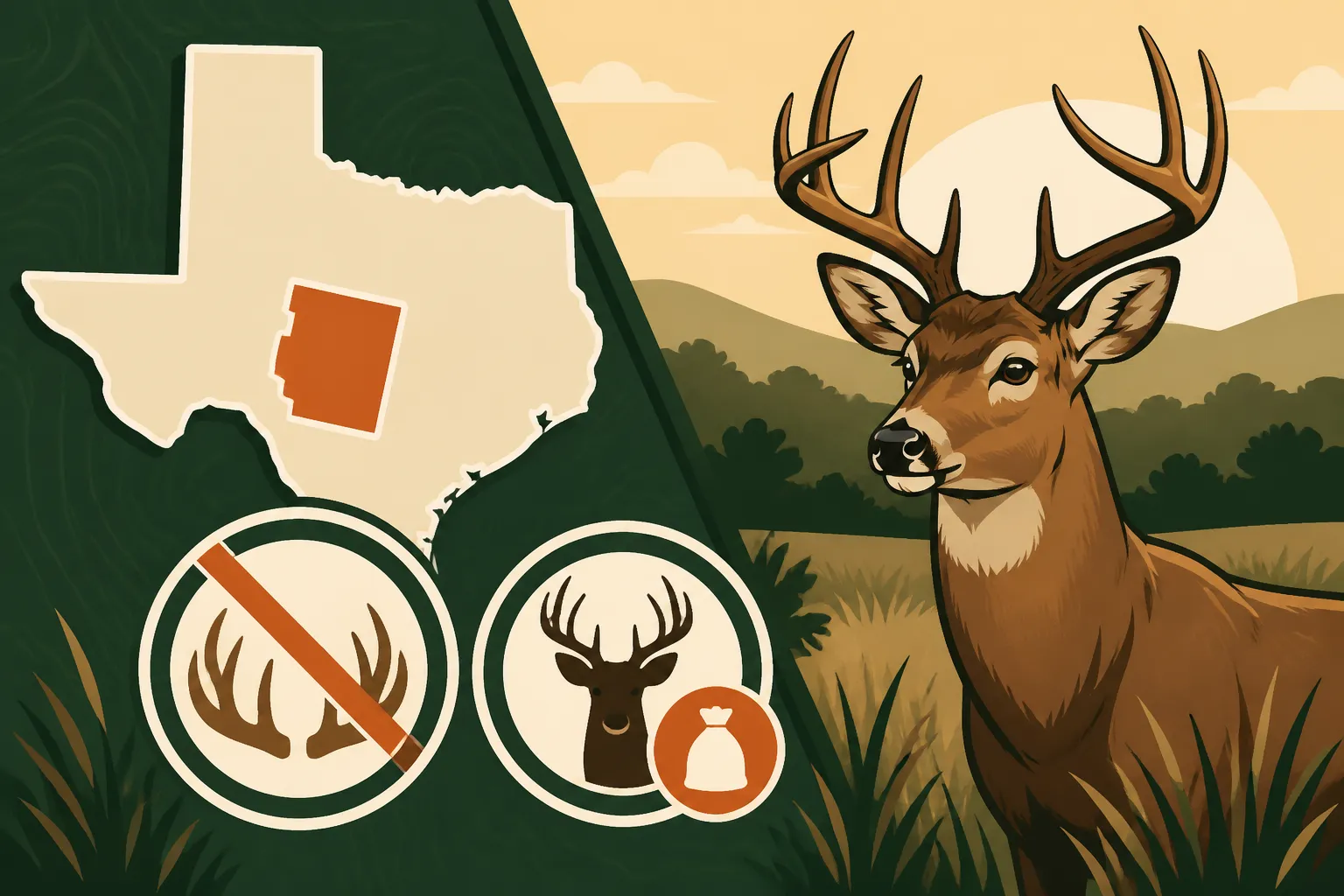
Kerr County Antler Restriction & Bag Limit
Navigating the intricate web of hunting regulations in Texas can feel like trying to untangle a particularly stubborn fishing line, especially when you're moving between counties. The frustration of not knowing if that buck you're looking at is legal, or if you're even allowed to take an antlerless deer, can really put a damper on your hunt. This comprehensive guide is here to clear up all that confusion, focusing specifically on the white-tailed deer antler restrictions and bag limits for Kerr County, ensuring you hunt confidently and within the law.
The Foundation of Texas Deer Management: Antler Restrictions
Let's be honest, those antler restrictions can feel like an extra layer of complexity when all you want to do is enjoy your time in the woods. But there's a really solid reason behind them, and it's all about making sure we have healthy, thriving deer populations for generations to come. Texas Parks and Wildlife Department (TPWD) implements these rules to achieve specific management goals, primarily to shift the harvest pressure from younger bucks, allowing them to mature, and to balance the buck-to-doe ratio. It's a long-term strategy that really pays off in better quality deer.
The 13-Inch Rule and Its Purpose
The most common regulation across many Texas counties, especially in prime deer country, is the "13-inch rule." This rule is designed to protect younger bucks that might have smaller antlers but great genetic potential. Instead of hunters taking the first legal buck they see, regardless of age, this rule encourages them to pass on those young, promising 1.5-year-old and 2.5-year-old deer. The idea is that if these bucks get a chance to age, their antlers will naturally grow larger, contributing to a better gene pool and more impressive trophy opportunities down the line. It's a hard rule to follow when a young, fat 8-point walks out, but understanding the biological reasoning behind it helps. We want strong, healthy herds, and sometimes that means making a tough decision in the moment. If you're new to this, it's worth brushing up on the general principles of Texas Antler Restrictions: 13-Inch Rule & Counties.
Exceptions and Special Regulations in the Hill Country
While the 13-inch rule is widespread, Texas is a vast state with diverse deer populations, and some counties have slight variations or are completely exempt from the standard antler restrictions. This is where the confusion often kicks in! Depending on local habitat conditions, deer density, and specific management objectives, TPWD might adjust rules. For instance, some areas might have stricter rules, while others, particularly those with overpopulation issues, might have more liberal bag limits. Always, and I mean always, double-check the local regulations for the specific county you'll be hunting in. What's legal in one county just across the road might not be in another. Kerr County, being a significant part of the Edwards Plateau and a hub for Hill Country Deer Hunting in Texas, has its own set of rules that are critical to understand.
Kerr County's Specific Antler Restriction Rules
Alright, let's get down to brass tacks for Kerr County. This is where many of us spend our deer season, and knowing the specifics here is absolutely non-negotiable. The rules are designed to maintain a healthy and robust deer herd in this heavily hunted region. Misinterpreting these regulations could lead to a citation, and nobody wants that. It's essential to consult the current Texas Deer Season 2026-2027: Dates by Zone to ensure you're hunting during the correct periods, as these rules are only active during certain seasons.
Legal Buck Definition in Kerr County
For white-tailed deer bucks in Kerr County, the regulations state that a legal buck is defined as a deer having a hardened antler:
- With an unbranched antler; OR
- With an inside spread of 13 inches or greater.
Let's break that down because it's a common point of misunderstanding.
- Unbranched Antler: This refers to a buck with at least one antler that does not have any points or tines branching off the main beam. It's often referred to as a "spike" or "forked horn" where one side is a spike. This allows for the harvest of some younger bucks that may not have the genetic potential for large antlers, or those that are just starting out. You might see a small, young buck with one spike and one fork. As long as one of those antlers is entirely unbranched, that animal is legal.
- Inside Spread of 13 Inches or Greater: This is where the famous "13-inch rule" comes into play. If a buck has branched antlers (meaning points coming off the main beam), its antlers must have an inside spread of at least 13 inches to be legal to harvest. This measurement is taken at the widest point between the main beams, not including any points.
So, essentially, in Kerr County, you can shoot a spike buck (an unbranched antler on at least one side) or a buck with branched antlers that are wide enough (13 inches or more inside spread). You cannot shoot a buck with branched antlers that have an inside spread less than 13 inches. This rule is designed to protect those middle-aged bucks (2.5 to 3.5 years old) that are still developing their antler potential. Learning How to Field Judge a 13-Inch Buck while they are still walking around is a skill every hunter in Kerr County needs to master.
Antlerless Deer Regulations
Harvesting antlerless deer (does) is just as crucial for herd management as buck regulations. It helps control the overall deer population, ensuring that the available food and habitat can support the number of deer present. In Kerr County, the regulations for antlerless deer can vary based on whether the property is enrolled in the Managed Lands Deer Permit (MLDP) program or if you are hunting under general season rules.
- General Season Antlerless Harvest: During the general open season, hunters often need to rely on "doe days" or specific antlerless permits issued by landowners who qualify. The specifics for these days and requirements will be clearly outlined in the annual Texas Outdoor Annual, so it's vital to check that before heading out. Sometimes, a general hunting license alone allows for antlerless harvest during certain periods, but it’s always better to confirm.
- MLDP Properties: Many ranches in Kerr County participate in the MLDP & Managed Lands in Texas Explained program. This program allows landowners to work with TPWD to manage their deer herds more intensively. On MLDP properties, hunters receive special MLDP tags, which often include a specific number of antlerless tags. These tags typically extend the season and allow for more flexible harvest management, as the landowner is actively collecting data and managing the herd. If you're hunting on an MLDP property, the landowner or lease manager will provide you with the necessary tags and explain the specific harvest instructions for both bucks and does. It’s a fantastic program for improving deer quality over time.
Kerr County Deer Bag Limits
Understanding the bag limits is just as important as knowing the antler restrictions. This tells you how many deer you can legally harvest in a given season within Kerr County. It's your responsibility as a hunter to keep track of your harvest and report it correctly through the Texas Hunting Tags & Harvest Reporting (My Texas Hunt Harvest) system.
Buck Bag Limit
For white-tailed deer in Kerr County, the general bag limit allows for a total of two bucks per season.
However, there's a critical nuance to this:
- Only one of these two bucks can have an unbranched antler. This means you can take two branched-antler bucks (both with an inside spread of 13 inches or greater), or one branched-antler buck and one unbranched-antler buck (spike). You cannot, for example, take two spike bucks. This regulation again emphasizes the protection of those potentially high-quality young branched-antler bucks, while still allowing some harvest flexibility.
Let's look at a quick table to clarify:
| Legal Buck Type | Antler Characteristics | Max Per Season in Kerr County |
|---|---|---|
| Branched-Antler Buck | Inside spread 13 inches or greater | 2 (if both meet criteria) |
| Unbranched-Antler Buck | At least one antler is completely unbranched (spike) | 1 |
| Illegal Buck (Example) | Branched antlers with an inside spread less than 13 inches | 0 (never legal) |
This table simplifies the buck bag limit, reminding you that your total buck harvest can't exceed two, and only one of those can be a spike.
Antlerless Deer Bag Limit
The bag limit for antlerless deer in Kerr County also plays a significant role in managing the herd.
- Generally, the bag limit is two antlerless deer. This is often tied to "doe days" within the general season or specific MLDP permits.
- Important Consideration: The total combined bag limit for white-tailed deer (bucks and antlerless) is typically five deer per person per license year across all counties, but the county-specific limits still apply. This means you might take two bucks and two does in Kerr County, but you couldn't then go to another county and take two more bucks if you've already filled your statewide buck tags.
Always verify your specific antlerless tag allocation, especially if you're on a managed property. On MLDP properties, the number of antlerless tags can be much higher, and they will be issued by the landowner or manager, allowing you to harvest more does than the general season limit would permit. This is done to achieve specific population goals for that particular property.
Practical Tips for Hunting in Kerr County
Hunting in Kerr County can be incredibly rewarding, but it pays to be prepared and knowledgeable. The rolling hills, thick cedar breaks, and diverse terrain present unique challenges and opportunities. Beyond just knowing the regulations, having a good strategy and the right gear can make all the difference.
Field Judging Bucks with Confidence
One of the biggest anxieties for hunters in antler-restricted counties is making a mistake when field judging a buck. That brief moment of truth, trying to estimate antler spread or confirm an unbranched antler, can be stressful. Here are a few tips to help you out:
- Ear Tip Method: A common rule of thumb for whitetails in Texas is that an adult deer's ear tips, when alert and pointed forward, are typically around 13-14 inches apart. If the main beams of a buck's antlers extend noticeably outside the ear tips, it’s a good indicator that it meets or exceeds the 13-inch spread requirement. This isn't foolproof, as ear width can vary, but it's a solid starting point for a quick judgment.
- Practice with Optics: Spend time watching deer through your Best Rifle Scope for Texas Deer Hunting or binoculars. Practice estimating spreads on bucks you won't shoot, comparing your estimate to known measurements if possible (e.g., from trail camera photos). This helps train your eye.
- Trail Cameras are Your Friend: Modern cellular trail cameras can provide incredible scouting data. Setting them up to pattern bucks, especially during the pre-rut and rut, can give you photos with clear antler measurements or at least close-ups that help you study them. Knowing what deer are on your property before the season opens is a huge advantage.
- Patience is Key: If you're unsure, let the deer walk. It's always better to pass on a questionable buck than to make an illegal harvest. There will almost always be another opportunity, and the peace of mind is worth it. For more specific tactics, you might want to read up on Best Time of Day to Hunt Whitetail in Texas.
Essential Resources for Kerr County Hunters
Staying informed is your best defense against inadvertently breaking a hunting law. There are several resources available that every hunter in Texas, and especially Kerr County, should utilize:
- The Texas Outdoor Annual: This is your bible. Available online through the TPWD website and often in print at sporting goods stores and license vendors, the Outdoor Annual contains all the current regulations for every species and every county. Make it a habit to How to Read the Texas Outdoor Annual cover to cover, or at least the sections relevant to your hunt, every single year. Regulations can change, and ignorance is no excuse.
- TPWD Website and App: The official TPWD website is an incredible resource for up-to-date information, including drawn hunts, license purchases, and regulation updates. They also have a mobile app that can be very handy for quick lookups in the field.
- Local Game Wardens: Don't hesitate to reach out to your local game warden if you have a specific question that isn't clearly answered in the Outdoor Annual. They are a valuable resource and would much rather answer a question beforehand than deal with a violation afterward.
- Local Sporting Goods Stores and Outfitters: Many local businesses, like Headwaters Outfitters in Kerrville or similar shops, are often very knowledgeable about local regulations and can offer advice or point you to resources.
- Your Hunting License: Before anything else, ensure you have your Texas Hunting License: Cost, Types & How to Buy (2026) in order. It's the absolute first step for any hunter in Texas.
By staying vigilant, educating yourself on these specific rules, and utilizing the available resources, you can ensure your Kerr County hunting experience is not only successful but also entirely legal and ethical. These efforts contribute to the overall health and sustainability of Texas's incredible white-tailed deer population, ensuring future generations can enjoy the same opportunities we do today. For a broader perspective on deer hunting in Texas, consider diving into the White-Tailed Deer Hunting in Texas: Complete Guide.
Disclaimer
Please note that hunting regulations are subject to change. While every effort has been made to provide accurate and up-to-date information regarding Kerr County's antler restrictions and bag limits, it is the individual hunter's responsibility to verify all current regulations with the official Texas Parks and Wildlife Department (TPWD) Outdoor Annual prior to hunting. This guide is for informational purposes only and should not be considered a substitute for the official TPWD regulations.