Mason County Antler Restriction & Bag Limit
Staring through a dusty pair of binoculars at a mature Hill Country buck weaving through granite outcrops and dense mesquite brush is an exhilarating experience. However, the excitement quickly turns into stress when you are trying to decide if that buck’s inside spread clears the state-mandated width before taking a shot. In Mason County, mistaking a narrow buck for a legal harvest can lead to hefty fines and a ruined season. This detailed guide breaks down the exact antler restrictions, bag limits, and harvest rules for Mason County so you can hunt with complete confidence.
Mason County Antler Restrictions and How to Field Judge Bucks
Mason County sits squarely in the heart of the Llano Uplift within the Edwards Plateau region. Because of high deer densities and historical hunting pressure across the Texas Hill Country, the state enforces special antler restrictions here to protect younger bucks and allow them to reach older age classes. Understanding how these rules apply in the field is the first step toward a successful hunt.
The 13 Inch Inside Spread Rule Explained
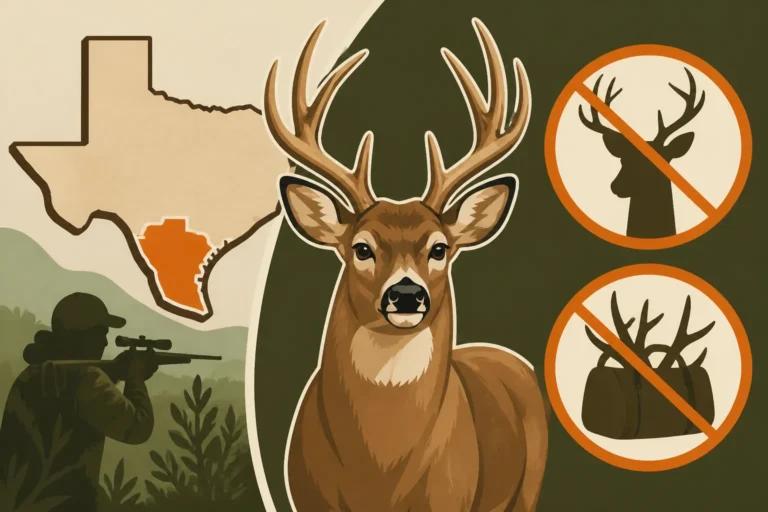
In Mason County, a legal buck must meet specific antler criteria before it can be harvested on a standard county log tag. The primary rule focuses on the main beam inside spread. A legal buck must have an inside antler spread of 13 inches or greater.
To visualize 13 inches in the field, biologists and veteran hunters rely on anatomical markers on the deer itself. On an average Texas Hill Country white-tailed deer, the distance between the tips of the ears when held out in a full alert position measures approximately 13 inches from tip to tip. If the inside beam curvature of the antlers extends beyond the outer edges of those alert ears, the buck is almost certainly legal under the Texas Antler Restrictions: 13-Inch Rule & Counties guidelines.
If you are unsure about the rule, remember that the measurement is calculated between the main beams at their widest point inside. Points, tine length, and mass do not substitute for this width requirement. If a buck has massive g-2 and g-3 tines with heavy circumference but only sports an 11-inch inside spread, it remains illegal under the standard spread requirement unless it meets the unbranched antler exception.
Practical Tips for Field Judging Ear Tip Spread
Field judging white-tailed deer in thick cover requires patience and a good routine. Before deciding to take a shot, wait until the buck turns directly toward you or faces directly away. A side profile offers almost no reliable way to gauge inside spread width.
When learning How to Field Judge a 13-Inch Buck, look for these specific physical indicators:
- Ear Angle: Ensure the buck is alert with ears flipped forward or flat outward. If the ears are laid back in aggression or pinned down while feeding, they will give you a false sense of antler width.
- Ear Tip Clearance: Look for clear daylight between the inside of the main beam curves and the tips of the ears. If the beams come straight up from the skull inside the ear line and fail to push outward past the ear tips, pass on the animal.
- Beam Curvature: Bucks with heavy forward-sweeping main beams can sometimes fool you. They may look wide from the side, but from the front, their beams turn inward too early, cutting short the inside spread measurement.
Taking a few extra seconds to double-check these visual cues through clear optics will save you from an accidental violation.
Unbranched Antler Bucks and Spike Rules
The antler restriction framework is designed to manage herd health while still offering harvest opportunities. To protect young, promising bucks with small racks while allowing hunters to cull mature, low-potential animals or harvest meat, the state permits the taking of bucks with at least one unbranched antler.
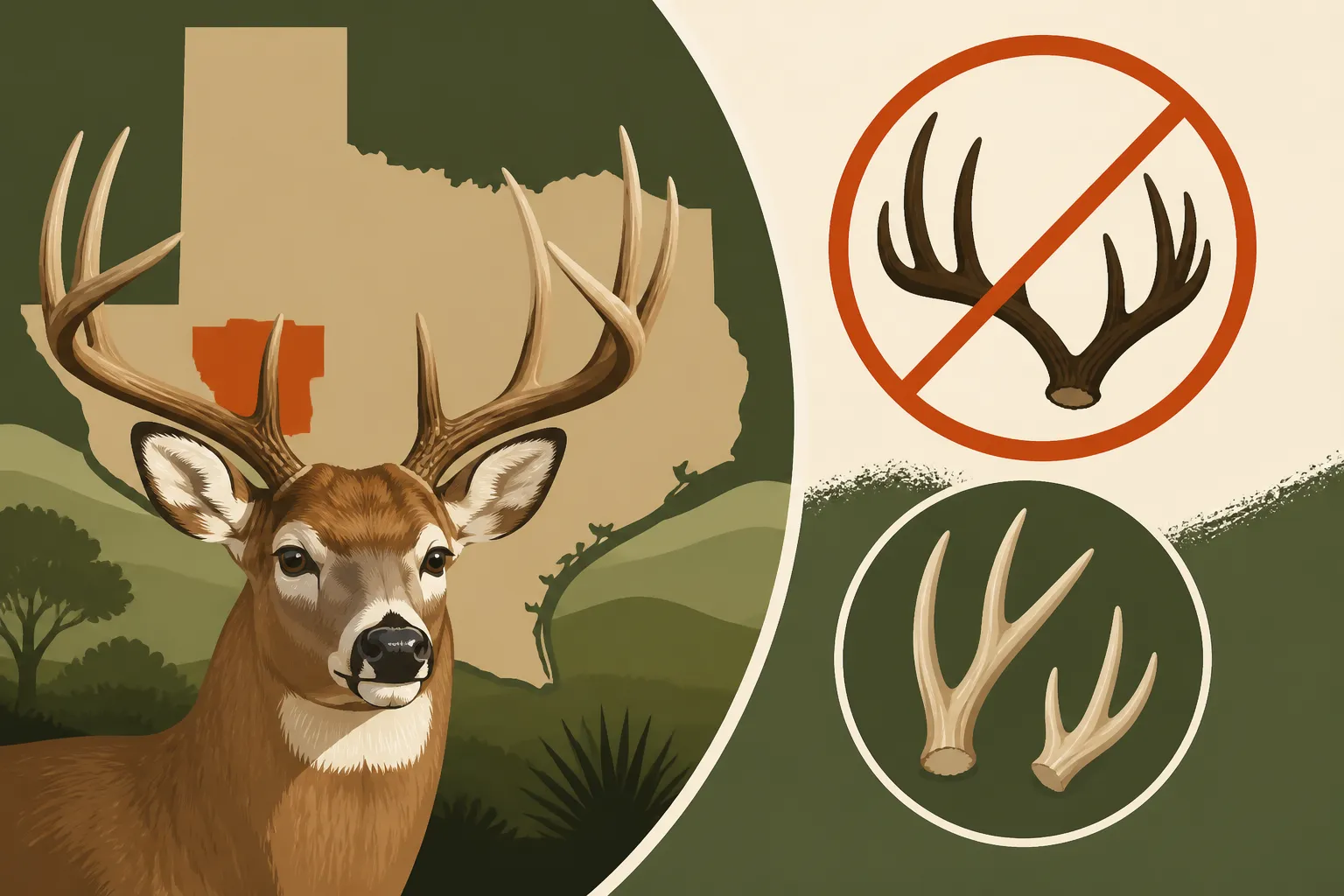
An unbranched antler is defined as a main beam that has no points coming off it that are at least one inch long. A classic spike buck with two smooth main beams is legal under this provision. Additionally, an older buck that has broken a beam down to a slick main shaft or a buck that naturally grew an unbranched antler on one side and a typical branched rack on the other is legal to harvest as an unbranched antler buck.
Importantly, harvesting an unbranched antler buck does not require the 13-inch inside spread. As long as at least one side features a single, unbranched beam, the buck is legal regardless of how narrow or wide its head gear may be.
Mason County Deer Bag Limits and Harvest Rules
Understanding what constitutes a legal buck is only half the battle. You must also know how many deer you can legally harvest during a given season and what tags apply to each category of animal in Mason County.
Total Bag Limit Breakdown for Buck and Unbranched Antlers
In Mason County, the annual white-tailed deer bag limit is set at five total deer, with a strict limit of no more than two bucks across all combined seasons.
When harvesting your two bucks in Mason County, you cannot simply take any two bucks that cross your path. Your buck harvest must follow one of two specific combinations:
- One narrow/unbranched buck and one wide buck: You may take one buck with at least one unbranched antler, and one buck with an inside spread of 13 inches or greater.
- Two unbranched bucks: You may take two bucks that both feature at least one unbranched antler.
Under no circumstances may a hunter harvest two bucks in Mason County that both possess branched antlers with a 13-inch or greater inside spread. Pushing past this limit by taking two wide-spread trophy bucks in the same license year is a direct violation of state regulations. Reviewing the overall Texas Whitetail Bag Limit & Buck Rules before setting foot on your lease ensures you stay completely compliant.
Antlerless Deer Permits and County Doe Days
Antlerless deer management is critical in the Texas Hill Country to prevent overpopulation and protect habitat from overgrazing. In Mason County, harvesting doe and button bucks is governed by specific season windows often referred to as doe days, or through specialized management programs.
During the archery season, antlerless deer may be taken without special permits using standard archery equipment. However, during the general firearm season, unpermitted antlerless harvest is restricted to specific designated days, typically falling around Thanksgiving weekend and early season periods.
If you are hunting a property enrolled in the Managed Lands Deer Program (MLDP), harvest rules differ. MLDP properties receive property-specific tags based on wildlife biologist surveys. If you possess an MLDP tag issued for the ranch you are hunting, you must use that specific tag instead of the tags on your standard hunting license, and the county antler restrictions or standard county doe days may be adjusted according to the property’s custom management plan.
Tagging Log Completion and Harvest Reporting Requirements
Once a deer is down, legal processing must begin immediately at the kill site. Before moving the animal or attaching a haul rope, you must cut out the month and day of harvest on the appropriate tag from your license and secure it to the animal.
Tagging steps must be completed meticulously:
- Fill out the back of your paper hunting license in the harvest log section, listing the county (Mason), date, and type of animal.
- Attach the physical tag firmly to the deer. Common attachment locations include the narrow part of the hind leg above the hock or the base of an antler on a buck.
- Keep the tag cleanly attached throughout transport to your camp, processing facility, or home residence.
In certain designated Chronic Wasting Disease (CWD) check zones across the state, mandatory reporting or carcass movement restrictions apply. Always check current local zone boundaries in the Hill Country before transporting intact deer carcasses across county lines.
Mason County Hunting Seasons and Regulations Summary
Staying on top of seasonal dates helps you plan your trips to the lease and ensures you are using the correct equipment during dedicated season frameworks.
Archery and General Season Framework
The hunting year in Mason County follows the standard Texas North Zone frameworks for white-tailed deer. The season opens with a dedicated archery-only segment running through October. During this period, hunters may use compound bows, recurves, longbows, or crossbows to take both bucks and antlerless deer.
The general firearm season opens in early November and stretches into early January. During general season, hunters can utilize centerfire rifles, muzzleloaders, shotguns, handguns, or archery equipment. Antler restrictions remain fully active throughout both the archery and general seasons.
Muzzleloader and Youth Special Seasons
Mason County features dedicated youth-only hunting weekends. A early youth weekend takes place prior to the general opener, and a late youth weekend occurs immediately following the close of the general season. During youth weekends, licensed hunters aged 16 and under may harvest deer under the supervision of an adult. Antler restrictions still apply to youth hunters in Mason County unless specific management provisions state otherwise on MLDP acreage.
A special late muzzleloader season also runs following the general firearm period. This segment provides additional opportunities for hunters utilizing blackpowder firearms or modern inline muzzleloaders to harvest unbranched bucks and antlerless deer, helping land managers achieve harvest goals after general pressure subsides.
| Season Segment | Equipment Allowed | Bag Limit & Restrictions Summary |
|---|---|---|
| Archery Season | Compound, Recurve, Longbow, Crossbow | Full county bag limit applies. Antler restrictions active on bucks. Antlerless legal without special permits. |
| General Season | Centerfire Rifles, Shotguns, Handguns, Muzzleloaders, Archery | Antler restrictions active. Max 2 bucks (only 1 wide buck). Antlerless restricted to designated Doe Days unless using MLDP tags. |
| Youth Special Seasons | All Legal Firearms & Archery | Open to hunters 16 and under. Antler restrictions apply. Early and late weekend segments available. |
| Late Muzzleloader | Muzzleloading Firearms Only | Focuses on unbranched bucks and antlerless deer to finish seasonal management goals. |
Tactical Advice for Hunting White-Tailed Deer in Mason County
Successfully harvesting a legal buck in Mason County requires adapting to the regional terrain, vegetation, and deer behavior. The rugged country surrounding towns like Mason, Art, and Pontotoc presents distinct challenges and opportunities.
Navigating the Hill Country Terrain and Vegetation
Mason County is defined by rolling hills, granite outcrops, live oak motts, brushy cedar (ashe juniper) breaks, and red sandy dirt interspersed with gravel bottoms. Waterways like the Llano River and its tributaries serve as major travel corridors for wildlife.
Because brush density can obscure antler sightlines, position your blinds or elevated stands to provide clear views into open lanes. High vantage points overlooking draw crossings or brush edges give you extra time to glass a buck’s head gear thoroughly. Bringing a high-power optic, such as a crisp pair of 10×42 binoculars or a tripod-mounted spotting scope, is essential when judging whether a beam clears the ears at 150 yards against a backdrop of thick mesquite.
Hunters looking into land options often explore Mason County Hunting (Leases & Outfitters) or general Edwards Plateau Hunting Lease Cost & Options to find properties with the ideal mix of river bottoms, oak flats, and cover.
Feeder Setups Feed Timing and Water Sources
Supplemental feeding plays a big role in Hill Country deer hunting. Corn feeders are widely utilized to draw deer out of dense cedar breaks into open viewing areas. When building a feed strategy, consider using a solid Best Deer Feeder Setup for Texas that pairs timed spin feeders with protein stations to support rack development during dry spring and summer months.
Set your feeder timers to spin shortly after first light and roughly an hour before sunset. In the sandy, well-drained soils of Mason County, water is often a limiting factor during dry spells. Placing a stand within viewing distance of a natural seep, concrete stock tank, or dirt dirt tank can produce incredible results, especially during warm early-season archery hunts.
During the late autumn months, keep an eye on temperature drops. Knowing When Is the Texas Whitetail Rut? in the Hill Country—which typically peaks around mid-to-late November—allows you to change tactics. When bucks begin actively cruising for does, blind setups over key travel funnels become far more productive than static feeder setups. Using localized calling techniques, such as learning How to Grunt and Rattle Whitetail in the Hill Country, can draw dominant bucks out of heavy cover and into open range where you can easily verify their inside spread width.
By pairing strict adherence to Mason County’s 13-inch antler restrictions and bag limits with solid field judging techniques, you protect the local herd, ensure the future quality of Hill Country deer hunting, and set yourself up for a rewarding and legal season outdoors.
Disclaimer
This article is for general informational purposes only and does not constitute professional advice. Laws, prices and regulations vary by location and change over time. Consult a qualified professional for guidance on your specific situation.