Texas Duck Zones Explained (High Plains, North, South)
Oh, the joy and frustration of duck hunting in Texas! There's nothing quite like the sound of wings beating overhead as dawn breaks, but trying to untangle the web of regulations, especially when it comes to duck zones, can feel like you need a law degree and a meteorology certification. Many of us have spent countless hours poring over the Outdoor Annual, wondering if we're in the High Plains, North, or South Zone, and what that means for our hunt. This guide is here to cut through the confusion, meticulously breaking down each Texas duck zone to help you understand the boundaries, typical species, migration patterns, and how to plan truly successful waterfowl hunts across our vast state.
The Maze of Texas Duck Hunting Zones: Why They Matter
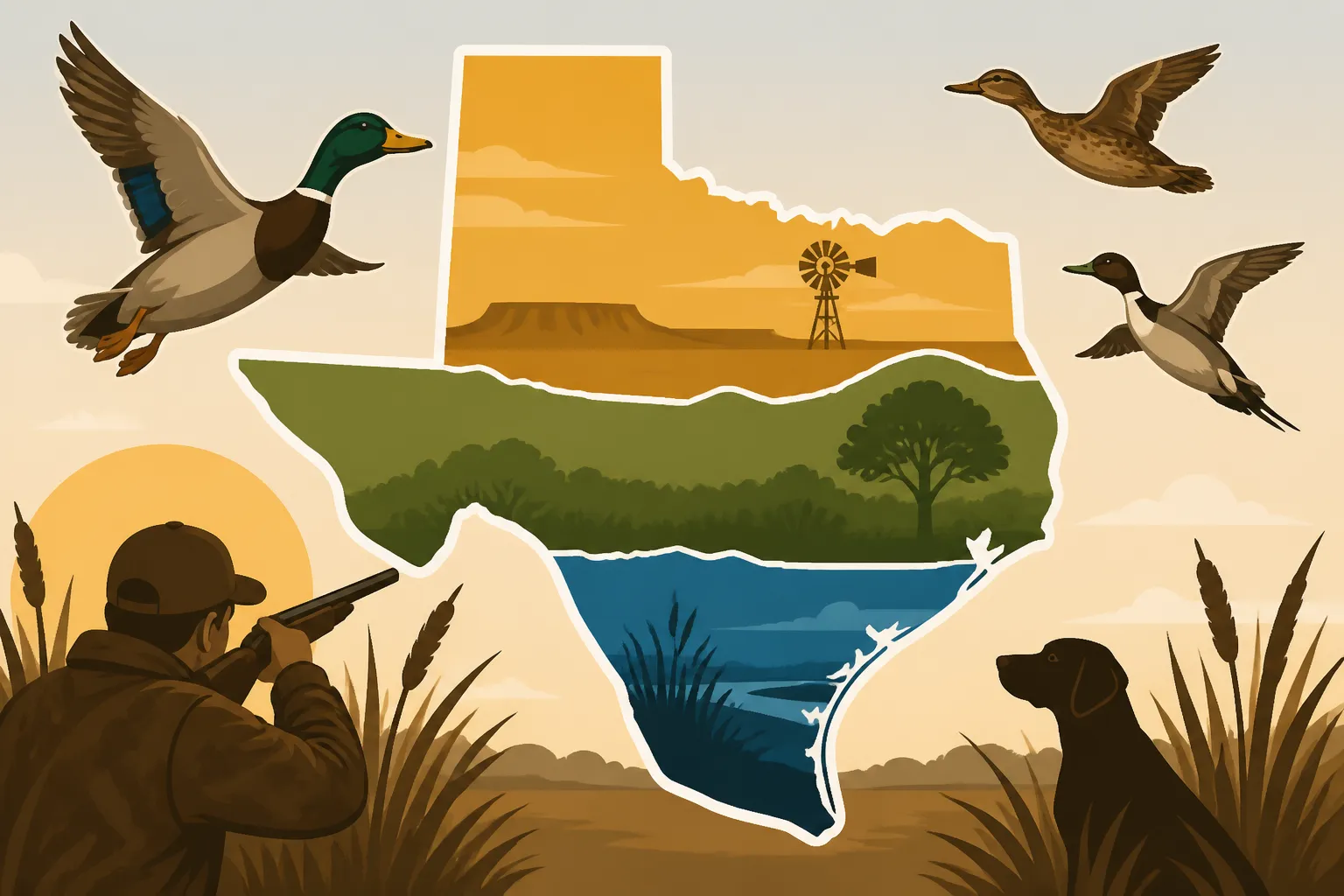
It’s easy to feel like you need a GPS unit just to figure out which set of duck season dates applies to your blind, isn't it? Texas is an enormous state, spanning diverse ecosystems from the Panhandle to the Gulf Coast, and that geographical spread means different migratory bird patterns and, consequently, different hunting regulations. The Texas Parks and Wildlife Department (TPWD) divides the state into three primary duck zones—High Plains, North, and South—each with its own specific opening and closing dates for general duck season, not to mention special early seasons like September Teal. Ignoring these zone distinctions isn't just a minor oversight; it can lead to unintentional violations and a ruined hunt. Trust me, nobody wants to be that guy who shows up ready for opening day only to find out they're a week early or late for their specific zone.
Deciphering the "Why" Behind the Zones
These zones aren't just arbitrary lines drawn on a map to complicate your life, I promise! They exist for a very good reason: to effectively manage migratory waterfowl populations. Ducks, geese, and other migratory birds follow predictable, albeit sometimes variable, flyways. Texas lies within the Central Flyway, a massive migratory corridor stretching from Canada all the way down to Mexico. As birds move south for the winter, they hit different parts of Texas at different times. By establishing zones, wildlife managers can tailor hunting seasons to coincide with the peak presence of waterfowl in specific regions, ensuring sustainable harvest levels while also providing ample hunting opportunities. For example, the High Plains often sees an earlier influx of some species compared to the far South Texas coast.
Think about it from a biological perspective. If the entire state had one uniform season, hunters in the northernmost counties might miss the bulk of the early migration, while those on the coast might be hammering birds before they've truly settled in or after a significant portion has already moved further south. The zones allow for a more nuanced approach, recognizing the distinct ecological and migratory patterns that characterize each region of Texas. This strategic division helps conserve the resource for future generations, which, at the end of the day, is what we all want as responsible hunters.
The Impact on Your Hunting Calendar and Strategy
Understanding which zone you're hunting in fundamentally dictates when you can even think about setting out decoys. This isn't just about general duck season either. Special seasons, like the highly anticipated September Teal Season Dates in Texas, also adhere to these zone boundaries. It’s a game-changer for planning your entire fall and winter hunting schedule. If you hunt a lease in the Panhandle, your season might open earlier for many species than if your lease is near Corpus Christi. This difference can mean everything for targeting specific migration pushes or particular species.
Consider a scenario: You’ve got a fantastic spot near Vernon in the North Zone, and your buddy has an equally promising one down in Rockport in the South Zone. Your North Zone general season might open a week or two before his South Zone. That impacts everything from when you take off work, when you clean your shotgun, and when you start practicing your calls. It even affects which species you're likely to encounter in their prime. Early season in the North might be fantastic for local puddle ducks and early migrating birds, while the South Zone might be where the real action heats up for pintails and wigeon later in the winter as temperatures drop further north. You truly need to consult the most current Texas Duck & Waterfowl Season 2026: Zones details every year.
Common Frustrations with Zone Overlap and Confusion
Let’s be honest, it’s not always straightforward. Texas county lines don't always align perfectly with the ecological realities of bird migration, and some county boundaries act as the dividing line for zones. This can lead to confusion, especially if you hunt near a zone border. Imagine having two properties just miles apart, but one is in the North Zone and the other in the South. What do you do? It's enough to make your head spin! Many hunters express frustration over the seemingly arbitrary nature of some of these lines, especially when a single large body of water or a river might fall into two different zones.
A common scenario involves hunters who might have access to land in different parts of the state. Keeping track of varying opening and closing dates, as well as distinct bag limits that can sometimes apply, becomes a significant mental exercise. You’re constantly double-checking maps and dates, fearing you might accidentally step into a different zone or misinterpret a regulation. This is where a clear understanding, coupled with a reliable hunting app like onX Hunt or HuntStand, becomes invaluable, helping you pinpoint your exact location relative to zone boundaries. It's a common struggle, and validating your location before the hunt is always the smartest move to avoid any sticky situations.
Diving Deep into the High Plains Duck Zone
Now, let's turn our attention to the vast expanse of the Texas High Plains. This region, largely defined by the Panhandle and extending slightly south, offers a unique duck hunting experience distinct from the rest of the state. When people think of Texas duck hunting, their minds often jump to the coastal marshes, but the High Plains holds its own as a waterfowl haven, particularly when winter weather begins to roll in from the north.
Geographic Boundaries and Unique Waterfowl Habitat
The High Plains Duck Zone is pretty easy to delineate on a map. It essentially covers the 26 counties in the Texas Panhandle that lie west of a line beginning at the Texas-Oklahoma border, south along U.S. Highway 83 to State Highway 70, then south along SH 70 to U.S. Highway 62/82, and west along US 62/82 to the New Mexico border. It's a land of wide-open spaces, vast agricultural fields, and critically important playa lakes. These shallow, ephemeral wetlands dot the landscape, acting as crucial stopovers and wintering grounds for millions of migratory birds. When they hold water, these playas are magnets for waterfowl, offering food and sanctuary.
Unlike the heavily timbered East Texas or the brush country of the South, the High Plains offers a more expansive, almost prairie-like hunting environment. The agricultural production, primarily wheat, corn, and milo, provides an abundant food source for ducks and geese, drawing them in from miles around. This combination of feeding grounds and watering holes makes the High Plains an indispensable part of the Central Flyway, attracting birds that have traveled long distances and are looking to fuel up.
Target Species and Optimal Hunting Periods
Hunters in the High Plains can expect to encounter a robust mix of waterfowl. Mallards are often the kings of the plains, especially the big, green-headed northern birds that provide excellent table fare. You'll also find plenty of pintails, wigeon, gadwalls, and teal. While lesser scaup and other diving ducks do show up, the bread and butter here are usually the dabblers. The season often opens a bit earlier in the High Plains Zone than in the other zones, typically in late October. This timing aligns with the arrival of the first significant cold fronts that push birds south from states like Colorado, Kansas, and even further north.
The optimal hunting periods often coincide with these cold fronts. As temperatures drop and smaller water bodies freeze further north, birds are forced to continue their journey, and the High Plains playas become vital. Late November through December can be fantastic, especially if there's sufficient water in the playas. Many hunters will target agricultural fields where birds are feeding, setting up large spreads of decoys to entice weary travelers. It's a unique style of hunting, often involving a good deal of scouting to find active water and feeding patterns.
Understanding Weather Patterns and Migration Flow
Weather is king in the High Plains, perhaps even more so than in other zones. A mild fall can mean fewer birds holding in the region, as they might just push further south without stopping. However, a series of strong cold fronts, especially those accompanied by snow or ice further north, can absolutely stack ducks and geese into the High Plains. These severe weather events are precisely what trigger the big pushes of migratory waterfowl down the Central Flyway.
The sheer unpredictability of playa lake water levels also plays a significant role. Drought years mean dry playas, and dry playas mean fewer ducks. Conversely, years with ample rainfall can transform the landscape into a waterfowl paradise. Hunters need to pay close attention to local weather forecasts and regional rainfall, as these factors directly impact bird numbers and distribution. Monitoring weather fronts moving down from the Dakotas or the Rockies can give you a crucial edge, indicating when those big flights of mallards and pintails are likely to hit the Texas Panhandle & Trans-Pecos Hunting in Texas region. It’s all about timing and adapting to Mother Nature’s whims.
Navigating the North Zone for Waterfowl
Moving south and east from the High Plains, we enter the North Zone, which encompasses a vast stretch of central and northern Texas. This zone is a melting pot of habitats, from agricultural lands to large reservoirs and river systems, offering a diverse array of duck hunting opportunities. For many hunters living in the Dallas-Fort Worth, Austin, or even Houston areas, the North Zone is their primary stomping ground, providing accessible waterfowl action without requiring a trek to the distant Panhandle or Gulf Coast.
Defining the North Zone's Extent and Key Features
The North Zone's boundary is defined by a line that starts at the Texas-Oklahoma border, follows U.S. Highway 83 south to State Highway 70, then south along SH 70 to U.S. Highway 62/82, then east along US 62/82 to State Highway 283, south along SH 283 to U.S. Highway 183, south along US 183 to State Highway 71, and then east along SH 71 to the Texas-Louisiana border. Essentially, it covers a wide swath of central and north Texas, excluding the Panhandle and the southernmost counties. This zone includes major river systems like the Red, Trinity, Brazos, and Colorado Rivers, as well as massive reservoirs such as Texoma, Richland-Chambers, and Sam Rayburn.
The habitats are incredibly varied. You'll find extensive agricultural fields, particularly rice fields in the eastern parts of the zone, which are huge draws for waterfowl. There are also numerous small stock tanks, flooded timber, river sloughs, and marshy areas, especially around the major reservoirs. This diversity means that hunters in the North Zone need to be versatile in their tactics, ready to hunt anything from open water to dense timber.
Diverse Species and Early Season Opportunities
The North Zone sees a tremendous variety of waterfowl, often serving as a funnel for birds moving through the Central Flyway before many push further south to the coast. You can expect to encounter mallards, gadwalls, wigeon, pintails, and various species of teal. Redheads, canvasbacks, and other diving ducks are common on the larger reservoirs. The general duck season here typically opens in early November, offering a prime opportunity to intercept birds that have just arrived from their northern breeding grounds.
Many hunters look forward to the early season in the North Zone because it can provide fast action on fresh birds. These ducks haven't been pressured as much and can be more responsive to calls and decoy spreads. For those looking to get out early, knowing How to Hunt Ducks in Texas (Step by Step) in the North Zone involves understanding local water conditions and being prepared for potentially warmer weather during the initial weeks. Even when the main duck season hasn't opened, remember that the Texas Teal Season Dates 2026 in the North Zone usually kick off much earlier, often in September, providing a fantastic bonus hunt for blue-winged and green-winged teal.
The Role of Agriculture and Wetland Management
Agriculture plays a huge role in drawing and holding birds in the North Zone. Flooded rice fields, corn stubble, and wheat fields provide massive caloric energy for migrating and wintering waterfowl. This is particularly true in counties like Wharton and Matagorda, even though they technically border the South Zone, their agricultural impact is similar to the rice-rich areas of the North. Landowners and duck clubs often manage their properties specifically for waterfowl, flooding fields at optimal times to create ideal feeding and resting areas.
Beyond agriculture, successful wetland management on both private and public lands is critical. Many wildlife management areas (WMAs) within the North Zone are managed to provide diverse habitats, from shallow mudflats for dabblers to deeper impoundments for divers. Hunters often rely on these managed areas, as well as extensive private leases, for consistent opportunities. Understanding how different water levels and crop rotations impact bird usage on specific tracts of land can be the key to consistent success throughout the season in the North Zone. For more on optimizing your setup, check out Duck Hunting in Texas: Decoys & Blinds.
Conquering the South Zone: Gulf Coast to Border Waters
As we head even further south, we enter the South Zone, a region synonymous with robust wintering populations of waterfowl and a truly iconic Texas hunting experience. This zone is perhaps the most famous for duck hunting, largely due to its extensive coastal marshes, bays, and unique ecosystems that draw millions of birds annually. If you're looking for that quintessential Texas duck hunt, particularly later in the season, the South Zone is often where the action is.
Southern Boundaries and Coastal Influence
The South Zone encompasses all counties not included in the High Plains or North Zones. This means everything south of that US 183/SH 71 line, extending all the way down to the Rio Grande and out to the Gulf of Mexico. This vast area includes the expansive coastal plains, barrier islands, and estuaries of the Texas Gulf Coast, as well as the unique brush country of South Texas, with its resacas and cattle tanks. The coastal influence is undeniable, shaping both the available habitat and the species of ducks that frequent the region.
The South Zone boasts an incredible diversity of ecosystems. From the wind-swept prairies and marshlands of the upper coast near Galveston and Beaumont, down through the bay systems around Matagorda, Port Aransas, and Corpus Christi, and all the way to the Laguna Madre and Boca Chica near Brownsville, the landscape offers a variety of waterfowl challenges. This region is a critical wintering ground, not just a stopover, for a significant portion of the Central Flyway's population.
Estuaries, Bays, and Inland Resacas: Distinct Hunting Environments
The South Zone truly shines with its varied hunting environments. Along the coast, you have the sprawling bay systems like Galveston Bay, Matagorda Bay, Espiritu Santo Bay, and the Laguna Madre. These brackish and saltwater environments are prime for diving ducks such as redheads, pintails, wigeon, and even canvasbacks, which thrive on the submerged aquatic vegetation. Hunting here often involves boat blinds, shallow water skiffs, and extensive decoy spreads like those described in Best Duck Decoy Spread for Texas Coast. The tides and prevailing winds play a huge role in successful coastal hunts, dictating access and bird movement.
Moving slightly inland, you'll find vast coastal prairies and rice fields, especially in areas like Garwood, El Campo, and Eagle Lake. These agricultural areas are magnets for puddle ducks, particularly large concentrations of pintails, gadwalls, and teal. Further south, into the brush country, the landscape changes to more inland ponds, resacas (old oxbow lakes), and cattle tanks. Here, birds like green-winged teal, mottled ducks, and wood ducks often seek refuge. Understanding these distinct micro-habitats within the South Zone is key to consistently finding birds. Many of the most productive hunts occur in areas like the Gulf Coast Hunting in Texas: Waterfowl & Nilgai region.
The Allure of Late Season Hunting and Trophy Birds
The general duck season in the South Zone typically opens later than the High Plains and North Zones, often extending well into January. This late-season timing is precisely what makes it so appealing to many hunters. By December and January, many birds have completed their migration and are settled into their wintering grounds. This is when you can encounter incredible concentrations of ducks, especially redheads and pintails, on the coastal bays. The colder temperatures up north push more birds down, and the South Zone becomes the last stop on the flyway.
For many, the late season in the South Zone offers the best chance at truly "trophy" birds—fully plumed drakes of various species. The sheer numbers can be astounding, with thousands of ducks taking to the air. While these birds have often been pressured throughout their migration, smart scouting, good calling, and well-placed blinds can still lead to memorable hunts. The long season allows for multiple trips and adapting your strategy as conditions change throughout the winter. It's a challenging but incredibly rewarding experience, showcasing the incredible waterfowl resource Texas has to offer.
Essential Regulations and Licensing for Texas Duck Hunters
Regardless of which duck zone you find yourself in, understanding the rules and having the proper documentation is non-negotiable. Texas has specific regulations that apply statewide, but also some nuances that migratory bird hunters need to be especially aware of. It's not just about having a valid hunting license; there are several layers of endorsements and certifications required to legally pursue ducks and geese. Skipping any of these steps can quickly turn a fantastic day afield into a frustrating encounter with a game warden.
Bag Limits, Possession Limits, and Species-Specific Regulations
This is where things can get tricky, even for seasoned hunters. While the general aggregate bag limit for ducks is typically 5 or 6 per day (always check the current year's Outdoor Annual for exact numbers), this isn't a free-for-all. Within that total, there are often species-specific limits. For example, you might be limited to 2 mallards (with specific drake limits), 1 pintail, 2 redheads, 2 canvasbacks, 3 wood ducks, and only specific numbers of scaup or hooded mergansers. Exceeding any of these individual species limits, even if you're under the overall aggregate, is a violation.
The possession limit is usually three times the daily bag limit, and this applies to birds in your immediate possession, in transit, or stored at home. This is important to remember, especially if you're hunting for several days or have multiple hunters contributing to a cooler. Additionally, knowing how to identify birds on the wing is crucial. Misidentifying a hen mallard for a gadwall, or a pintail for a wigeon, can put you over your legal limit without realizing it. It's a skill that takes practice, but it's fundamental to ethical and legal duck hunting. The Texas Duck Bag Limit & Species Rules are complex, so continuous review is necessary.
Federal and State Stamp Requirements for Duck Hunters
Beyond your general hunting license, there are two critical stamps you must possess to hunt migratory waterfowl in Texas (and across the U.S.).
- Federal Duck Stamp: This is a physical stamp, or an e-stamp with a physical stamp to follow, that is required for anyone 16 years or older to hunt ducks, geese, and other migratory waterfowl. The money from these stamps goes directly to conserving wetland habitats critical for waterfowl and other wildlife. It's a direct contribution to the resource we all enjoy.
- Texas Migratory Game Bird Stamp: This state stamp is required for anyone hunting migratory game birds, including ducks, geese, doves, sandhill cranes, and rails. This is often purchased alongside your general hunting license.
It's absolutely vital to have both of these stamps in your possession while hunting. Game wardens frequently check for these, and an oversight can result in a hefty fine. Think of them as your entry ticket to the duck marsh; without them, you're not allowed in.
The Role of the HIP Certification
Last but certainly not least, every migratory game bird hunter in Texas, regardless of age, must be HIP certified. HIP stands for the Harvest Information Program. This certification involves answering a few simple questions about your previous year's migratory bird hunting activity. The data collected from HIP surveys is used by the U.S. Fish and Wildlife Service (USFWS) to estimate hunter participation and harvest numbers. This information is then used by wildlife managers to make informed decisions about season lengths, bag limits, and conservation efforts.
The beauty of the Texas Migratory Bird Endorsement & HIP Certification is that it's generally free and can be done quickly when you purchase your hunting license online or at a local retailer. You'll simply be asked if you plan to hunt migratory birds, and if you say yes, you'll go through the brief survey. Neglecting this step is a common, but easily avoidable, mistake that could cost you a fine. Always make sure that "HIP Certified" is printed on your hunting license or otherwise documented.
Strategizing Your Duck Hunt Across Texas Zones
Knowing the zones and regulations is half the battle; the other half is putting that knowledge to practical use. Successful duck hunting in Texas, especially when considering the diversity across zones, requires more than just showing up with a shotgun. It demands careful planning, adaptable strategies, and a keen understanding of bird behavior within different environments. Being able to shift tactics from a High Plains playa to a South Zone coastal marsh is a mark of a truly experienced waterfowl hunter.
Scouting Smart: From Aerial Views to Boots on the Ground
Scouting is paramount for duck hunting success, no matter the zone. In the High Plains, this might involve driving county roads, glassing playa lakes, or even using aerial imagery like Google Earth or dedicated hunting apps to identify water sources that are holding birds. You're looking for concentration points, feed lines into agricultural fields, and travel corridors. For the North Zone, scouting might focus on identifying active feeding fields near major reservoirs or pinpointing flooded timber pockets. If you're hunting public lands like a WMA, understanding the property's layout and typical bird usage is key. For more on this, consider learning How to Scout for Deer Before Season in Texas, as many of the principles apply to waterfowl, too.
In the South Zone, coastal scouting often involves boat trips to locate active feeding areas in the bays, watching for concentrations of diving ducks. Inland, it's about checking rice fields for activity or observing birds entering and leaving resacas. The most effective scouting combines modern technology (maps, weather apps) with traditional "boots on the ground" effort (or "waders in the water" in this case). Observing bird flights at dawn and dusk can reveal critical information about where they're roosting and where they're feeding, giving you a tangible starting point for your hunt.
Decoy Spreads and Blind Selection for Varying Habitats
Your decoy spread and blind choice should be dictated by the specific zone and habitat you're hunting. What works on a High Plains playa might be completely ineffective in a South Zone marsh.
- High Plains: Often requires large spreads of field decoys for feeding birds, especially mallards and geese. Layout blinds or natural cover in wheat or milo fields are common. For playas, a dozen or two duck decoys, perhaps with a few full-body goose decoys, might suffice, with hunters hunkered down in brush or portable blinds.
- North Zone: On large reservoirs, open-water spreads with diving duck decoys (redheads, canvasbacks) are effective, often hunted from boat blinds or permanent blinds along shorelines. In flooded timber or river bottoms, smaller, more natural spreads of dabblers with natural brush blinds are the ticket.
- South Zone: Coastal hunting demands robust boat blinds or marsh blinds, with large spreads of diving and puddle duck decoys to imitate a bustling bay. For inland rice fields, layout blinds or panel blinds are common, mimicking birds feeding in the stubble.
Always remember that concealment is key. Ducks have incredible eyesight, and a poorly hidden hunter can flare an entire flock before they even consider your spread. Investing in quality camo like Best Early-Season Camo for Texas Heat and understanding how to blend into your surroundings is critical.
Adapting to Changing Conditions and Maximizing Success
The weather in Texas is notoriously fickle, and successful duck hunters are masters of adaptation. A warm front can shut down a hunt that was hot just days before, while a sudden blue norther can bring in a fresh wave of birds. Being able to adjust your strategy on the fly is essential. This might mean:
- Changing locations: If your primary spot isn't producing, have a backup plan. This could involve moving to a different part of the same water body or even a different type of habitat (e.g., from an open water bay to an inland rice field).
- Modifying your spread: If birds are skittish, try a smaller, more realistic spread. If they're coming in high, try adding more movement with jerk strings or spinning-wing decoys.
- Adjusting your calling: Sometimes, less is more. On calm days, soft quacks and clucks can be more effective than aggressive hail calls.
It's also about staying current with the bigger picture. Are there major cold fronts moving through Oklahoma or Kansas? Are water levels dropping significantly in certain areas? The more information you have, the better you can predict bird movement and adapt your hunting plan. Ultimately, duck hunting in Texas is a dynamic pursuit, and continuous learning and flexibility are your greatest assets, ensuring you make the most of the diverse opportunities each zone offers throughout the season.
| Duck Zone | Typical Season Dates (Example) | Primary Habitat Types | Key Waterfowl Species Targeted | Typical Hunting Challenges |
|---|---|---|---|---|
| High Plains | Late Oct – Jan | Playa lakes, agricultural fields (wheat, corn) | Mallards, Pintails, Wigeon, Gadwall, Green-winged Teal | Water availability in playas, extreme weather, long distances |
| North Zone | Early Nov – Late Jan (split seasons) | Reservoirs, rivers, flooded timber, agricultural fields (rice) | Mallards, Gadwall, Wigeon, Pintails, Diving Ducks (Redheads, Canvasbacks) | Variable bird pressure, diverse habitats require adaptable tactics |
| South Zone | Mid-Nov – Late Jan (split seasons) | Coastal marshes, estuaries, bays, inland rice fields, resacas | Redheads, Pintails, Wigeon, Gadwall, Blue-winged Teal, Mottled Ducks | Tidal influence, weather fronts, heavy hunting pressure on coastal birds |
Note: Season dates are examples and can vary annually. Always consult the official Texas Parks and Wildlife Department Outdoor Annual for the most current regulations and dates for the specific year you plan to hunt.
Disclaimer
Please remember that hunting regulations, season dates, and bag limits can change annually. It is your responsibility as a hunter to consult the official Texas Parks and Wildlife Department (TPWD) Outdoor Annual for the most up-to-date and accurate information before planning and executing any hunt. This guide provides general information and should not be considered a substitute for official legal documentation.