How to Hunt Feral Hog in Texas
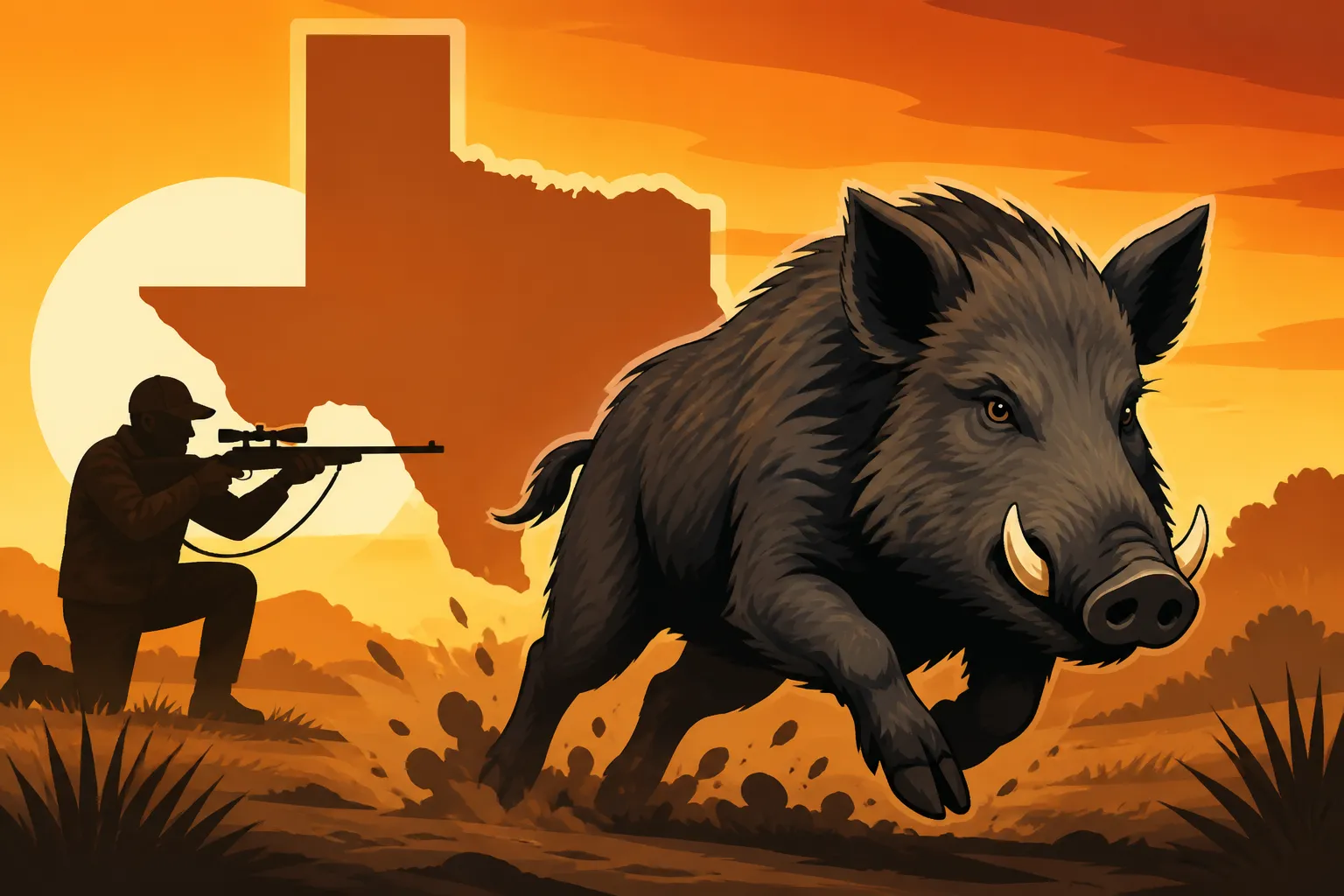
Feral hogs are a persistent nuisance across Texas, causing millions in agricultural damage, tearing up prime wildlife habitat, and making a mess of pretty much anything they come across. If you're tired of these destructive invaders on your property or just looking for an exciting and impactful hunt, this guide will walk you through everything you need to know about hunting feral hogs in the Lone Star State, from understanding their behavior to choosing the right gear and executing effective tactics.
Understanding the Feral Hog Problem in Texas
Texas has the largest feral hog population in the United States, estimated to be well over 3 million animals. These aren't just a few stragglers; we're talking about a serious ecological and agricultural crisis. Feral hogs are descendants of domestic pigs brought to the Americas by European explorers, particularly early Spanish settlers, who either escaped or were released to forage freely. Over generations, they've reverted to a wild state, developing thick coats, long tusks, and an incredible ability to survive and thrive in almost any environment. Their destructive rooting for food and wallowing behavior decimates crops, pastures, and natural habitats, and they even prey on native wildlife like fawns and ground-nesting birds. It's a never-ending battle, but one that hunters play a crucial role in managing. For a broader overview of the issue, check out our Feral Hog Hunting in Texas: Year-Round Guide.
Why Feral Hogs are Such a Challenge
These animals are incredibly intelligent, adaptable, and prolific breeders. A sow can start reproducing at six months old and have two litters of 4-8 piglets each year. Do the math, and you can see how quickly a small group can explode into an uncontrollable sounder. They learn quickly from pressure, adapting their patterns and becoming mostly nocturnal in areas with heavy hunting activity. This makes them a challenging adversary, demanding a variety of tactics and a deep understanding of their habits. Their omnivorous diet means they'll eat just about anything – roots, tubers, insects, small animals, carrion, and, of course, all your corn. They're built tough, too, with thick hide and gristle plates, especially on older boars, which makes shot placement absolutely critical.
Legalities and Regulations for Hog Hunting
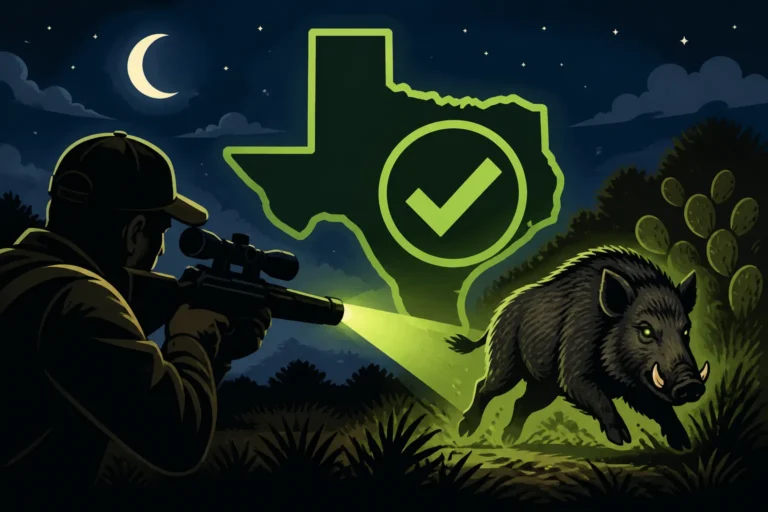
One of the unique aspects of hunting feral hogs in Texas is that they are considered an exotic, non-game animal. This means there's no closed season and no bag limit on feral hogs in Texas. That's right, you can hunt them 365 days a year, day or night, with almost any legal means or method, provided you have permission from the landowner. If you're on private land, a hunting license is not even required to hunt feral hogs. However, if you plan to hunt other game animals at the same time, or if you're hunting on public land, then a valid Texas hunting license is definitely necessary. It's always smart to double-check the latest regulations in the Texas Outdoor Annual, as specific public hunting areas or WMAs might have additional rules. Always ensure you have explicit landowner permission before stepping foot on private property, and be clear about the methods you intend to use.
Essential Gear for Texas Hog Hunting
Hunting feral hogs can range from a quick, opportunistic shot during deer season to a dedicated, high-tech night operation. The gear you need will largely depend on your chosen method and the conditions you expect to encounter.
Firearms and Ammunition Choices
When it comes to putting down a tough hog, reliable stopping power is key. While almost any centerfire rifle cartridge can be effective with proper shot placement, some calibers stand out for their hog-dropping capabilities.
- Rifles: Popular choices include the .223/5.56 NATO, .308 Winchester, 6.5 Creedmoor, and .30-06 Springfield. The AR platform rifles are particularly popular for hog hunting due to their capacity for quick follow-up shots and accessory mounting. For smaller hogs or close-range shots, a .223 can work, but for larger boars, something with more punch like a .308 or a 6.5 Creedmoor is often preferred. Make sure you're using quality expanding bullets designed for medium to large game, not just varmint rounds.
- Shotguns: A shotgun loaded with slugs or buckshot (00 buck is a common choice) can be devastating at closer ranges, especially in thick cover. This is a great option if you're hunting hogs in dense brush or as an opportunistic hunt while dove or duck hunting.
- Handguns: For those seeking a challenge, a large-caliber handgun (like a .357 Magnum, .44 Magnum, or 10mm Auto) can be effective at very close distances. This is often an option for hunters who pursue hogs with dogs, where close-quarters engagements are common.
- Archery Equipment: Bowhunting for hogs is an exhilarating experience. A compound bow with a draw weight suitable for deer hunting (40 lbs minimum, 50-60 lbs is better) and good broadheads will get the job done. Just like with firearms, shot placement is paramount. If you're interested in bowhunting in Texas, we have a comprehensive Bowhunting in Texas: Archery Season Guide that can offer more insights.
Optics for Day and Night Hunting
Hogs are often most active during low light hours or even pitch black, especially in areas with hunting pressure. This makes good optics invaluable.
- Daytime Optics: For traditional daytime hunting, a good quality rifle scope with variable magnification (e.g., 3-9×40 or 4-12×40) is essential. Clear glass and good light transmission will help you in dawn and dusk conditions. Binoculars (8×42 or 10×42) are also crucial for scouting and identifying targets from a distance.
- Nighttime Optics: This is where hog hunting truly shines in Texas. Thermal imaging and night vision optics have revolutionized hog control.
- Thermal Scopes: These detect heat signatures, making hogs stand out clearly against a cooler background, even in complete darkness or light fog. They are incredibly effective for identifying hogs in dense cover. Brands like Pulsar and AGM offer excellent thermal scopes tailored for hog hunting. To learn more about specific models, check out our guide on the Best Thermal Scopes for Hog Hunting in Texas.
- Night Vision: Night vision amplifies existing ambient light (starlight, moonlight), allowing you to see in the dark. While not as effective at cutting through brush as thermal, modern digital night vision offers impressive clarity and can be a more budget-friendly option than high-end thermal.
- Weapon Lights: If thermal or night vision isn't in your budget, a powerful weapon-mounted light can still be highly effective for night hunting. Green or red lights are often preferred as they are less likely to spook hogs. Remember, Texas does allow hunting hogs at night, and Is Thermal Hunting Legal in Texas? provides more details on those regulations.
Other Must-Have Gear
Beyond your weapon and optics, a few other items will make your hog hunt more successful and comfortable.
- Hunting Apparel: Dress for the Texas weather. Camouflage that blends with the local terrain is always good, but hogs are colorblind, so scent control is more critical. Early season hunts call for lightweight, breathable materials, while cooler weather might require layers. Good snake boots are also a smart investment, especially in the thick brush of South Texas.
- Knife and Game Processing Gear: A sharp, sturdy knife is essential for field dressing. Consider a game cart if you expect to haul hogs out of remote areas. Given the Texas heat, having a plan to cool your harvest quickly is vital.
- Headlamp: Even with night vision or thermal, a good headlamp with a red light setting is indispensable for navigating, tracking, and basic tasks in the dark without compromising your night vision.
- Backpack: A comfortable daypack to carry water, snacks, extra ammo, first-aid, and any other essentials is a must.
- Hunting Apps: Apps like onX Hunt or HuntStand can be incredibly helpful for property boundaries, scouting, marking waypoints, and understanding terrain.
Top Tactics for Hunting Feral Hogs in Texas
Feral hogs are wily creatures, and a single approach rarely works all the time. Success often comes from combining different tactics and adapting to their behavior. Here are some of the most effective methods. For a deep dive into various approaches, our Hog Hunting Methods in Texas: Thermal, Night & Trapping article offers even more details.
Hunting Over Feeders and Bait
One of the most common and effective ways to hunt hogs, especially on private land, is over feeders or baited areas. Hogs are constantly foraging, and a consistent food source can draw them in.
- Setting Up Feeders: Deer feeders, typically gravity or spin feeders, work just as well for hogs. Corn is king, but some hunters also use soured grain, commercial hog attractants, or even leftover restaurant grease. Place feeders in areas with known hog activity, near water sources, or along travel corridors. Make sure your feeder is sturdy; hogs are notorious for destroying them. Consider using a heavy-duty metal feeder or reinforcing an existing one. Our guide on Best Deer Feeder Setup for Texas can give you some great ideas that are easily adaptable for hogs.
- Timing is Key: Hogs often hit feeders in the pre-dawn hours, late evening, or throughout the night, particularly if they're feeling pressured. A trail camera monitoring the feeder will give you invaluable insight into their patterns and allow you to time your hunts perfectly. You might find that they only visit after midnight, requiring a night hunting setup.
- Blinds: Hunting from a ground blind, box blind, or even a tripod stand overlooking a feeder provides concealment and a stable shooting platform. Scent control is vital, as hogs have an incredible sense of smell. Pay attention to wind direction!
Spot-and-Stalk and Still Hunting
For a more active and challenging hunt, spot-and-stalk or still hunting can be incredibly rewarding. This method requires patience, stealth, and a good understanding of hog behavior and terrain.
- Scouting: Look for fresh rooting, wallows, tracks, and rubs on trees. These signs indicate recent hog activity. Hogs often travel along creek beds, dense tree lines, or through agricultural fields. Pay attention to areas with thick cover where they might bed down during the day.
- Wind and Scent Control: Always hunt into the wind. Hogs will smell you long before you see them if the wind is wrong. Utilize scent-eliminating sprays, wash your clothes in scent-free detergent, and store them properly.
- Stealthy Movement: Move slowly and deliberately, pausing frequently to scan the area, listen for grunts, squeals, or the sound of rooting. Use binoculars to glass open areas and pick apart thick cover.
- Stalking: Once you spot hogs, use terrain and cover to your advantage to close the distance undetected. This can be tricky, as hogs often move in sounders, and getting close to one without spooking the others requires skill.
Night Hunting with Thermal and Night Vision
This is arguably the most effective method for population control and provides an exhilarating experience. Since hogs are primarily nocturnal, especially under pressure, hunting them after dark levels the playing field.
- Equipment is Crucial: As discussed earlier, thermal imaging or advanced night vision scopes are game-changers. They allow you to detect hogs long before they can detect you. A thermal monocular is excellent for scanning, while a thermal rifle scope ensures precise shot placement.
- Strategy: Drive roads on large ranches, scanning pastures and field edges with thermal. Once a sounder is located, plan a stalk to get into shooting range. Alternatively, set up ambushes near known water sources, travel corridors, or feeders that hogs frequent at night.
- Safety First: Night hunting requires extra caution. Always be absolutely sure of your target and what lies beyond it. Communicate clearly with any hunting partners. Ensure you have backup lighting and understand your equipment thoroughly.
- Legal Considerations: While generally legal, always verify local ordinances or specific lease rules. Some counties or land types might have particular restrictions. Our post How to Hunt Hogs at Night Without Thermal offers alternatives if specialized equipment isn't an option.
Trapping and Control Methods
For serious hog population control, especially on larger properties or agricultural lands, trapping is often the most efficient method. Hunting alone, while fun, typically doesn't remove enough hogs to significantly impact the population.
- Trap Design: Modern hog traps range from simple corral traps to advanced "smart traps" that can be monitored and triggered remotely via cellular technology. Corral traps are highly effective, using panels to create a large enclosure with a root-style gate or drop gate.
- Baiting the Trap: Pre-baiting is critical for success. Condition hogs to enter the trap area by placing bait (usually corn) both inside and outside the trap for several days or weeks before setting the trigger. You want the entire sounder to feel comfortable entering and exiting before you spring the trap.
- Location: Place traps in areas with high hog activity, especially near wallows, feeding areas, or travel paths. Ensure the trap is well-hidden and blends into the surroundings.
- Smart Traps: Companies like Jager Pro offer sophisticated trap systems that allow you to observe hogs remotely via trail cameras and then drop the gate with a phone app once the entire sounder is inside. This maximizes your catch rate. For more detailed information on different approaches, check out Hog Trapping in Texas: Methods That Work.
Here's a quick comparison of popular hog hunting methods:
| Hunting Method | Best for | Pros | Cons |
|---|---|---|---|
| Over Feeders/Bait | Private land, consistent harvest | Draws hogs to specific location, predictable, good for groups | Hogs can become nocturnal, requires regular baiting, potential for feeder damage |
| Spot-and-Stalk/Still | Active hunters, varied terrain | Exciting, challenging, no specialized equipment needed for day | Requires high skill and patience, often lower success rates, very scent-sensitive hogs |
| Night Hunting (Thermal/NV) | Population control, pressured hogs | Extremely effective, allows for large harvests, less pressure on other game | Expensive equipment, requires practice, increased safety considerations |
| Trapping | High population density, agricultural areas | Most effective for population reduction, humane removal possible | Initial investment in traps, time-consuming pre-baiting, can be labor-intensive |
Field Dressing and Processing Your Harvest
Congratulations, you've taken down a Texas hog! Now comes the important part: getting that meat from the field to your table, especially considering the often-warm Texas climate.
Quick Cooling and Preparation in the Field
Feral hogs, like any game animal, need to be field dressed quickly to prevent spoilage, particularly in the Texas heat. Their body temperature is similar to deer, and bacterial growth can rapidly compromise the meat if it's not cooled down.
- Gutting: As soon as the hog is down and confirmed dead, begin the gutting process. Open the body cavity and remove all internal organs. Be especially cautious around the intestines, as they can carry bacteria. You might encounter strong odors, especially from older boars.
- Bleeding: If possible, bleed the animal thoroughly. This helps improve meat quality.
- Cleanliness: Wear gloves to protect yourself and keep the meat clean. Use water (if available) to rinse out the body cavity.
- Cooling: Prop the cavity open to allow air circulation. If it's warm, consider placing bags of ice inside the cavity for transport. Getting the hog to a cooler or refrigeration as quickly as possible is paramount. For detailed instructions on how to handle game in the heat, refer to How to Cool a Deer Fast in Texas Heat.
Getting Your Hog to the Processor or Home
Once field dressed, your next step depends on whether you plan to butcher it yourself or take it to a professional processor.
- Transport: For transport, a hog can be loaded whole into the back of a truck or on a trailer. If it's a large hog and you're alone, a game cart can be a lifesaver. Keep the carcass elevated off the hot bed of a truck if possible, or covered with a tarp that allows some airflow to prevent direct sun exposure.
- Processing: Many local meat processors in Texas handle feral hogs. Call ahead to confirm their services and pricing. If you're butchering at home, you'll need a clean workspace, sharp knives, a meat grinder (for sausage), and plenty of freezer bags. Hog meat is excellent for sausage, pulled pork, bacon, and roasts. Remember to cook feral hog meat thoroughly to an internal temperature of at least 160°F (71°C), as they can carry parasites like trichinosis, though this is rare.
- Meat Quality: The quality of feral hog meat can vary greatly depending on the hog's age, diet, and sex. Younger hogs (especially sows or barrows) tend to have milder, more tender meat. Older boars, especially during breeding season, can have very strong, gamey meat. Still, with proper preparation and cooking, even the toughest boar can yield delicious results.
Disclaimer
Hunting is an inherently dangerous activity. Always prioritize safety, understand and follow all Texas Parks and Wildlife Department regulations, obtain landowner permission, and handle firearms and other hunting equipment responsibly. This guide is for informational purposes only and does not replace official hunting regulations or professional instruction.